A student asked, “𝐖𝐢𝐥𝐥 𝐀𝐈 𝐭𝐚𝐤𝐞 𝐦𝐲 𝐣𝐨𝐛?”
The real question is, “𝐇𝐨𝐰 𝐝𝐨 𝐈 𝐠𝐫𝐨𝐰 𝐰𝐢𝐭𝐡 𝐀𝐈?”
Discover what AI means for your skills, career, and earning potential at the @nssfug CareerExpo2026
Register: https://t.co/YrHHFBGzcK
#NSSFCareerExpo2026
In the era of AI, Clean Code is no longer just about aesthetics or being a "nice" teammate;
it has become a functional requirement for managing the sheer volume of code AI can generate.
When a machine can write 100 lines of code in seconds, the human developer's role shifts from "author" to "editor and architect."
Here is how clean code principles have evolved for the AI era:
1. DRY (Don’t Repeat Yourself) is Now a "Guardrail"
Traditionally, DRY was about reducing human error during updates. In the AI era, it’s about context management.
* The AI Trap: LLMs often generate redundant boilerplate if they don't have full context of your existing utilities.
* The Clean Approach: By strictly centralizing logic, you give the AI a smaller, more accurate "surface area" to understand. One source of truth means the AI is less likely to hallucinate a second, conflicting version of the same logic.
2. Meaningful Naming as "Prompt Engineering"
Naming variables and functions well has always been a hallmark of clean code. Now, it serves as the ultimate prompt.
* Self-Documenting Code: If a function is named calculateSeasonalDiscount(), an AI assistant can instantly "guess" the intended logic.
* The AI Benefit: Clear names act as a continuous, high-quality prompt for the AI's autocompletion, leading to more accurate suggestions.
3. The "Junior Engineer" Mental Model
The most effective way to maintain a clean codebase in 2026 is to treat AI like a fast, literal junior engineer.
* Encapsulation: Wrap AI-generated snippets into defined modules immediately to keep them from "bleeding" into the rest of your architecture.
* Review, Don't Paste: Never "mindlessly" copy-paste AI output. Use it as a draft, then refactor it to meet your project's specific standards for simplicity (KISS principle).
4. TDD (Test-Driven Development) is the New Compass
With AI writing code so fast, it's easy to lose track of whether the code actually does what you intended.
* Tests as Intent: Write your unit tests before asking the AI to generate the implementation.
* Validation: This ensures that the machine-generated code is validated against your specific requirements, not just "looking like" it works.
#WeLoveNerds #BuildWithAT #AfricasTalking #MachineLearning #CleanCode #SoftwareEngineering
The New Era of Dev: SLMs vs. LLMs
Do you know how top-tier developers are actually using AI today?
It’s no longer just "prompt and pray." It’s about picking the right tool for the specific job. 🛠️
🧠 LLMs (Large Language Models)
The Architects.
Developers use heavyweights like GPT-4 or Claude 3.5 for high-level logic.
Best for: Complex system architecture, debugging "impossible" logic, and explaining legacy codebases.
The Vibe: It’s like having a Senior Architect on speed dial.
⚡ SLMs (Small Language Models)
The Specialized Speedsters.
Models like Phi-3 or Mistral 7B are the unsung heroes of 2026.
Best for: Running locally on your machine (privacy!), instant autocomplete, and unit test scaffolding.
The Vibe: Low latency, zero cost, and they live right in your IDE without needing the cloud.
📈 The 2026 Workflow:
LLMs to map out the vision.
SLMs to handle the repetitive "grunt work" locally.
Human (You!) to provide the judgment, security audit, and creative spark.
AI has raised the floor, but it’s also raising the ceiling. Are you an operator or an orchestrator?
#WeLoveNerds #BuildWithAI #Coding2026 #DevCommunity #LLM #SLM
Remember when "coding" meant staring at a syntax error for three hours?
Today, we’re dancing with AI to build entire architectures in minutes.
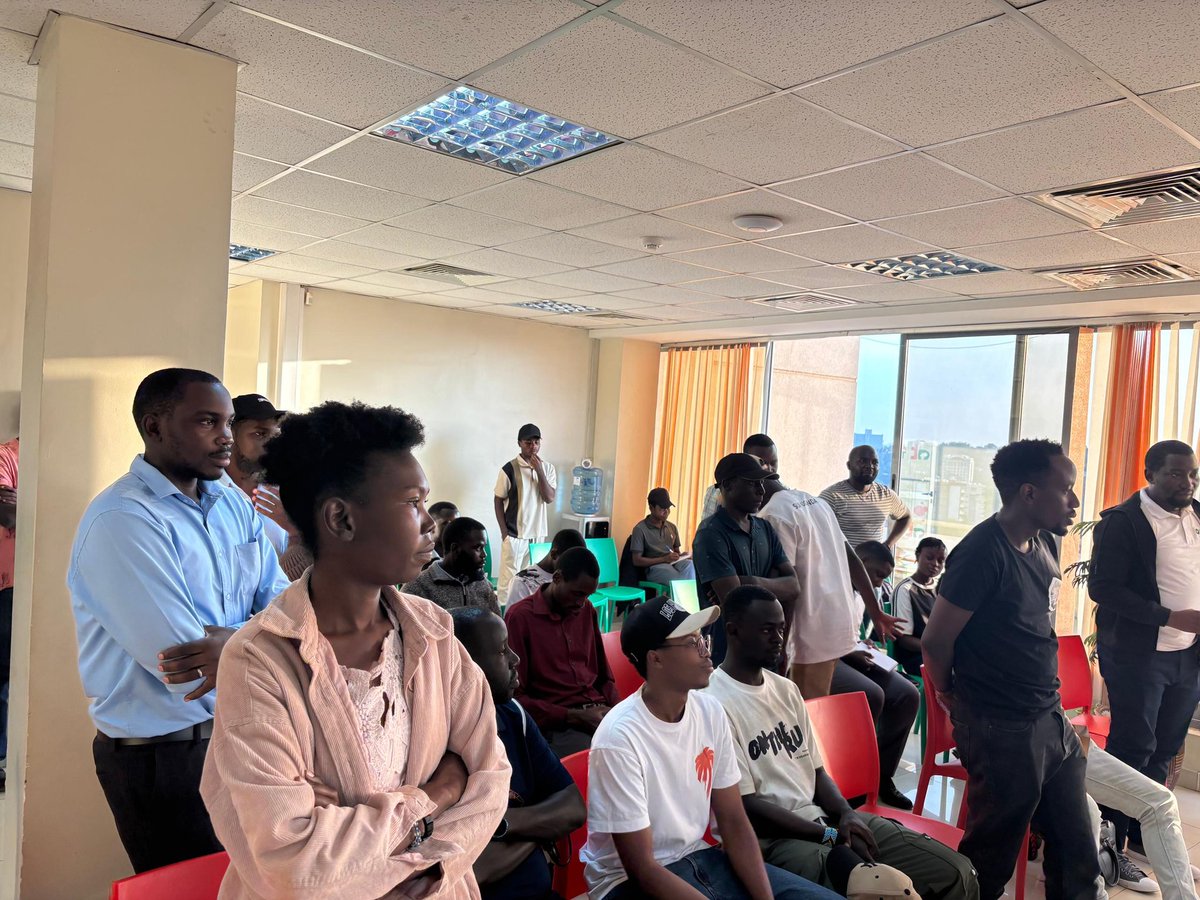
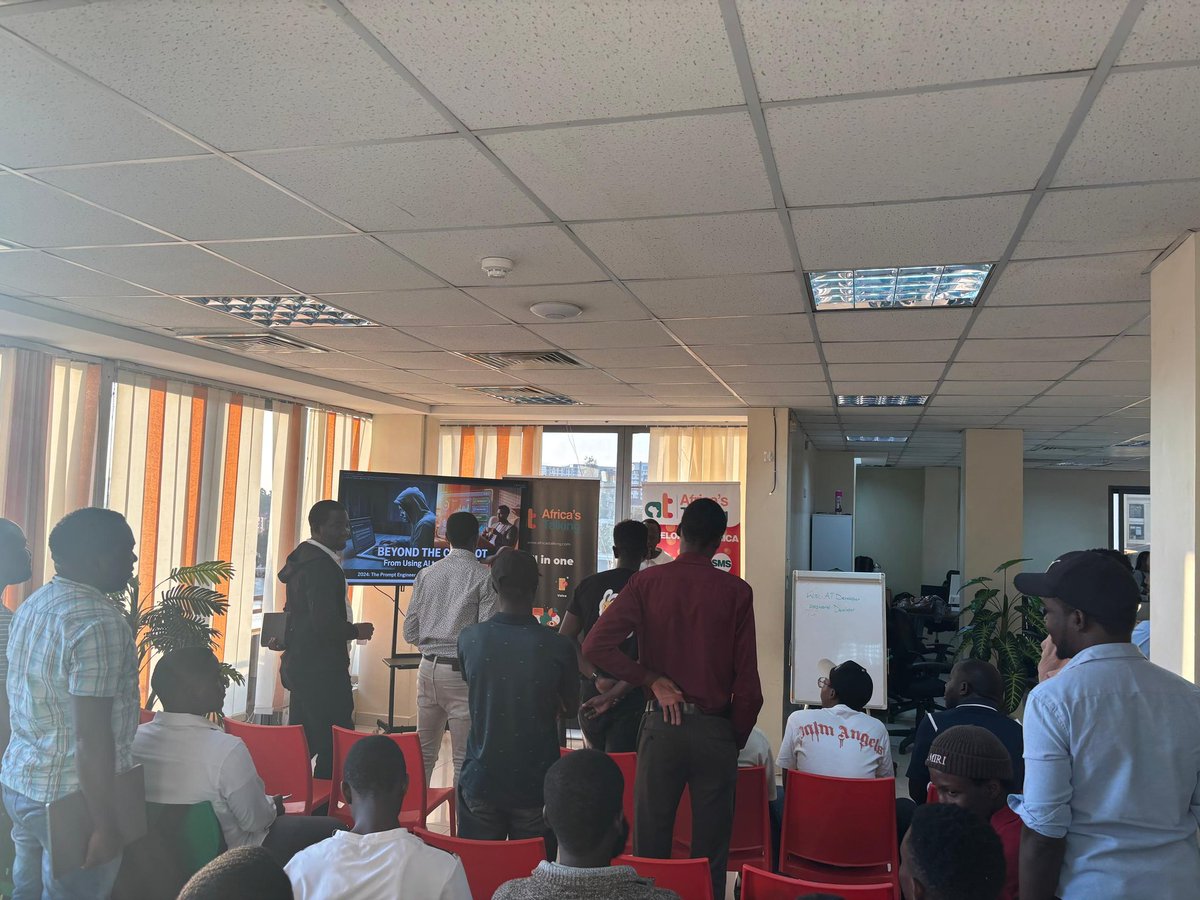
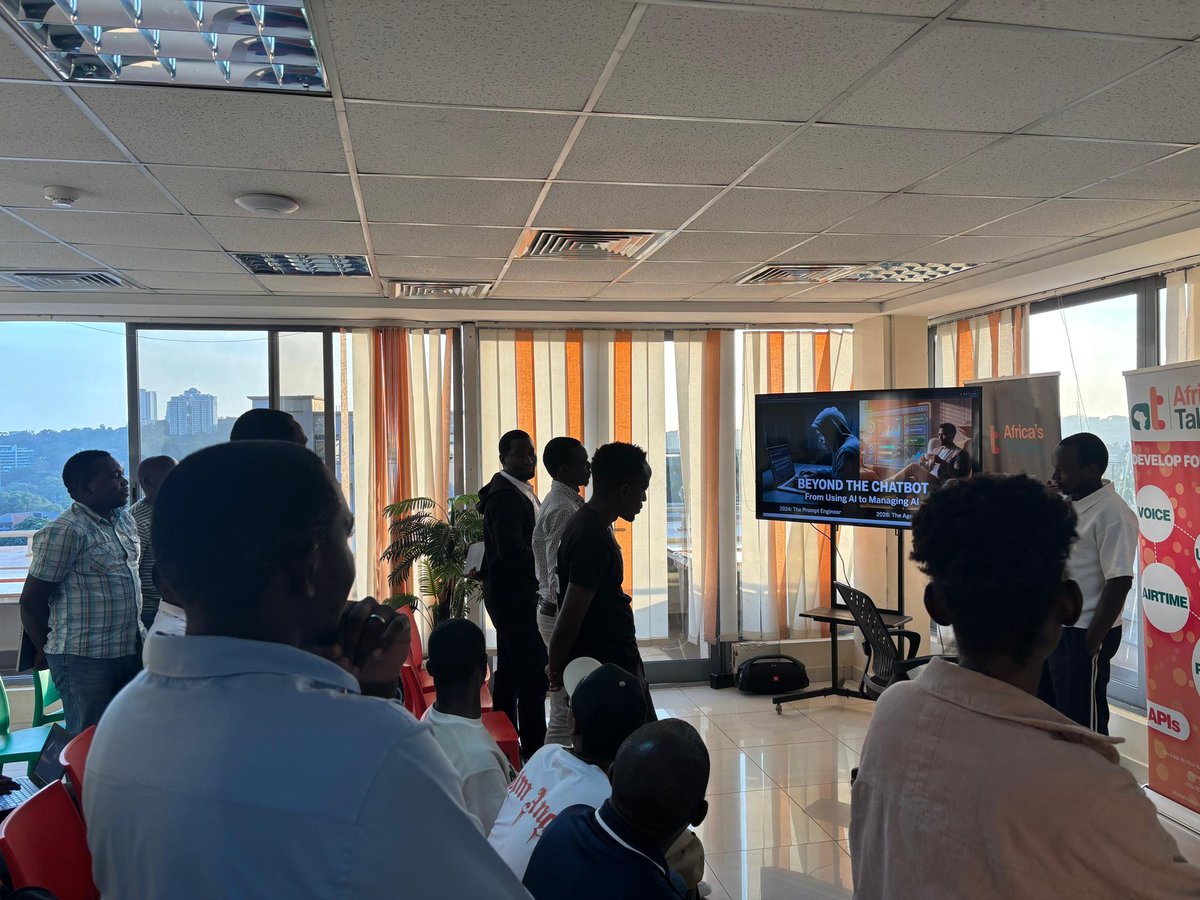
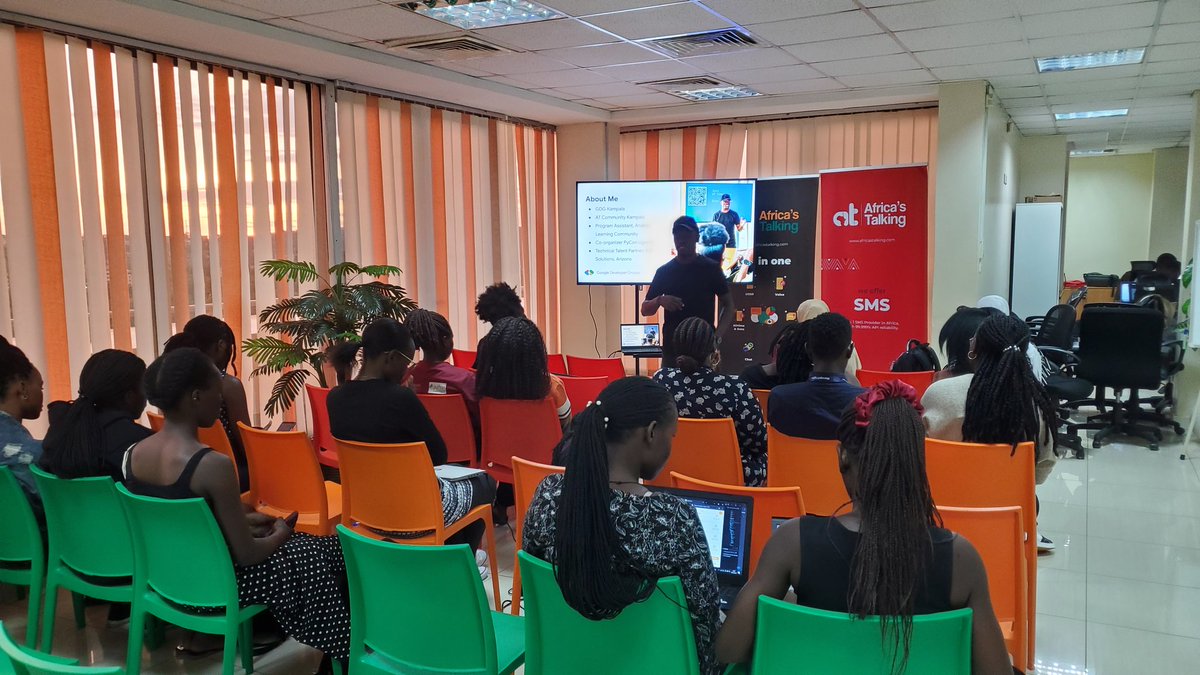
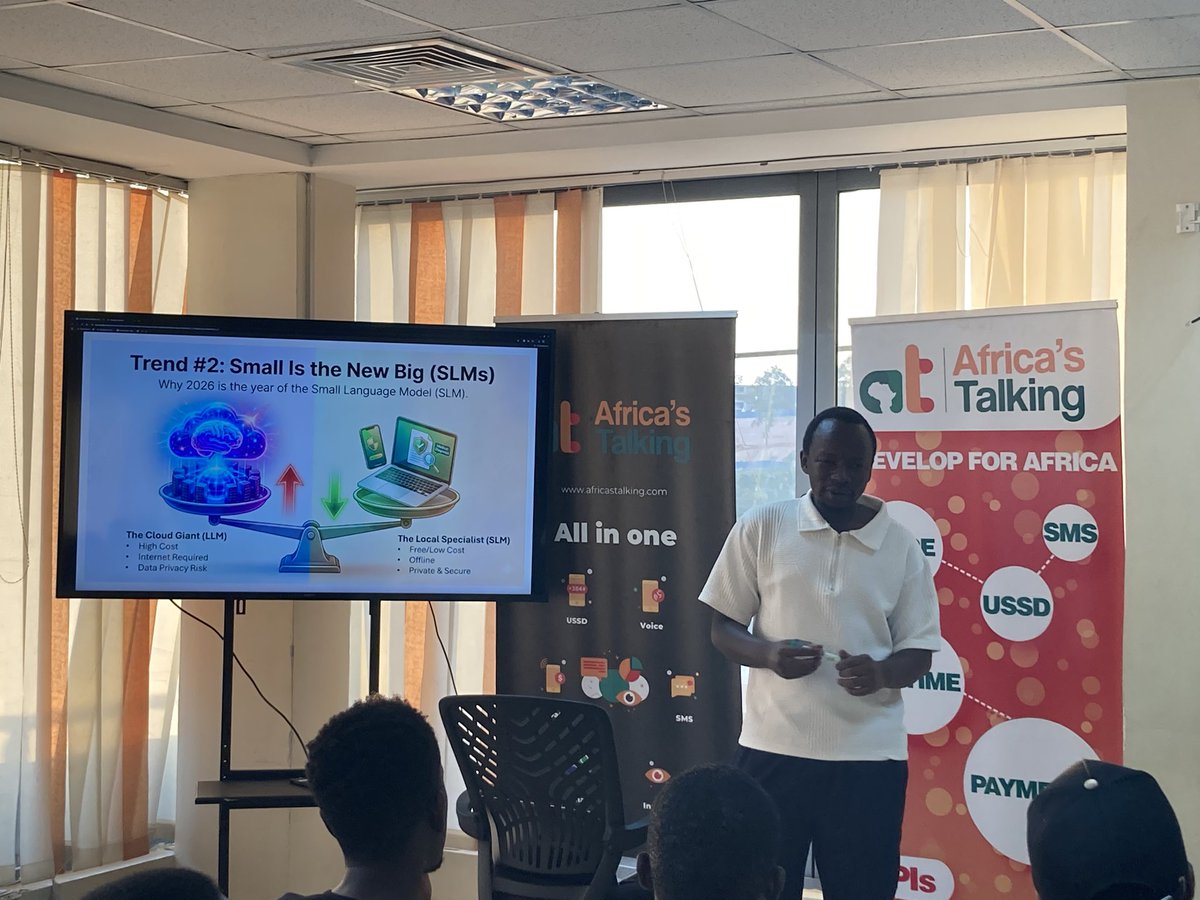
The craft hasn't died; it’s evolved. But staying relevant means more than just prompting, it's about mastering the new workflow. I’m heading to the Africa's Talking community event to bridge that gap between "writing code" and "architecting the future."
Whether you're just starting or you’ve been in the trenches for years, this is where the new playbook is being written.
Link: https://t.co/5xwIRH66qW
Today 12th Feb 2026 - Acacia Place Level 4 @AsaLugada @ganafaR
2026 is the year of Small Language models(SLMs). They’re free or low cost, offline, private and secure. A good example is Ollama. You don’t have to use a giant cloud LLM.
We had a productive presence at #DevFestJinja today, where our team members Mark and David shared comprehensive insights into the @Africastalking suite of communication APIs. The session highlighted the ease of integrating robust SMS, Voice, USSD, and Payments functionalities for developers operating across Africa.
A key highlight was David's live demonstration, showcasing the practical implementation and capabilities of Voice Agents. This demonstrated how developers can leverage our platform to build sophisticated, interactive voice-enabled applications. We appreciate the engagement from the #DevCommunity and look forward to fostering further innovation. #BuildWithAT #GDGJinja @googlecloud #APIDevelopment #BuildWithAI #Devfestjinja
Happy 63rd Independence Day, Uganda! 🇺🇬
Today, we celebrate our nation's sovereignty and bright future.
At AI Studio, we're proud to be part of Uganda's journey, building innovative AI solutions for a better tomorrow.
#UgandaAt63#IndependenceDayUganda#AIStudioUG
Honored to have our CEO @ganafaR represent AI Studio Uganda at State House Entebbe with H.E. President of Uganda
Inspired by Hon. @DrMusenero's vision to harness AI and Industry 4.0 for Uganda's growth.
#AISovereignty#UgandaAI#Industry4.0
We’re proud to announce IBM as our official enterprise partner in East Africa!
This week at IBM’s “Driving Profitability” event in Kampala, our CEO joined partners & customers to explore hybrid cloud, automation, and enterprise AI for Africa’s businesses.
#EnterpriseAI
The Afri-Aya dataset is now live. 🎉
14 cultures, 14 languages, and we're only getting started.
📌 Afri-Aya dataset: https://t.co/4ut0zfvxwJ
This is the largest human-reviewed dataset for African vision-language models (VLMs) to date, representing the greatest number of cultures.
What began as a six-week project during this year's Expedition Aya went on to win the gold prize. Now, five months later, we are thrilled to release version one.
@katomubirusteve and I have had the privilege of working with so many great members of our Regional Africa community over at @Cohere_Labs, and it shows just how much we can achieve when we come together towards a common goal.
What's even more exciting is that for many, this was their first contribution to open science. We're so glad they stepped up and took the opportunity to have their cultures represented.
None of this would be possible to begin with without the lovely team at @Cohere_Labs : @sarahookr, @mziizm, Julia Kreutzer, Alejandro Rodríguez Salamanca, Madeline Smith, Brittawnya P., John Dang and many more, who shaped and gave feedback to the project in its earliest stages.
We would particularly like to thank Alejandro Rodríguez Salamanca for his role as an advisor on the project, as well as Madeline Smith and Brittawnya P., for their continued support and motivation that got us over the finish line.
That said, we are not done. We have a new task ahead of us: fine-tuning a vision-language model to understand these 14 African cultures. We've already started this work and expect to share more news soon.
Although version one is now available, we welcome new contributors and are actively working to expand the number of cultures represented.
We have another 11 cultures under review, but we still need many volunteers to make this happen. If you are familiar with an African culture and language, we would be excited to have you join us on this journey.
Let's give sight to African large language models.
Special thanks to each of the contributors 🎉 : Abigail Oppong, Aisha Hagar, Abdulkadir Bayero, Cynthia Habonimana, Gimei Alex, Glorry Sibomana, Jaward Sesay, Olga Niyongabo, Oumayma Essarhi, Sa'ad Nasir Bashir, Henok B Ademtew, Paul Okewunmi, Testimony Adekoya, Chisom Aniekwensi, Chimere George-Emeruwa, Ashay Srivastava, Tasi'u Jibril
Is the water you drink really safe? 💧
Don’t leave it to chance, bring it to the Jibu Lab for testing!
We test:
✔️ Drinking water at home
✔️ School or hospital water
✔️ Business and community water supplies
Our lab is certified, reliable, and open to everyone.
👉 Drop off your sample today and know your water is safe.
#SafeWater #JibuUganda #BetterFutureTogether
Reach your customers instantly, every time.
Makes business communication simple.
Send, Bulk SMS,
Make Bulk Voice Calls,
Whether you’re a business owner, or marketer, we help you connect, engage, and grow, without the stress.
Call us today: 0775919085 or [email protected]
⚽🔥 It’s game time! Manchester United vs Arsenal ⚡
Think you know the score? 🤔 Predict the result and stand a chance to WIN yourself a brand new Jibu Tap Bottle 💧
Drop your predictions below ⬇️
#JibuUganda#PredictAndWin#MUFC#AFC
Great discussions at the #WorldYouthSkillsDay policy dialogue on AI in Education.
Our focus: Using offline AI to power an inclusive and employer-led TVET system in Uganda.
Making skills accessible to everyone, everywhere. @EnabelinUganda#EdTech#FutureOfWork#OfflineAI
🇺🇬 Uganda’s Open Data Platform is almost here!
500+ datasets, APIs, real-time updates all in one place
Centralizing and cleaning Uganda’s public data for researchers, devs, and innovators.
Beta launch in a few weeks be part of it!
#UgandaTech#DataScience#Innovation#GovTech
Calling all devs and entrepreneurs
This Thursday evening,
Allan from Xente will be sharing on how to build and sell B2B products in Africa
Don’t miss the insights and networking from 5PM to 8PM
🔗 RSVP now: https://t.co/2C74qyaQiK
#B2B#Startups#AfricaTech#DevCommunity