China skipped credit cards. Now they’re about to skip the “AI is a chatbot” phase entirely.
This photo tells a bigger story than “Chinese grannies like tech.”
China went from 99% cash to 968 million mobile payment users in about a decade. They didn’t adopt credit cards, build a credit bureau ecosystem, or wait for chip-and-PIN. They leapfrogged straight to QR codes. Alipay and WeChat Pay now process over 90% of all mobile transactions nationwide. Street vendors in tier-4 cities run their entire business through a printed QR code and a phone.
OpenClaw is following the same adoption curve, but faster. The project hit 250,000 GitHub stars in 60 days. It took React over a decade to reach that number. Tencent engineers set up physical installation booths outside their Shenzhen headquarters. Baidu integrated it into their search app for 700 million users. Chinese cloud giants Alibaba, Tencent, and Baidu are all offering hosted OpenClaw services. Their American counterparts haven’t touched it.
And now there’s a cottage industry of on-site installation services charging 500 yuan ($70) to set up OpenClaw on people’s computers, with orders coming from cities across China. Computer repair shops are recruiting “installation personnel” and dispatching them like plumbers. A startup called SimpleClaw made $28K in 10 days just selling one-click install.
The mobile payments parallel is precise. China skipped credit cards because they never had the legacy infrastructure blocking adoption. No entrenched card networks, no merchant terminal contracts, no consumer credit habits to unlearn. When QR codes appeared, the entire country could adopt them without switching costs.
The same structural advantage applies to AI agents. Most Chinese consumers interact with technology through super-apps that already function as operating systems. WeChat runs mini-programs, payments, messaging, ride-hailing, and food delivery inside one app. Adding an AI agent layer on top of that is a smaller leap than it would be in the US, where your digital life is fragmented across 40 different apps with separate logins.
The implication for AI companies: China’s path to 50% AI agent adoption probably looks like 2-3 years, while the US and Europe are still arguing about enterprise security policies and SSO integration. And by the time Western companies figure out distribution, the Chinese ecosystem will have generated millions of real-world agent task trajectories that make their models better at actually doing things.
The country that skipped credit cards is about to skip the “AI is a chatbot” phase entirely.
It’s official, I’m going to Consensus Hong Kong by CoinDesk https://t.co/G0eqRGmzgW
Meet me in Hong Kong for panels, parties, and power moves at Asia’s Most Influential Crypto Event. #ConsensusHK
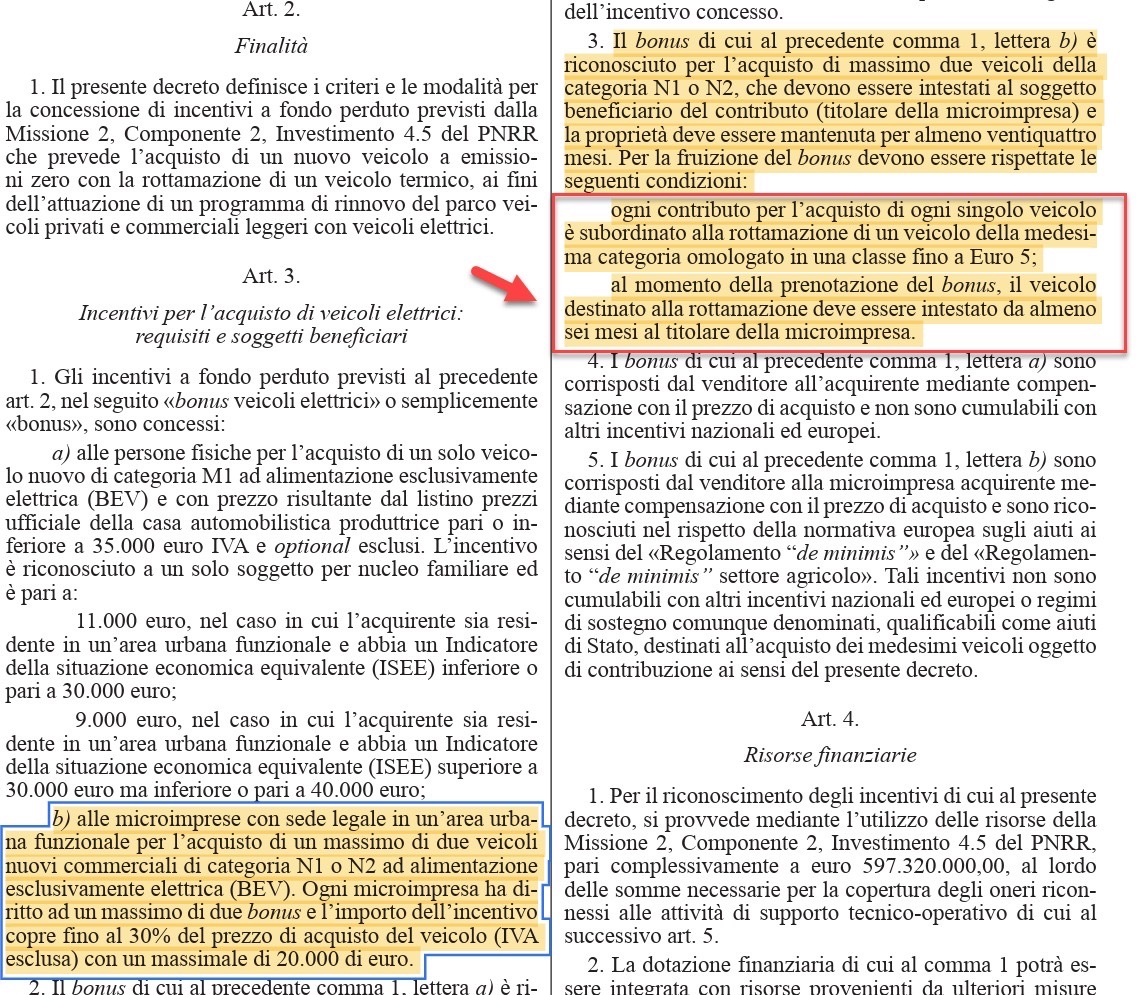
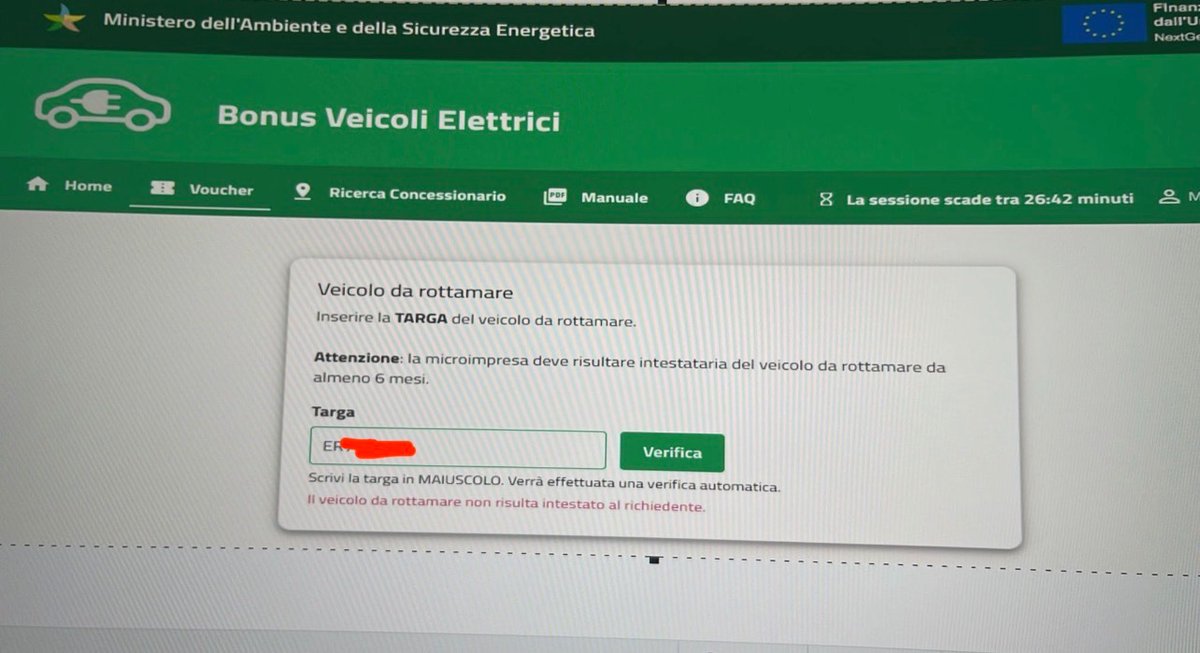
@sole24ore Per microimprese il decreto 8 Ago 2025 pubblicato in GU, Art.3 par.3 diceva chiaramente “veicolo da rottamare deve essere intestato al titolare della microimpresa” ma questo non è stato rispettato! Ora chi risponde alle aziende ingiustamente escluse?
@repubblica Per microimprese il decreto 8 Ago 2025 pubblicato in GU, Art.3 par.3 diceva chiaramente “veicolo da rottamare deve essere intestato al titolare della microimpresa” ma questo non è stato rispettato! Ora chi risponde alle aziende ingiustamente escluse?
@SkyTG24 Per microimprese il decreto 8 Ago 2025 pubblicato in GU, Art.3 par.3 diceva chiaramente “veicolo da rottamare deve essere intestato al titolare della microimpresa” ma questo non è stato rispettato! Ora chi risponde alle aziende ingiustamente escluse?
@Radio1Rai Per microimprese il decreto 8 Ago 2025 pubblicato in GU, Art.3 par.3 diceva chiaramente “veicolo da rottamare deve essere intestato al titolare della microimpresa” ma questo non è stato rispettato! Ora chi risponde, lei On. Gilberto Pichetto Fratin?
@GPichetto On. Ministro perdoni il disturbo, ma per microimprese il decreto 8 Ago 2025 pubblicato in GU, Art.3 par.3 diceva chiaramente “veicolo da rottamare deve essere intestato al titolare della microimpresa” ma questo non è stato rispettato! Ora chi risponde?
@GPichetto@MASE_IT Off topic ma per lei: Per microimprese il decreto 8 Ago 2025 pubblicato in GU, Art.3 par.3 diceva chiaramente “veicolo da rottamare deve essere intestato al titolare della microimpresa” ma questo non è stato rispettato! Ora chi risponde, lei?
@vaielettrico@MASE_IT@motus_e Per microimprese il decreto 8 Ago 2025 pubblicato in GU, Art.3 par.3 diceva chiaramente “veicolo da rottamare deve essere intestato al titolare della microimpresa” ma questo non è stato rispettato! Ora chi risponde, lei On. Gilberto Pichetto Fratin?
This report is long but very good.
“With R1, DeepSeek essentially cracked one of the holy grails of AI: getting models to reason step-by-step without relying on massive supervised datasets. Their DeepSeek-R1-Zero experiment showed something remarkable: using pure reinforcement learning with carefully crafted reward functions, they managed to get models to develop sophisticated reasoning capabilities completely autonomously. This wasn't just about solving problems— the model organically learned to generate long chains of thought, self-verify its work, and allocate more computation time to harder problems.
The technical breakthrough here was their novel approach to reward modeling. Rather than using complex neural reward models that can lead to "reward hacking" (where the model finds bogus ways to boost their rewards that don't actually lead to better real-world model performance), they developed a clever rule-based system that combines accuracy rewards (verifying final answers) with format rewards (encouraging structured thinking). This simpler approach turned out to be more robust and scalable than the process-based reward models that others have tried.”
https://t.co/XRqgMNRzg1
Mil gracias a todos
Many thanks to all
Merci beaucoup à tous
Grazie mille à tutti
谢谢大家
شكرا لكم جميعا
תודה לכולכם
Obrigado a todos
Vielen Dank euch allen
Tack alla
Хвала свима
Gràcies a tots
@matteohallissey Vai avanti così, entrassero in libera concorrenza i taxi che decida l’utente se continuare a usufruire del loro servizio e della loro correttezza fiscale o di quella di privati come Uber o Grab. Poi vediamo come evolve.
@5M4R1O@AndreaGiuricin Straw Man Argument! Uber fornisce un servizio di prenotazione e - al contrario dei tassisti - valutazione. I driver di Uber pagano le tasse in tutto il mondo, e un governo può facilmente richiedere un audit ad Uber per verificare che I driver facciano i bravi
That actually blew my mind. This is the CEO of CATL, the world's largest battery company, who says they're becoming so good at recycling (already at 99.6% for Nickel and Cobalt) that China will reach a point when it doesn't need to mine minerals anymore.