-Ekonomi tam açılmadan buradan da paylaşalım-
“Target Audience?”
Görünecek kimseleri yoksa reklam panolarının bir anlamı kalır mı?
Katkılarından dolayı @arifgoodmorning’a teşekkür ediyorum:)
Prepare for takeoff. ✈️ Flight simulator is now available globally on web to all users. https://t.co/hQP0No142P
We've recently added many our most powerful professional desktop features to web. Elevation profiles, new import types, but there's always been one other feature you've been asking us to add to the web version of Google Earth, just for fun...
Where will you fly? Share your best maneuvers, views, and flyovers with us!
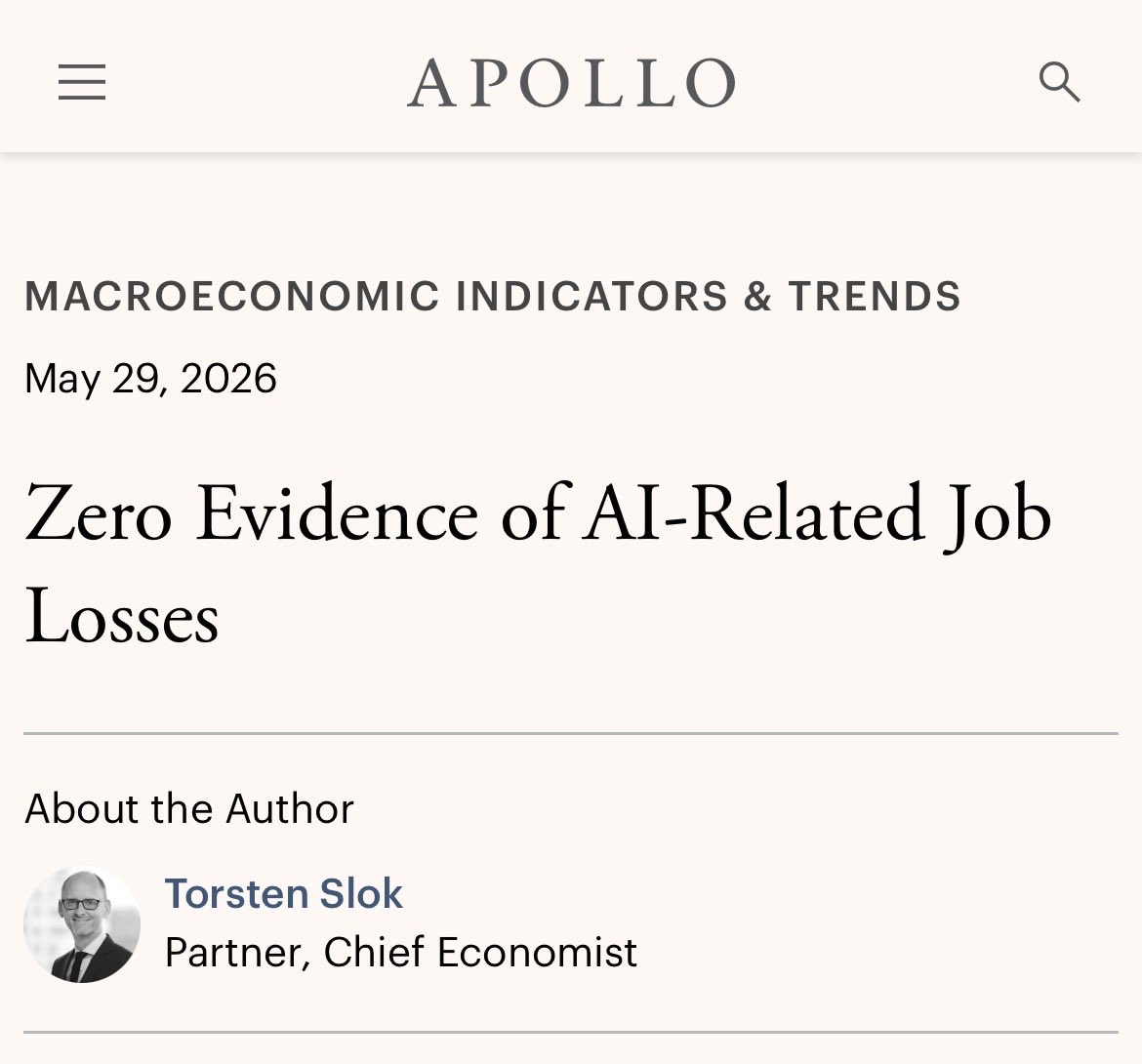
Two economists just published a mathematical proof that AI will destroy the economy.
Not might. Not could. Will — if nothing changes.
The paper is called "The AI Layoff Trap." Published March 2, 2026. Wharton School, University of Pennsylvania. Boston University. Peer reviewed. Mathematically modeled.
The conclusion is one sentence.
"At the limit, firms automate their way to boundless productivity and zero demand."
An economy that produces everything. And sells it to nobody.
Here is how you get there.
A company fires 500 workers and replaces them with AI. A competitor fires 700 to keep up. Another fires 1,000. Every company is behaving rationally. Every company is following the incentives correctly. And every company is building a trap for itself.
Because the workers who were fired were also customers.
When they lose their jobs faster than the economy can absorb them, they stop spending. Consumer demand falls. Companies respond by cutting costs — which means automating more workers — which means less spending — which means more falling demand — which means more automation.
The loop has no natural exit.
The researchers tested every proposed solution. Universal basic income. Capital income taxes. Worker equity participation. Upskilling programs. Corporate coordination agreements.
Every single one failed in the model.
The only intervention that worked: a Pigouvian automation tax — a per-task levy charged every time a company replaces a human with AI, forcing them to price in the demand they are destroying before they pull the trigger.
No government has implemented this. No major economy is seriously discussing it.
Meanwhile the numbers are already tracking the curve. 100,000 tech workers laid off in 2025. 92,000 more in the first months of 2026. Jack Dorsey fired half of Block's workforce and said publicly: "Within the next year, the majority of companies will reach the same conclusion."
Nobody is doing anything wrong. Companies are following their incentives perfectly. That is exactly the problem.
Rational behavior. At scale. Simultaneously. With no mechanism to stop it.
Two economists built the math. The math leads to one place.
Source: Falk & Tsoukalas · Wharton School + Boston University ·
The most important sentence in Karpathy's whole post is probably this:
anything with a measurable score and fast feedback will become something agents can optimize for you.
automatically with no humans involved.
I will not eat my snowstorm snacks early.
I will not eat my snowstorm snacks early.
I will not eat my snowstorm snacks early.
I will not eat my snowstorm snacks early.
Agency > Intelligence
I had this intuitively wrong for decades, I think due to a pervasive cultural veneration of intelligence, various entertainment/media, obsession with IQ etc. Agency is significantly more powerful and significantly more scarce. Are you hiring for agency? Are we educating for agency? Are you acting as if you had 10X agency?
Grok explanation is ~close:
“Agency, as a personality trait, refers to an individual's capacity to take initiative, make decisions, and exert control over their actions and environment. It’s about being proactive rather than reactive—someone with high agency doesn’t just let life happen to them; they shape it. Think of it as a blend of self-efficacy, determination, and a sense of ownership over one’s path.
People with strong agency tend to set goals and pursue them with confidence, even in the face of obstacles. They’re the type to say, “I’ll figure it out,” and then actually do it. On the flip side, someone low in agency might feel more like a passenger in their own life, waiting for external forces—like luck, other people, or circumstances—to dictate what happens next.
It’s not quite the same as assertiveness or ambition, though it can overlap. Agency is quieter, more internal—it’s the belief that you *can* act, paired with the will to follow through. Psychologists often tie it to concepts like locus of control: high-agency folks lean toward an internal locus, feeling they steer their fate, while low-agency folks might lean external, seeing life as something that happens *to* them.”
Hangi Geninizi Değiştirirdiniz? | CRISPR-cas9 Gen Modifikasyonu ve Sonrası
İnsanın doğa karşısındaki hakimiyetinin son noktası bu mu? Kendi sonumuzu mu hazırlıyoruz? gibi soruları beraberinde getiren CRISPR-cas9 teknolojisini konuştuk.
İyi seyirler! 🔗 https://t.co/sG9857xrPY
here is what happens when you take creatine:
- 5gs: bigger muscles
- 15gs: bigger brain
- 70gs: replace sleep
- 88gs: remote viewing
- 120gs: agentic workflows
Bir grup akademisyen tarafından oluşturulan Galata Anket, Türkiye genelinden katılımcılara hızlı ve güvenli şekilde ulaştırarak akademik saha çalışmalarınızı kolaylaştırıyor. Kendileriyle dayanışmak için detayları paylaşıyoruz:
https://t.co/bkybbEQ5ON
@ahmetuakbiyik@GalataAnket