We've been getting a lot of questions lately about how the Internet Archive digitizes books.
The short answer: page by page, by hand.
You may remember our viral 2021 video of Eliza Zhang scanning a book. That's still how we do it.
Meet Eliza, and learn how we scan books: https://t.co/gt9s5lbPE4
We've been getting a lot of questions lately about how the Internet Archive digitizes books.
The short answer: page by page, by hand.
You may remember our viral 2021 video of Eliza Zhang scanning a book. That's still how we do it.
Meet Eliza, and learn how we scan books: https://t.co/gt9s5lbPE4
The aviation community may be global, but it is tight-knit. Help us rally around Brazilian aviation’s @avioesemusicas who has been diagnosed with Creutzfeldt-Jakob disease. A pilot in Texas paid Lito this honor.
To learn more about Lito’s situation: https://t.co/ACKN4UHgBr
We’re asking our community for help.
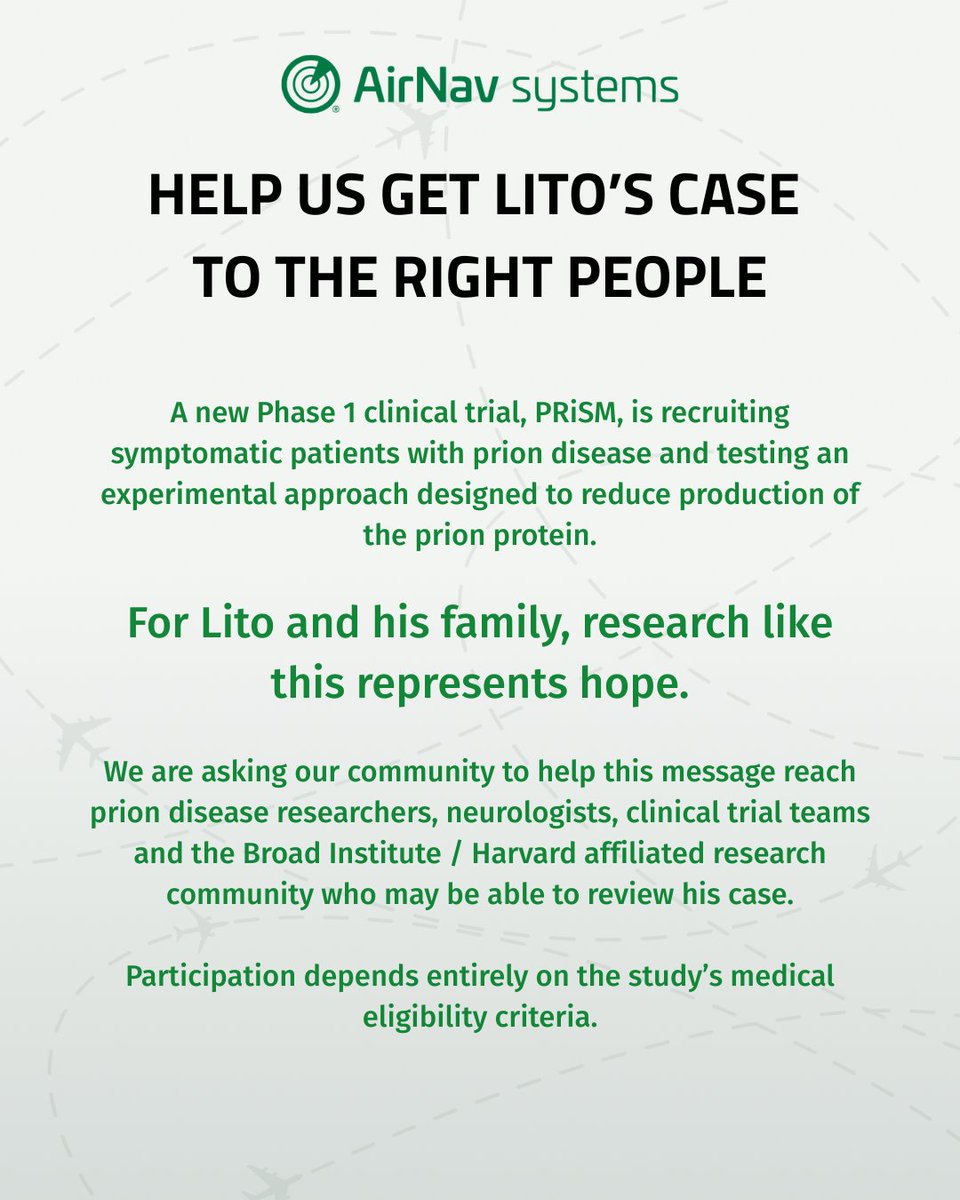
@avioesemusicas, a valued aviation influencer and creator of Aviões e Músicas, has been diagnosed with Creutzfeldt-Jakob disease (CJD), a rare and rapidly progressive neurological condition.
For Lito and his family, time matters. We want to help his case reach the researchers, specialists, and organizations working at the forefront of prion disease research.
If you know someone who may be able to help make the right connection, please share this post and tag the relevant teams and specialists.
We would especially appreciate help getting this message in front of:
@ionispharma@broadinstitute@Harvard@MayoClinic
We are not asking for promises. We are asking for Lito’s case to be seen, reviewed, and considered by the right people.
Sometimes, one connection can make all the difference.
Chegou a hora de dar aquela força para o nosso grande amigo Lito!!! @avioesemusicas !!!
Eu fui lá no estúdio do Aviões e Músicas e gravei um vídeo sobre o efeito do El Niño na aviação. Vai lá agora, você vai ver algo interessante, alguém que tem medo de voar num canal de aviação!!! Mas tudo isso é para ajudar o Lito e o canal, e para ajudar mesmo precisamos de vocês!!! Então clica aí no link vai lá, deixa o seu like, se inscreve e deixa uma mensagem de força para o Lito!!!
Espero que gostem do vídeo!!! Grande abraços e saudações aeronáuticas a todos!!!!
EL NIÑO na aviação! O que esperar? Feat. @SpaceToday | EP. 1444 - https://t.co/gRZUe2MPTU
Had to do a double take and crosscheck my position. I’ve been flying up and down the western coast of South America for the past 26 years and I’ve never seen what looked like cities and towns below the undercast to my right while flying south, then I remembered an article I read a few months ago. These people are having a field day fishing off the coasts of Peru and Chile, uninvited.
🇫🇷🌒 𝗙𝗟𝗔𝗦𝗛 𝗜𝗡𝗙𝗢 — Lors de l’éclipse solaire, le photographe Jean-Philippe Jubera a immortalisé depuis le Rocher de la Vierge, à Biarritz, la silhouette de la Vierge et de l’Enfant devant un Soleil presque entièrement occulté par la Lune.
Brazil grows more than half its grain on land that scientists said would never farm.
The Cerrado is a savanna covering a quarter of the country, and its soil is naturally acidic, with a pH between 4 and 5 when most crops want 5.5 to 6.5.
That acidity releases aluminum, which is poison to roots.
It also locks up phosphorus, so the little that is there cannot be used.
Some Cerrado soils held under 1 milligram of usable phosphorus per kilo.
Norman Borlaug, the man who won a Nobel Prize for feeding the world, told the New York Times that nobody thought those soils would ever be productive.
Brazil did not go find better land.
It rebuilt the land it had.
Embrapa worked out that lime neutralizes the aluminum, and farmers started spreading it by the millions of tonnes.
Brazil applied 11.5 million tonnes of agricultural lime in 1990 and 61.6 million in 2023.
Then came gypsum, which sinks deeper and fixes the soil 20 to 60 centimeters down, where lime cannot reach.
Roots that used to stop short could suddenly go looking for water.
Fifty years later that same savanna produces more than half of Brazil's grain.
Two thirds of the country's farmland still needs that treatment to work at all.
The dirt did not change on its own.
Somebody engineered it.
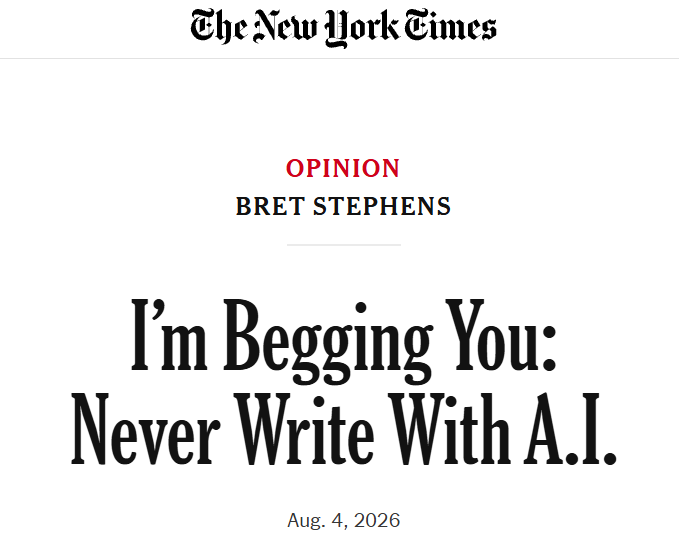
Must-read article for anyone whose job involves *thinking*
https://t.co/88ezsrjMgz
"The problem with writing with A.I. is that it’s mentally enfeebling...
What, uniquely, does writing do? ... It compels thinking in ways that silent contemplation or spoken language rarely can."
Curiosidade. O Tupi é uma língua que apresenta o tempo nominal. O verbo não expressa tempo. Em tupi existe o tempo do substantivo. Para isso, usam-se os sufixos RAMA (futuro, promissor, que vai ser) e PÛERA (passado, velho, superado, que já foi). Ybyrá - árvore. Ybyrárama - muda (a futura árvore). Ybyrápûera - tronco, toco de árvore (a ex-árvore, a árvore que já foi). É um belo exemplo de como as línguas recortam o mundo de forma diferente: em tupi, o movimento no tempo é das coisas, não das ações. Lindo isso, não? #PapoDeLinguista
On this day in 1975, a U.S. Apollo spacecraft and USSR Soyuz spacecraft docked during the first joint venture in space between the United States and the Soviet Union: the Apollo-Soyuz Test Project.
🖼️: Artist rendering of the ASTP docking
One pilot marked the 15th anniversary of the final @NASA Space Shuttle mission this week with a special flight path in Florida. Rewind the flight for yourself at https://t.co/f1URyzTKre