📢7amleh, in collaboration with the Palestinian Digital Rights Coalition and dozens of international organizations, has launched #ReconnectGaza, a global campaign to demand the rebuilding of Gaza’s telecommunications network and safeguard the right to communication as a fundamental human right. This campaign comes in response to the deliberate destruction of Gaza’s telecommunications infrastructure amidst the genocidal onslaught, which has left millions cut off from the world, restricted emergency response efforts, and further crippled an already devastated economy. Estimates indicate that 75% of the telecommunications infrastructure has been damaged, with 50% completely destroyed. The denial of connectivity has paralysed essential services, blocking healthcare coordination, disrupting education, and cutting off Palestinians from the digital economy.
🌍The #ReconnectGaza campaign aims to gather international support to push for real, lasting change, ensuring that Palestinians in Gaza are no longer left in the dark. 7amleh calls on everyone to join the campaign, amplify its message, and demand action from decision makers. Connectivity is not a privilege; it is a fundamental human right. Together, we can ensure that Gaza’s voice is heard and that its people can reclaim their right to communicate, work, and rebuild their future.
✊Join #ReconnectGaza Campaign: https://t.co/Qy5cw8hUJy
#لنُعِد_الاتصال_لغزّة
New research reveals a worrying trend: AI's data practices risk concentrating power overwhelmingly in the hands of dominant technology companies. I spoke w/@ShayneRedford@sarahookr@sarahbmyers@GiadaPistilli about what this says about the state of AI https://t.co/GqCjObTGho
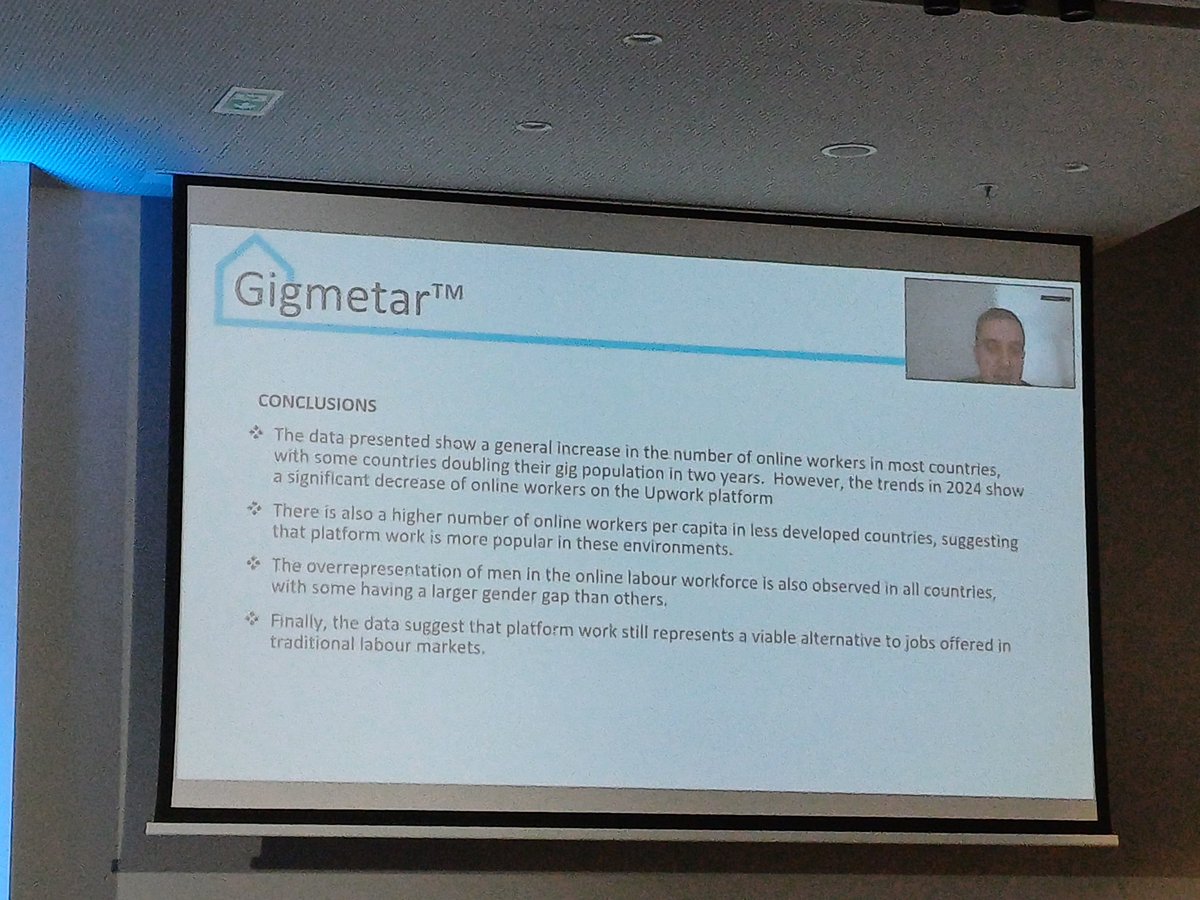
#SEEDiG9: A very interesting presentation on the state of platform based gig work in Serbia and East and South-East Europe by Gigmetar @PublicPolicyRS: https://t.co/88wNhfWm4w
Join us this week as we chat with @greenwebfound
and #MozillaAlumni about people & planet over profit tech-alternatives. Register here ⤵️ https://t.co/bCPNdVV327
The Vanishing Culture report arrives today at a critical moment: While @internetarchive recovers from a cyberattack, it’s a reminder of how fragile our access to knowledge can be. Preserving culture & history requires resilience—and collective action.
🔗 https://t.co/IcGMa396TJ
I'm talking at a conference later this year (on UX+AI).
I just saw an ad for the conference with my photo and was like, wait, that doesn't look right.
Is my bra showing in my profile pic and I've never noticed...? That's weird.
I open my original photo.
No bra showing.
I put the two photos side by side and I'm like WTF...
Someone edited my photo to unbutton my blouse and reveal a made-up hint of a bra or something else underneath. 🤨
Immediately, I email the conference host.
(FYI he is a great, respectable guy with 5 kids at home.)
He is super apologetic and immediately looks into the issue.
He quickly reports back that the woman running their social media used a cropped square image from their website.
She needed it to be more vertical, so she used an AI expand image tool to make the photo taller.
AI invented the bottom part of the image (in which it believed that women's shirts should be unbuttoned further, with some tension around the buttons, and revealing a little hint of something underneath). 🤯
—
FYI the conference organizers were super apologetic and took down all of the content with that photo.
BREAKING: The FTC has announced the “click-to-cancel” rule that will require companies to let you cancel any product as easily as you registered.
Long, difficult cancelation processes will be illegal.
If you signed up with a click, they’ll have to let you cancel with a click.
Data centers are draining energy and water, while Big Tech hides the damage with ‘creative accounting’. With power grids strained and energy security at risk, governments must act now, demanding full transparency on emissions and AI’s environmental impact. https://t.co/Y1xPpLbplh
Earlier this month, the Commission launched a call for tender for a study on how to foster energy efficiency & limit the carbon footprint of AI technologies. The #AIAct envisages energy efficiency should be included in technical standards for GPAI models.
https://t.co/BLG16gsZlZ
After months of digging and reporting, I have learned where Facebook's bizarre AI spam (like "Shrimp Jesus") comes from, who is making it, how it works, and how it is monetized.
Turns out Meta is directly paying people to spam FB with this stuff
https://t.co/FQYLQDaF1q
Private orgs are now claiming to be buying the specific phone locations of specific people to track their movement over time, which is a wild, wild development regardless of who is being tracked
https://t.co/2xlvp7dzK1
"They flooded the internet with duplicitous, cheap words. It’s the oldest trick in the book"
✍️ @MiaRSato profiles Ben Faw, the man behind the AI gaffes at @SInow & @USATODAY, and finds that he has a years long history of filling the internet with garbage https://t.co/fyPNIMSKQi
A ground-breaking investigation by @AnnieGilbertson and @_alexreisner for @proof__news found that subtitles from 173,536 @YouTube videos, siphoned from more than 48,000 channels, were used by Anthropic, Nvidia, Apple and Salesforce to train their AI models
https://t.co/x6Pz8gUsXA
"We found that the rise of AI is being powered by data annotators, content moderators, machine learning engineers, data center technicians, writers and artists."
Read more about the exploited humans behind AI's boom from OII's @geoplace in @latimes:
https://t.co/CVjAPlhKe4
@ben_elgin @ntashawhite With all that, Google has now set a goal to be net-zero carbon by 2030. That will see it reduce its absolute emissions -- direct and indirect -- by at least 50%, power itself with 24x7 clean energy, and balance the rest with carbon-removal credits.
https://t.co/MJW3RUjxeQ
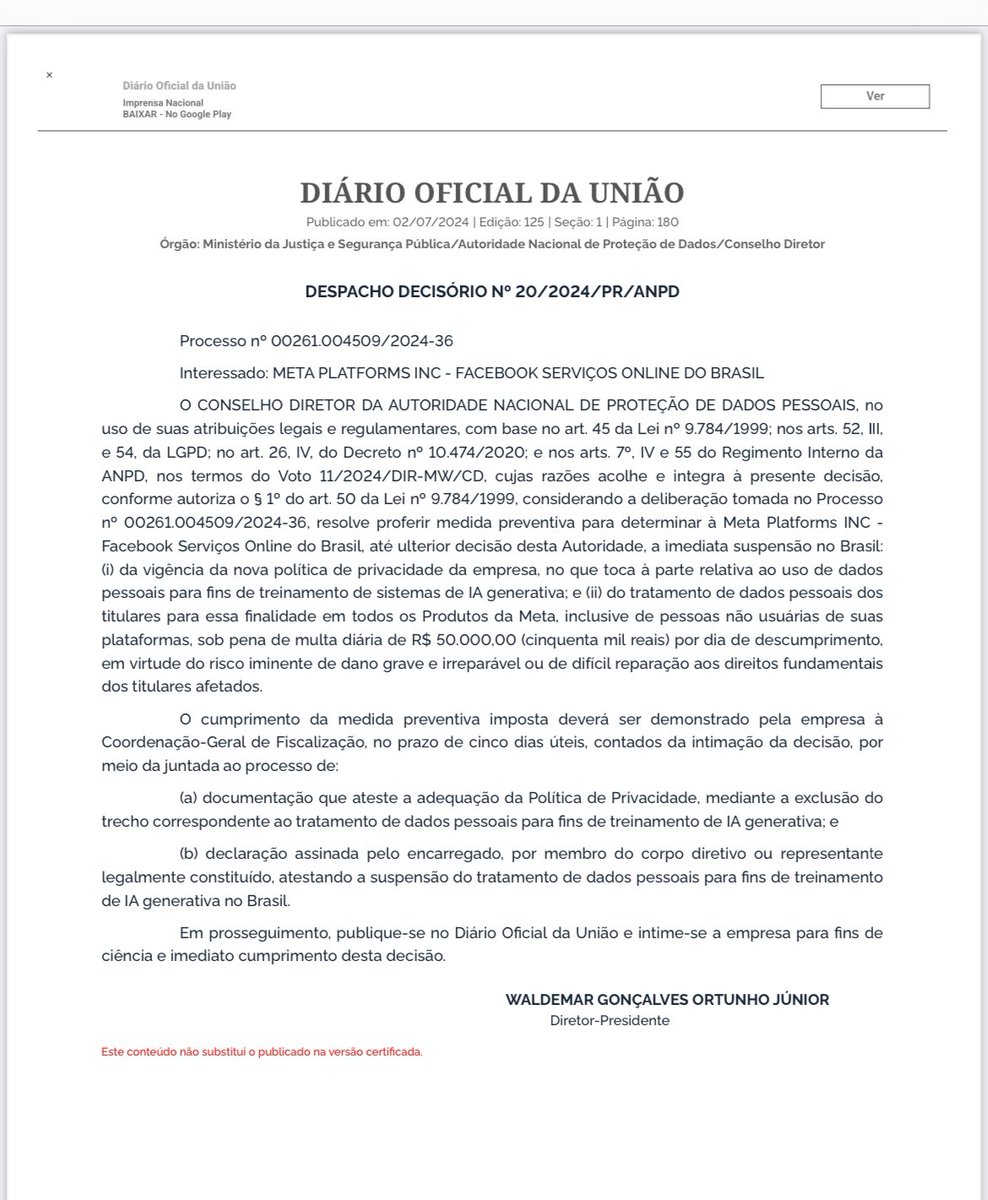
The Brazilian DPA just ordered Meta to pause the training of large language models using public content shared by adults on Facebook and Instagram in Brazil.
"Google’s greenhouse gas emissions have surged 48 per cent in the past five years due to the expansion of its data centres that underpin artificial intelligence systems, leaving its commitment to get to “net zero” by 2030 in doubt." https://t.co/nWycwmstib