Anthropic is questioning whether AI may turn out to be altogether useless. This is the single most honest thing Anthropic has ever written.
“But achieving recursive improvement alone does not suggest an immediate change in how industrial production occurs, societies organize, or markets function. More intelligence can’t learn what a drug does over decades of use, can’t hold elections sooner than a constitution dictates, and can’t turn a stranger into an old friend in a weekend. For most people, the felt pace of this future will still be set by the bottlenecks, even if the laboratory upstream runs at the speed of compute. That collision, where recursive intelligence building itself ever faster meets the world of humans, relationships, and governance, is another part of this future we can’t predict.”
Cursor is hiring design engineers.
looking for people with taste, systems thinking, and deep care for fast, polished experiences – especially folks excited to build the tools that help designers, engineers, and agents ship quality code.
know someone? tag them or DM me 📧
In the last 6 months at @Ahrefs, we analyzed over 1 billion data points across 14 studies. Here's what we learned about AI search optimization:
1) "Best X" blog listicles are the single most prominent content format cited by AI chatbots. They make up 43.8% of all page types cited by ChatGPT specifically.
2) 67% of ChatGPT's top 1,000 citations come from sources marketers can't influence: Wikipedia (29.7%), homepages (23.8%), app stores (6.6%). Only 32.3% are influenceable content like educational pages, reviews, news, and blog posts.
3) 28.3% of ChatGPT's most-cited pages have zero Google organic visibility. These pages get cited repeatedly by ChatGPT despite not ranking in Google at all. A completely separate discovery layer.
4) ChatGPT only cites about 50% of the URLs it retrieves. It fetches dozens of pages per query but uses half as background context without attribution. This means that being retrieved and being cited are very different things.
5) Adding schema markup had zero meaningful impact on AI citations. AI Overviews actually dipped −4.6%, while AI Mode (+2.4%) and ChatGPT (+2.2%) showed changes indistinguishable from zero.
6) YouTube mentions have the highest correlation (0.737) with AI brand visibility out of all the factors we studied (including all the conventional SEO metrics like backlinks, page count, DR, etc). This held true for both Google-owned and OpenAI products.
7) AI Overviews reduce clicks to the #1 result by 58%. That’s up from 34.5% just 10 months earlier. The trend is accelerating.
8) 99.9% of AI Overviews appear on informational intent queries. Transactional, navigational, and local searches are almost entirely AIO-free. Shopping triggers AIOs just 3.2% of the time.
9) For a given search query, Google’s AI Mode and AI Overviews reach the same conclusions 86% of the time — but cite almost entirely different sources (only 13.7% citation overlap).
10) AI Overviews change every 2.15 days on average, with 70% of content differing between consecutive observations. But semantic similarity stays at 0.95. The words, sources, and entities constantly shuffle, but the actual meaning barely moves.
You can now pin a dock of your recently opened Mac apps right on your desk and switch between them with a single tap when using Mac Virtual Display on Vision Pro.
It updates automatically so you always have a direct shortcut to the apps you’re currently working with. You can even pin your favourites to the front of the line to create your perfect setup.
It‘s called App Time Travel, and it's one of the headline features in the big new choclift for Vision Pro update, available today.
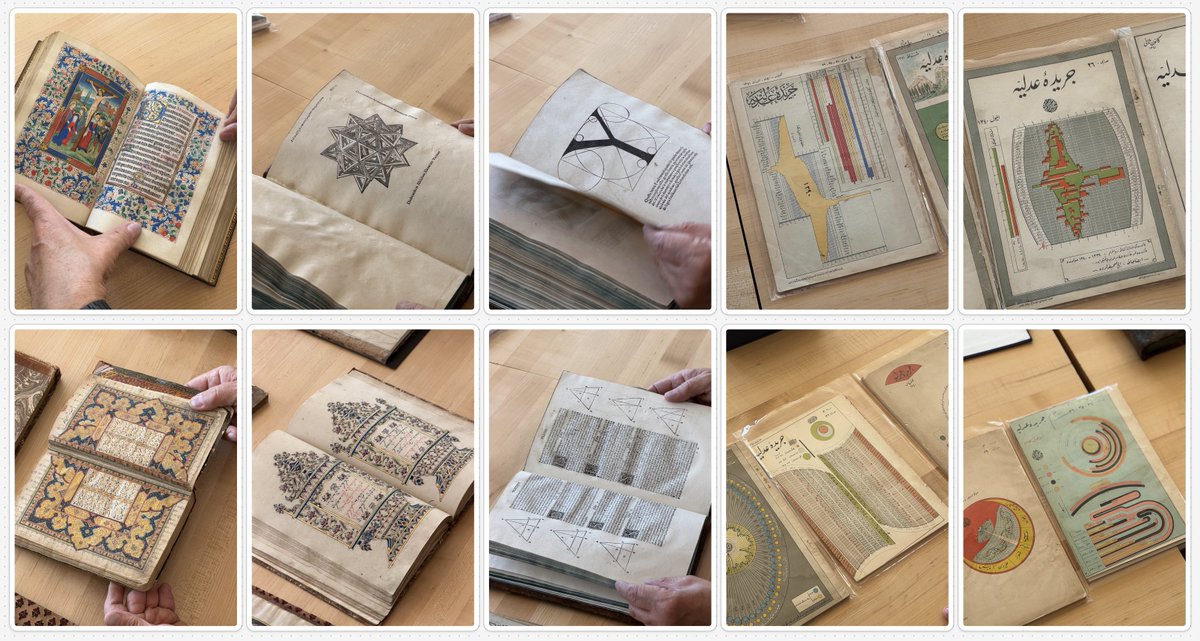
this is your sign to go do a guided tour at @Lett_Arc
there is just so much historic inspo from the archives it feels almost silly that more people dont know about it
1/3 - illuminated manuscripts, family trees, census results, platonic solids, euclidian shapes of the alphabet, etc.
This paragraph by Richard Feynman hits so hard:
“Fall in love with some activity, and do it! Nobody ever figures out what life is all about, and it doesn’t matter. Explore the world. Nearly everything is really interesting if you go into it deeply enough. Work as hard and as much as you want to on the things you like to do the best. Don’t think about what you want to be, but what you want to do. Keep up some kind of a minimum with other things so that society doesn’t stop you from doing anything at all.”
This talk is full of gems.
@soleio has directly or indirectly helped more designers than anyone I know over the past couple decades.
Make it your weekend watch.
Sober feedback from the more honest @claude Opus 4.8 about its limitations.
“What’s sobering is everything that sailed past it: my Plan agent, my implementation, 21 green tests, my own /code-review high with 7 finder angles, and the CI claude-review bot. Only Codex caught it. If Codex hadn’t been wired into this repo, I’d have shipped a fix that does nothing — arguably worse than no fix”
NEW: This tiny devices changes based on what you’re doing.
Dune is a context-aware keypad with three physical buttons that automatically adapt to the app you’re using.
• Shows a “Join Meeting” button before calls
• Turns into mic and camera controls during meetings
• Becomes approve/reject buttons inside Claude
• Works in GitHub for reviewing pull requests
• Can trigger custom shortcuts and agentic workflows
It turns repetitive Mac actions into one button press.
from apps to material
software used to be something you opened
an app was a room with walls: calendar here, notes there, music there, work there. each one had its own logic, buttons, its own little kingdom. the user moved between kingdoms, carrying context in their head
but ai starts to break the walls
software becomes less like a destination and more like material. something you shape, combine, stretch, ask, remix, and leave behind as traces. a document can become an app. a conversation can become a workflow. a song can become a memory. a task can become an agent. the boundary between using and making gets blurry
the old model was: choose the right tool for each task
the new model is: express the shape of the thing you want, then refine it with the system you built
this changes the role of the interface. ui is no longer only fixed views for fixed functions. it becomes a surface where intent turns into structure. the best interfaces will feel less like menus and more like clay – responsive, persistent, inspectable, and alive
apps won’t disappear. rooms are still useful. but the deeper shift is that software stops being a set of sealed containers and becomes a medium people can think through
like paper, but executable
like language, but spatial
like memory, but programmable
software stops being something only programmers make
it becomes material anyone can shape
getting started in CAD is not about learning buttons.
it is about learning how objects are born.
• sketch → define the 2D logic
• constrain → remove ambiguity
• extrude/revolve → turn geometry into volume
• fillet/chamfer → make edges manufacturable
• assemble → understand how parts live together
start by modeling real objects around you.
a bracket. a hinge. a bottle cap. a gearbox.
CAD is not drawing.
it is thinking in geometry, constraints, tolerances, and manufacturing.
Thanks! I forked this for KeyPath (SwiftUI + Kanata macOS app) and made two changes:
1. Added Swift/SwiftUI-specific standards — view body decomposition, @Observable state management, actor isolation, scattered Task {} blocks
2. Rewired the tone to channel angry Steve Jobs in a product review. Every finding is framed as a UX problem, not just a code problem. "The user doesn't see your architecture. They see lag, they see flicker, they see inconsistency."
https://t.co/uNC3ZZMWCP
I love coding macos apps in swift with claude code, but I could imaging being 50x faster if I could point with my mouse, circle things, and just talk.
I want each small UI point I give to spinoff a separate agent and for rebuilds to be happening continuously.
cc: @_catwu