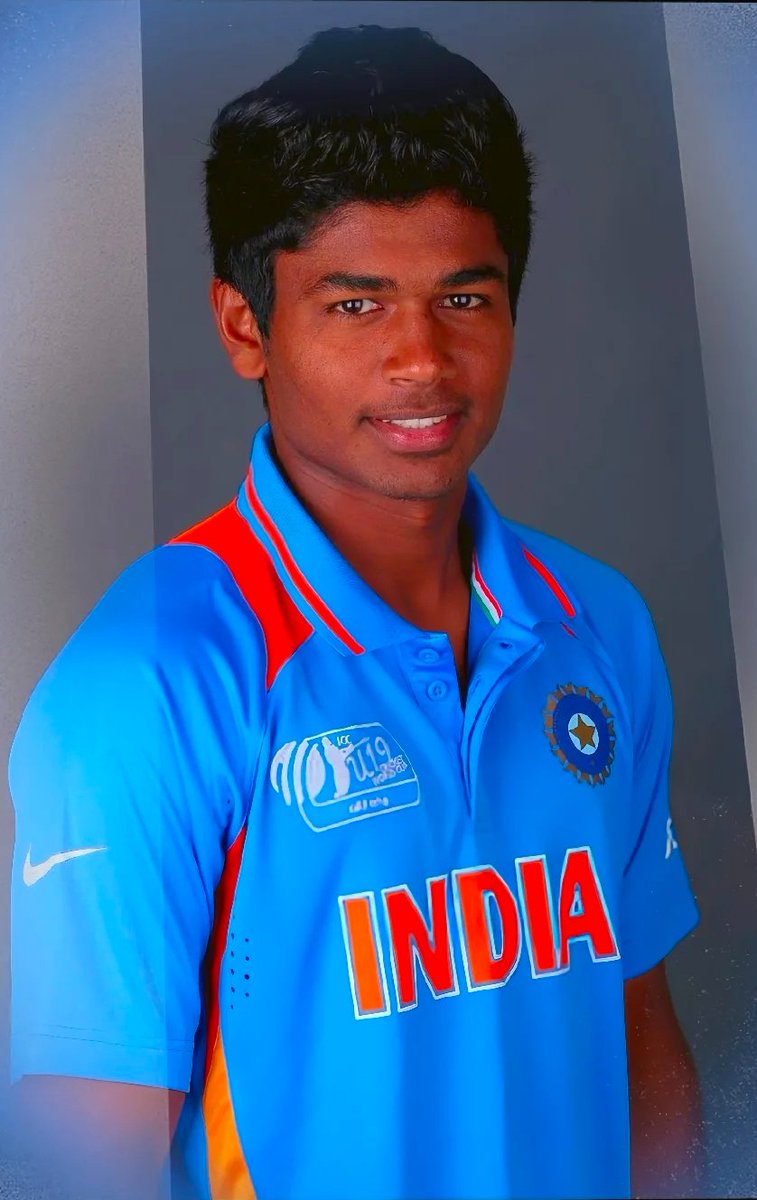
One of our greatest ever, signing off.
Kane Williamson has announced his retirement from international cricket effective immediately.
Head to https://t.co/Pm8RiU65zt to read more.
This is a searing and beautiful piece of writing. Gave me pause and a lot to think about today. Not sure if the author - an IPS officer is on X - but thank you for this https://t.co/gVmF9CRBS8
Just a small anecdote of Sachin Tendulkar’s Irani Trophy debut on his birthday:
November 1989, Wankhede Stadium.
5 selectors sat in the stands with notebooks & doubts, watching a 16 year old boy try to force his way onto a plane to Pakistan. Sachin Tendulkar had already shone through the Ranji season, 583 runs showing he was ready. But the men in charge preferred patience. They wanted one more look.
Irani Trophy gave it to them. Rest of India against Delhi. Tendulkar made 39 in first innings. Promising, but not the hundred that would have made selection automatic. So the 2nd innings became an audition he could not afford to fail.
What happened next was less a cricket match & more a rescue mission. Tendulkar walked in at number 4. Scorecard around him read like a horror story. Not a single teammate managed to reach double figures after he arrived (in fact, no one crossed 6 runs). Wickets fell like dominoes. By the time 9th wicket went down, he was stranded in the 80s, the hundred slipping away with every departing batter.
Enter Gursharan Singh. Rest of India vice captain had fractured his finger in first innings, his right hand wrapped in plaster, his match effectively over. Then Raj Singh Dungarpur walked over & told him to pad up. Not to save the game, but to save the boy’s hundred.
Gursharan walked out one handed. Tendulkar, already heading back to the pavilion assuming the injured man would not bat, stopped in his tracks. Gursharan looked at him & said, “Tera hundred kar ke jayenge.”
Tendulkar smiled, took strike & told Gursharan he would handle Maninder Singh himself. They added 36 runs for last wicket & Sachin scored 103*.
A week later, he was on a flight to Karachi. Selectors had seen enough. Sometimes greatness needs a century. Sometimes it needs a teammate with a broken finger willing to stand in the firing line so the story can continue.
Kaun hain ye log, kahan se aate hain? Urging for a switch in old standards in 2026 is gold anachronism. Chronic ailment with some people but thoda zyada ho raha hai.
Greenwich got the prime meridian crown because the British Crown was ruling navigation then. We can only clutch our pearls and insist Ujjain was robbed and deserves the crown instead. Kohinoor tumahara tha. Unka hai. Calm please. Koi calm dhaam nahin, maze hi maze!
We use time, longitude, maps, directions, even the bloody metre and kilogramme because the British Empire conquered, measured, and declared it standard. The rest of the world adopted it and moved on.
The world is not going to redo every GPS and flight chart to make you feel culturally validated. Standards aren’t about fairness or ancient glory. Greenwich won. Deal with it. You invented the zero and Greenwich is the zero. You invented the decimal but the empire's decimal point stuck. End of story. Yo duniya hai pradhan, yun hi chaale hai.
Minister saab should do something useful and doable like gaming UGC guidelines and preventing paper leaks, instead of leaking ideas past their expiry dates. Huzoor aate aate bahut der kar di.
Second super over. SA get 24. Afg get a dot and a wicket in the first two balls & then Gurbaz hits 3 6s. A wide, and now Gurbaz can tie again with a four, and win with a 6. And he's caught at point.
One of the most amazing matches ever in World Cup history, certainly the closest!
A Kanchipuram Sari is not mere fabric.
It is a language with grammar, a financial instrument you can wear, a biological object dyed with chemistry, & a cultural archive woven by history & hand.
For over a millennium, it functioned as liquid wealth. In desperate times, the silk could be burned away, leaving behind real silver & gold.
A garment that protected its wearer, even in fire.
Today, that loom meets AI, microbes, & cryptography — systems trying to relearn lost grammar, grow colour without poisoning land, & turn trust from promise into proof.
What happens when a thousand-year-old loom meets 21st century’s thinking machines?
Issue 3: Kanchipuram Saris & Thinking Machines, written by Nivedita, designed & built by @AltCarbonIndia
https://t.co/VI6AwcmAWs
No analysis of #Iran is complete if you reduce what's unfolding in the country into a simplistic binary of an oppressive regime vs a freedom-loving people. That's a liberal trap. I have serious disagreements with the character of the Iranian state (which I have with a lot of regimes), but that doesn't stop me from trying to understand the broader picture. Iran has lived under crippling sanctions for decades--and those who imposed the sanctions wanted to make everyday life miserable in the hope that the public would rise against the regime which would open a window for the liberal interventionists. Why is Iran under sanctions? Mainly because of its nuclear programme. Iran exists in a very hostile region. Just look at the map -- Iran is the only Persian Gulf country that doesn't host an American military base. It sits in a region where Israel is the only nuclear power. The mistake Iran did -- as I have always argued -- was that it did not make the bomb. They thought they could leverage a nuclear threshold status for both security and economic relief. That was a blunder in a world of jungle. Tehran signed the nuclear deal in 2015. Trump demolished it in 2018 and reimposed sanctions. Europe just follows the line given from Washington.
Despite the hostility in the region, Iran enjoyed relative deterrence due its so-called axis of resistance. The US first killed Soleimani, one of the architects of the axis. And then Israel, post-Oct 7, with American help, chipped away at the axis. Because for both Israel and the US, Iran is the only revisionist power in West Asia. You take Syria out, Iran would be weakened. And you take Iran out, the whole region could be redrawn. Look at what happened. Hamas was pushed into the ruins of Gaza. Hezbollah has been degraded. Houthis are fighting their own battles. And the Syrian regime, Iran's only state ally in the region, collapsed. Russia is stuck in Ukraine. China remains too self-occupied. Iran suddenly lay vulnerable to external threats. And then the Israelis bombed Iran in June. Trump happily joined in.
Europe followed suit in the subsequent months by reimposing snapback sanctions--because Iran violated a deal that Trump killed in 2018! In the middle of all this, Iran had elected a reformist as its president in an election in which more than 30 million people voted. But the government’s hands were tied when it came to economic issues because of the sanctions. And there is genuine public resentment which was what triggered the shopkeepers' protests on January 1. But on Jan 2, after meeting Netanyahu in Florida, Trump said he was “locked and loaded”. Mossad started amplifying anti-regime messages in Farsi via social media. It even posted on X that “we are with you in the field” (I wrote here on X on the day the US attacked Venezuela and abducted President Maduro that Iran was next).
The protests started turning violent. Reza Pahlavi, son of the deposed monarch who is living in the US, suddenly emerged as the “Crown Prince”. Someone who hasn’t set foot in Iran for over four decades, emerged in western TV and press as the rightful voice of Iran’s opposition and he called for urgent American bombing of Iran! Garbage propaganda channels such as Iran International unleashed a firestorm of misinformation. Reports about the situation on the ground came from “rights groups” based in Oslo and Washington. The liberal mills, which were conspicuously silent during Israel’s genocide of Palestinians for two years, started firing on all cylinders. Iran, they said, wants freedom through American and Israeli bombings.
And now Trump is asking the “protesters” to take over institutions. #IranProtests
शुक्रिया @TheLallantop
पहचान, सबक और हौसले के लिए.
और शुभकामनाएँ भविष्य के लिए.
अपना साथ यहाँ समाप्त होता है.
अध्ययन अवकाश और फिर आगे के संकल्प की बात करूँगा.
आप सबने भी बहुत सिखाया. शुक्रिया.
I read through opinions of and @deepigoyal and @Sbikh on Gig workers. More interestingly, I read through @Nixxin view. It is very brave of him to express himself and take a stand on the matter.
Zomato is a listed company. All its financials are out in the open. Despite paying ‘low salaries’, Quick commerce ‘Blinkit’ still lost 929 crores in 2025 and 156 crores in Q2 of 2026. It has a long journey ahead to become viable. They have to control costs while increasing margins. Else, the business model dies taking along with lacs of jobs.
We are silent on the mature ITeS services companies like @Infosys, @Wipro , @TCS which earn billions in profits by employing IT coolies while freezing the pay at 30K a month (Source @Careers360) for about 20 years. And most of us have been partaking in this abuse.
We should all know that most gig workers earn more than a fresher BTech earns even after spending 20 lacs and 4 years of their life. The ITeS companies multiplied their profits 10X, employee count 3X while salary bill stagnated.
However, we rage and protest when a young loss making startup creates jobs and pays to market conditions. Because we see the gig workers every day. Transact every day. Engage every day. Face them yesterday. And we compare our privilege to their compulsions.That is possibly ‘guilt’ as Depinder says.
We also forget how they responded during Covid. Restaurants expanded. Cloud kitchens were created. Millions of workers retained their jobs despite a lockdown as they saved the entire restaurant businesses from an imminent collapse. Companies like @Paytm by @vijayshekhar ensured that you don’t need to touch the currency physically while still transact buying your vegetables.
Many studies have shown that when a demographically targeted group benefit raises the cost of an enterprise, employers respond by hiring less. When India expanded the maternity heave from 12 weeks to 26 weeks, research showed a 4.6% drop in newly married woman gaining employment. A similar thing happened when minimum wages were raised. The contractual employees is a direct consequence of regulating salaries.
I always had a problem when those who got through the gate raise the cost so high that it closes the gates on others. Any forced increase will lead to reduced opportunities for others. We aren’t creating enough jobs. Government is failing the youth. The question before India is more jobs or more money for those who already have jobs?
I have this pet peeve against all Entrepreneurs who were beneficiaries of public education system at low or no cost but deride it only wanting to kill it. The current EdTech companies offering STEM education thrive on deriding public education and created a business model on the vulnerability of India to find a decent office job. We are all a part of the charade.
We all pass the buck when confronted with uneasy questions. Why don’t we voluntarily add a decent tip because our heart beats for gig workers? How many of us are willing to pay a higher delivery charge if it has to be real quick? How many pay the minimum wages to their domestic workers? How many pay overtime to their drivers?
Personally, I am against 10 minute delivery. No one dies if an order is delivered in 20 minutes. The quick commerce that monetises the urge and urgency of fickle and shallow people must stop. Charge a premium. Increase delivery charges. Offer zero discounts if it is immediate. Make people pay.
But at the same time, we need to look inward. Our urgency. We need to strike a balance between the companies, the business model, the gig workers and what we as consumers are willing to pay.
Stop confusing the market cap of Zomato with its profits! If the business isn’t profitable, everything evaporates. Let the business models succeed, mature and we can have a better debate about job creation vs worker exploitation. For now, ask Infosys, TCS, Wipro etc, as to why the fresher salary is stuck at 3.5 lacs for 20 years..
Long post: I'm in the thick of multiple (sometimes heated) discussions on Whatsapp groups about Zomato & gig economy workers, and I'm fed up of repeating points, so I'll put all my arguments here. And maybe burn a few bridges in the process...
1. Disclosure: I am an Eternal and Info Edge shareholder, and have been for a few years. It has been a good bet for me, and the things I'm saying are despite having a vested interest in the success of these companies.
2. Why are they speaking up now? It's rare to see Deepinder and Sanjeev Bikhchandani speak with such passion about this issue, despite the fact that the issues that Raghav Chadha is raising are NOT new. We've heard them over the years from other politicians, and from multiple gig economy associations (esp Telangana). Issues are not new, strikes are not new.
What is new here is the impact on the stock price that the strike has had, and the political support that the strike has received from Raghav Chadha. The fear that this might blow up into something bigger from a regulatory standpoint is real, and that will have a tangible impact on the bottomline. Eternal/Zomato has already lost a significant amount of market value (12.89% in 3 months, 5.47% in a month) and is at a crazy PE of 1400+, which means that if investors get scared, it can plummet. The stock price is fragile.
At that scale, Info Edge's 12.38% stake in Zomato is impacted and can be impacted by this. Bring in regulation and it there's a clear business impact because Zomato operates on fine margins, and tightly controls gig worker and restaurant payouts. Can the BJP say it won't support gig economy workers? Politically, it's a no win situation for Zomato and Info Edge, and they're on their own. And it's their money at stake.
Update: it was point out to me, and I agree... correlation is not causation.
3. How much do they pay gig economy workers? Only Eternal can give clear data, but it is true that it's a fine margin. Eternal has granular control over its contribution margins, and exercises multiple levers (increasing average order value, increasing restaurant revenue, reducing delivery payouts) to achieve profitability and increase profits. It's an incredibly well run business. A chart they published in 2024 which explained how they control margins made me choose to invest in them.
Two things:
3a. For every anecdote about a delivery worker struggling, Eternal can you tell you stories of success. They probably will.
3b. Averages do not do justice here, neither does the median situation. I'll explain this later.
4. Gig economy workers have very little negotiating power: It's a buyers market. I've said this many times before:
Platforms and aggregators are in the business of increasing fragmentation and monetizing aggregation, such that no single player has sufficient individual negotiating power. Delivery workers have no choice but to unionise and strike, and then it's a game of blink (for the lack of a better word).
5. Our country's burgeoning employment problem (and poorly run education system) is at fault here: we're producing poorly skilled and educated masses, and not enough employment opportunities, so people have little choice. Social upliftment is difficult. We're seeing a rise in personal debt used for consumption, not assets. Last year, FMCG company struggled with rural sales, and I'm not sure how much of their sales this year has been front-loaded and how much is demand driven. Income inequality is increasing rapidly. We're largely mirroring South Korea's experience with debt ridden chaebols, and a largely successful startup ecosystem to attract investment in the country, so no one will mess with this (unless you're running gambling and calling it gaming). But I digress...No one is going to escape poverty (not destitution but poverty) by becoming a gig economy worker. But do they have choice? There's enough supply and demand is controlled by a handful of large "employers" in Zomato, Swiggy, Zepto, Uber, Ola, Rapido and the ecommerce aggregators that also do deliveries.
6. Is this employment: Of course, this is not employment. All labour platforms learned this from Uber: delivery workers are not employees. There's no minimum wage, there's no guaranteed social security, there's very little accountability of the type that labour laws provide for. It is labour arbitrage by creating a construct where delivery workers are not employees, they're not "entrepreneurs". It's a halfway house.
7. There's also massive externalisation of cost: vehicles, fuel, safety. Add those costs to the P&L of these companies and they probably won't survive. They know this. Government has actually failed by allowing the halfway house of employment-entrepreneurship as a construct. But government has failed to provide adequate education and employment too, so they can't kill this. Not easy for them either.
8. But we don't want unions: They're not employees so can they even unionise? I don't think so. They have unions and associations, but to be honest, I don't want communism and unionism. I'm a capitalist, but when there's market failure, regulation needs to step in for capitalism to succeed sustainably. At least that's how I see "rational self interest" in objectivism.
But I digress again: there appears to be market failure on the supply side, and it is given power imbalance, the complete control that platforms have, and the risk of exploitation (I've published recordings of Uber and Ola drivers a decade ago complaining to the co that because they reduced commissions, they're unable to pay loans and will commit suicide), there needs to be regulation to address this power imbalance in the industry itself.
Zomato can give you data on how the average delivery worker fares, or even the median. However, the role of regulation here to ensure that there's a minimum threshold of income such that there isn't exploitation. The real question is: will the platforms be able to survive that, given that, at best, their profitability is on precarious ground?
9. Shouldn't competition solve for this? It should but network effects are already at play, with limited platforms. There is demand side capture with limited players, and with each platform looking to reduce costs, move to profitability, with Zepto looking to list, Swiggy having recently listed, this is now going to be more about maximising wealth for founders and investors. While there isn't cartelisation, and there is competition between them, I'm not sure if there is competition on the supply side. No one is trying to pull delivery workers from the other, is there?
Not everyone can pull off a Rapido, and ONDC isn't really working out, is it?
10. Lastly, I usually avoid commenting on people, but something triggered me here: I see Deepinder's tweet about how the delivery business has exposed us to poverty in our cities as deflection, and frankly it reads like AI slop. It just feels artificial.
We see poverty every day in our cities, on our roads, and many people employ those who who live in slums, bastis and cramped colonies with illegal construction and poor sanitation. It's not that we haven't used the Delhi metro or local trains in Mumbai. Deepinder isn't even acknowledging the problem that is being raised. It reads like deflection.
Sanjeev's comment on Raghav, talking about where he got married and who he got married to is despicable trash talk, and unbecoming of someone like Sanjeev. He's better than that. It's lazy ad-hominem and he's smarter than that. You don't need to be poor to have sympathy for the poor, or try to help them. There needs to be some semblance of humility here, especially when you have so much power.
Sure, Raghav is a politician, but politicians have a great sense of what can be a compelling issue for them to raise, but the fact that a politician is raising it shouldn't deflect us from the problem at hand. It's also true that the AAP government was in power in Delhi for 12 years and they didn't do anything substantive for gig economy workers in Delhi. What have they done in Punjab?
In one group someone has asked whether there is another business behind getting this issue raised, as in is anyone targeting Zomato... again, that doesn't change the fact that the issue is real, and has been real or raised for over a decade, and there is governance failure, and market failure on the supply side.
This needs to be solved, and deflecting is going to just kick the ball down the road. But then I guess that's what will happen here again.
हिंदी के महान कवि विनोद कुमार शुक्ल का निधन। अपने पीछे छोड़ गए शब्दों और कविताओं की खूबसूरत दुनिया को छोड़कर।
उनकी मेरी प्रिय कविता -
“सबको अपने हिस्से की भूख मिलती है, सबको अपने हिस्से का भात नहीं मिलता
While tweeting will spread awareness, only thing that will help is telling / tagging your MPs that you aren't okay with this.
They can raise the issue internally. The only solution to this problem is political, & as citizens we should let our elected representatives know.