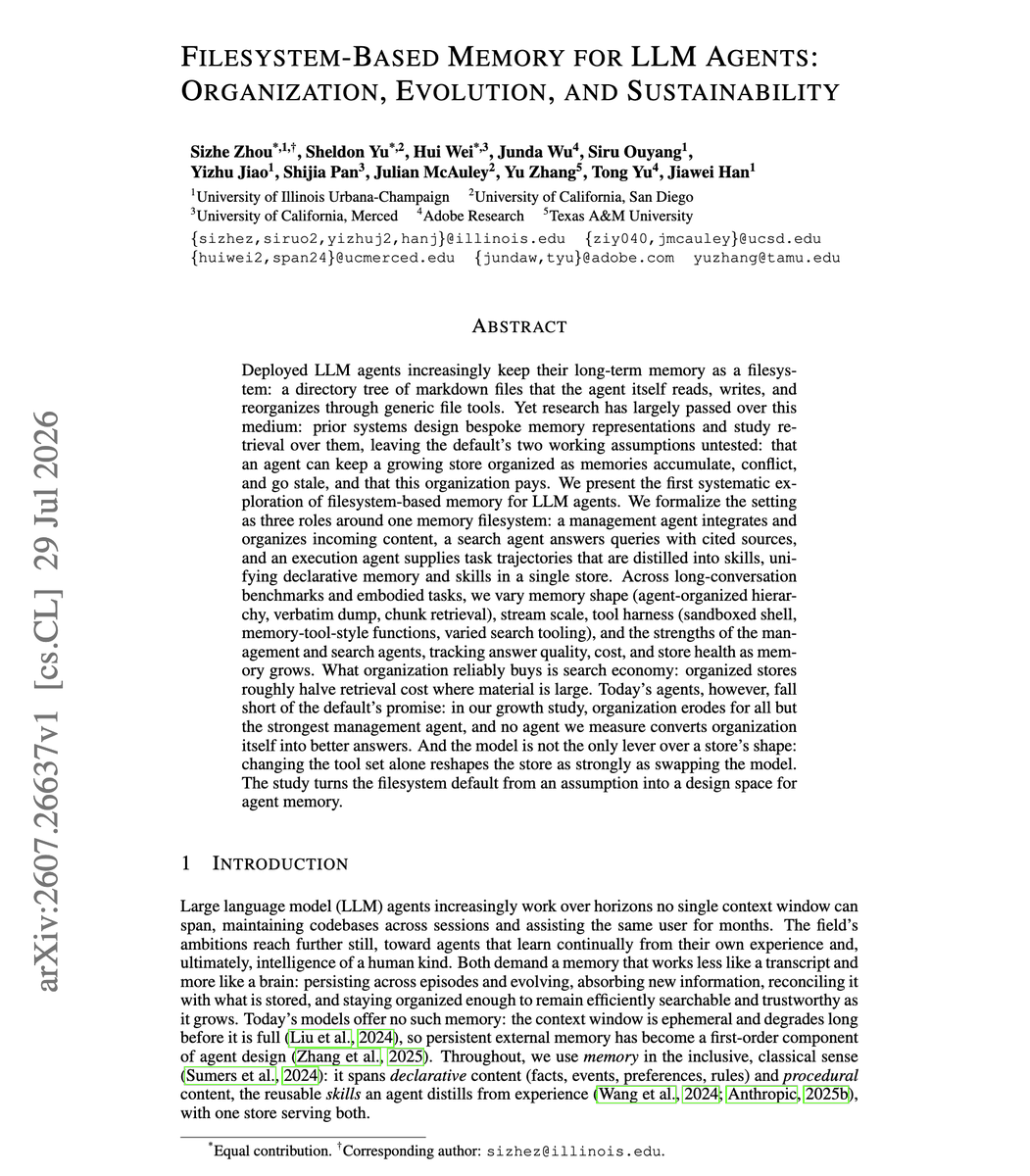
Finally a good paper testing if file-system based memory for LLM agents is worth it.
First, what does this look like?
Deployed agents keep long-term memory as a folder of markdown files they read and reorganize with ordinary file tools.
Two assumptions had never been checked. That an agent can keep a growing store organized as memories accumulate, conflict, and go stale. And whether the organization pays for itself.
Organized stores roughly halve retrieval cost when the material is large. No agent in the study converted organization into better answers, and in the growth study the store degraded for every management agent except the strongest one.
Changing the tool set alone reshapes the memory store as strongly as swapping the model.
Paper: https://t.co/WC6EtdQBfB
Track more trending AI papers in our academy: https://t.co/LRnpZN7L4c
THIS IS INSTITUTIONAL FAILURE AT ITS PEAK 😳🔥
SONAL: You hacked into CBSE’s answer sheet system and could change marks?
STUDENT: Yes. I could log in as any examiner and put marks.
SONAL: How long did it take?
STUDENT ⚡️: Around 30 minutes. One of the easiest hacks of my life.
SONAL: You warned CBSE?
STUDENT ☹️: Yes. No reply.
17 lakh students careers put on bet by negligence 💥
I read all 277 pages of SpaceX's IPO filing so you don't have to.
Losses up 700%. Revenue decelerating. 107x price-to-sales multiple.
It's a trainwreck. Full breakdown below 👇
🦀 The Rust frontend is officially merged into vLLM!
As GPUs get faster, the frontend has become a real share of CPU time. The new Rust frontend is a drop-in alternative to the Python API server — same engine, same ZMQ boundary. Opt in with VLLM_USE_RUST_FRONTEND=1.
Early numbers: on a preprocess-heavy workload, ~837 req/s vs ~162 req/s for default Python — ~5x in a single process.
A few design choices we're excited about:
• Layered crates with clear boundaries
• Stream-native pipeline — non-streaming for free
• Builds on stable Rust
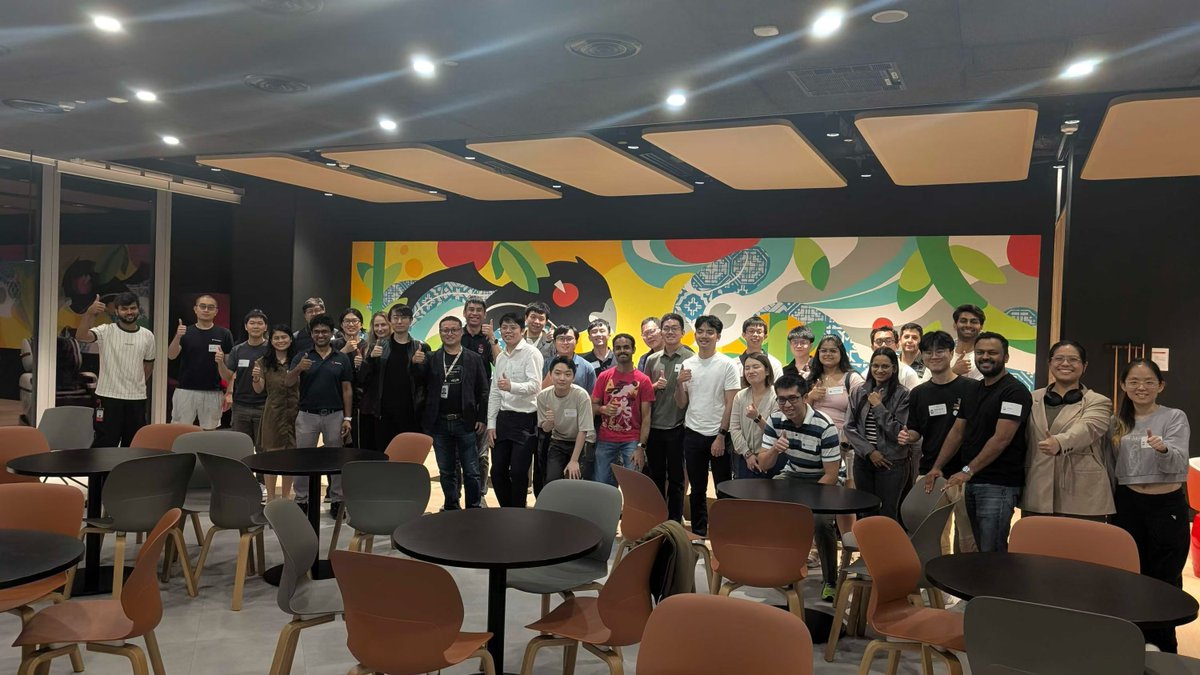
Huge thanks to @BugenZhao from @inferact for introducing the work at @PyTorch Meetup Singapore.
https://t.co/Tw8PoIjbH9
A new study from IISc & collaborators unveils a quantum-inspired neuromorphic computer built on a CMOS substrate that searches complex energy landscapes the way nature does, opening a new path toward solving some of the hardest optimisation problems.
🔗: https://t.co/Ch0G9FneTy
🚨 Google DeepMind CEO Sir Demis Hassabis:
“Today’s systems, are nowhere near [AGI]. Doesn’t matter how many Erdős problems you solve… I think it’s far, far from what a true invention or someone like a Ramanujan would have been able to do”
it’s over for the Erdős hype
These are Dynkin diagrams!
Symmetries are the fundamental structure of the universe.
There are 3 kinds of known symmetries:
discrete, continuous, and mixed/quantum
Mathematicians defined objects to study them:
Groups, Lie Algebras, Hopf Algebras
And we got periodic tables:
Very satisfying to see classical information theory take center stage again. The recent wave of efforts to mitigate #LLM hardware bottlenecks is a massive validation. #TurboQuant has thrown Source Coding/Rate Distortion Theory back into the core systems conversation. #AI
Introducing SWE-ZERO-12M-trajectories: the largest agentic trace dataset in the open, 5.7x larger than the previous largest.
112B tokens · 12M trajectories · 122K PRs · 3K repos · 16 languages
https://t.co/aVqCc4J5tr
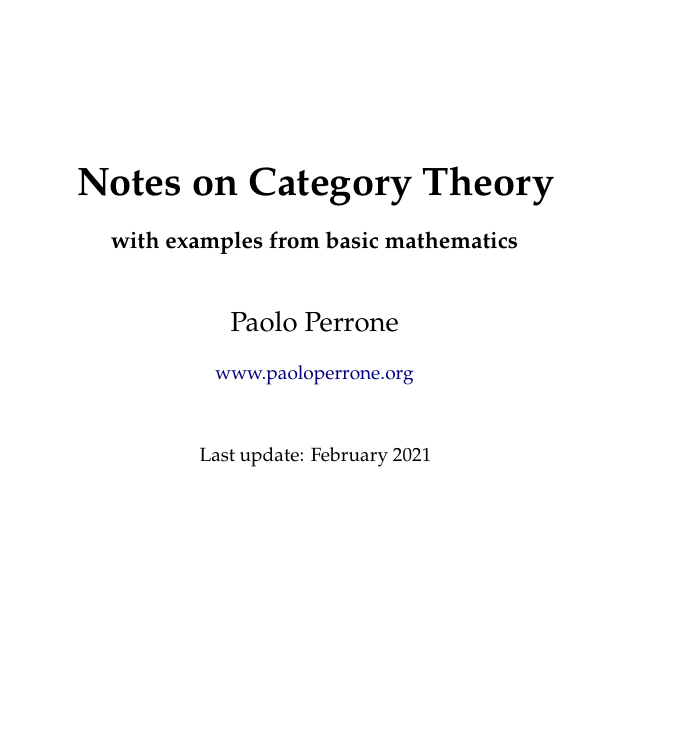
If you've been struggling learning category theory, you might want to check out Paolo Perrone's 'Notes on Category theory: with examples from basic mathematics' available publicly on arXiv.
These notes were produced during a class given to a diverse set of scientists (including chemists and physicists), with knowledge in linear algebra being the only subject assumed to be known!
🔗👇
We’re reimagining a 50-year-old interface - the mouse pointer - with AI. 🖱️
These experimental demos show how people can intuitively direct Gemini on their screens using motion, speech, and natural shorthand to get things done 🧵
Some guy just used AI to insert himself into Game of Thrones and "fix" the entire series.
This is exactly why GPUs cost $5,000 in 2026.
And honestly? Worth every penny😂
Higher-Order Linear Attention Models Are RNNs/SSMs:
Generalizing State-Space Duality to higher-order linear attention.
It’s getting wild.
https://t.co/vUBN3nDFMy