1/12
💀💀💀No miris aquest fil si no et vols cabrejar.👀👀👀
Perquè us presentem la nova eina del @Menjòmetre. Consultable per tothom. El hub de política.
La que els polítics no voldran que utilitzis. Ni que coneguis. Perquè fent-ho, s’entenen moltes coses que mai comprenem de la política.
És una eina que, amb dades oficials, extreu tots els càrrecs polítics de cadascún dels partits del Parlament. Tots els càrrecs i tots els noms. I cognoms. Per data. Amb el màxim detall.
Vols conèixer curiositats molt curioses? No és trivial. Segueix-nos.👇
spain needs a different growth model.
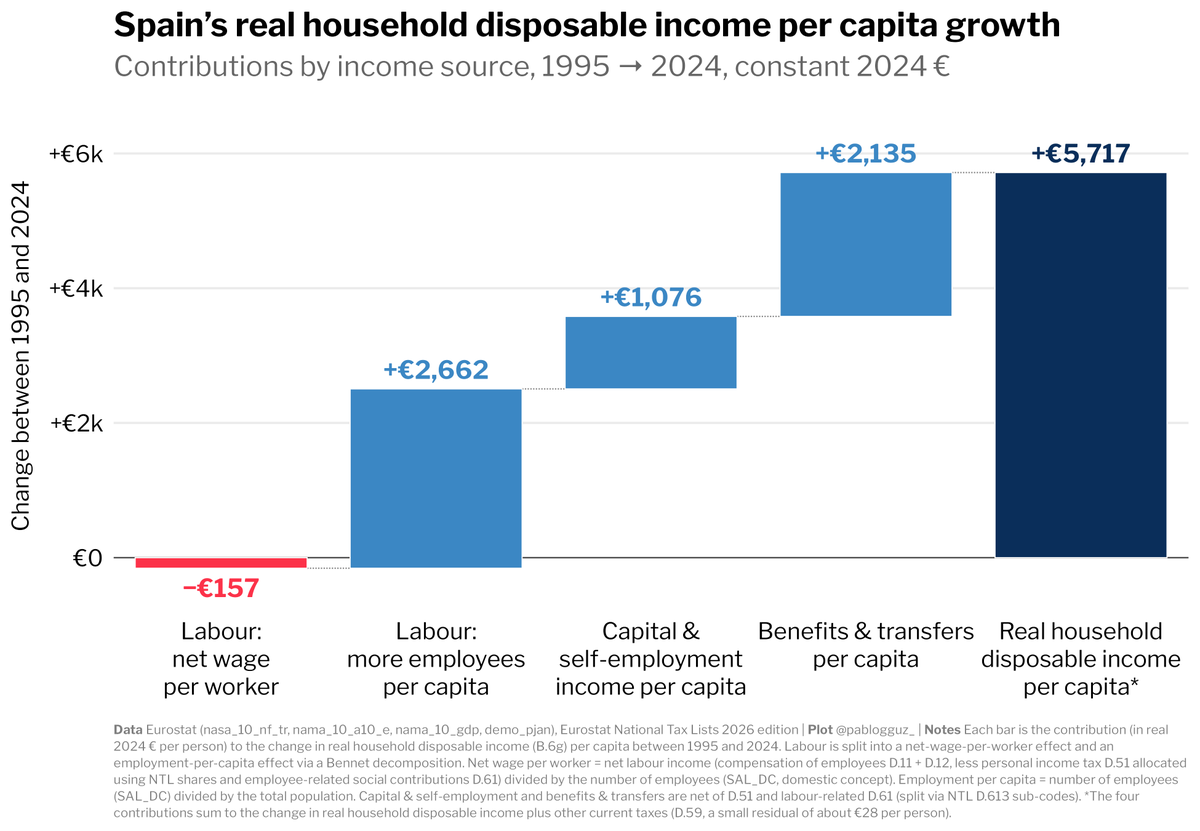
in the last 30 years, real household disposable income per capita has grown by roughly 38% in real terms (around €5.7k per person at 2024 prices). this can be decomposed into growth in net labour income per capita (+16.7 pp), cash benefits such as pensions (+14.2 pp), and capital and self-employment income per capita (+7.2 pp).
however, the labour contribution came entirely from the extensive margin (pulling more people into employment) rather than from higher real wages per worker. in fact, the average spanish employee takes home slightly less in real terms today than in 1995!
going forward, this model is unlikely to keep working. the extensive-margin gains came from two channels, both of which leaned on favourable conditions that are (most likely) not going to repeat. the first is that the working-age population grew faster than the total population during the 90s and 2000s, mainly because of the favourable age structure left behind by spain's baby boom (the large cohorts born in the 1960s and 1970s moved into prime working age while the cohorts behind them were smaller), but also because of immigration waves that were disproportionately working-age. this is what demographers often call a demographic dividend, which lifts the employment-to-population ratio purely by composition (even with no change in how much any given working-age person works). the second channel is that, within the working-age population, the employment rate rose substantially, from below 50% in the mid-1990s to around two-thirds today.
of course, none of this is bad, but there is only so much further either channel can go. the demographic dividend is already reversing: the baby boom cohorts are now moving into retirement, the cohorts replacing them are much smaller, and ageing will push the working-age share of the population down. the employment rate itself is approaching a natural ceiling -- there is still a gap relative to the average advanced european economy but it is not large, and closing it would only buy spain a few more years of compositional growth.
immigration, often raised as the way out, cannot realistically offset the demographic drag ahead. the scale of net inflows required to offset ageing on a sustained basis is multiples of any plausible figure consistent with social and political constraints in european countries, and even if such flows materialised, immigrants themselves age and accrue the same retirement pension entitlements as natives. in other words, sustaining the current demographic structure would require a permanent inflow large enough to offset both the ageing of the native population and that of past migrant cohorts, indefinitely. fertility, however, is now falling across virtually every region of the world, and the global working-age population is projected to peak within a few decades and then decline. there is simply no migrant pool waiting to be drawn from on the scale spain would need.
this is also why cash benefits cannot keep doing what they have been doing. it is worth being explicit about why retirement pensions, specifically, are at the centre of all this. spain runs a defined-benefit, pay-as-you-go public pension system: pensions are not the actuarial outcome of what each worker contributed, but a function of years contributed and final wages, paid out of the contributions of those currently working. the current system promises retirees an internal rate of return on their contributions that is significantly higher than anything the payments into the system can plausibly grow at. and because the payments into the system are, mechanically, the number of contributors times the average wage on which they contribute, a gap of that kind is sustainable only as long as the contributing base keeps expanding fast enough relative to the receiving one. the same demographic dynamics that enabled the extensive-margin growth of the last three decades are what allowed this to (sort of) work, but these are now reversing. on top of that, the system already runs a structural deficit: only about three-quarters of contributory pension expenditure is covered by social contributions, and the rest is financed out of general taxation paid by the entire population.
and pensions are not an independent source of household income. they are funded by taxes, and taxes have to be levied on income generated somewhere in the economy. in spain, as in any developed country, that income is overwhelmingly the wage bill: personal income tax and social contributions on labour. so the real question is whether labour income per worker is growing.
gross compensation per worker (including social security contributions) has in fact risen slightly in real terms since 1995, by around 5%. but the entire gain (and a little more) has been absorbed by a widening fiscal wedge, so that the take-home wage is marginally lower today than it was thirty years ago. in other words, the modest productivity gains the spanish economy has managed to deliver have not reached workers. they have been routed, in their entirety, into financing the rising weight of transfers.
one could argue, of course, that if wages eventually start growing, the additional income can simply be taxed away to keep financing rising benefits. but that is just another way of saying that the take-home pay of the average spanish worker is supposed to stay flat for the foreseeable future, and that whatever productivity gains eventually arrive will be routed straight through to retirees. i will leave it to the reader to judge what kind of social contract that describes.
thirty years of stagnant wages is already a long experiment in that direction. either policymakers start taking productivity growth seriously or the bill comes due on a model that was always going to run out of room.
1/11
FIL IMPORTANT. UN MÉS.
Focus és una de les empreses culturals més potents de Barcelona.
Teatres. Concerts. Espectacles. La seva agenda és la agenda cultural de la ciutat.
I quan una empresa té tanta presència pública, el Menjòmetre hi va a mirar.
Sempre. 👇
‼️Cada dia flipem més. Si recordeu aquest cas (contracte de publi per 700k amb un sol licitador), ara hem trobat que el propietari de l’agència que guanya…tatxan…és assessor de comunicació de l’Ajuntament de @jaumecollboni. Això només pot ser la punta de la punteta de l’iceberg
1/12 🚨 FIL: Com més de 1,5 milions d'euros públics van parar a una associació que acaba de fitxar l'ex-regidora que els va aprovar.
El cas de porta giratòria perfecte.
Investigació amb @menjometre 🐕🦺. Seguiu-nos
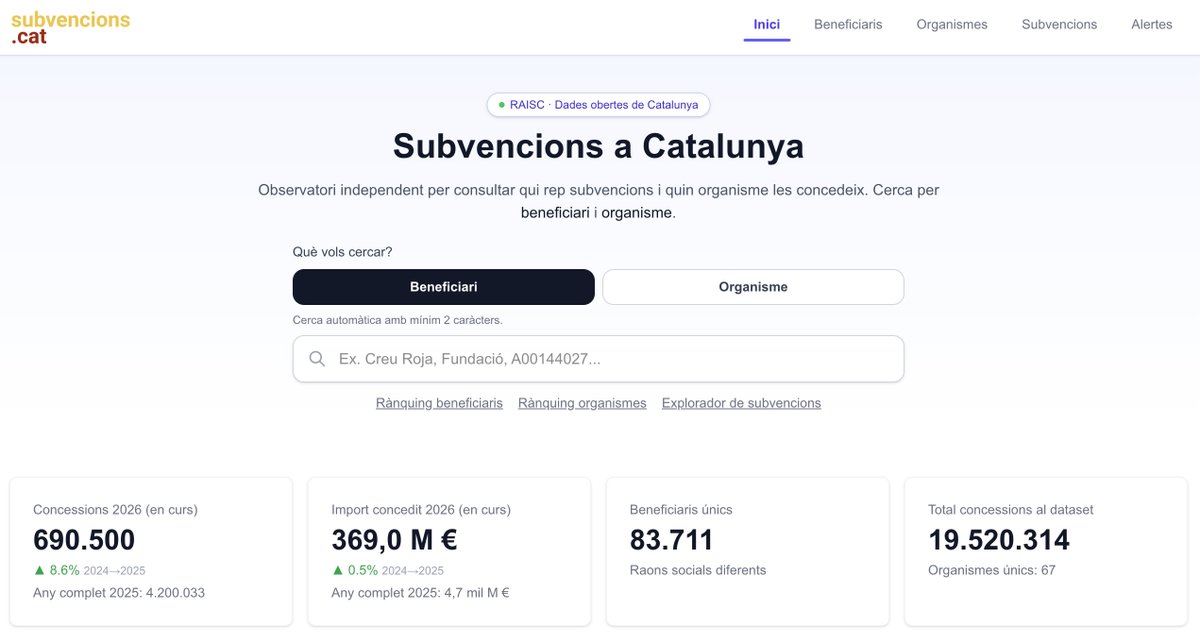
Confirmo el que m'ha semblat a primer cop d'ull. Les noves dades de concessions publicades tenen aproximadament 1 milió menys de registres que ahir. Adjunto captura de pantalla del dia de publicació de subvencions .cat vs avui:
06/03/26: 20.813.398 (amb 482 organismes únics)
Avui: 19.520.314 registres (amb 67 organismes únics)
El gruix de la despesa segueix sent present, ara no se superen els 5.000M€, mentre que abans sí.
Estoy muy harto de todo, la verdad.
Pero no voy a cejar en una cosa: pelear todas y cada una de las ñapas y corruptelas del Estado que yo pille.
Me habéis dado un altavoz enorme: más de 130 000 seguidores, premios, presencia en diarios, tele, conferencias…
Mientras viva, utilizaré esta influencia (¡con todas mis fuerzas!) para provocar cambios en lo público. Sin política. Sin gritar. Con el coco, no con las tripas.
Si queréis ayudarme a seguir, haceos patronos míos en Patreon, por favor. Es de lo que (sobre)vivo, con perdón. Y gracias a ello soy libre y no dependo de nada ni nadie.
Gracias y disculpad.
https://t.co/gpzV4tZYpI
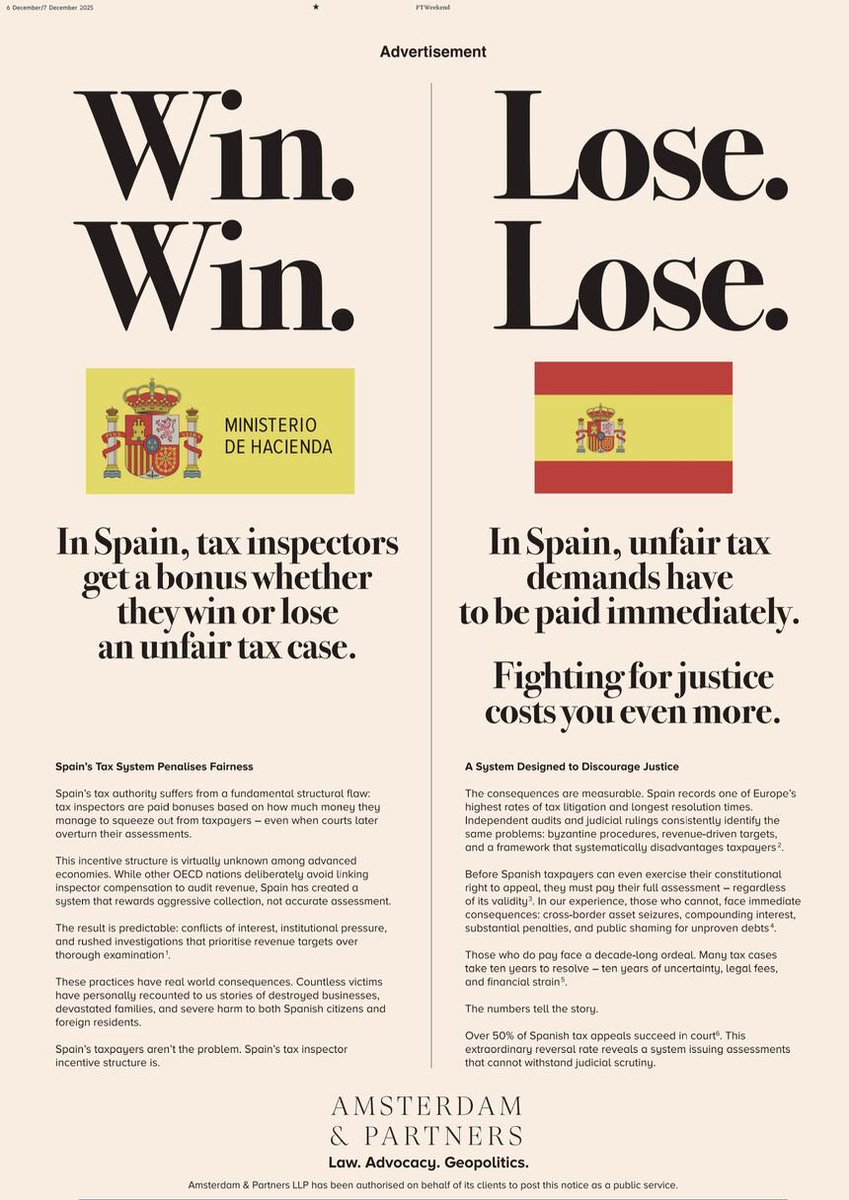
Esto se está publicando en medios internacionales y viralizando gracias Amsterdam & Partners.
Y con razón. Explica buena parte de la pobreza en Expaña.
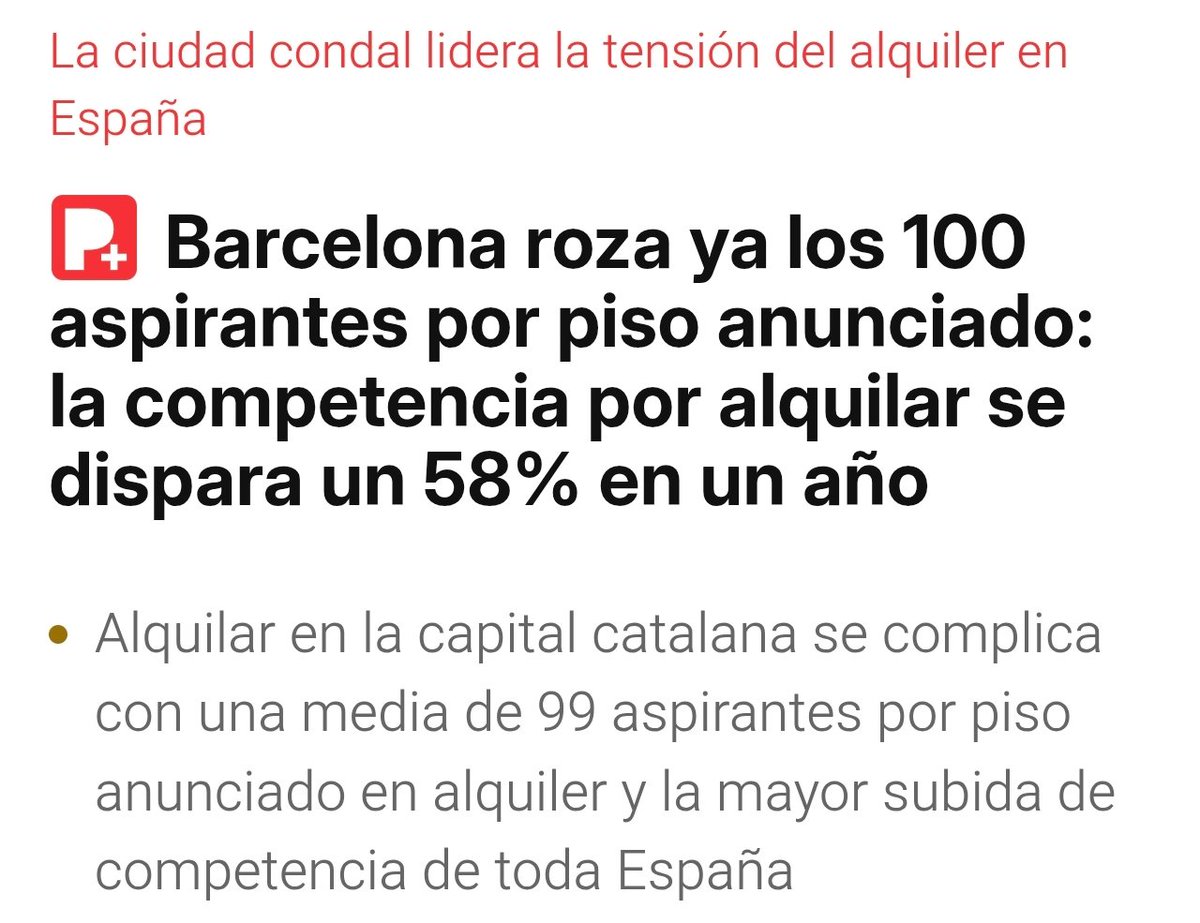
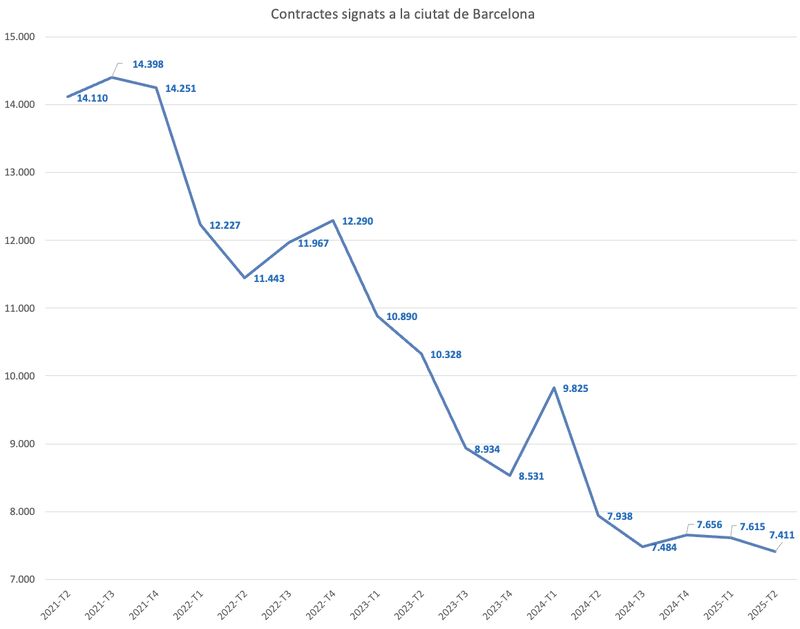
La mala política ha destruït el lloguer a Barcelona. D'un mercat car a un mercat inexistent. Un remei pitjor que la malaltia. I es veu que ho volen seguir "arreglant"...
🔴 𝗡 𝗢 𝗧 𝗔 𝗗 𝗘 𝗣 𝗥 𝗘 𝗡 𝗦 𝗔 𝗢 𝗙 𝗜 𝗖 𝗜 𝗔 𝗟 🔴
🚀 El Observatorio de los Observatorios Públicos de España rompe la barrera de los 400 observatorios y se consolida como observatorio de referencia de los observatorios de referencia.
A las 21:15 de hoy (hora peninsular española y del BOE), el Observatorio de los Observatorios Públicos de España ha alcanzado la cifra histórica de 4️⃣3️⃣1️⃣ observatorios catalogados, superando así el número de cosas smart financiadas por @redpuntoes.
«Cada observatorio es un acto de fe en la capacidad de un político para convocar humanos a reunirse y mecanografiar informes que seguramente nadie leerá», ha declarado Jaime Gómez-Obregón, presidente vitalicio, interino y no remunerado del Observatorio de los Observatorios.
El hito ha sido posible gracias a la colaboración de @gsusmad en GitHub, distinguido observador de observatorios, quien ha catalogado más de una treintena con el entusiasmo propio de un concejal inaugurando un marketplace municipal.¹ 🚀
«Queremos publicar nuestra primera Memoria Oficial con Word 2010, como $DEITY manda», ha declarado a los medios Gómez-Obregón. «Pero aún no han llegado los fondos prometidos por la ministra. Si esto sigue así, tendremos que hacerla en Markdown», ha apostillado.
El Observatorio de los Observatorios desea agradecer profundamente a todos los ciudadanos que han contribuido de manera altruista a identificar observatorios. Y muy especialmente a los políticos que los crean, sin quienes estaríamos ahora haciendo un curso de Dreamweaver y Flash del SEPE.
Firmado,
Jaime Gómez-Obregón
Presidente del Observatorio de los Observatorios Públicos de España.
___
¹ @gsusmad ha enviado una pull request ejemplar con más de 30 observatorios nuevos. Si tú también aspiras a la gloria, echa un vistazo al proyecto en GitHub² y apadrina alguno de los issues abiertos.
² Véase https://t.co/EuNwUqDNc2. Y sí, es verdad: estás leyendo una nota al pie de una nota al pie en un tuit. 🙃
https://t.co/5C3s3syJpv
En España los partidos han encontrado una fórmula mágica para financiarse:
👉 Crear altos cargos y asesores a discreción
👉 Obligarles a pagar un “impuesto” mensual al partido
Resultado: millones de € cada año. Vamos con datos🧵