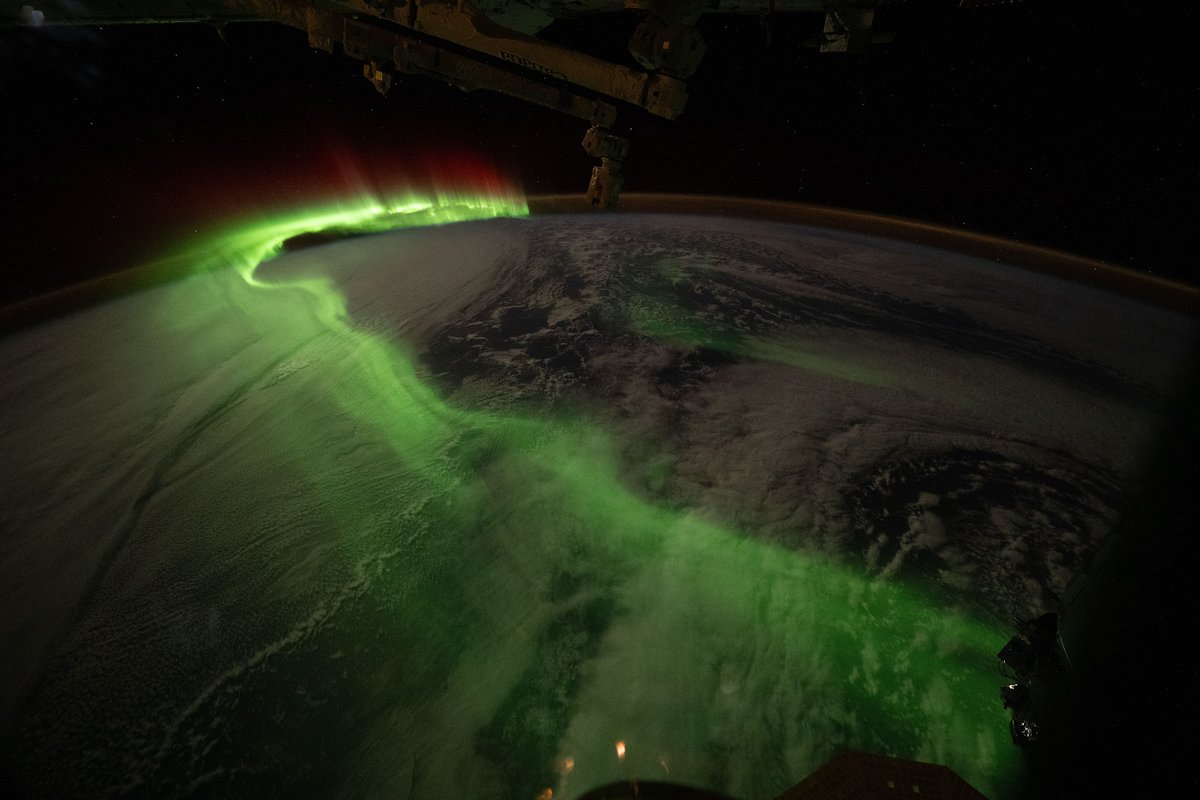
Jour 130, orbite 2017 – La variété des recherches menées à bord de la Station spatiale internationale est impressionnante – pour preuve ce timelapse de l’installation de l’expérience Laplace, à la croisée de la science planétaire et de l’astrophysique. Au 18e siècle, le scientifique français Pierre-Simon Laplace postulait que les planètes 🪐 naissent d’un nuage de gaz et de poussière. Aujourd’hui, l’expérience qui porte son nom vise à reproduire ce processus… et à l’observer en direct !
Installée dans le dispositif commercial ICE Cubes Facility du module Columbus, Laplace cherche à comprendre comment de simples grains de poussière finissent par former les premières briques d’une planète. L’expérience propose donc d’observer, jusqu’à leur aggrégation, des nuages de poussière en suspension dans une fine atmosphère gazeuse – un phénomène qui s’étudie bien mieux en micropesanteur !
Les résultats permettront notamment d’améliorer les modèles de formation planétaire, contribuant à mieux comprendre la formation de la Terre 🌍 et éclairer l’étude des exoplanètes. Ils permettront aussi d’affiner l’interprétation des observations réalisées au moyen des télescopes spatiaux ou terrestres. Vive la science !
🎥 @esa / @NASA
#εpsilon • @esaspaceflight • @ESA_fr • @Space_Station • @nasajohnson • @ICECubesService • @DLR_en • @UCF
NASA astronauts Chris Williams and Jessica Meir checked out their spacesuits, tools, and procedures on Tuesday ahead of a robotic arm repair spacewalk planned for June 30. More... https://t.co/IAqYYNvC8z
Final exams for Soyuz training: passed. I used to dislike exams, but after a few decades I appreciate the useful stress they create. It sharpens focus, exposes gaps, and helps the crew get ready for the real day. It’s called eustress. Looking forward to July 14.
Astronauts Chris Williams and Jessica Meir will conduct a spacewalk on June 30 for a robotics repair job. Managers will preview the spacewalk on June 25 on @NASA's YouTube channel. More... https://t.co/8SfAqUPJiI
Expedition 74 began the week learning how to bioengineer cartilage tissues and manufacture advanced materials while ramping up for a spacewalk. More... https://t.co/bYWyg6gEVC
Jour 126, orbite 1954 – L’os est un tissu vivant : pour rester solide, il a besoin d’être soumis à la gravité qui s’exerce lorsque nous sommes debout, bougeons ou faisons de l’exercice. Sans cette stimulation, il s’affaiblit rapidement – c’est l’une des raisons pour lesquelles les astronautes font du sport pendant environ deux heures par jour. Mais ce n’est pas seulement un enjeu pour l’exploration spatiale : sur Terre aussi, le vieillissement, certaines maladies ou les blessures peuvent réduire ces sollicitations, fragilisant les os et rendant leur réparation plus difficile.
À bord de la Station spatiale internationale, l’expérience commerciale GreenBone Ortho, soutenue par les programmes BASS et BSGN de l’ESA, transforme ce défi en opportunité. GreenBone Ortho teste b.Bone™ avec des cellules osseuses humaines en micropesanteur, où la perte osseuse est beaucoup plus rapide. Ce biomatériau est porteur de résultats prometteurs sur Terre chez des patients non atteints d’ostéoporose, et la Station permet d’évaluer ses performances dans un environnement qui reproduit certains aspects clés de l’ostéoporose, avant une phase d’essais cliniques ciblés.
C’est un exemple parlant de ce que la recherche spatiale apporte : un moyen unique d’aller plus vite et d’ouvrir la voie à de meilleurs thérapies pour les patients sur Terre. Vive la science !
📸 @esa / @NASA
#εpsilon • @esaspaceflight • @Space_Station • @nasajohnson • @ESA_fr • @CNES
Artemis III crew 🤝 Orion
Training is underway! The Artemis III astronauts have begun preparing for their mission, starting with familiarization of their spacecraft inside a full-scale Orion mockup at Johnson’s Space Vehicle Mockup Facility.
Expedition 74 used ultrasound scans, augmented reality, and artificial intelligence to study cartilage growth, blood vessels, and the digestive system on Thursday to protect crew health and improve patient care on Earth. More... https://t.co/Uxi4HMvVgw
Jour 125, orbite 1938 – Un grand merci à toutes celles et ceux qui suivent cette mission sur les réseaux sociaux, ainsi qu’à toutes les équipes incroyables qui travaillent sur εpsilon ! Cette aventure est extraordinaire depuis le premier jour, et je vous suis extrêmement reconnaissante de votre soutien à tous. J’ai hâte de partager avec vous la seconde moitié de cette mission !
🎥 @esa / @NASA
#εpsilon • @esaspaceflight • @Space_Station • @NASAJohnson • @CNES
LIVE: An uncrewed @SpaceX Dragon spacecraft is preparing to head back to Earth with cargo and scientific experiments from the @Space_Station. Undocking is scheduled for 12:05pm ET (1605 UTC). https://t.co/RAc6LEvOcX
A @SpaceX Dragon packed with science experiments and cargo is poised to undock from the space station at 12:05pm ET today live on @NASA+ and return to Earth for retrieval on Wednesday. https://t.co/4ynLdLPLSv
Big splashdown, bigger science! 🌊🧪
One heavy, science-packed Dragon spacecraft is coming home, wrapping up SpaceX’s 34th resupply mission to station. Learn how returning samples and hardware prepare humans for deep-space exploration and improve life on Earth. https://t.co/K81f3o3iKk
.@NASA astronaut Anil Menon, due to launch to the space station on July 14 for an eight-month research mission, will be available for limited media interviews beginning at 9 a.m. EDT Monday, June 22. More... https://t.co/lvlyqWYwv7
"The fascination that I have for test flying comes from being able to go into an environment where we have an idea what's going to happen, but then you have to [make it] happen."
Meet the Artemis III crew in this episode of Houston We Have a Podcast: https://t.co/3GEB1Kivpc
Space agriculture, stem cells, and cargo ops wrapped up the week for the Expedition 74 crew. The astronauts also conducted blood tests and installed a new food processor as a @SpaceX Dragon nears the end of its mission. More... https://t.co/PapChBWJ6O
As per Bresnik's own statement in an interview with CNN yesterday, he may have let slip the Commander and Pilot of Crew-14. Listen at the 5 min mark. I had already speculated Birch on this flight (as per my last Manifest). Thank you to John @johngordonoke for catching this.
Expedition 74 spent Wednesday working on CubeSats, a science freezer, and biomedical monitoring while preparing for a Canadarm2 repair spacewalk. More... https://t.co/WLJBKiIXe1
Starting with some energy, and my inability to write brief updates, I am just extremely proud of the NASA crew, our industry, and our international partners. We are getting into a rhythm here at NASA. Earlier this year, setbacks put the Artemis II rocket back in the VAB for repairs, and we determined it was necessary to add another mission, Artemis III in 2027. Since then, we have unveiled the Ignition plans to build a Moon Base and nuclear-powered spaceships, launched a highly successful mission around the Moon, brought the crew home safely, and now watched the torch pass to Artemis III. There will be no shortage of major milestones to celebrate in the months ahead as we build the Moon Base and launch the Nancy Grace Roman telescope. I am beyond proud of the team and all the momentum and excitement around the space program.
I do want to take this moment to address two of the questions I have been seeing since the crew announcement.
Why are there no women assigned to Artemis III?
I have seen reactions ranging from disappointment to outrage. I have personally been to space twice with 50% female crews. My closest advisors and some of the smartest engineers I know are women. In our latest NASA leadership organization, nearly 50% of the Center Directors and Mission Directorate leadership are women. The last astronaut candidate class selected under this Administration was majority female because they were the best of the best, including one astronaut I previously went to space with.
In a world with so much controversy, I hope this can be a moment where we celebrate the astronauts selected, respect the integrity of the process, and recognize the extraordinary depth of talent across the entire corps. The crew selection does not involve any political appointees. The Astronaut Office assigns the crew that gives the mission the best chance of meeting its objectives, taking into account many factors, including the background and expertise of the astronauts, such as test pilot experience, development work on specific programs, and availability. For example, those raising this concern may not be aware of the pipeline of crews already preparing to launch to the Space Station, or those who have been undergoing lunar-specific training that would be a better fit for a future surface mission.
The Artemis III astronauts are experienced, qualified, and deserve to be celebrated for the mission they have been assigned, just as the crews that follow will be celebrated when their time comes. We have an extraordinary astronaut corps, and every mission and every crew is part of a larger campaign to get America back to the Moon and to build the future we all dreamed about as children.
What are the objectives for Artemis III if both landers will not be fully ready?
Coming off a highly successful lunar mission like Artemis II, it is not surprising that the bar is set high for Artemis III. I think it is important to understand how difficult and dangerous it is to land astronauts on the Moon. We have not done it in a very long time, and we want to draw from a past playbook for success. That means getting into a cadence of launching, learning, and rolling improvements into the next mission.
First and foremost, it is imperative for SLS to be flying with some frequency for operational currency and, honestly, safety. Earlier this year, it was very clear across NASA leadership that an additional mission was necessary in 2027. It is also imperative to gain interoperability data from rendezvous and docking with landers in Earth orbit. We do not need those landers that are still in development to be fully capable and certified for landing on the Moon on Artemis III, but we do need to test certain systems and controllability. Not to mention, we are moving quickly into a future where we do not require a single rocket to bring everything necessary for a mission to space, and as such, gaining experience with multi-launch campaigns and on-orbit assembly is directionally correct.
The Blue Origin test lander for Artemis III will incorporate many of the most important systems and subsystems that have not previously been operated by the provider, including ECLSS in a crew cabin, and other avionics. With SpaceX, they have demonstrated many of those capabilities continuously on Crew Dragon, but other controllability tests are important based on the negative-X axis acceleration that will be necessary when Starship undertakes the TLI burn to the Moon with a docked Orion.
After Artemis III, we will learn a lot and roll in further improvements, be that hardware, software, or procedural updates, as both providers undertake end-to-end uncrewed demonstrations to the surface in 2028, in advance of Artemis IV, where NASA astronauts will finally complete the grand return to the Moon.
As I said in my remarks yesterday, when Gene Cernan left the lunar surface on Apollo 17, he said, “We leave as we came, and, God willing, we shall return, with peace and hope for all mankind.” We are returning, and we are doing so with the fire carried forward from Apollo, the lessons learned from Artemis II, the crew of Artemis III, and all those who will follow. NASA will send the very best crews for the right missions. If the composition of our astronaut corps and our latest class of candidates says anything, it is that we have exactly the talent required to get the job done.
Godspeed Artemis III, and all those who will follow.


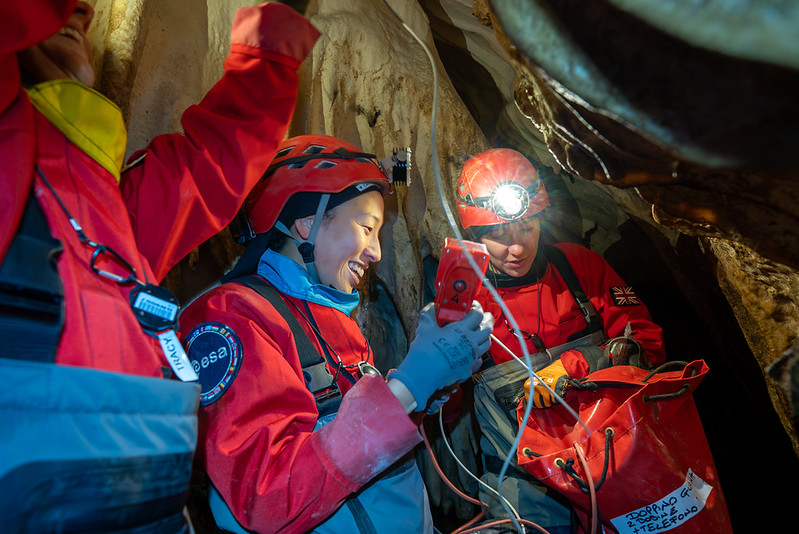




![NASA's tweet photo. "The fascination that I have for test flying comes from being able to go into an environment where we have an idea what's going to happen, but then you have to [make it] happen."
Meet the Artemis III crew in this episode of Houston We Have a Podcast: https://t.co/3GEB1Kivpc https://t.co/YDpC4PWEJf](https://pbs.twimg.com/media/HKox2XrXMAEXN2P.jpg)