I think a lot of people have woken up to the conclusion that the only way to burn off the woke mind virus is to actually not care about racism or about being racist at all.
Pretty soon, if it’s not already happening, anyone crying about racism will met with the default response:
“So what?”
Do you really want white people checking out like this? Because this is the predictable, exhausted endpoint of weaponizing race for power.
Believe me when I say that we will all come to miss the days when the word ‘racism’ actually meant something, back when white people still cared about not being called racist.
Gen Z guys are already there. Once that word is completely drained of any real meaning or moral weight, we’ll all rue the day we let it happen.
the Henry Nowak murder sounds like a completely outrageous parody of the british criminal justice system. it's hard to believe it's real.
- native Britons can't legally carry a breadknife
- for some reason Sikhs get a special carveout and can carry "religious use" knives of any length. even over 50 cm
- 18 year old boy Henry Nowak is walking home peacefully, is fatally stabbed by Vickrum Digwa with his "ceremonial" kirpan
- Digwa claims to the police that he was racially abused and the responding police immediately believe him and shackle the dying Nowak, ignoring Digwa and his co-conspirators
- Nowak informs the officers that he has been stabbed and the officer says "You've been stabbed? Whereabouts? I don't think you have, mate."
- the officers do not check on his condition, cuffing him roughly as he bleeds out. as they read him his rights, he dies.
- Digwa's mother, Kiran Kaur arrives at the scene and takes the knife with her, attempting to conceal it
- Digwa's brother Gurpreet Digwa made the 999 call and attempted to concoct a defense for his brother, claiming he had been the victim of a racial attack
- Despite the "life sentence" the court meted out, Digwa will be eligible for parole at age 43
- there have been no consequences whatsoever for the police officers that shackled Nowak and left him to drown in his own blood while his killers watched. none of the officers have even been named
each fact is more radicalizing than the last.
France Has the Banlieues. Britain Is Building Its Own.
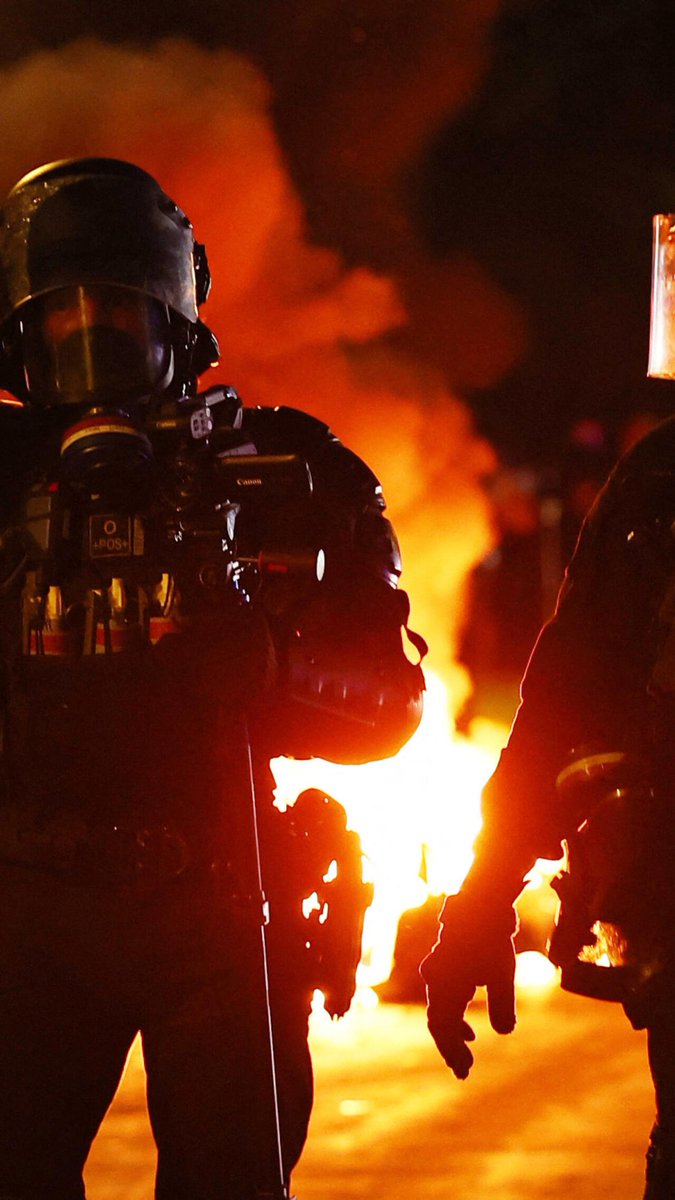
For the second consecutive year, Paris has erupted in violence following a PSG Champions League victory. Last year two people died, over 190 were injured and more than 500 were arrested across France with 264 vehicles burned. This year 780 people were detained, 57 police officers were injured and riots spread across 15 cities. Cars were set ablaze. Shops were looted. A group attempted to storm a police station in one of Paris's wealthiest arrondissements. The French interior minister described most of the celebrations as peaceful. He was not describing the same events everyone else was watching.
This is not a football story. Football was the occasion. The violence is the story, and it has nothing to do with the score in Budapest.
PSG was transformed after Qatar Investment Authority bought the club in 2012, turning it into a globally marketed brand with deep roots in the banlieues, the outer suburbs of Paris that ring the city like a wound that never heals. These are the zones urbaines sensibles, the French government's own designation for 751 areas of concentrated deprivation, parallel culture and social breakdown. France has been building these reservations for fifty years through mass immigration and deliberate non-integration. The people who live in them did not assimilate. They were never required to. The bill for that decision arrives every time France holds a public event.
The pattern is not new and it is not accidental. The 2005 banlieue riots spread across France and lasted three weeks. The 2023 riots following the police shooting of Nahel Merzouk spread from Nanterre across every major French city within days. A criminal police officer sent to Nanterre during those uprisings said publicly that he no longer had the impression of being in France. PSG victories in 2025 and 2026 have produced the same geography of violence, the same communities, the same targets and the same response from the French state: riot police, tear gas, mass arrests and ministerial press conferences describing the situation as largely under control.
Nobody compelled anyone to set fire to cars, loot shops, attack police officers or attempt to storm a police station. These are choices made by individuals who have concluded that the society around them owes them something and that violence is an acceptable means of claiming it. That conclusion was not inevitable. It was produced by decades of welfare dependency, cultural separatism, the deliberate rejection of French republican values and the political class's refusal to name what was happening until it was too late to reverse it.
France is five to ten years ahead of Britain on this trajectory. The banlieues are what happens when mass immigration produces parallel communities with no integration, no shared civic culture and no meaningful stake in the host society. Britain has its own versions. Tower Hamlets. Parts of Birmingham, Bradford and Luton. The same architecture of parallel life, the same deliberate separation, the same political refusal to enforce integration or demand contribution. The violence in Paris is not a warning about what might happen. It is a preview of what will happen if the same trajectory continues.
The French government will hold a celebration at the Champ de Mars today. Emmanuel Macron will host PSG at the Elysee Palace. Officials will talk about the importance of sport and national pride. Nobody in a position of power will say what the 780 arrests and 57 injured officers actually represent. The same silence that built the banlieues will manage the consequences of them. Until next time.
"France is five to ten years ahead of Britain on this trajectory. The Banlieues are what happens when mass immigration produces parallel communities with no integration, no shared civic culture and no meaningful stake in the host society. Britain has its own versions."
Whilst I hate agreeing with Tony Blair, he’s right on this one.
It isn’t just Labour though. Every political party with a chance of winning significant seat numbers has the same problem.
They can’t put what needs to be done in a manifesto, because they’d be unelectable. They can’t say out loud what the real problems are, because the electoral arithmetic would destroy them. And that’s if they even know what the real problems are in the first place. It seems to me that they don’t have the people capable of delivering the meaningful change that would put the UK back on course. This much is likely becoming clear to a lot of us by now.
I actually sympathise with the politicians in these parties. They’re inheriting an impossible set of circumstances, and for the most part, they don’t have the financial or economic understanding of what they’re facing (anyone who has read about the views of certain Labour MPs regarding the gilt markets will know what I’m talking about). In fairness, few people do.
So we continue on this path of make-believe. Policy that sounds good and in line with the ideology of whichever electoral cohort fits best… and will deliver maximum seats. But won’t lead to the outcomes the country badly needs.
It’s also why I believe the massive fiscal crisis I’ve been warning about is inevitable. I can’t see any change of approach other than how certain parties treat the various symptoms… rather than acknowledge the core issues and design the state around them. It requires an overhaul I don’t believe any of the parties are capable of delivering.
We’ll get there eventually. But sadly, in my view, it will happen following a crisis, with the country kicking and screaming, rather than by design in an attempt to rebuild national resilience.
It’s sad to watch the slow structural decline of the UK as a global business hub - as yet another FTSE company looks certain to be acquired by a US firm.