Why don’t I bother filleting fish?
Because this works on everything from little trout and large salmon, wastes no meat, and gets almost all of the the bones out without the hassle!
Give it a try…
Children need coherent narratives around emotions, not protection from them:
"Information doesn't scare kids as much as the absence of information scares kids."
"It's not my kid seeing me sad that's going to destabilize them, it's seeing me sad and me making up a bogus story or denying it."
"Kids can handle the truth and they can handle the truth when it's told to them from a loving trusted adult."
"Pain was never the thing that really got in our way, it was the pain plus a lack of a coherent narrative and support."
"Without a coherent narrative, they have what I call unformulated experience, it's just affect and experience that free floats in their body, and that tends to later show up as triggers in adulthood."
@GoodInside on @hubermanlab
Great recommendation. I’ve made it a point to get 100 reps of these a week. I started doing the one legged (fewer reps per set) version per @kneesovertoes and making sure to keep hips level and that’s made a tremendous difference in terms of increasing strength in all lower body movements and overhead pressing.
The low back exercises @kneeovertoesguy teaches are 10/10 for everything from protecting your back against injury, improving strength and mobility… and zero to very low cost depending on if you use equipment or not. Takes very little time. Not paid or flowed to say this.
The below 7 quotes have shaped my thinking and changed my behavior over the last year.
I revisit them often.
“Language can become a screen which stands between the thinker and reality. This is the reason why true creativity often starts where language ends.”
— Arthur Koestler
“I imagine one of the reasons people cling to their hates so stubbornly is because they sense, once hate is gone, they will be forced to deal with pain.”
― James Baldwin, Notes of a Native Son
“People fall so in love with their pain, they can’t leave it behind. The same as the stories they tell. We trap ourselves.”
— Chuck Palahniuk
“The truth knocks on the door and you say, ‘Go away, I’m looking for the truth,’ and so it goes away. Puzzling.”
— Robert M. Pirsig
“Character, like a photograph, develops in darkness.”
— Yousuf Karsh
“A man is about as big as the things that make him angry.”
― Winston Churchill
“I will have to remember ‘I am here today to cross the swamp, not to fight all the alligators.’”
— From The Art of Possibility by Rosamund and Benjamin Zander
Kevin Durant Off Season Training
- Full Range Squats
- ATG Split Squat Pulses
- Toe Raises
- German Hang
- Snake Posture Core Fist
The aim is to develop more range of motion in joints, better posture, and strength through flexible positions.
Every training session, every protein-forward meal, and every recovery event is a direct investment in the person you will be at 80. Skeletal muscle does not maintain itself. Bone density does not hold without load. There is no neutral. Every session compounds. Every skipped one costs. The 80-year-old version of you gets the body you built right now. Train hard. Eat with purpose. Show up consistently.
Write down the 3-5 things—and no more—that are making you most anxious or uncomfortable.
They’re often things that have been punted from one day’s to-do list to the next, to the next, to the next, and so on.
Most important usually = most uncomfortable, with some chance of rejection or conflict.
For each item, ask yourself:
– “If this were the only thing I accomplished today, would I be satisfied with my day?”
– “Will moving this forward make all the other to-do’s unimportant or easier to knock off later?”
“To a disciple who was forever complaining about others, the Master said, ‘If it is peace you want, seek to change yourself, not other people. It is easier to protect your feet with slippers than to carpet the whole of the earth.’” — Anthony de Mello
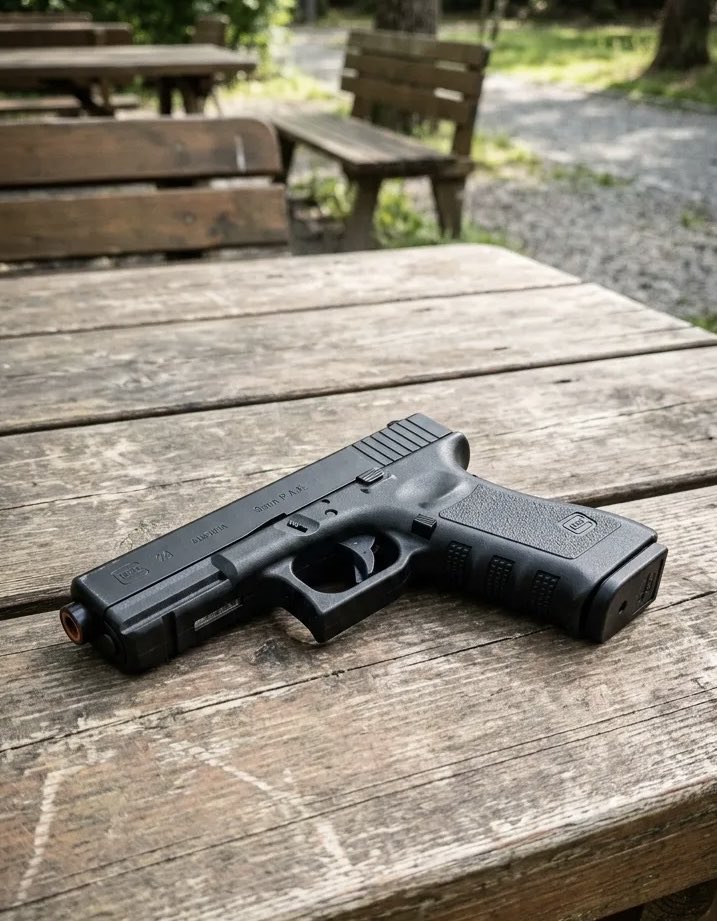
The gun is the most misunderstood object in Western civilization. Not a weapon. A technology. The technology that made the idea of equality physically real.
1. The longbow democratized warfare – a peasant could kill a knight with a stick and a string, and Agincourt proved it. The gun completed the process. The armored warrior class whose claim to social dominance rested on physical superiority became obsolete. The aristocratic monopoly on violence ended not with a philosophy but with a mechanism. The gun is the physical enforcement of the idea that all men are created equal. Which is why the American founders put it in the second amendment – not as an afterthought, but as the guarantee of everything else.
2. The Roman citizen had the right to bear arms. The Greek citizen had it. The English yeoman had it. The Swiss canton built its entire civilization on it. The disarming of the population has always been, in every civilization, in every century, the first act of the government that intends to stop being answerable to that population. Show me a disarmed population and I will show you a population that lost something else shortly after.
3. The Second Amendment is not about hunting. It is not about sport. It is about the relationship between the armed citizen and the state – the explicit constitutional acknowledgment that the citizen’s right to defend himself, his family, and his civilization against any threat, including the government itself, is not granted by the state and cannot be revoked by it. Power flows upward from the armed citizen, not downward from the armed state.
4. The gun defends the family. The woman alone with her children. The farmer on the edge of civilization. The shopkeeper in the neighborhood the police no longer patrol. The gun is the equalizer – the technology that makes the physical difference between a large man and a small woman irrelevant. Every argument for disarmament is, at its core, an argument that the state will protect you better than you can protect yourself. The evidence for this proposition is not encouraging.
5. In Europe, the disarmament is now nearly complete – and it happened precisely as the state’s ability and willingness to protect its citizens began to decline. The timing is not coincidental. A population that cannot defend itself must trust the state to defend it – which is a population that cannot effectively question whether the state is doing so. The dependency is the design.
6. The gun is a civilizational technology in the deepest sense: it requires responsibility, judgment, and the willingness to accept the consequences of your decisions. You cannot outsource it. You cannot have a committee fire it. It is the most anti-bureaucratic object ever invented – a direct, personal, consequential instrument that puts the full weight of the decision on the individual holding it. Which is precisely why the administrative state finds it intolerable. Not because it is dangerous. Because it is sovereign.
7. The family that can defend itself does not depend on the state for its most fundamental security. The civilization that can defend itself has not yet outsourced its survival to an institution that will negotiate the terms of that survival on its own behalf. The gun determines who controls violence – and therefore who controls everything that violence can threaten. Which is everything. The Sobieski who rode down the hill had a sword and sixty thousand horsemen. The equivalent today is the armed citizen who understands what he is defending and why. Every civilization that forgot this discovered it the hard way. The ones that remembered it are still here.
“There does seem to be something almost spiritual about whether or not we’re funneling energy into things that really reflect us at our best … versus competition. Competition, it turns out, is what destroys people.”
— Dr. Andrew Huberman (@hubermanlab)
Listen to my brand-new interview with Dr. Andrew Huberman: https://t.co/sL6oVgwROl