Mañana jugamos unos cuartos de final de una Copa del Mundo.
Muchos éramos muy pequeños en 2010 y casi no nos acordamos, disfrutemos del momento y confiemos en este equipo, nos han dado motivos para creer.
GANAR, GANAR Y GANAR. @SEFutbol 🇪🇸🇪🇸
El de mañana para España me parece EL PARTIDO.
Ese partido que si conseguimos ganarlo, cambiará la mentalidad de prácticamente todos los españoles.
Estoy seguro de que sería la victoria que dispararía la ilusión en el país, se empezarían a ver muchísimas más banderas por las calles, por las ventanas y que haría que todo el mundo pensara que el Mundial se puede ganar.
Mañana jugaremos EL PARTIDO.
A Gaudí siempre le preguntaban cuando acabarían lss obras, y el siempre respondía que su cliente no tiene prisa.
Para Antoni Gaudí, que murió tal día como hoy, hace 100 años, ingresado en un hospicio porque lo tomaron por un mendigo tras ser atropellado por un tranvía, habría sido un sueño saber que el Papa, los Reyes de España, el presidente del Gobierno y de la Generalitat, el alcalde de Barcelona y una larga lista de autoridades estarían, un siglo después, rindiéndole homenaje y mirando al cielo para ver cómo se iluminaba la torre de la iglesia más alta del mundo.
La epopeya de la Sagrada Familia, 144 años en construcción, y que aún no ha acabado, ha tenido uno de sus días para la historia con la solemne ceremonia religiosa que ha culminado con la bendición del Papa a la Torre de Jesucristo.
Otro momento que hará que la imagen de Barcelona dé la vuelta mundo, con 9.000 personas dentro del templo y 130.000 en el exterior
Y lo de los drones eso ya no se como expresarlo, mejor verlo.
es mil veces mejor un plan de tardeo o uno de chill que salir de fiesta en una discoteca hasta las tantas, gastarte un pastizal y encima estar reventado al día siguiente, de este barco no me baja nadie
🗣️Il a remporté 15 fois Roland-Garros en 2041, 2042, 2043, 2044, 2045, 2047 (battu en 2046 par Stefan Djokovic), 2048, 2049, 2050, 2051, 2053, 2054, 2056, 2057 et 2059...
Il est Espagnol, Rafael Nadal Junior !
me pueden decepcionar muchas cosas en la vida pero las adaptaciones cinematográficas de los juegos del hambre NUNCA lo harán esto es una cosa espectacular
Welcome home Reid, Victor, Christina, and Jeremy! 🫶
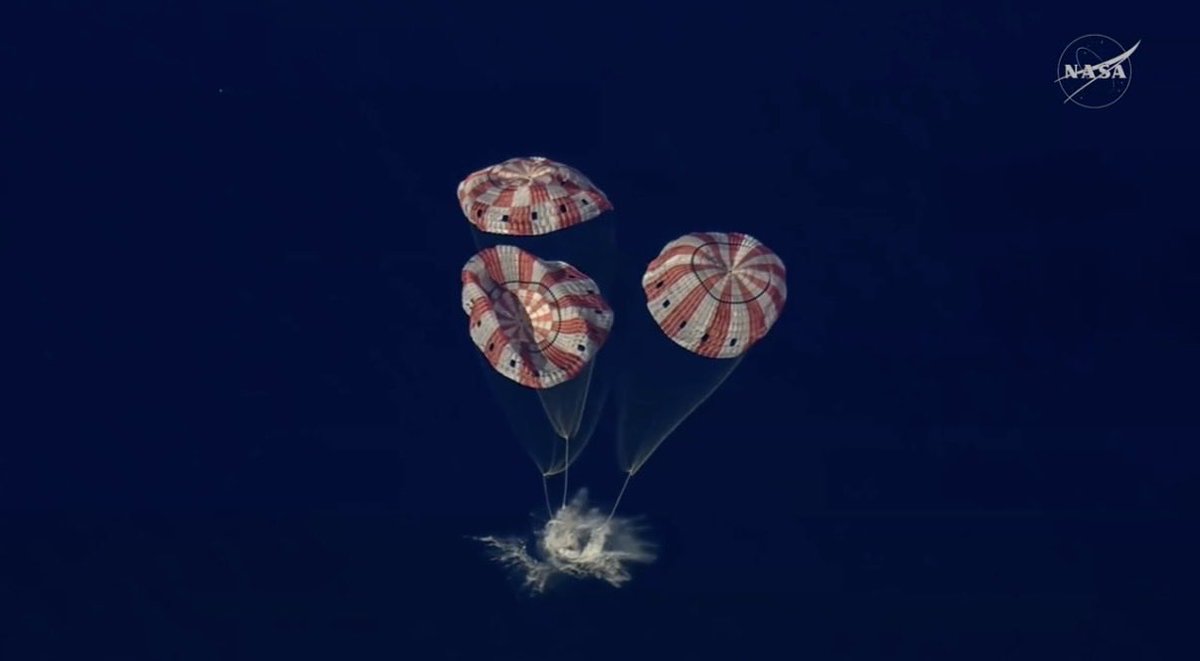
The Artemis II astronauts have splashed down at 8:07pm ET (0007 UTC April 11), bringing their historic 10-day mission around the Moon to an end.
Jeremy Hansen became an astronaut in 2009. He waited 17 years to go to space. His first trip off Earth is a flight around the Moon.
He grew up on a farm near a small town in Ontario, Canada. As a kid, he saw a photograph of Neil Armstrong standing on the lunar surface and wondered what it would feel like to be up there. He joined the Air Cadets at 12. Earned his glider wings at 16. Had his pilot's license at 17, before he could legally drink or vote in Canada.
He went to military college and studied space science. Got a master's in physics. Then he spent six years as a fighter pilot flying CF-18 Hornets (Canada's version of the F-18) out of Cold Lake, Alberta, protecting North American airspace under NORAD, the joint US-Canada defense system that monitors every aircraft entering the continent's skies. He flew Arctic missions. Logged more than 4,000 hours in the cockpit across 25 different aircraft.
The Canadian Space Agency picked him in 2009. Two spots opened up out of the entire country. He got one. Moved to Houston. Finished NASA's astronaut training in 2011.
Then he waited. And waited. Canada only gets a crew seat on the International Space Station about once every five or six years because of how funding is split among countries. His colleague David Saint-Jacques, who was selected the same year, flew to the station in 2018. Hansen kept training. He lived underground for six days in a cave in Sardinia, Italy. Spent a week on the ocean floor in a small habitat off the coast of Florida, simulating what deep space isolation feels like. Joined a geology expedition in the Canadian High Arctic, studying rock formations that look like the surface of the Moon. In 2017, NASA asked him to lead the training of an entire class of new astronauts, the first time they had ever given that job to someone who wasn't American. He did all of that without ever leaving Earth.
Canada earned its seat on Artemis II because of the Canadarm, the robotic arm that flew on every Space Shuttle mission for 30 years and now runs on the Space Station. Canada put roughly $2 billion toward building the next version for future Moon operations, and NASA gave them a crew spot on the first flight back. Hansen was the pick.
Five days ago, on April 1, he launched from Kennedy Space Center in Florida. His three crewmates, Wiseman, Glover, and Koch, have all been to space before. Hansen hadn't. His first time feeling weightlessness, his first time seeing Earth from outside it, his first time in a spacecraft at all, is a ten-day trip around the Moon, roughly 252,000 miles from home, farther than any human has ever traveled. He told reporters from orbit that it "makes me feel like a little kid." He is 50 years old, with three teenagers and a wife named Catherine, who is a doctor back in Houston.
On flight day one, as Orion swung back toward Earth before the engine burn that would send them to the Moon, Hansen turned to his commander and said, "It feels like we're going to hit it. It's amazing that we're actually going to go around and miss this thing."
"We will always choose each other."
Mission control has reacquired signal with the Artemis II crew after the mission’s planned loss of signal. Our astronauts are once again using the Deep Space Network to keep conversation and science data flowing between space and Earth.
"Es maravilloso volver a tener noticias de la Tierra": así ha sido el momento en el que la nave Orión ha recuperado la comunicación
"En última instancia, siempre elegiremos la Tierra, siempre nos elegiremos unos a otros", ha indicado la astronauta Christina Koch
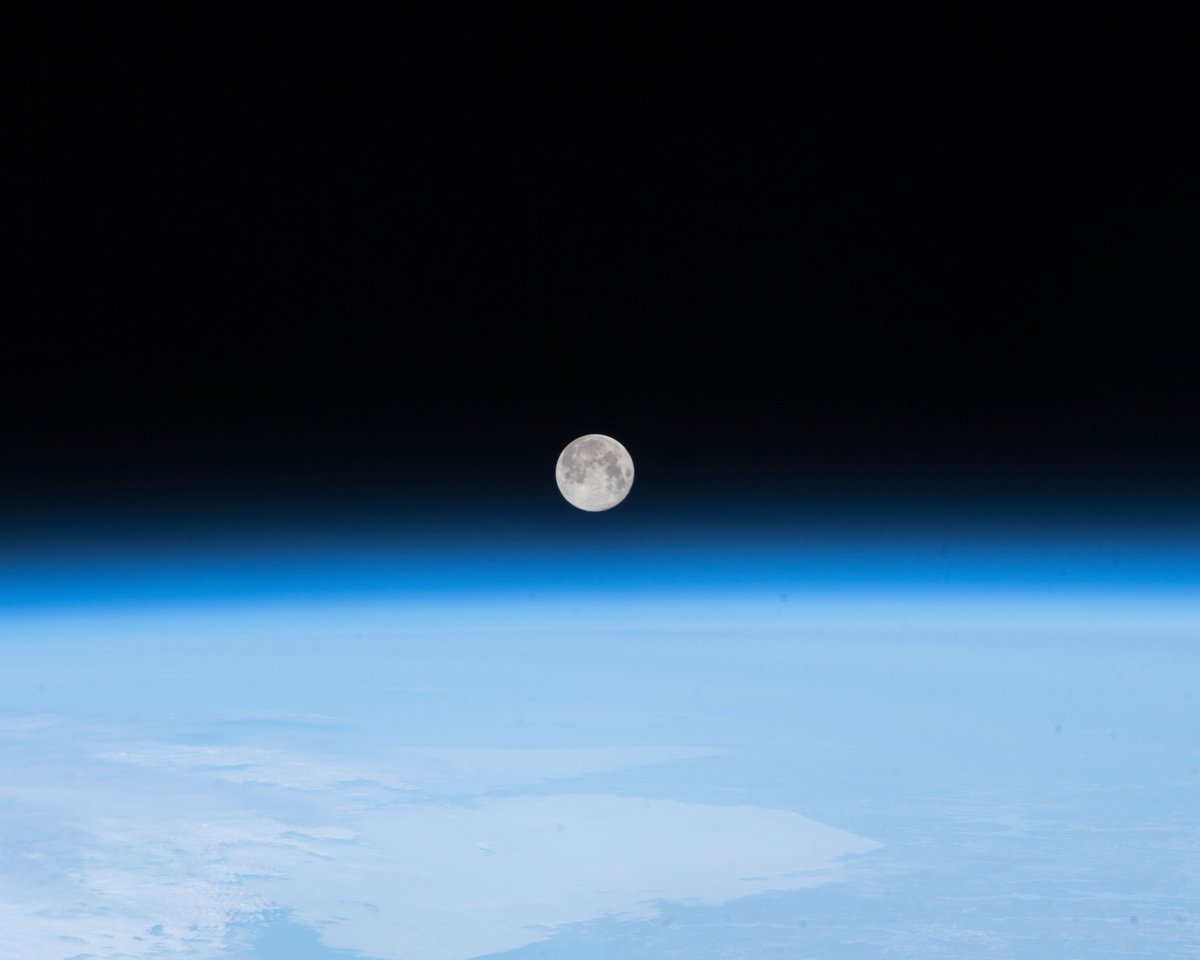
Los astronautas de @NASAArtemis II superaron el récord de distancia a la Tierra, establecido durante la misión Apolo 13, a las 1:56 p.m. EDT (17:56 UTC). La Luna sigue agrandándose cada vez más en las ventanas de la nave espacial Orion, mientras la tripulación se prepara para observar su cara lejana. Se prevé que los astronautas alcancen su máxima aproximación a la Luna alrededor de las 7:02 p.m. EDT (23:02 UTC).