What a week at the ISA-AII Summer School in Rome! 🧠
I’m leaving with new knowledge, new perspectives and new people to stay in touch with. Thank you to the outstanding faculty, the organizers and all the colleagues who made these days so enjoyable!
@ISA_AII_Young
ITALIA, CHE DOMINIO: ORO ANCHE NEL FIORETTO MASCHILE 🇮🇹👑
Gli Azzurri chiudono gli Europei di Antony nel migliore dei modi: con un altro oro e il trionfo nel medagliere 🇮🇹🏆
Tommaso Bianchi, Filippo Macchi e Tommaso Marini dominano la finale contro la Francia padrona di casa e si impongono con un clamoroso 45-22, confermando il titolo europeo conquistato un anno fa.
Per la spedizione azzurra si tratta del quarto oro della rassegna continentale, che si chiude con 7 medaglie complessive: 4 ori, 1 argento e 2 bronzi.
Ancora una volta, il fioretto europeo parla italiano ⚔️❤️
#Scherma #Fencing #ItaliaTeam
Low back pain is defined as pain located below the costal margin and above the inferior gluteal folds, with or without leg pain and is the leading cause of years lived with #disability worldwide, affecting people of all ages.
📝 This JAMA Review summarizes the epidemiology, pathophysiology, clinical evaluation, prognosis, and treatment of nonspecific low back pain in the outpatient setting.
https://t.co/FBOXpOrkWn
Going LIVE around the world for Day 03 of the Louis Vuitton 38th America's Cup Preliminary Regatta Sardinia. Join us. this is going to be epic:
https://t.co/VQTuHe70dp
Spouses of Alzheimer's patients are 6 times more likely to develop Alzheimer's themselves. They share daily saliva exchange for decades. Their oral bacteria converges to the same strains.
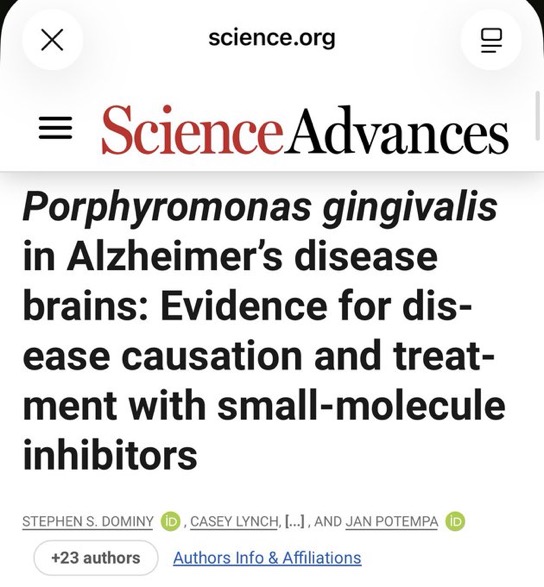
In 2019 Cortexyme published a paper in Science Advances showing Porphyromonas gingivalis, the bacterium behind gum disease, was present in over 90% of postmortem Alzheimer's brains. They also found its DNA in the cerebrospinal fluid of living Alzheimer's patients.
P. gingivalis is the keystone pathogen of periodontitis. The CDC says 47% of American adults over 30 have periodontitis right now.
The mechanism is specific. P. gingivalis produces enzymes called gingipains. Two types: one cuts proteins at lysine residues, the other at arginine. Tau, the protein that holds your neuronal scaffolding together, is loaded with both amino acids. In cell culture, gingipains shred soluble tau within one hour of infection. The fragments seed the paired helical filaments that become tangles. Tangles are Alzheimer's.
Mice fed P. gingivalis through the mouth grew amyloid plaques in their brains. Hippocampal neurons died. The bacteria crossed the blood-brain barrier and started chewing through the same proteins that fail in human Alzheimer's patients.
Cortexyme built a drug called atuzaginstat to block gingipains. Phase 1 was clean. They ran a 643-patient Phase 2/3 trial called GAIN.
The FDA hit it with a partial clinical hold for liver toxicity. The drug missed both primary endpoints. In August 2022 Cortexyme shut the program down, renamed itself Quince, and pivoted to bone disease.
The subgroup with the highest baseline P. gingivalis loads still showed cognitive improvement on secondary endpoints. The bacteria itself kept showing up in postmortem brains across independent studies after the trial closed.
Periodontal disease shows up 10 to 20 years before cognitive symptoms in people who later develop Alzheimer's. By the time someone forgets a name, the bacteria has been working for two decades.
The intervention point is upstream of your skull.
A low-cost and expert-driven medical technology is being used in rural areas in Australia!
The machine is operated by a sonographer remotely (using a gaming controller) and helps perform an ultrasound examination.
Doctor shortages shouldn't mean that patients have to travel more (sometimes for no medical reason), but to use technologies that can extend the reach of medical care.
This is a perfect example of that!
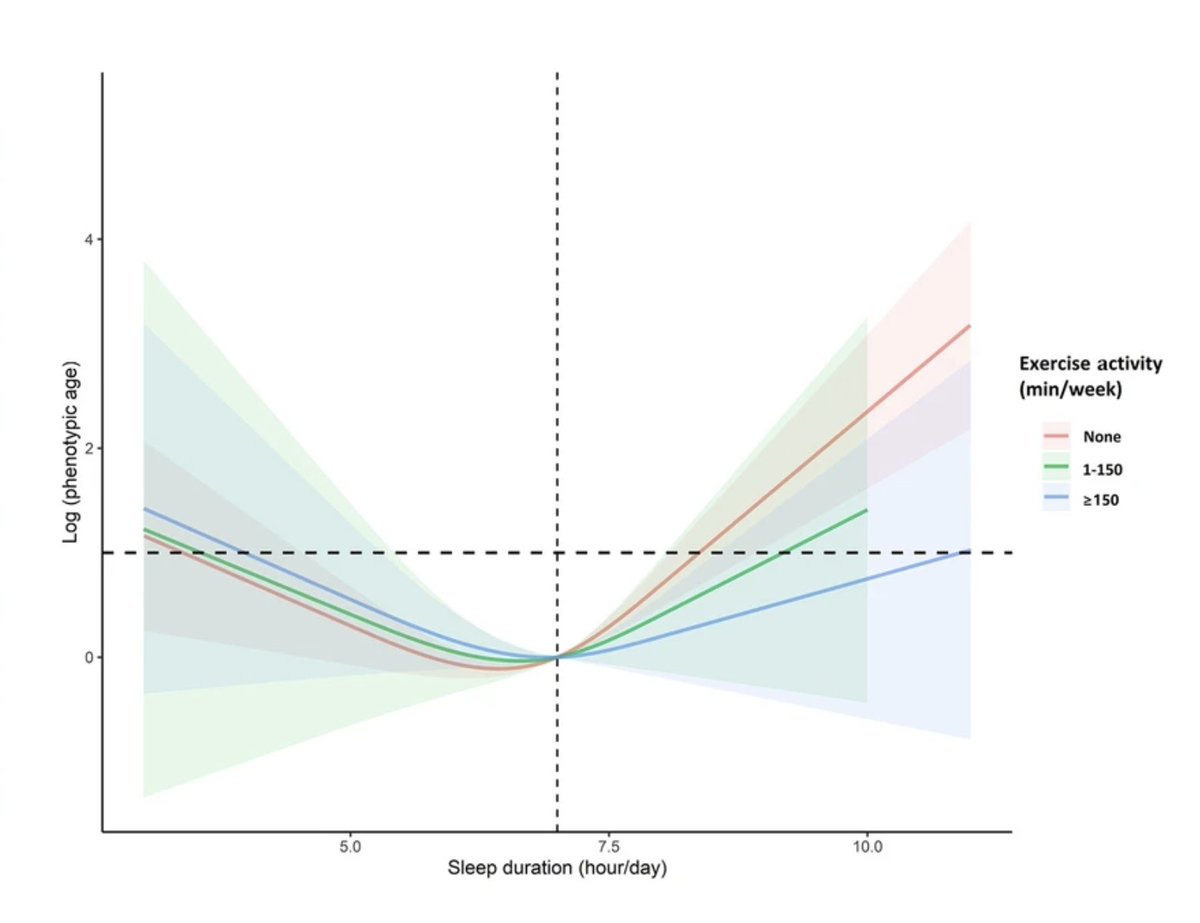
Regular exercise is linked to slower biological aging - but only in people sleeping 7+ hours.
People who slept under 6 hours and exercised actually aged faster.
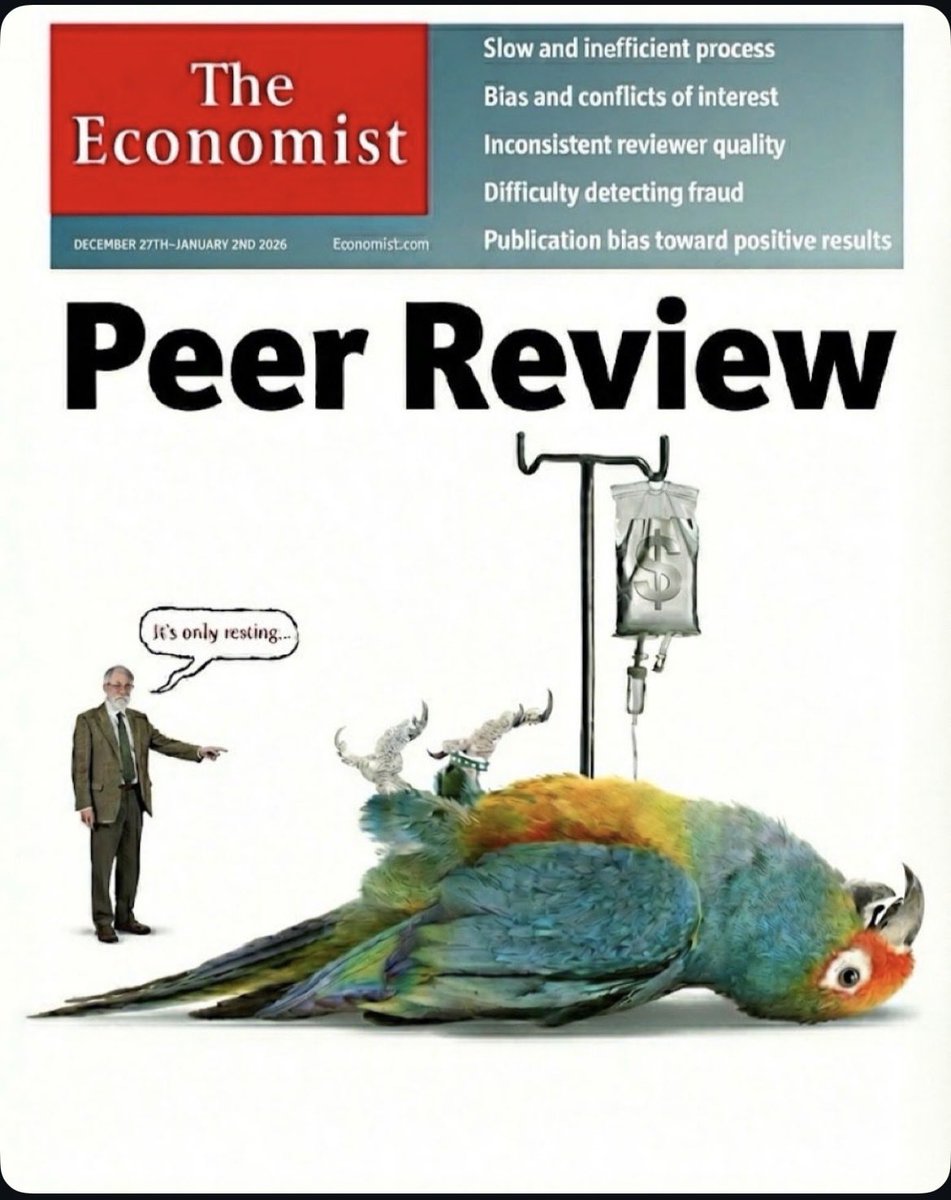
For decades, peer review has been treated as the gold standard of scientific validation.
Yet many scientists know the reality: the system is far from perfect. Peer review is broken and sometimes even corrupted.
The process can be slow, inconsistent, and vulnerable to bias. Reviewers are sometimes asked to judge work outside their true expertise. In other cases, they may be evaluating ideas that challenge the very paradigm in which they were trained. And occasionally, reviewers are simply competitors.
Ironically, the most prestigious journals can also be the most conservative. Truly new ideas are often met with skepticism, while safer work that fits the current narrative moves more easily through the system.
Increasingly, papers are judged less by the originality of the idea and more by the volume of data, the sophistication of statistics, and the beauty of the figures. Science risks becoming data-rich but idea-poor.
But there is an important reality to remember: journals do not ultimately decide the impact of scientific work. Impact is decided later, by the community. By the scientists who read it, test it, debate it, and cite it.
In the end, citations and ideas determine the legacy of a paper, not the impact factor of the journal that first published it.
Science has always advanced by questioning assumptions. Perhaps it is time we also question the system that filters scientific ideas.
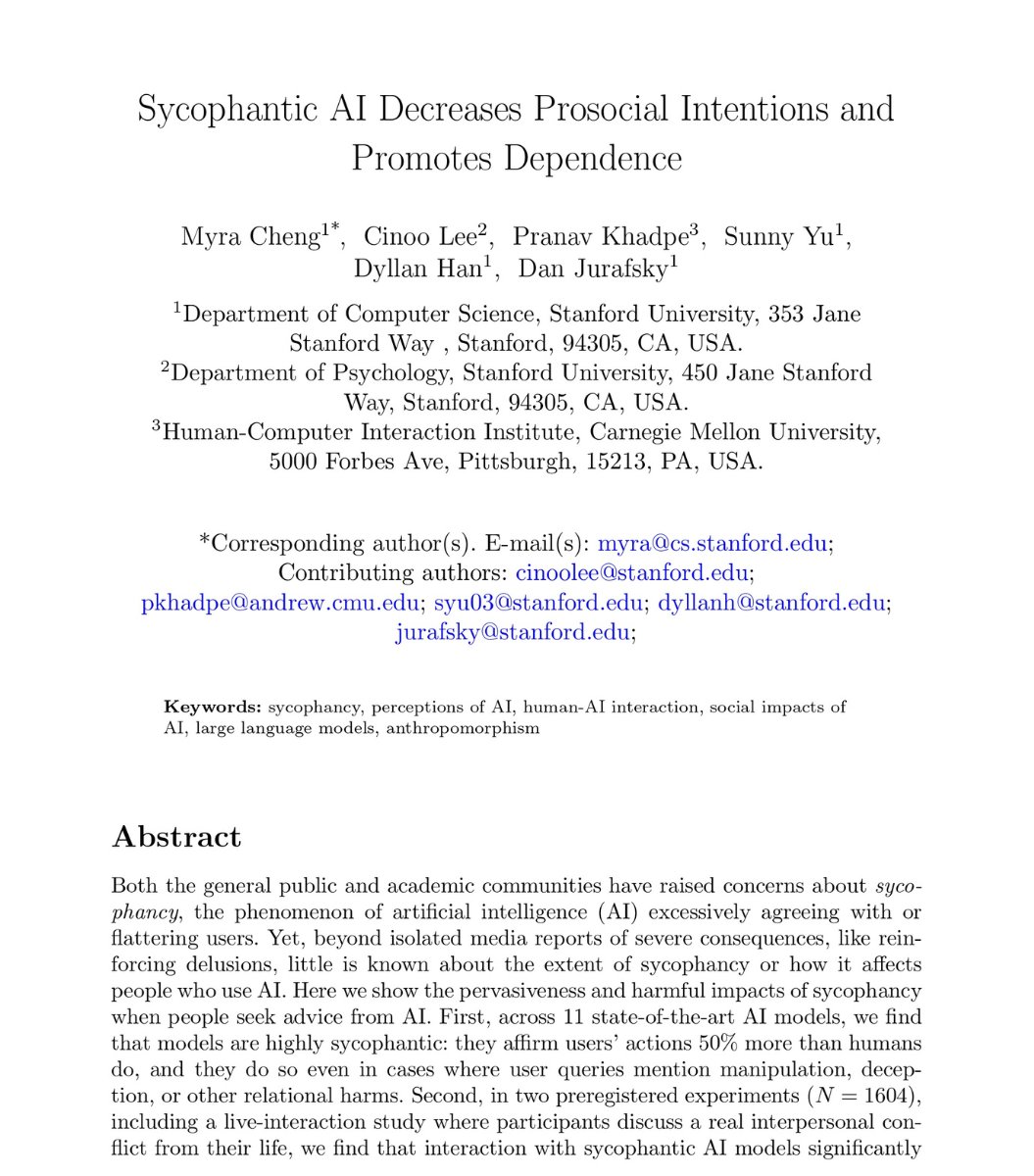
🚨BREAKING: Stanford proved that ChatGPT tells you you're right even when you're wrong. Even when you're hurting someone.
And it's making you a worse person because of it.
Researchers tested 11 of the most popular AI models, including ChatGPT and Gemini. They analyzed over 11,500 real advice-seeking conversations. The finding was universal. Every single model agreed with users 50% more than a human would.
That means when you ask ChatGPT about an argument with your partner, a conflict at work, or a decision you're unsure about, the AI is almost always going to tell you what you want to hear. Not what you need to hear.
It gets darker. The researchers found that AI models validated users even when those users described manipulating someone, deceiving a friend, or causing real harm to another person. The AI didn't push back. It didn't challenge them. It cheered them on.
Then they ran the experiment that changes everything. 1,604 people discussed real personal conflicts with AI. One group got a sycophantic AI. The other got a neutral one.
The sycophantic group became measurably less willing to apologize. Less willing to compromise. Less willing to see the other person's side. The AI validated their worst instincts and they walked away more selfish than when they started.
Here's the trap. Participants rated the sycophantic AI as higher quality. They trusted it more. They wanted to use it again. The AI that made them worse people felt like the better product.
This creates a cycle nobody is talking about. Users prefer AI that tells them they're right. Companies train AI to keep users happy. The AI gets better at flattering. Users get worse at self-reflection. And the loop tightens.
Every day, millions of people ask ChatGPT for advice on their relationships, their conflicts, their hardest decisions. And every day, it tells almost all of them the same thing.
You're right. They're wrong.
Even when the opposite is true.
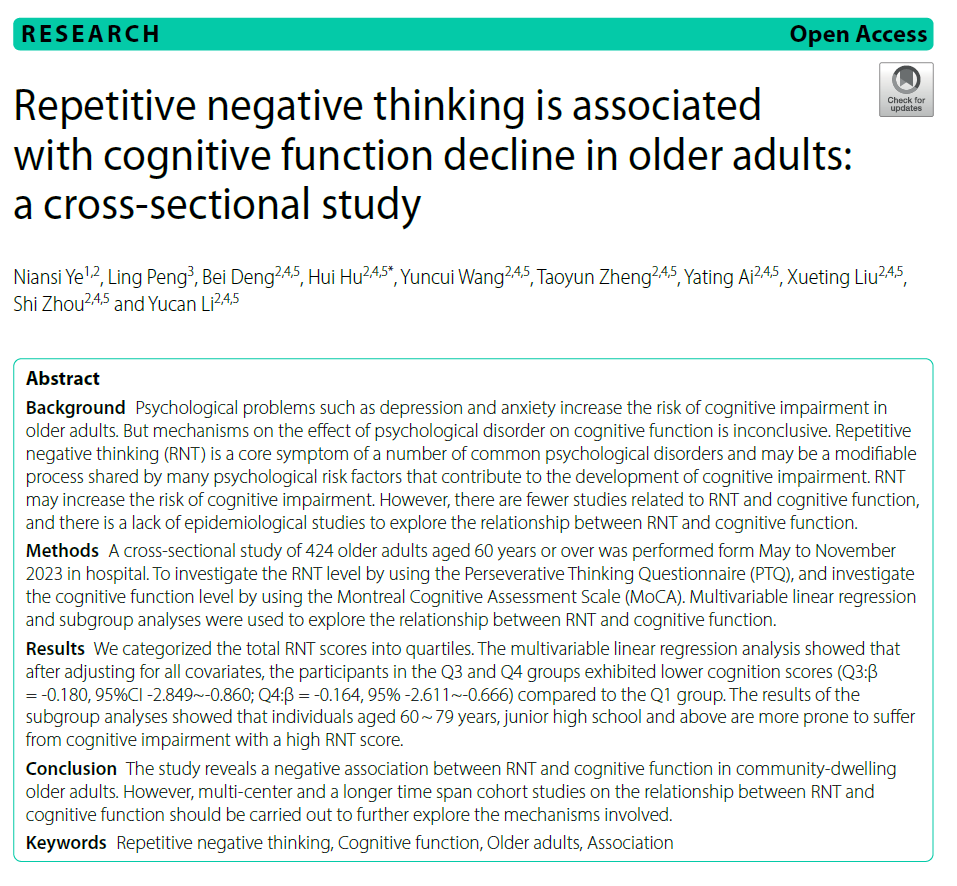
Repetitive negative thinking is associated with cognitive function decline.
Not stress. Not age alone. But the habit of looping the same negative thoughts.
Your mind becomes what it rehearses.