Lionel Messi is by far the greatest player to ever play and the greatest player that could ever be. But more importantly than his otherworldly divine footballing talents is the manner in which he carries himself. He makes everyone want to emulate his humility and class. The love that people have for Messi stems from this dual combination: Divine talent coupled with indescribable humility.
Day 45... “Sara, I need you to get your recruiter mode on and help me find someone amazing.”
📣 At Yalo (https://t.co/HL7QSRlLXo), we’re hiring for a new role we just created: AI Builder & Evangelist.
If I were earlier in my career, this is a job I would have loved.
Building with AI all day, teaching others how to do it, and working alongside really talented people at Yalo across product, engineering, support, and go-to-market.
Two responsibilities, reporting directly to me:
1) Build
You will build AI automations inside Yalo, internal agents, workflows, and tools that replace manual work. Claude Code, OpenClaw, whatever gets it done.
2) Teach
You will help everyone at Yalo, and our customers, get good at AI and get the most out of Yalo’s tools and products. From the basics to the advanced stuff: tutorials, recordings, templates, walkthroughs, hackathons. You can explain things at all levels, so your grandma gets it and a senior engineer still learns something.
You’re the kind of person who sees Anthropic or OpenAI drop something on X and you’re trying it before the thread hits 100 likes. You lost a weekend to Claude Code or Replit Agent. Then made a Loom about it. Then got your friends to start building too.
Maybe this is your first official job. Maybe you’re switching careers. If you’re an AI maximalist, someone who believes AI changes everything and is already living that way, Sara and I want to talk to you.
The only requirements are:
1. You’re deep in AI, and can prove it.
2. You’re highly curious.
3. You’re resourceful.
I’ll make sure this is a place where you learn a ton and have outsized impact.
📍Mexico City preferred. Remote possible.
📩 To apply, send me two links:
1. Something you built with AI
2. Something you taught or explained
That’s it.
And please tag friends if you think they’d be a good fit 🙏🏼🤘
Day 23 of building my personal AI agent.
AI is moving insanely fast. Every week there are new tools, new capabilities unlocked. I believe the only way to stay up to date is to put in the work every day: learn, build, tinker.
Because of this, I committed to spending ~1 hour every night testing new AI tools, trying new things, and posting about it publicly. That's what this series is about....
My goal is to post something for 100 days. Some days that hour & post flows easily. Today was not one of those days. After a full Monday of back-to-back meetings and a long to-do list, it was past 9:30pm, tired, and I had no good ideas to test.
So I asked my wife for ideas...
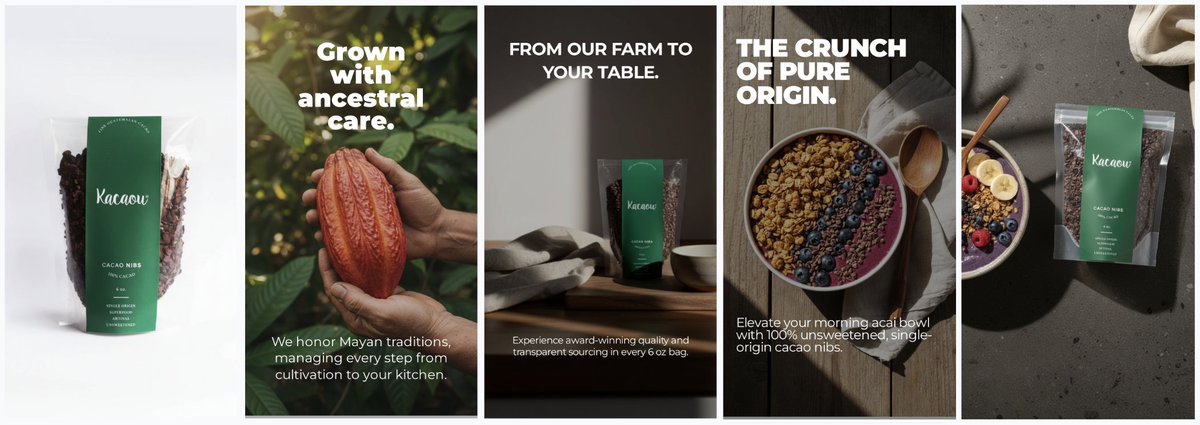
She said: "Can Sara help me generate content for my cacao brand?"
The process was messy. Sara's first attempts were bad. Some AI models kept messing up the text and logo in the product images.... Then it improved to mediocre. We went in circles. Sara hit API limits. I had to find additional keys, raise api quotas, and stitch tools together. Eventually we got something working.
The final workflow looked kinda like this:
📥 Sara downloaded the existing product images from the site
🗑️ Used remove dot bg via api to clean up the backgrounds
🎨 Combined Nano Banana 2 and ran some tests on Google's new Pomelli for generation and editing
💾 Sara saved all files automatically and gave her own creative opinions
🔁 Iterated together until the final designs felt good enough
The results aren't perfect, but I think they look pretty good!! Makes me wonder if we should consider doing something more formally around this for our customers inside Yalo's product...
More to keep learning and testing, but exciting start on Sara getting "creative".
And if you happen to be into really tasty and healthy single-origin Guatemalan cacao, let me know and I'll hook you up 🍫
10 lessons from @karpathy's "Intro to Large Language Models" talk recorded ~1 year ago, but still an amazing overview of LLMs.
1. An LLM is Just Two Files 📂
An LLM isn't some abstract cloud entity; at its core, it's just two files: a large parameters file (the model's "brain," e.g., 140GB for Llama 2 70B) and a much smaller code file to run it (e.g., 500 lines of C). Inference (running the model) is self-contained and can be done on a personal computer without an internet connection. The real complexity and cost lie in creating the parameters file, not in using it.
2. Understand the Two-Stage Lifecycle: Pre-training and Fine-tuning 🛠️
Creating a model like ChatGPT involves two distinct stages:
Stage 1: Pre-training. This is the expensive, computationally massive part where a "base model" is created by compressing a huge chunk of the internet (e.g., 10TB of text) into the model's parameters. This stage is about acquiring general knowledge. It can cost millions of dollars and take months.
Stage 2: Fine-tuning. This is a much cheaper process where the knowledgeable base model is trained on a smaller, high-quality dataset of instruction-answer pairs. This stage is about alignment and formatting—teaching the model to be a helpful, conversational assistant rather than just a document generator.
3. The Simple Objective is Deceptively Powerful: Next-Word Prediction
The entire training process is optimized for a single, simple task: predicting the next word in a sequence. This seemingly trivial objective forces the model to learn grammar, facts, reasoning, and a vast internal representation of the world to be accurate. The "magic" of an LLM emerges from mastering this one fundamental skill over a massive dataset.
4. Treat LLMs as Empirical, Inscrutable Artifacts 🧪
We understand the mathematical architecture of an LLM (the Transformer), but we don't truly understand how the billions of parameters collaborate to produce a specific answer. @karpathy calls them "inscrutable artifacts." This means you can't reason about them like traditional code. The only way to truly understand an LLM's capabilities and limitations is through rigorous empirical testing and evaluation of its behavior.
5. Scaling Laws Drive Predictable Progress 📈
A key discovery in AI is the existence of scaling laws. The performance of an LLM is a remarkably predictable function of two variables: the number of parameters (📷) and the amount of training data (📷). This means we have high confidence that by simply increasing compute and data, we can create more powerful models. This predictability is what fuels the industry's "gold rush" for more GPUs and data.
6. The Future is Tool Use and Multimodality 🛠️➡️🖼️
(BTW: this video was ~1 year ago, and proving very accurate in the predictions!)
Modern LLMs are evolving beyond just generating text. Their real power comes from acting as an orchestrator that can use tools. This includes browsing the internet, running code in a Python interpreter, using a calculator, or generating images with DALL-E. Furthermore, they are becoming multimodal, able to process and generate not just text, but also images, audio, and more, significantly expanding their problem-solving capabilities.1
7. Adopt the "LLM OS" Mental Model 💻
Instead of a "chatbot," a more accurate mental model is to think of an LLM as the kernel of a new operating system. In this "LLM OS," the LLM process coordinates resources (tools, memory, files) to solve problems, all accessible through a natural language interface.2 This analogy helps explain its role in orchestrating complex tasks, managing a "context window" like RAM, and browsing files like a disk.
8. The Future is "System 2" Thinking and Self-Improvement 🤔
(NOTE: Another great prediction of where all LLMs are now, 1 year later)
Currently, LLMs only have "System 1" thinking—fast, intuitive, and automatic, generating one word after another.3 A major research direction is to give them "System 2" capabilities: slower, deliberate reasoning where they can "think" about a problem, explore possibilities, and refine an answer over time. Another frontier is self-improvement, similar to how AlphaGo played against itself to surpass human ability.4 The challenge for LLMs is the lack of a simple "win/loss" reward function for open-ended language tasks.
9. Master Customization and the Open vs. Closed Trade-off 🎯
One-size-fits-all models are giving way to customization. This can range from simple custom instructions and providing documents for context (Retrieval Augmented Generation) to full-fledged fine-tuning on proprietary data. This creates a spectrum of expert models, as seen in the GPTs store. A key strategic decision is choosing between more powerful but proprietary closed models (like GPT-4) and more flexible but less capable open-weight models (like Llama 2).
10. Security is a New and Alien Landscape 🔓
LLMs introduce novel security vulnerabilities that don't exist in traditional software.5 You must defend against:
Jailbreaks: Tricking a model into ignoring its safety rules through clever role-playing or prompts.6
Prompt Injection: Hijacking the model's context by feeding it hidden, malicious instructions from an external source (like a webpage or document).7
Data Poisoning: Corrupting the model during training by inserting "sleeper agent" triggers into the dataset, causing it to misbehave when a specific keyword is used.
Source: https://t.co/R6wQ1AMgua
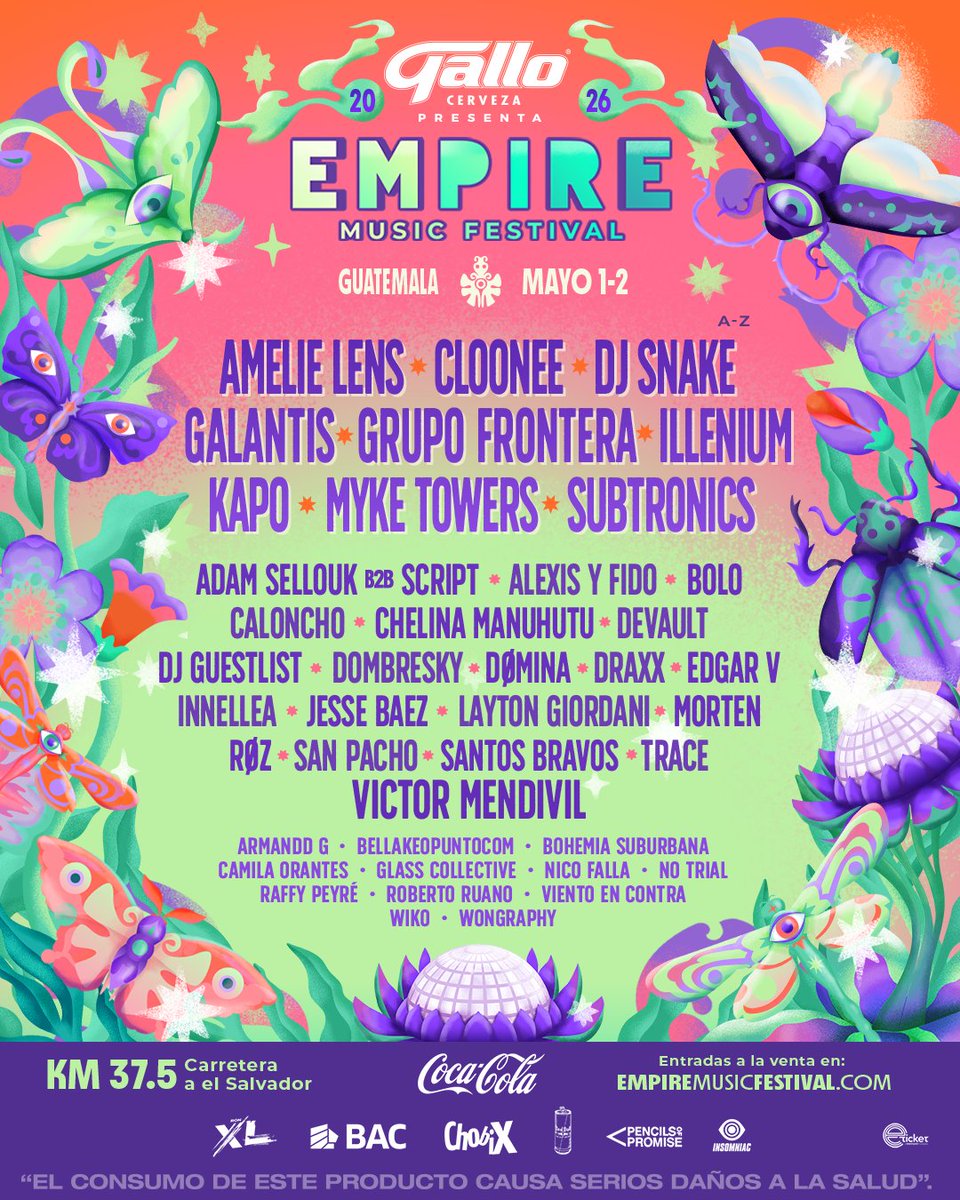
Join our friends at @TioEmpire this May in Guatemala!⚡️ 3 Stages, 2 Days & pure energy await at their 10 Year celebration. 🇬🇹
Tickets are available now for your next international music festival destination. 🌸🍃 → https://t.co/S9oB3TNuvj
started https://t.co/o2MXOVuQDI for people interested in keeping up with AI.
with so much information out there and limited time, it helps to have recommendations on the most valuable articles, books, courses and podcasts to check out.
The Motagua river in Guatemala. We're not aware of any situation as severe as that anywhere on earth. (should be over in a few months from now though, if all goes well).
The only places we know of that may come anywhere close are the Magdalena in Colombia (look up "Barranquilla basura") and a number of places in Indonesia, India and Philippines (Manila is still near the top). Rivers like the Odaw in Accra look very bad but the water is stagnant most of the time so the actual emissions are not super high.
Updated global inventory coming next year.
Another milestone in Guatemala: we have now removed over one thousand truckloads of trash from the Rio Las Vacas. 🇬🇹
This is our toughest river challenge so far, but we’re continually working to improve Interceptor 006 and keep tons of plastic from entering the Caribbean Sea.
According to a study published by Science in 2020, there are ~150 million tons of plastic in the world's oceans. By 2050 there could be more plastic than fish by weight.
This is the Motagua River mouth, Guatemala
[source: https://t.co/sUy93c2ZxE]
https://t.co/UkoM4OQzTB
3 días de festival 🎡
3 escenarios simultáneos ⚡
Amenidades gratis 🎠
Food trucks + bebidas 🍻
+40 artistas de diferentes géneros 💃🏻
Esto sí que es refrescante, see you there. 💚