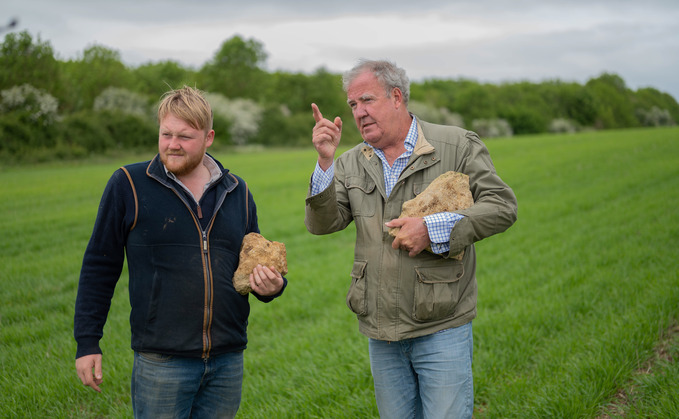
Two hundred of the thousand acres at Diddly Squat grew nothing at all this year. That was a decision taken in advance, on a spreadsheet. Wheat or barley on that ground was a guaranteed loss before the drill left the shed, so Jeremy Clarkson left it bare and explained why in his Sun column this week.
One line from it went everywhere. Farmers have reached the point where it is quite simply impossible to make money from growing food. Every paper carried that sentence, and every paper stopped there.
The list underneath it did not get printed anywhere.
Because he went on to set out what two hundred acres of good English ground could do instead of feeding anyone, and there were four items on it.
- Rent it to a global agri-company growing crops for anaerobic digesters.
- Cover it in solar panels.
- Put a data centre on it.
- Sell the farm to a Chinese company for a multistorey high-intensity piggery.
Every one of those pays. The only use of that land which reliably loses money is the one that puts food on a British plate. He added that he was not being ridiculous, and that anybody in 1926 would have laughed you out of the room for suggesting the factories would be gone by 2026.
Now the bit with a date on it.
From 1 January 2027 the UK's carbon border tax applies to imported fertiliser. The Treasury's own costings put the take at £140 million in 2027-28, rising to £180 million the year after. Estimates of the hit run from around £33 a tonne to £75, which is a fifth to a quarter added to the largest input bill an arable farm carries. The Central Association of Agricultural Valuers has warned that a typical 500 acre cereals farm could be down as much as £70,000 once fertiliser and fuel costs land.
So the fertiliser that grows the wheat gets taxed on a known date, in writing, by a government that says out loud it wants food security.
Nobody in Whitehall has ever signed a policy to stop Britain growing food. They have signed a great many that make every alternative pay better, which arrives at the same field.
And understand whose field this is. Diddly Squat has a television crew, a farm shop with a queue down the lane, a pub, a lager brand, a bestselling book every autumn and one of the best land agents in the country. It is the most commercially advantaged thousand acres in Britain, and two hundred of them were left bare this year because putting seed in them was the losing move.
Every arable farmer in England is doing that same sum this autumn. Almost none of them have a production company to cover the difference.
Those two hundred acres have not gone out of production. They are waiting to hear which industry wants them more than you do.
Jodrell Bank is the most visible causality of UKRI’s short sighted ‘vision’ for science, but as you’ll see below, there are many other valuable UK facilities and collaborations at risk. We became aware of the problem in the autumn of last year. It is not a result of the overall funding settlement for science after the spending review, which was quite generous I would say in the circumstances. Neither as far as we can tell is it a direct decision by ministers (all of whom have now gone in any case). Rather the problems appears to have been caused by senior management at UKRI focusing on short term economic ���impact’ (whatever that means) rather than doing their job as custodians of the foundations of science. What must happen now is that the new ministerial team make the time (and space ;-)) to review the upcoming catastrophe, and instruct UKRI to do their job and focus on making Britain the best place in the world to do science, now and in the future.
The entire Save Jodrell Bank campaign has nearly 3.5k signatures already across all petitions. Let's keep it going. Spread the word, share the petitions and Let's force a reversal on this!
https://t.co/hDkoapfH2m
https://t.co/3Thix7EMxu
It’s not just PPAN. It’s going to affect the ISIS neutron source, the Diamond Light Source, the Central Laser Facility, the Boulby lab, Hartree supercomputing, and all the supporting departments of STFC. all of this info is publicly available.
https://t.co/btLPMq2rGd
I had 3-4 weeks off Twitter with autistic burnout recently & my engagement is right down (also due to standing up to a vile group of trolls on here-they reported me lots, restricting my reach). If you see this photo it would be so ace if you could RT it or drop me a quick hello if you have a moment, both of which help an account get back on track. I also hope these little violas ping some floral dopamine in your meat computer & give you a small lift 🌿
France Burns at a Scale Not Seen Since 1945.
Emmanuel Macron told emergency responders in Gironde on Monday that France faces its most difficult situation since the Second World War, describing the blaze outside Bordeaux as completely unprecedented. Roughly 160,000 hectares have burned nationwide this year, and the usual August peak of the fire season has not yet arrived.
The scale is hard to absorb. More than 220,000 people have been evacuated from Gironde alone, one of the largest evacuations in modern French history. Around 2,500 firefighters, 1,500 soldiers and 1,200 police are deployed, 88 firefighters have been injured, and 240 homes are gone.
At its closest, the fire came within fifteen kilometres of Bordeaux. Four firefighters have died across France in just over two weeks.
As of Tuesday the main front is stable, with military engineers cutting firebreaks alongside crews. That may not hold. Temperatures near 42 degrees are forecast later this week, and authorities warn the fires could burn for months.
Then there is the part no evacuation figure captures. Ecological Transition Minister Monique Barbut has warned that the damage to wildlife will be catastrophic, and the wildlife photographer Marina Scaglia has spent this season documenting what that looks like on the ground.
She writes that she could not stay silent this year. Thousands of hectares are burning, in every region of France and across the world, and while we count the devastated land, nature is dying. Animals are fleeing. Ecosystems are collapsing. But she has also seen firefighters spraying a doe, and people filling hollows in rocks so animals can drink, and she calls that mobilisation beautiful.
Her request is simple. Leave wildlife alone this year and let them recover. They have no shelter, no food and no time to heal. Let them breathe. These are not numbers. These are lives.
Stay connected,
Follow Gandalv @Microinteracti1
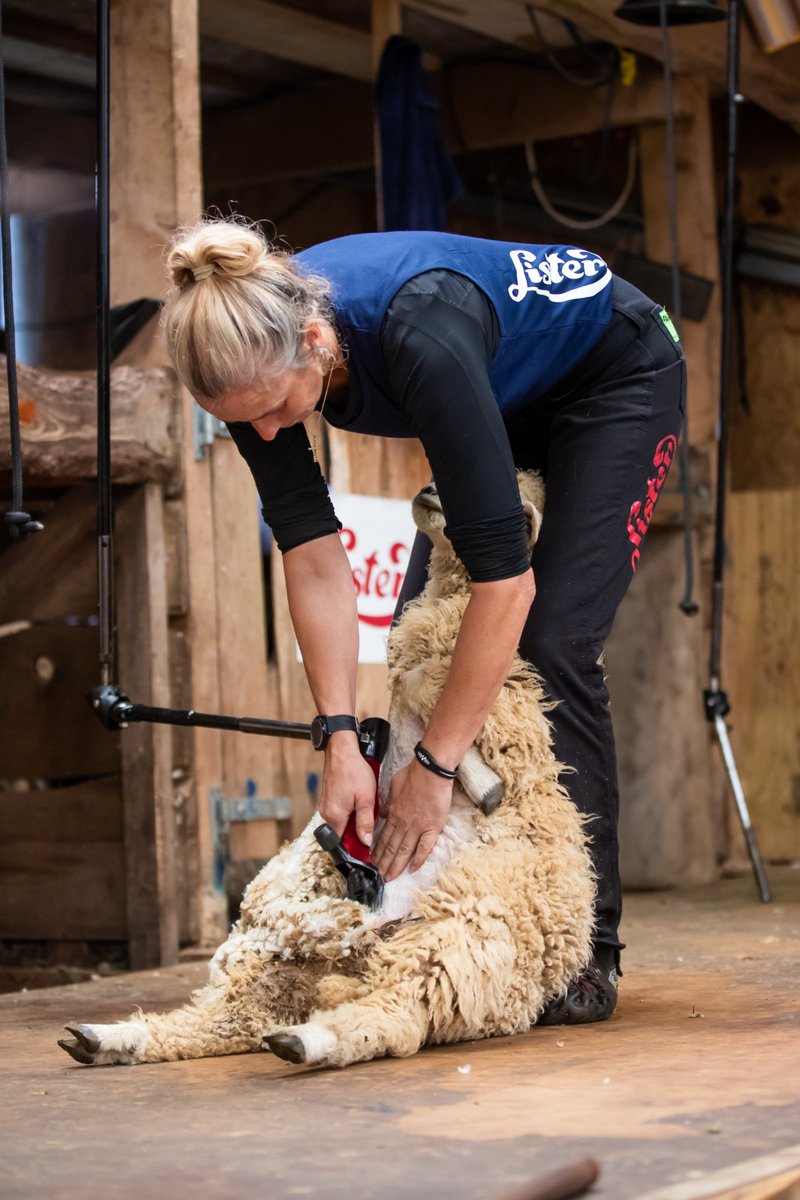
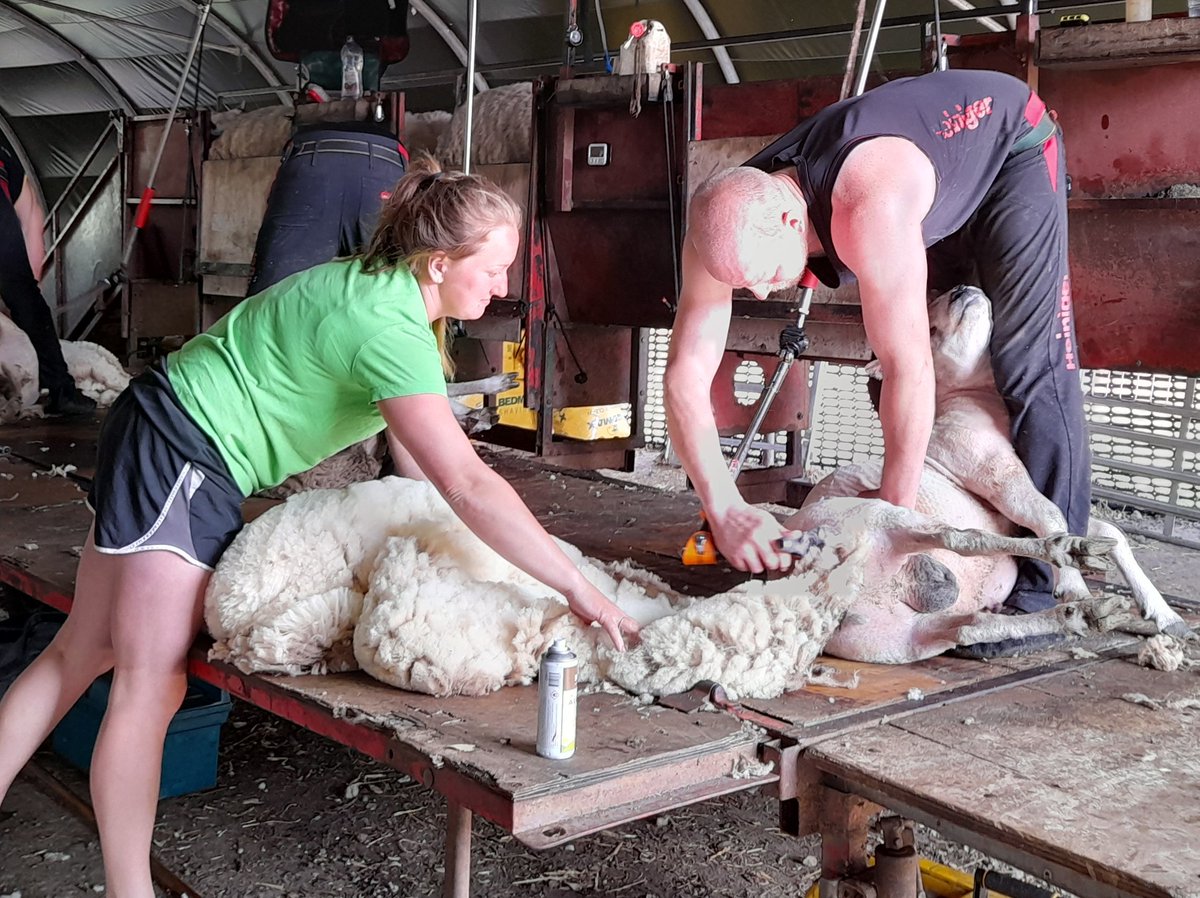
The obvious answer to losing our foreign shearers is to simply train our own. Britain already does. Training was never the problem, and here is what actually is.
The country has fourteen million breeding ewes and about three months to shear them, because the fleece has to come off in a short warm window or the animal suffers. A mountain of work crammed into one season, then nothing for nine months.
So think like someone weighing up the trade. You spend years mastering one of the hardest physical skills in farming, shearing hundreds a day with calm hands and no harm to the animal, and the reward is twelve brutal weeks in summer and three quarters of a year with no work and no money. Nobody builds a life on that. So they don't, and who could blame them.
The shearers who fly in have solved the one problem Britain cannot. A top shearer works four countries a year, New Zealand, America, Britain, Australia, three months in each, chasing the season round the planet until twelve weeks becomes fifty. That is what makes it a career instead of a summer job, and no single country can recreate it, because no single country has more than one season.
There used to be British gangs on this circuit. Contractors who travelled, who trained the next lot, who knew every shed in the dale. That world thinned as the wool stopped paying and the young went to jobs that ran all year, and the gap was filled by the shearers who fly in, who now teach the British newcomers coming up, because the knowledge had nowhere else to live. Cut them off and you do not force Britain to train its own. You remove the last people still doing the teaching.
And this is what makes it so hard to stomach. Seventy-five people, in for twelve weeks, gone the day the job is done, costing the taxpayer nothing and leaving the flock shorn. If any arrival on earth is the useful kind, it is this one. A government serious about who comes and goes would fling the door open to exactly these people and spend its energy on the arrivals it genuinely cannot account for.
It has done the precise reverse. A hard No for the seventy-five it could see, needed and time-limit, while the numbers it cannot explain carry on untouched.
They looked at a skills chain held together by seasonal workers and decided the workers were the problem. They were the only reason it still existed.
The last overseas shearers Britain intends to let in are on the fells right now, working out the final weeks of their leave.
The door shut on 30 June. No vote, no debate, no announcement, just a date passing quietly in a summer when everyone was looking elsewhere. Those still working the Borders this week are here on leave that expires on 1 October, and when they fly out that is the end of it.
Understand what is walking out.
Six New Zealanders spent three months in one Northumberland valley last year and sheared nearly 90,000 sheep. Fifteen thousand head each, across farms from the Scottish Borders down to County Durham. They have been coming into Coquetdale for over thirty years. Since 2011 a concession has let up to 75 of them in each spring, and between them they take the wool off one and a half to two million British sheep in a window a few weeks long.
The Home Office rejected the application on 2 February. Twenty-six days of farmers writing to their MPs got it reinstated on 10 March for one final year, with a line about the sector having had fourteen years to train British workers and now being expected to transition to domestic labour.
Here is what that sentence is standing on. British Wool trains over 800 people a year, most of those courses are basic level, and most of the people on them are sheep farmers learning to do their own flock. Training was never the bottleneck. A top shearer clears a ewe in two or three minutes, calm hands, no panic in the animal, hundreds a day for weeks on end, and reaching that standard takes years of conditioning and a place in a global trade that follows the season around the planet.
Fourteen million breeding ewes. A few weeks to do them all. A sheep left in fleece gets eaten alive by maggots, so the job is not optional and the date is not negotiable.
Next spring those farms make phone calls that nobody answers.
Seventy-five shearers, once a year, and a government that could not find room for them.
This is the result of many bad legacy decisions taken by UKRI hastily and without proper consultation, overseen by a government department that no longer exists. Surely the new @andyburnham government will want to take time to review this.
This photo at Posh George's Montenegro penthouse was taken days after we exposed him as the criminal bankrolling Farage
Who is she?
We didn't expect to identify her as a US federal judge
Or to uncover he paid her late husband, former AG for Arizona, where he was convicted
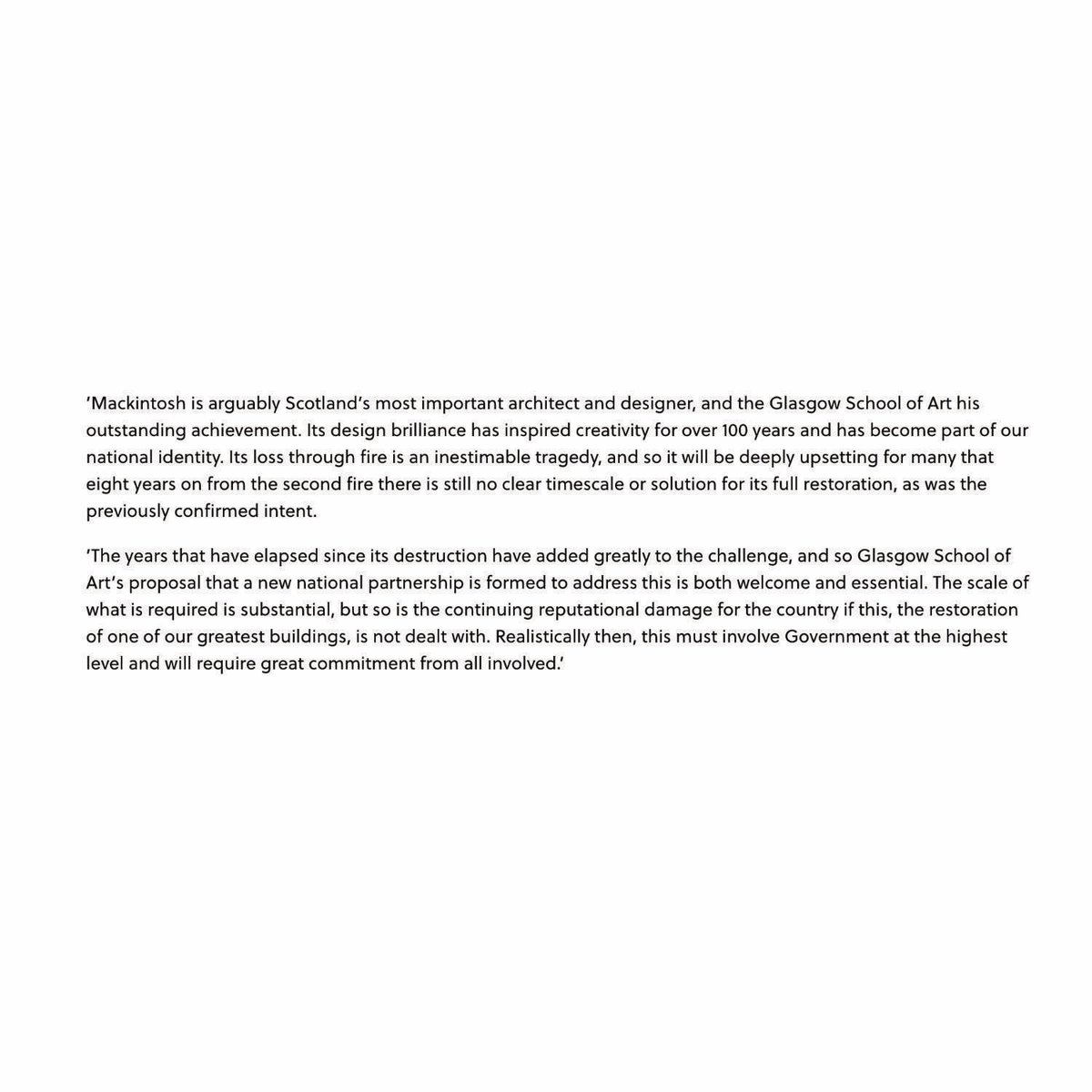
The CEO of The National Trust for Scotland has responded to recent news on the GSA Mackintosh Building.
An honest and hopeful assessment ( see extract here ).
Other leaders please take note - and make things happen.
Full details: https://t.co/Mkdg4LLoGg
Mealy mouthed ‘cost of living’ / ‘national priorities’ lines always trotted out. If the building was in London money would have been found and it'd be back. It's world heritage, one of Britain’s best buildings. Enough pussyfooted prose. Leadership please.
https://t.co/9yjoay10sn
If you’re just waking up and haven’t caught the news yet…
Reform UK lost two council by-elections to Labour last night in Thurrock.
I know Zia Yusuf and Nigel Farage won’t be tweeting about this one, so just making sure you’re all aware 😂😂😂
GLASGOW
Mackintosh School of Art
Statement from Professor Ian Ritchie CBE RA FREng RIBA published in New York Times
"Mackintosh, a Glaswegian and former student of GSA, he, along with wife Margaret Macdonald whom he met at GSA were, and remain, huge figures in Scotland’s and Europe’s art and architecture worlds.
Unquestionably, his GSA building is a masterpiece, and a magnificent legacy to Glasgow and to all of us. As a Scot, I find it uncompromisable that the promise to rebuild is now questioned because of money.
As a nation, we have an obligation to rebuild it, with the same materials.
There are comprehensive records and detailed surveys of the entire building and its furniture. It is well within the wit, wisdom and capacity of Scots to ensure it can be rebuilt and within the current building regulations. It just needs will power!”
Question for the Electoral Commission
- there is a byelection happening in 3 weeks
- should a candidate be platformed by a news Channel in this way
- will GB News offer the same time slot to all 33 other candidates in Clacton
- are rules just ignored because it's Farage (again)
Just to prove I'm consistent, here I am seven years ago refusing to answer questions by C4's Matt Frei about millionaire Arron Banks spending nearly £500k to fund my lavish lifestyle, while I march down the street with my mate the traitor Nathan Gill.
I'm hearing different speculation about the Mack rebuild, but let me be clear about one thing - nothing other than the full and faithful reinstatement of Scotland's finest building will be acceptable.
This is our Notre Dame. Both governments must step up. https://t.co/40xdt5cA99
In a podcast Nigel Farage admits Cottrell funded his operation ahead of the election.
He also claims Cottrell was involved in a “tax avoidance scheme” in the US.
That is not true: he was jailed for his role in a dark web drug money laundering conspiracy.
The number one rule of a political adviser is keep quiet in public. To keep off social media and to be the voice behind the scenes. But just for today I’m breaking that rule.
I first met Keir Starmer more than twelve years ago when he was standing to be the Labour Party candidate in Holborn and St Pancras.
Since then I have had the privilege of being by his side. From Brexit to the pandemic, leadership campaign to election, opposition to government. Changing Labour from a party of protest to a party of change. Having the chance to do what politics is really about: improving people’s lives.
Keir is a man of extraordinary strength, determination and decency. I’m so proud of what we have achieved together. Others will judge his time in politics as they see fit. But for me I see a Britain today that is a better country because of his leadership.
Right, back to staying quiet.