In our scenario, frontier-model export controls were a 2028 event. It took two days for it to happen 😢. The most capable US models are now legally off-limits for non Americans. The silver lining is that it's getting very hard for European policy makers to keep ignoring this.
This is, perversely, good news for Britain, Australia, Japan, Europe, and other countries being cut off that would once have seen themselves as close allies of the United States.
It shows us what the future may hold if AI is the strategically and economically decisive technology of the 21st century and is controlled by the US and China. It is good news because *it may be happening early enough to give us time to act.*
I think this will be rescinded pretty soon, but it’s a sign of things to come. In a future where frontier models cannot be used outside the US, our industries and economies will fall behind and American businesses may not be able to operate overseas. We won’t be able to defend ourselves militarily with defence systems built on obsolete software. Europe 2031 is a good scenario of what a future like this could mean: https://t.co/AMc5LrFJeS
Some of the things we need to do are ‘no regrets’ measures we should do anyway. But some are genuinely costly and risky.
We need cheap electricity – powered by gas, coal (this is costly, coal is very bad), deregulated nuclear fission – whatever can provide *cheap, reliable, 24/7* power. This almost certainly excludes wind power, which is enormously expensive and unreliable. We need projects to be able to connect to the grid in days rather than years by paying for fast-track connections.
We need to make it incredibly easy to build data centres, with the property taxes retained locally and hypothecated for local tax cuts so there is some direct benefit for locals. This doesn’t need to be nationwide.
We need to create new regulatory regimes for innovative businesses that give them the right to hire and fire staff with ease. The difficulty and cost of firing staff is one of the main reasons Europe has fallen behind so badly. We need to create a parallel employment regime that companies and workers can opt in to: https://t.co/YaNOXK1Po2
Even though I think it will probably fail, I think we should probably try to create a good, non-American frontier AI lab. I am quite pessimistic about this – even extremely well-resourced, innovative software companies are struggling to do this. But the stakes are so high that not trying seems foolish.
One thing that might work in our favour is the number of brilliant AI engineers who are not US citizens, who under the current export controls do not have access to Mythos/Fable even if they live and work in the US. What happens to Demis Hassabis, Ilya Sutskever, Andrej Karpathy, and the many other Europeans, Canadians, etc who are working on AI models in Britain and America who are affected by this?
I do not think we should force our own companies to use model, because this would exacerbate their economic weakness – this lab should have to compete on an even playing field. I am deeply sceptical that this can work, but we cannot rule it out. If we do it, it has to be able to pay US salaries, operate without political constraints. https://t.co/Um05rUF4Vq
It is cope to tell yourself that Trump is an aberration or that these export controls are a one-off. To repeat, I think these specific controls will be lifted quickly and it will be easy to move on and forget it happened. But this is a look into a potential future. Every one of us that is not a US citizen is at risk. The standard political divides do not apply here; the question is whether you grasp the enormity of AI as a technology. We have to act!
we're hiring @stripe for a short-form video + social lead.
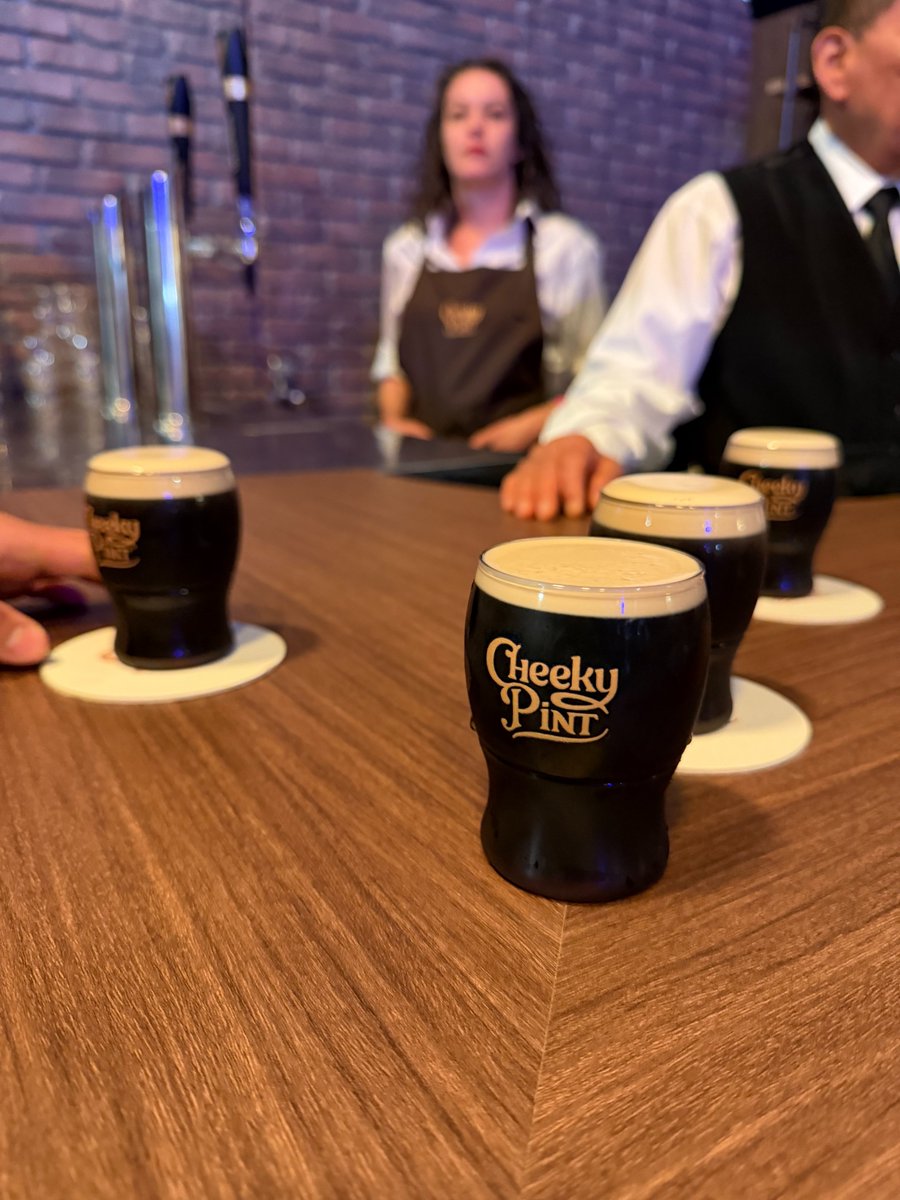
you'll be the engine of our short-form video strategy, making our content (like Cheeky Pint!) essential viewing for the world's most ambitious founders, operators, developers, and economists.
requirements:
>strong, evidence-based POVs about what works (and what doesn't) on YouTube
>comfortable wearing a lot of hats: producer, video editor, clipper manager, content commissioner, social media channel strategist, measurement aficionado
>experience working on short form video content that 1) you're really proud of and/or 2) you've got a view on what you'd improve
>exceptional taste
if this sounds like you, please apply! link below.
Fun fireside with @collision at Stripe Tour London yesterday.
- Fable hot takes
- Running an org in the AI era
- Why the EU/UK suck at tech
Full thing here:
https://t.co/uWd6tX1H1o
🚨 JUST IN: @LloydsBank just chose @stripe to power payments for a million business customers.
It already owns a card acquirer.
So why partner?
The product is called Lloyds Accept. Tap to Pay, payment links, terminal devices, live inside the Lloyds Business Account, sign up in minutes. All of it running on Stripe Connect.
Lloyds has owned Cardnet, its card-acquiring arm, for years. So this was a choice. A bank that already acquires card payments looked at building a modern small-business product and decided renting Stripe beat building it.
Modern SMB acquiring became its own discipline. Instant onboarding, Tap to Pay on a phone, the plumbing that lets a market stall take cards before lunch. Stripe spent more than a decade on it. Cardnet was built for a different kind of merchant.
Strip the announcement back and it's a swap. Lloyds brings a million business customers and the relationship. Stripe brings the product. Lloyds rents the product and keeps the customer. Stripe gets distribution it would have spent years and a fortune winning on its own.
Eileen O'Mara at Stripe put it quite well: together with Lloyds they reach more businesses than they ever could alone.
Stripe gets distribution
Lloyd's gets a new revenue line
For a decade the story was fintechs clawing for the distribution banks already had. At a time when Allica and Revolut are snapping at the heels of the small business segment. This is a smart move
Reports say Lloyd's CEO Charlie Nunn called Patrick Collison directly about this product. And there's something to be said for how he's trying to transform a bank that was just another high street bank for a long time...
This is very counter to Fintech is the threat. And a sharp contrast vs the US market where big banks still try to compete first. Partner second.
What is less clear is what the banks chasing SMB like Santander or Barclays might do here.
Word is Barclays is trying to sell its SMB payments gateway. So who knows.
A UK 🇬🇧 Bank with 1 Million business customers just chose @stripe 🤯
That tells you everything you need to know.
Lloyds will offer Stripe’s payment infrastructure to its business banking customers, including Tap to Pay, payment links and in-person payment terminals: https://t.co/JxGuIzf3Qy
What makes this interesting is that this is reportedly Stripe’s first partnership with a traditional UK bank.
It’s also another sign that banks are increasingly choosing to partner with FinTechs rather than build everything themselves.
Meanwhile, competition in UK business banking is heating up:
• Revolut is making business banking a major priority
• Tide serves 900,000 SMEs
• Allica Bank is targeting 10% market share by 2028
For years, FinTechs wanted to become banks. Now banks are embedding FinTech infrastructure.
The lines between the two keep getting thinner..
90% of the soldiers on the first boats to hit the beach didn't live to see the end of the day. Look at those faces. Some of them never made it to 18.
Never forget that they paid the ultimate price for our freedom. We live our lives the way we do because of them.
“Unfortunately, AI companies have an incentive to make apocalyptic statements like this. Nothing markets a technology like the suggestion that it’s too powerful to exist. But such pronouncements are making the public needlessly afraid of what is, in fact, a miracle.
Electricity was a miracle. The internet was a miracle. Today, we take them for granted. Within a few years, we won’t remember why we got so worked up about AI coding agents. We’ll take them entirely for granted too. That’s how technological miracles go.
In 1900, about 40 percent of Americans worked on farms. Today it’s just 2 percent. If you’d told someone in 1900 that 95 percent of farmers would lose their jobs to machines, they would have predicted mass starvation and ruin. Instead, we went on to do almost everything we now think of as modern life: We designed cars, wrote software, piloted airplanes, manufactured TVs, made movies, built skyscrapers, and launched satellites. Those last 2 percent now feed the rest of us, and they feed us better than any society in history. Fewer farmers didn’t mean less food. It meant more of everything else.”