I have been programming long enough (nearly 40 years) that I no longer entertain new programming languages that are less advanced than #Smalltalk, #Lisp, #Erlang
and #Forth
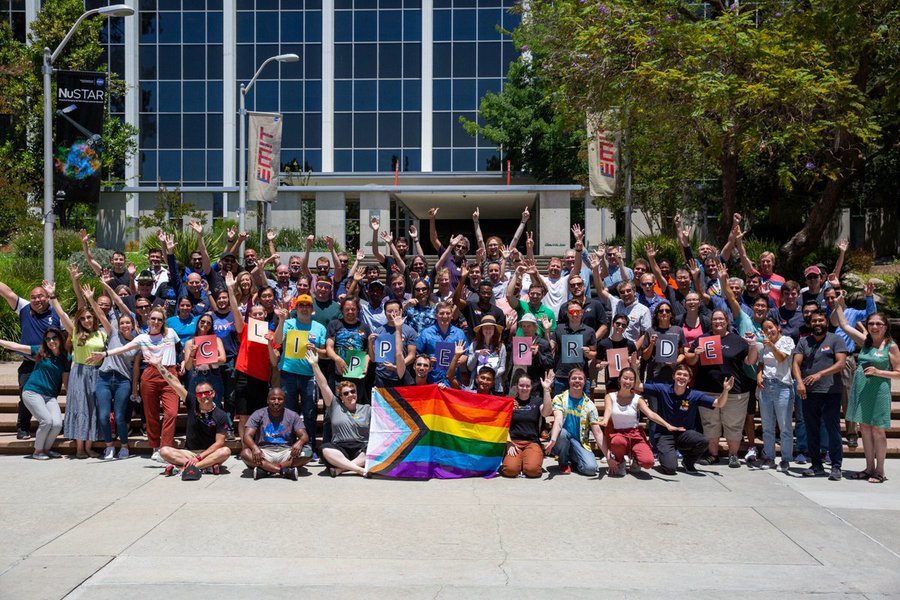
We celebrate the contributions our LGBTQI+ colleagues have made to space exploration and aeronautics. See their stories in our #PrideMonth gallery: https://t.co/RRffWDAdQO
Sampling the PIR analog sensor 100 times per second ~ 25uA...
TX ~ 10mA.... I should get around 1 year off the AAA batteries if triggered 300 times per day ;)
The delicate problem of IoT comms... nope, it's not done yet. LoRa, Zigbee/Thread, Wi-Fi, BLE , etc. Some are proprietary, but they are all complex and heavyweight. Yes, you can abstract a lot away in software stacks and hardware.. but raise your hand if you have ever (1/2)
OpenBSD with ECL (Embedded Common Lisp is much, much slower than Linux with SBL (Steel Bank Lisp).
But I am building an IoT hub.
Honestly, how fast does it *need* to run?
Simpler systems FTW.
I find myself only looking at faster laptops/desktops when I am needing to compile huge C/C++ app sources from scratch (like the ESP32 dev tree). I should probably just ask myself if I just need a faster CPU to placate these much too large code bases.... everything else I (1/2)
@svetlyak40wt Sorry, this is a system for my day job. :(
Most of my home automation revolves around ESP32 and uLisp doing all the work (with just a MQTT message queue broker on a PC as the hub).
@amszmidt I'm just talking about benchmarks (ECL vs SBCL; OpenBSD vs Linux). A typical (small to midsized) IoT gatway/hub is spending most of it's type idle (waiting for events) so my system is not necessarily slow.