#JWST's NIRCam now allows for simultaneous coronagraph imaging in both short and long wavelengths. Get the details on this new capability: https://t.co/p7ALrYmaOI
The first paper from my #JWST GTO program has been officially published and it's awesome: water confirmed in a main-belt comet! Kudos to PI and paper lead Michael Kelley!
Professional jealousy is a thing in our field and it can be destructive. Esp as a finishing grad student or postdoc it can be HARD to manage your own career anxieties while watching your peers & friends succeed. You want to be happy for them, but it also sucks.
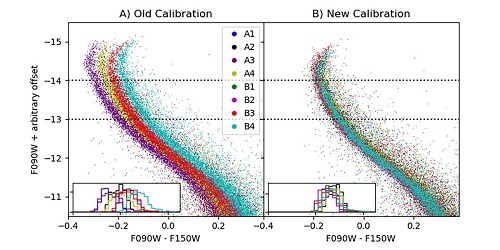
Are your #JWST NIRCam images plagued by "wisp" artefacts? @aaronrobotham has got the solution to help you get rid of them!
See before-and-after example here 👇
Gold stars for you! 🌟
Shown here is M92, a cluster of thousands of stars located 27,000 light-years away in our Milky Way. One of Webb’s first science observations, this was taken as part of a program designed to help scientists make the most of Webb: https://t.co/9CHqHtEZlz
What has @NASA’s James Webb Space Telescope revealed so far?
Discover what scientists are learning about some of astronomy’s biggest questions.
“New Eye on the Universe” airs Wednesday Feb 22 on @PBS. https://t.co/DPdS3BDLpg
M92 was also one of @NASAWebb's first science observations, partially to test how well Webb observes stars that are densely packed together. Plus, Webb operates at longer wavelengths and is able to detect smaller, fainter stars in shorter amounts of time: https://t.co/c0yPDwomX6
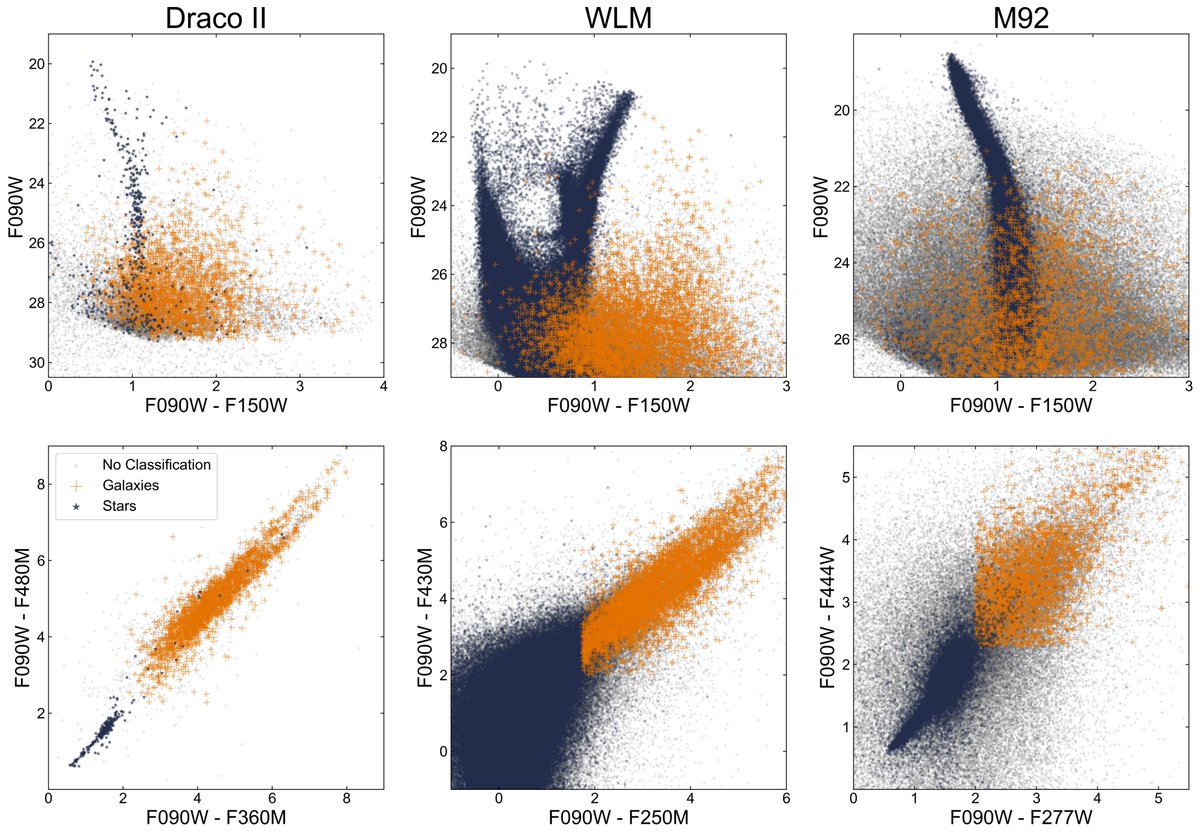
Wow! It's a great day to read our new research note for @JWST_stars, where we show applications of DOLPHOT output morphology parameters and long-baseline colors to disentangle resolved stars from background galaxies in NIRCam images. Incredible! https://t.co/j0WNiCu2e5
Here are some results from the stellar pops ERS team comparing the ETC predictions to PSF photometry from DOLPHOT. Something to keep in mind when preparing #JWST Cycle 2 proposals!
https://t.co/LG12ZrVwOd
The survey overview for our #JWST resolved stellar populations ERS program by Weisz, McQuinn, Savino, et al. is out today! In it, you can read about the science motivation & observing strategy and see the color-magnitude diagrams for M92, Draco II, & WLM. https://t.co/lxEvAVSfv8
Why, hello, gorgeous! #NASAWebb visited the iconic Pillars of Creation, capturing it in near-infrared light and delivering a kaleidoscope of color. Can you identify the newest stars? (Hint: They’re red and look like lava!) Details: https://t.co/kC4FOVnJnr
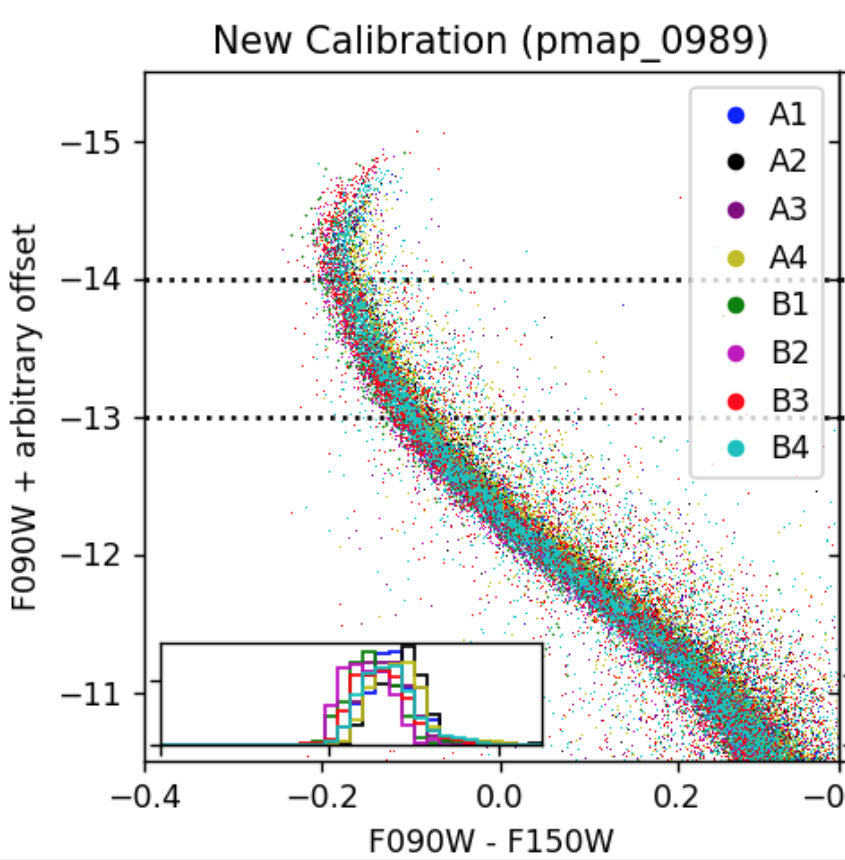
@gbrammer Yeah, A2 is the outlier in these calibrations. We're still trying to track that down. But it's close. Here's the M92 CMD with the new calibrations:
New #JWST NIRCam flux calibrations are now available in the pipeline! A news item should be out soon with a little more info. Note, we are continually improving calibrations -- subscribe here for updates: https://t.co/2mOurQDxeP
For #JWST enthusiasts, new NIRCam photometric calibration files are now available, if still a bit hidden, at https://t.co/CQS2eOVDXx. Thanks a lot @marthaboyer and others on the NIRCam team for getting this together.
New #JWST NIRCam flux calibrations are now available in the pipeline! A news item should be out soon with a little more info. Note, we are continually improving calibrations -- subscribe here for updates: https://t.co/2mOurQVGsX
For #JWST enthusiasts, new NIRCam photometric calibration files are now available, if still a bit hidden, at https://t.co/CQS2eOVDXx. Thanks a lot @marthaboyer and others on the NIRCam team for getting this together.
JWST calibration nerds! Did you know you can sign up to a mailing list that alerts you of calibration file updates, per instrument? Instructions are here: https://t.co/u1Z5g3g1fN
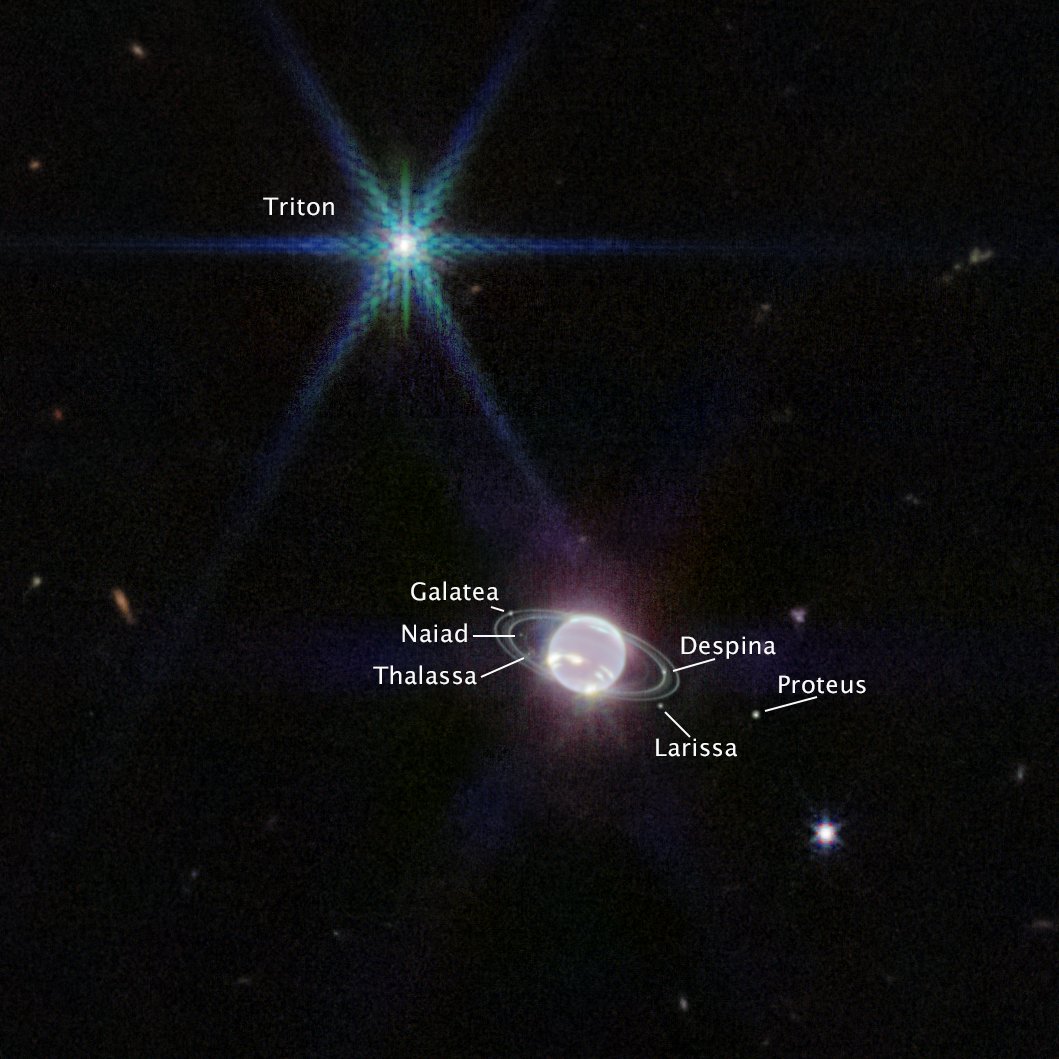
That’s no star. It’s Neptune’s large, unusual moon, Triton! Because Triton is covered in frozen, condensed nitrogen, it reflects 70% of the sunlight that hits it — making it appear very bright to Webb. 6 of Neptune’s other moons (labeled) are also seen here.