We're excited to be contributing $50,000 to the Ethereum Security QF matching pool!
Researchers, auditors, and protocol-level contributors are what keep Ethereum resilient for the future. Every donation backing them now goes further.
shower thought (when being showered by rain walking outside): When implementation becomes cheap, taste and vision are more important than ever - which are both rooted from actual understanding. Need to work hard and polish on this side.
A KB system that I use a lot myself.
a markdown KB that researches itself. Claude plans the agenda, fetches sources, writes atomic notes with citations and epistemic status, then audits for contradictions, gaps, and stale claims.
Plain files on disk. Obsidian-compatible. Queryable from any LLM via MCP. Can also publish notes as html to share with people.
https://t.co/vYlHJaizxH
The final 100 ETHSecurity Badge holders are in!
That brings us to 200 security experts, guiding how TheDAO allocates its funds and also coordinating behind the scenes to make Ethereum safer.
Big thanks to everyone who engaged with the process and helped shape it, and to @bonfiresai for building the tooling that made it possible.
Mark your calendars 👀🔥
ETH Taipei is back in 2026, Sep 11–15 (tentative) 🇹🇼
4 days of builders, ideas, and the energy you only get when the right people come together.
See you soon 🫡
Following the ongoing situation in Iran, I am convening a special Security College on Monday.
For regional security and stability, it is of the utmost importance that there is no further escalation through Iran’s unjustified attacks on partners in the region.
This week earlier @Zircuit Finance is live, and now also ready for integration: with referral, integrator will earn 10% of the protocol profit - real yields, streaming venue, and no cap!
Read the doc for more information, and feel free to reach out!
https://t.co/9FYGeVocxW
Zircuit Finance is now live.
Institutional-grade yield. Transparent structure. Security-first design.
Targeting 8–11% APR with no deposit minimums and 0% management fee.
Quite a few names come into mind, i'm not listing the ones who told me the left the blockchain space for now but let me know if that's of interest.
and this is by no means a complete list, just something on top of my head. There must be someone i'm missing but here we go:
All these folks are very into community and education
@changwu_tw (Chief Scientist of @imTokenOfficial ex-EF early days researcher)
@antonttc (Defi / options specialist, Morpho delegate)
@hsuantingchu (super builder since early days and now running a very impressive solver business)
@mnhsuTW (blocktrend - really one of the best blockchain media commentary)
@NICLin619 (the quiet but heavy and steady contributor)
@oskarth (Everything ZK)
if youve ever been drained or rugged by a protocol, this video... might be therapy 🛡️
i finally got a chance to walk & talk with @martinetlee, co-founder of @zircuit to learn more about the ethereum L2 "with antivirus".
2 min trailer 👇
i agree with a lot of what stani says here in principle, but i have to call out that this post misrepresents how aave operates in practice
aave is not an isolated lending market in the way people typically understand this term- while it is isolated from other curators, with everything managed under aave dao/aave service provider curation, each asset within aave core is connected with all others allowing for collateral lending and rehypothecation. @SebVentures put it pretty succinctly here: https://t.co/0zzdulLu4f
there are certain advantages to having upgradable market parameters- for example, it makes it simpler to update oracles if a pegged asset fails. but whether curation decisions happen at the level of market parameter upgrades or capital allocation decisions makes no difference in how curators respond to competitive pressure and profit motives
aave dao+service providers face the same competitive pressures as any other curator while managing their users' assets. they want to achieve top line metric growth like tvl (see https://t.co/mXnF6WmcNn) and increase their profitability, and they may be incentivized to cut corners or take actions that negatively impact the safety profile and risk adjusted returns of their users to achieve this. having upgradable markets does not remove principal agent problems inherent to risk curation, and while fixed fee contracts may help with incentive alignment, service providers will naturally cater to the preferences of key stakeholders to avoid being fired (independence within a dao model can be limited)
effectively, as a unified market aave is tying the solvency of the entire protocol to the weakest collateral assets. one bad apple spoils the bunch - failure of one collateral asset could quickly spread to other markets as users rush to withdraw or borrow out any available liquidity. and because aave does not have a way to segregate high risk from low risk collateral assets it systematically underprices risk from long tail assets or tokenized hedge funds, which drags down risk adjusted returns for end users
aave/compound style unified lending infrastructure has been a huge unlock for defi allowing more efficient capital formation, but it ultimately works best under a deliberately risk-averse strategy where all of the collateral assets have similar levels of tail risk (where it makes sent to charge a uniform risk premia across assets, and suppliers can be somewhat indifferent between which particular assets are backing their lent funds)
in my view, aave has seen considerable mandate drift in the past 1-2 years, allowing flavor-of-the-month looping strategies to begin crowding out lower risk overcollateralized lending activity. so far, they have been able to retain users based on inertia and the strength of their brand (just use aave), but imo the market will put sharper focus on risk-adjusted returns over time. hopefully aave v4 will address some of the infra shortfalls that make v3 markets unsuitable for margining long tail assets and tokenized hedge funds. until then, users can always use other lending protocols that allow risk based pricing (eg. morpho) or adhere to low-risk-only collateral policy (sparklend)
ultimately, diversity of curators and lending infrastructure is a good thing and it pushes everyone to do better for users. rather than trying to stifle competition, we should be demanding greater transparency and visibility into protocol and curator risk, to allow users to make informed decisions with their money. EF's focus on low risk defi, recent ratings initiatives from the likes of @CredoraNetwork and @SPGlobalRatings, and other initiatives yet to come will be key to making sure defi innovation continues moving the space forward, while minimizing tail risks and moral hazard
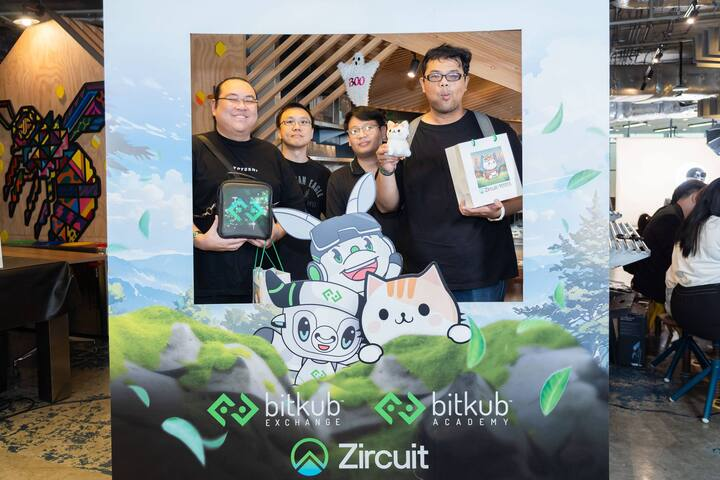
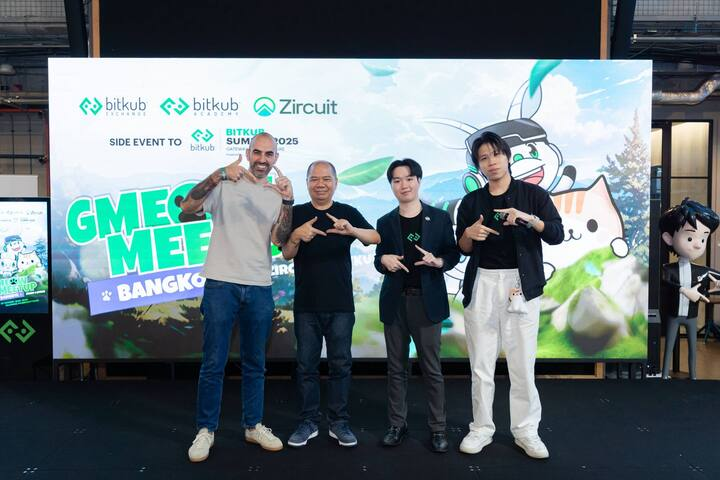
Our very own @martinetlee and @mirkogarozzo presented at our gmeow meetup in Bangkok earlier this week 🇹🇭 Thank you to everyone who stopped by 💚
They'll be at the @BitkubOfficial summit this weekend, so make sure to stop by and say hi 👋
Quantstamp is a thought leader on the account abstraction space - audited lots of leading AA protocols, has coauthored EIP-6900, and developed some internal tooling for these front. I’ve seen this internally and super proud of the team that ate keep pushing this forward and securing the space for the UX of the next billion users.