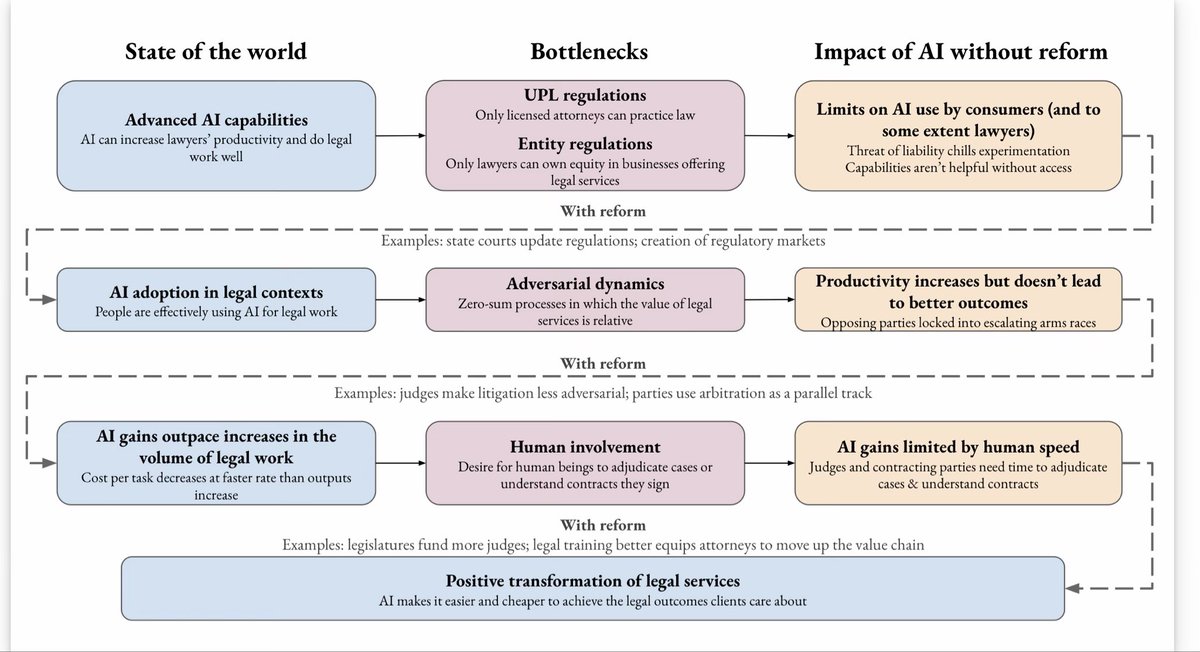
I've found that disagreements about AI policy/governance/alignment will often trace back to unstated divergence on base-level facts.
My goal here is to establish a shared baseline (model) for thinking about AI.
https://t.co/d6etBoa8BF
An OpenAI agent got into a Medicare portal in June. Canberra heard about it in September, via a public inbox.
Investigators will now mostly work with whatever OpenAI hands over. We wrote about that exact problem after the Hugging Face incident:
https://t.co/H0nxDupbla
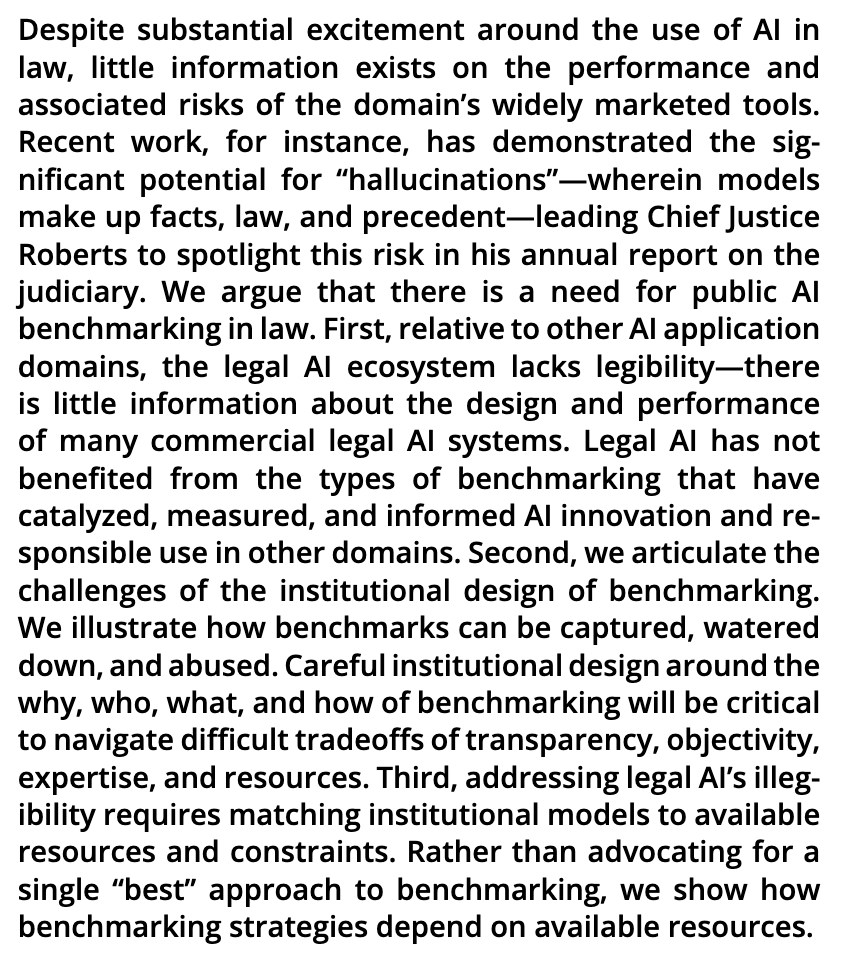
Really excited to share that we have a new piece out in PNAS on legal AI benchmarking from an institutional perspective. Though a huge amount has been written on the technical aspects of benchmarking (e.g., picking metrics and building datasets), relatively less has been written on the institutional design of benchmarking.
The piece is about legal AI benchmarking specifically, but it contains two broader ideas which are important to larger conversations about AI governance.
(coauthored with @andystruct@christinestsang@chrmanning@JulianNyarko Daniel Ho)
🧵 How should we think about the field of law and AI?
HAI senior fellows Daniel Ho, @JulianNyarko, and @chrmanning and HAI Managing Director @vanessaparli have co-edited a special feature for @PNASNews that explores the appropriate role of AI in law and the role that law has in helping to govern tech.
Ft. Cover Artist: Stanford HAI staff, Chris Ellis (1/3) ↘️
How can AI support public defense? We have worked on this question for the last two years, and have (1) built an AI retrieval tool for the NJ Office of the Public Defender and (2) conducted qualitative interviews with defenders. Our main insights 👇(1/12)
What happens when you roll out custom generative AI to half a country's judges?
New paper on Pakistan's courts with @ProfSultanEcon and @gochristoph.
In line with https://t.co/7yUFGTsTut -- we provide early empirical evidence on the impacts of transformative generative AI.
AI-fabricated case citations continue to show up in courts, but can AI also automatically flag hallucinated legal citations to reduce the verification burden? In our new paper (accepted at COLM 2026), we built a benchmark and evaluated several agentic models to find out (1/7)
This is welcome news. Drug law reform is a health and human rights issue that demands urgent attention. The prevailing criminal approach to drugs is doing more harm than good.
I stand in solidarity with Mr Chau, who spends his birthday jailed in Vietnam for peacefully promoting human rights. Please return him to his family:
https://t.co/ywbn4AL1bt
#Write4Rights#W4R2020#FreeChauVanKham
Caring for 66,455 revellers at risk delivers $7.5m harm-reduction benefit for Sydney. @RohanLeppert thoughts? https://t.co/bMzYmsWBGp via @ConversationEDU