Finding new medicines is getting more and more expensive, and AI won't help much unless we can generate physiological data at scale.
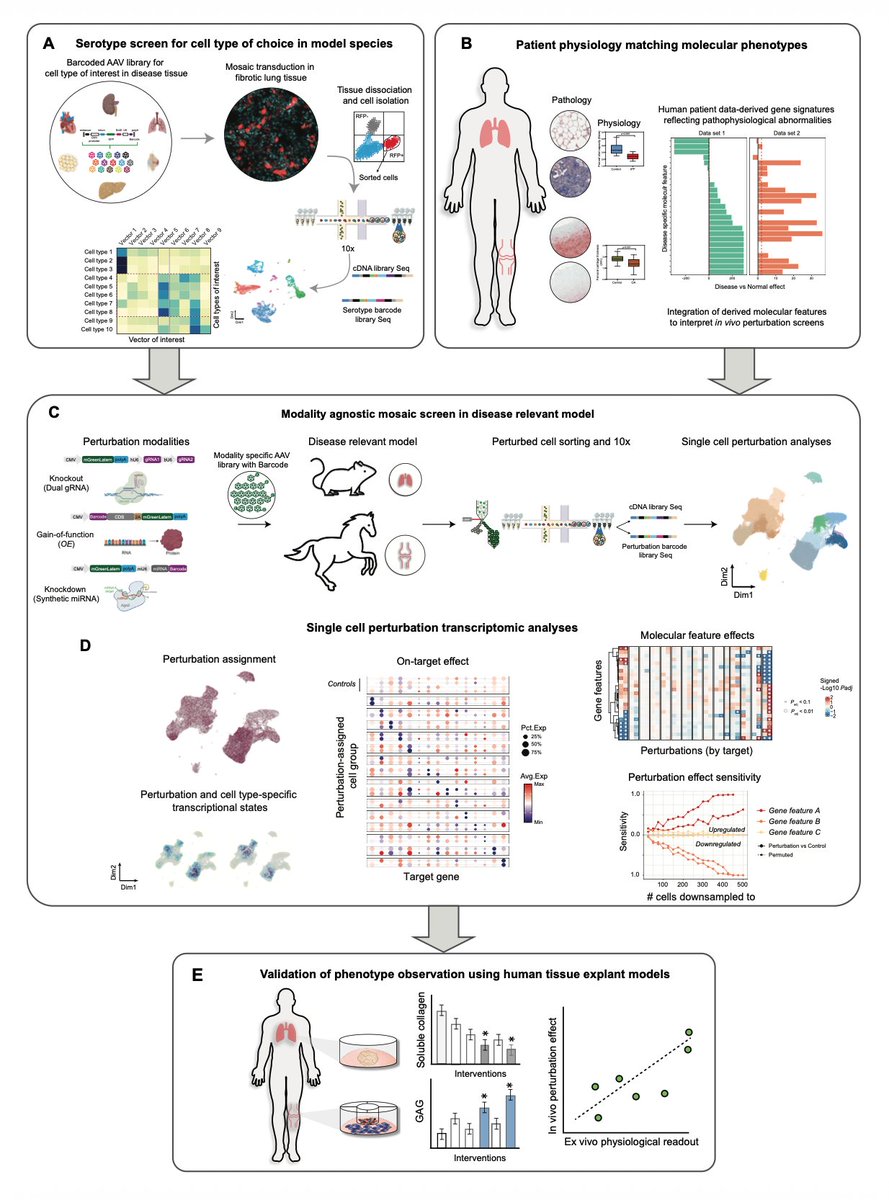
In our new preprint, @GordianBio extends the progress of the functional genomics community to run pooled in vivo screens at scale, in a way that answers questions about physiology and therapeutic potential.
We show screens in mice and horses, fibrotic and degenerative disease, with a framework for physiological predictions validated in human ex vivo tissues.
Very proud of @v_sontake, @vkartha88, Neety and the rest of the team. Tweetorial follows:
@MartinBJensen@_sholtodouglas lucky that in bio we can already know what some those gating long lead time studies will be, can start now + build infrastructure
Recent advancements in one-shot AI protein / antibody development by Chai, Nabla, AI Proteins, Generate, and a few others are accelerating the *main* theme in biotech:
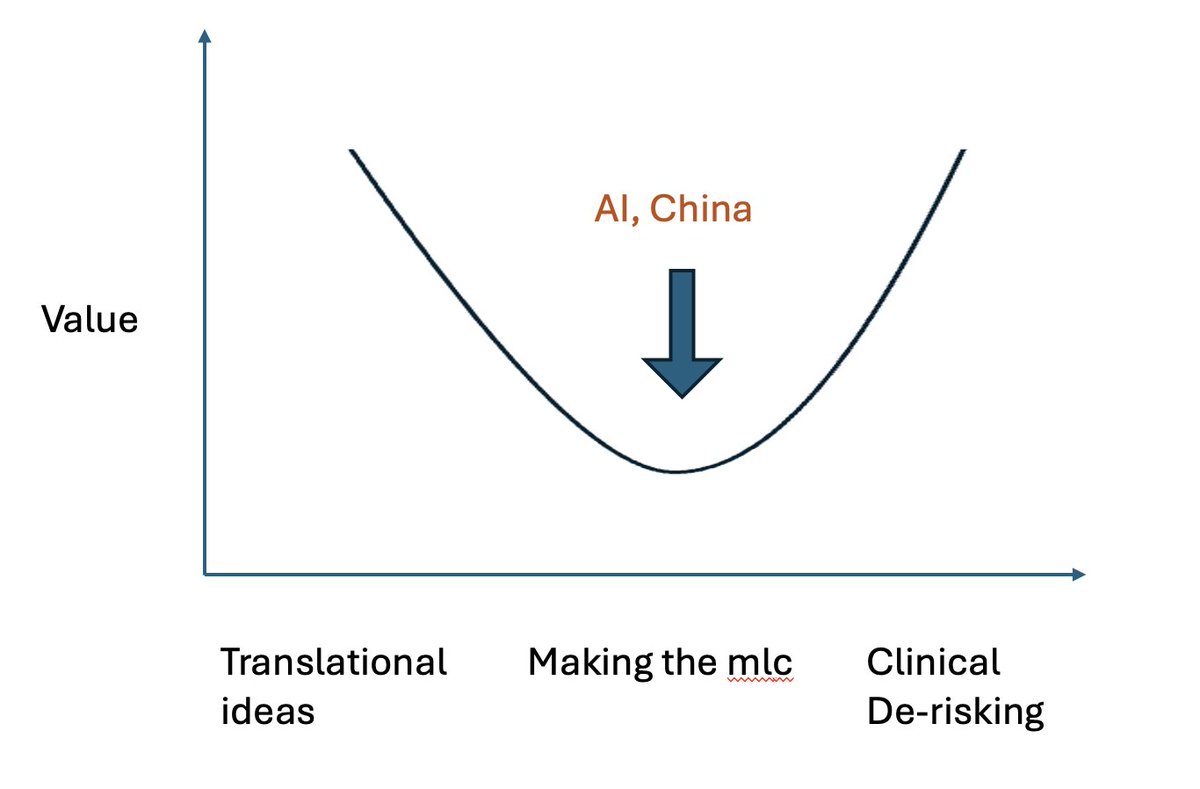
Value of building the molecule is going down. The value of novel targets, novel translational ideas, AND also the value of clinical execution is going UP
Here's where the value graph is moving towards:
The twin forces of AI and China are quickly driving down price of mlc dev across many modalities:
For AI - mainly Ab right now, emerging for genetic medicines, small mlc, ADCs, cell therapy;
For China - Abs, cell and gene therapy, small mlc, and soon genetic medicines
Having a "best in class" mlc is no longer enough - many tech platforms will soon offer you a mlc priced on metered compute (getting cheaper) and China CROs / biotechs will continue to eat the world with (over)capacity (continued involution).
To make a valuable drug, you must differentiate on either:
a) Novel translational ideas.
Novel targets, novel mechanisms, but not just that - connecting targets with diseases; novel application of certain targets in new disease settings, new intuition on which patient pops have widest therapeutic index for a drug, etc
OR
b) Clinical execution.
Determining the appropriate endpoints in a trial. Recruiting the right patients. Appropriate relationships with the right PIs / clinical sites. Ability to finance registrational studies in US markets ($10s to 100s of Ms)
Either be a translational target discovery engine / tech platform that unlocks new modalities (which unlocks new translational hypotheses) OR get a team of grizzled clin dev / CMO vets and go raise $X00M+ to validate a clinical hypothesis
Living in the middle (ie being "full stack") is dangerous work (at least for a startup)
@MartinBJensen If edge is novel target discovery (i.e. better at predicting what targets translate to human Tx effect), and you do second strategy (hard modalities), isn't that just stacking risk instead of leaning into and capitalizing on your edge? what's the benefit?
Is the longevity field making progress?
@NornGroup formed in 2021 to address that question. We’ve now built a website to make it clear who we are and how we work to make longevity medicine real. Read on for a summary, and some of our outputs.
Solid take. Problem is most don't know where to start -> do fishing experiments.
Value of a one patient's data/samples often wildly different than another patient's. Find most exciting patients first -> THEN get their samples-> no need to break the bank to find novel biology.
Biobankers are the next big thing in venture / company creation to usher in the promise of AI curing all diseases in the next ten years. We need tissue level data, cleanly tagged to phenotype and patient. Disease specific biobanks is something we're spending time on at Boom Capital. Start with the patient, understand what they need alongside the KOLs with perfect data, THEN find the technology. Find the cure. Repeat.
The strongest opinion I have is that the computational biology world has indexed far too heavily on gaining information from cells sitting in a dish. This is likely for historical reasons, in that LLMs work by just having a whole lot of text. But there's an important difference!
To end the year: breakdown and advice for @ARPA_H's healthspan-focused PROSPR call, largely from discussions in @norngroup.
The call is very ambitious, a sincere attempt at overcoming several of the biggest barriers for longevity medicine.
To understand age-related disease, we must rely on human data.
Gaps in human bio data bottleneck the development of impactful treatments and biomarkers. Long piece about what data is missing to make biomarkers that enable a step-change in age-related drug dev.
Link and thread:
I’m grateful for for everyone who has helped, and especially for people of @NornGroup@MartinBJensen@sufaldeb for the support, feedback, and getting me to write this in the first place.
And finally, I propose some projects that would result in the datasets that I believe are necessary for the development of aging biomarkers robust and sensitive enough to serve as clinical endpoints, and radically improve how aging related treatments can be trialled.