American science and technology became the best in the world because we made deliberate institutional choices that let exceptional people from everywhere come here, find one another, and build.
@NornGroup created Talent Bridge (applications open!) to increase the throughput of exceptional people into the US longevity ecosystem, where most of the field’s highest-leverage labs, companies, and funders are.
Talent Bridge is for people:
- whose main constraint is distance from the US
- who could do unusually good work with the right project, people, and path into America
- already working on longevity, in a neighbouring field, or ready to turn their skills toward aging
- who are ambitious and driven
We support projects aligned with adding healthy years to life, including scientific research, tool development, aging theory, policy work, Norn open calls, and other work that helps expand the truth-seeking capacity of the field.
Applications are reviewed on a rolling basis for candidate potential, project fit, and expected contribution to aging research. We reply within two weeks to applicants we are interested in sponsoring, and can help with visa and relocation logistics, network introductions, legal and housing connections, awards, and mentorship.
Apply with a project proposal aligned with Norn’s mission of adding healthy years to life.
More info on Talent Bridge: https://t.co/g7hKqgwkKg
Application form: https://t.co/Jhrdao00sW
For any questions, email: [email protected]
The longevity field is over-translated at this point, the basic research needs more support.
There was a ~decade long 'golden era of discoveries' from early 2000s to say 2016 Ocampo paper, where we learned about many new mechanisms.
We naturally started translating those, fueled in part by Calico as validation for investors. This is good, but the field didn't grow enough to replace the researchers now focused on translation. And new sources of funding like @ARPAHealth also focus on translation.
So the well is running low. Time for some rain.
(company data from @KarlPfleger)
AI in bio needs more data to train new models. But what data?
At Vitalist Bay, our founder @MartinBJensen argued for moving beyond the existing kinds of bio datasets and mobilizing researchers to plan definite data strategies for their fields (@impetusgrants's next focus.)
Viruses you picked up decades ago might quietly be driving age-related disease. But we are starting to learn how to fight back.
Epstein-Barr virus infects ~95% of adults and can persist in the body for life. It has been found causal in multiple sclerosis and several cancers. It has also been linked to immune and cardiovascular disease, making it a large burden to public health.
But EBV is not an inevitable risk factor. We are figuring out ways to fight back.
One approach is prevention. in clinics. Moderna made an mRNA vaccine against EBV called mRNA-1189. It is currently being tested in humans as a way to prevent infectious mononucleosis (Eclipse trial).
Another approach is immune control. Moderna is also testing vaccine mRNA-1195 in people with multiple sclerosis, asking whether targeting EBV could help treat relapsing MS.
A third approach is directly attacking EBV-positive cells. In Europe, an EBV-specific T-cell therapy (Ebvallo/tabelecleucel) is already authorized for a rare EBV-positive cancer that can occur after transplant.
Multiple other therapeutic avenues are pursued in either preclinical stages or Phase I trials.
EBV is scary because it is common, lifelong, and implicated in diseases that can appear decades after infection. If we can prevent EBV, control it, or eliminate the cells where it hides, we may be able to reduce a surprisingly large burden of disease later in life.
Notes on my trip to Shanghai. On how China has temufied all of biotech. Investigator-initiated trials. And why we are choosing to run trials there.
Link in comms
We audit the longevity field to map the bottlenecks on the road to aging therapies, and one of the biggest is that most targets still aren’t druggable.
More than two thirds of targets are out of reach for conventional medicines, and gene therapies often trigger an immune response. This is called immunogenicity.
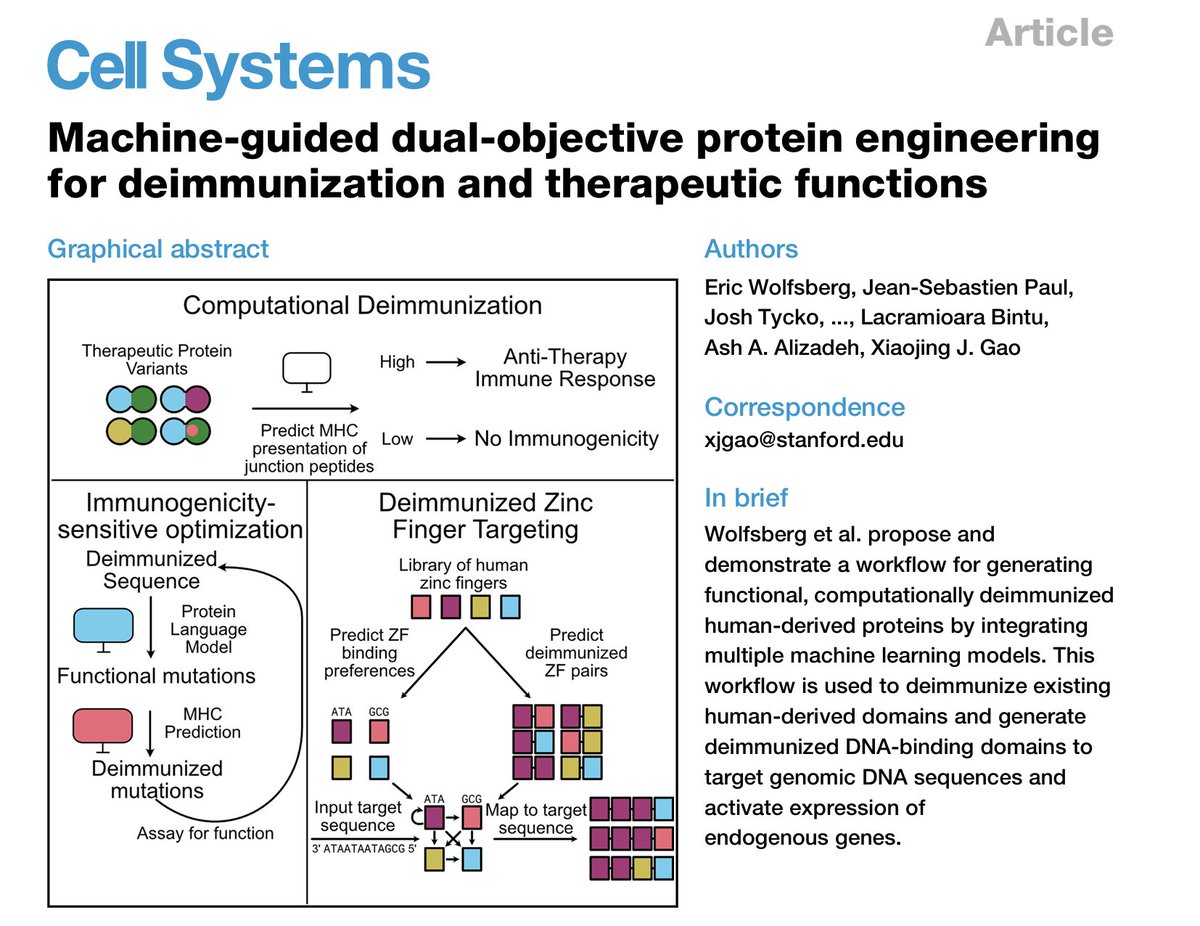
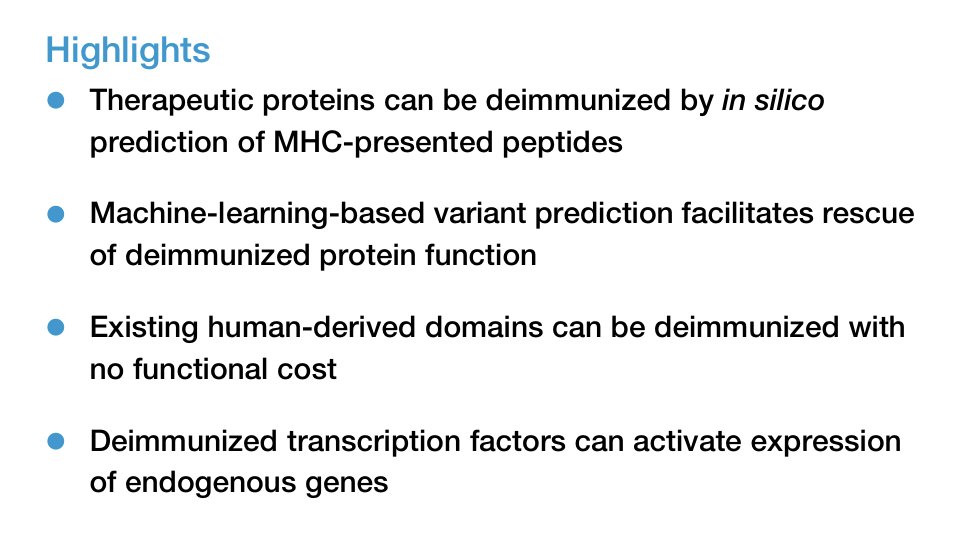
Removing immunogenic sequences from a therapeutic protein tends to break its function, and the variant space is too large to screen experimentally. A lab we funded via @impetusgrants published an ingenious way around these, using AI.
To engineer therapeutic proteins that are both functional and non-immunogenic, the Xiaojing Gao lab at Stanford (@SynBioGaoLab) built a modular workflow using ML models to optimize for protein function and low immunogenicity simultaneously.
They demonstrated it by generating deimmunized zinc-finger proteins that upregulate two therapeutically relevant genes, utrophin (UTRN) and SCN1A, passing both the function and immunogenicity filters.
The workflow is modular. As better models emerge, they can be switched in, making the pipeline more powerful without rebuilding it. That turns deimmunization from a bespoke problem into a repeatable process any lab can use.
On our map this sits at Viability, Development Stage. The question it addresses is what fraction of aging targets can be turned into drugs. Work like this makes that fraction larger.
The work was published in Cell Systems. Link below.
History has shown that investing in the right high-quality datasets can enable AI to create disproportionate gains in progress. We want to make that happen for longevity.
You can see the benefit of high-quality datasets in how protein structure databases laid the groundwork for AlphaFold and the applications it enabled, or how the ImageNet database transformed modern vision, now enabling self-driving cars.
Longevity needs its own equivalent of that "right data moment": datasets that let AI find more and better drugs, and quickly filter out weak ones at scale.
What’s missing today is data that tracks interventions over time and measures their effects at the level of organs and whole organisms. This is the level where disease lives. We have plenty of molecular and cellular data, but far less of this higher-level longitudinal intervention data.
We think that gap is a key reason therapeutic progress is lagging AI capability.
This is why we are starting an @ImpetusGrants focus on AI-enabling datasets. Useful projects in this vein include richer readouts in existing human cohorts, in vivo perturbation maps, and adaptive trial infrastructure.
The sooner we build those datasets, the sooner intelligence can translate into therapeutic abundance.
Click the link below to learn more about this round, and contribute.
Project Hail Mary is funny because Ryan Gosling is introduced as a PhD molecular biologist, but his brain seems to contain exactly zero percent molecular biology and an astonishing amount of non-molecular biology that the plot needs
"A very palpable shared mission of alleviating the burden of age-related disease on patients."
That's what led Satvik Dasariraju @satvik_93 to be part of Norn Nexus.
Satvik is an undergrad at @Harvard studying Human Developmental & Regenerative Biology and a Principal at @age1vc, a biotech VC firm investing in age-related diseases.
He's also president of the Aging Initiative at Harvard @aginginit, and has co-hosted events with Norn Group bringing together Boston's aging research and biotech communities.
Brilliant, mission-driven people like Satvik are exactly who the longevity field needs. Nexus exists to connect them.
for a while i've had a slight fear that the bluetooth from my airpods could be frying my brain
this weekend i pulled the raw data from a $30m government study of 1,679 mice blasted with cell phone radiation and reanalyzed it
what i found was...not what I expected?
🧵
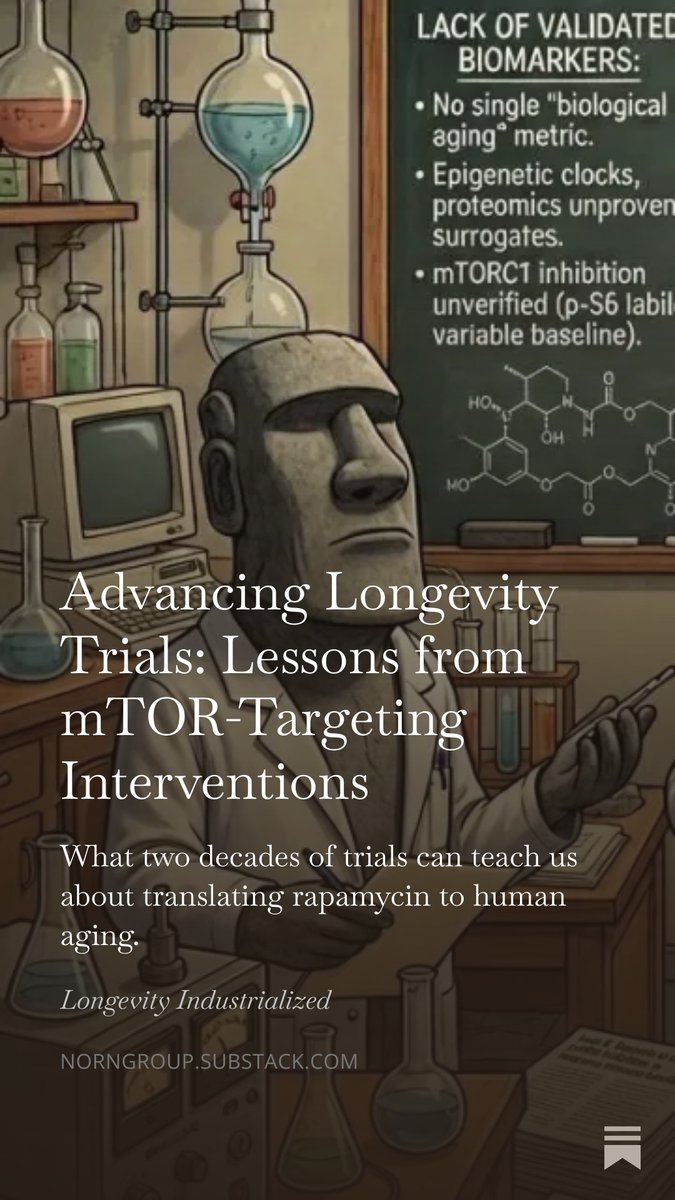
Rapamycin has extended lifespan in every model organism we've tested it in, and we have run a few trials in humans. But there is still no approved aging intervention. Why?
@NicolasDiLeo, who recently moved to the US with support from our early-career program Talent Bridge, spent months interviewing the trial PIs to find out.
It turns out a major reason is the challenge of designing clinical trials right the first time, especially for a new “disease” and mechanism..
Multiple lines of evidence are converging on the idea that viruses you picked up decades ago might quietly be driving age-related diseases.
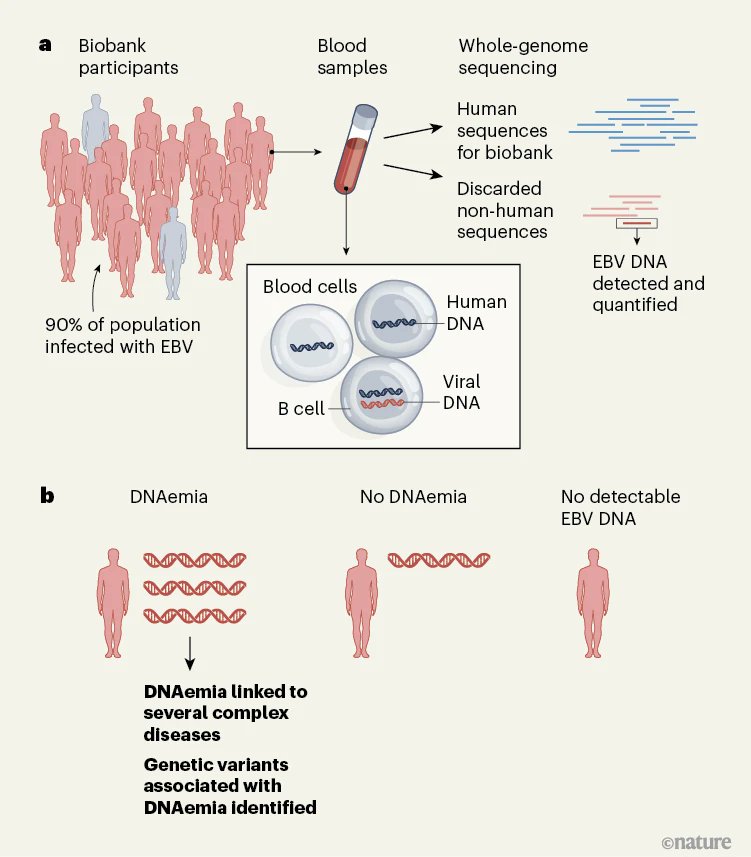
We've known for a few years that EBV raises MS risk 32-fold, and that molecular mimicry between an EBV protein and nerve insulation likely triggers brain autoimmunity. What remained unclear was why some people persistently carry EBV and others don't.
A new paper in @Nature from the @RyanDhindsa (whose lab has been supported by @impetusgrants) and @CalebLareau labs answers that at population scale. They mined ~735,000 human genomes for traces of Epstein-Barr virus, using reads of viral genomes that existing pipelines were throwing out as junk, and found that ~10% of people carry detectable EBV DNA in blood.
Carrying persistent EBV is associated with variable antigen processing, and the broader genetic architecture of viral persistence shares a component with lupus, rheumatoid arthritis, and type 1 diabetes.
Meanwhile, a separate line of very recent evidence is also pointing in that direction. The shingles vaccine, targeting another persistent herpesvirus, is showing ~20% dementia risk reduction in quasi-randomized studies which has been replicated across multiple countries.
There seems to be more at the intersection of immunity and age-related disease than we initially thought.
There are scientists working on aging today because of Norn Group.
"Impetus grants uniquely finds early career scientists right at pivotal moments in their careers and gives them the support to take bold steps in aging."
- Sophia Liu @immunoliugy, @ragoninstitute
We have deployed $34M through Impetus Grants into aging research, filling the well with new talent like Sophia who are now bringing new perspectives and ideas to the field.
Brain aging affects us all, and unlike other organs, we can't transplant our way out of this.
@xinjin at @ScrippsResearch was funded by @impetusgrants to apply their cutting-edge genomic tools to brain rejuvenation.
SheThe lab usespioneered ‘in vivo Perturb-seq’, a platform that combines pooled CRISPR perturbations with single-cell RNA readouts in living tissue, to understand how neurons behaveat scale.
Their Cell paper (supported by @impetusgrants) turbocharged this approach. By combining optimized AAV vectors with a transposon system, they now label >6% of cerebral cells, a 60-fold improvement over prior methods, enabling analysis of 30,000+ cells per experiment.
With Impetus funding, the lab is now focusing her in vivo screens on brain aging.
More to come!
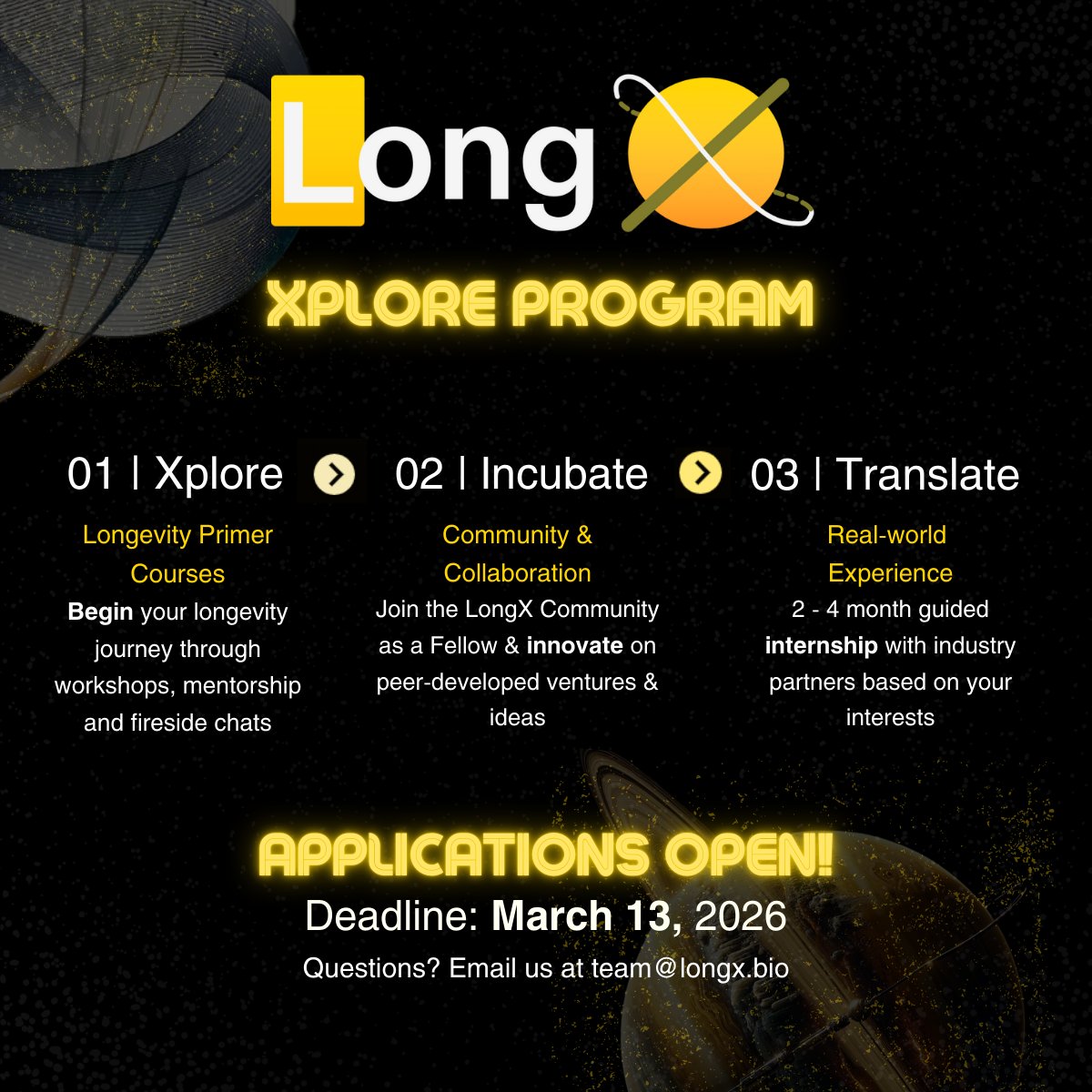
Longevity looks exciting from the outside. Inside, it’s dense, technical, and hard to break into, especially if you’re young, international, or non-traditional.
The Xplore Program exists to lower that barrier.
Apps for the 3rd cohort open today.
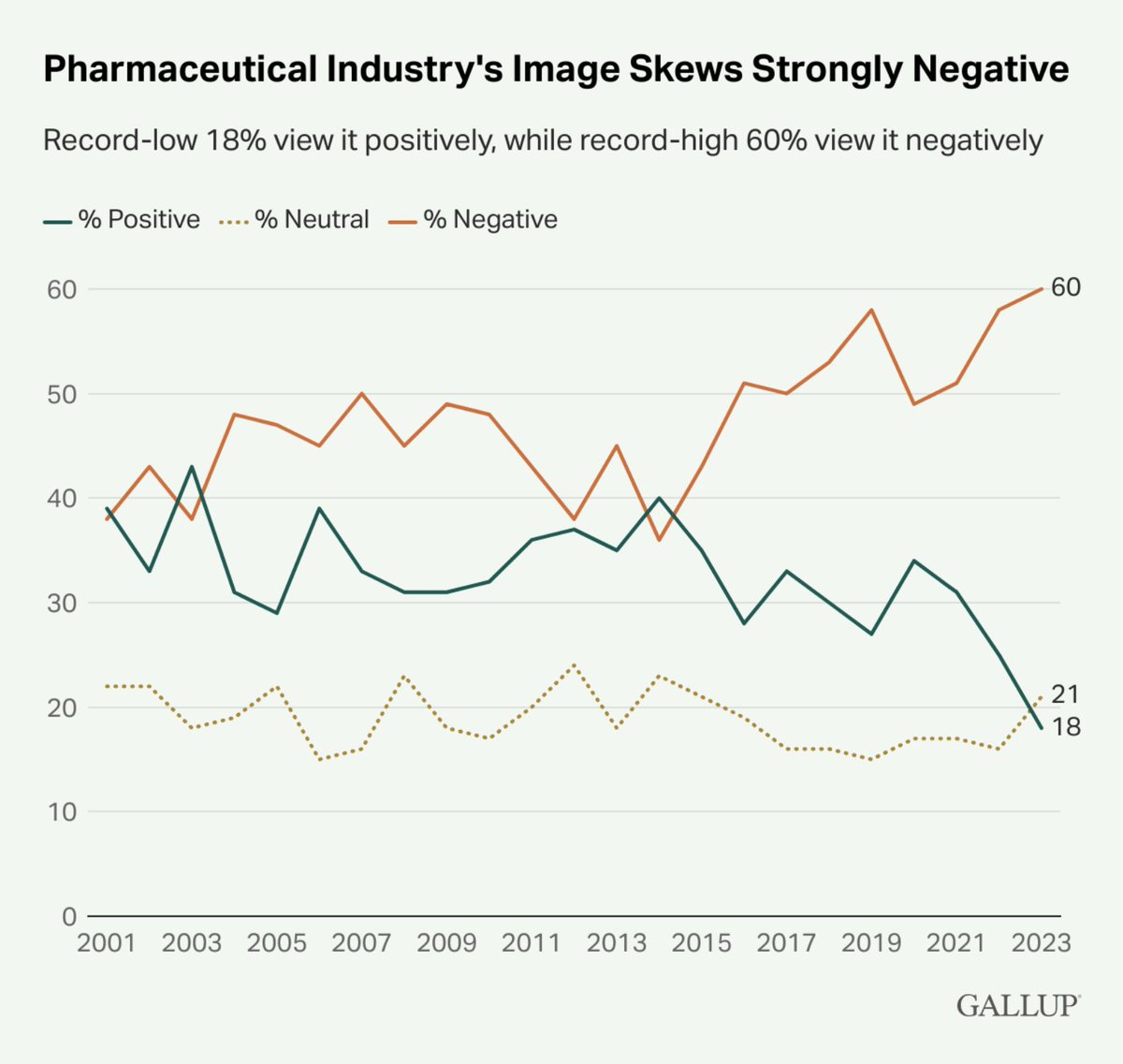
Pharma has the worst "value to humanity/public perception" ratio.
US life expectancy went from 68.1 to 79.3 years between 1950-2023, and about half of US lifespan gains from 1960 to 2000 have been attributed to medical care. Yet 60% of Americans rate pharma negatively (sources below). The industry that has added decades to our lifespans and massively improved our quality of life can’t convince the public that it’s on their side.
They need to actively communicate their value to the world, but how? More ads? More press releases? Where would they even start?
To get your aging drug approved, you need Phase III trials. To get reimbursed by Medicare and insurance companies, your primary endpoint needs to show clear benefits in how patients feel, function, or survive.
But "aging" can’t be an endpoint until we define exactly how to measure it. Without that clarity, trials look uncertain, and uncertain paths struggle to get funded.
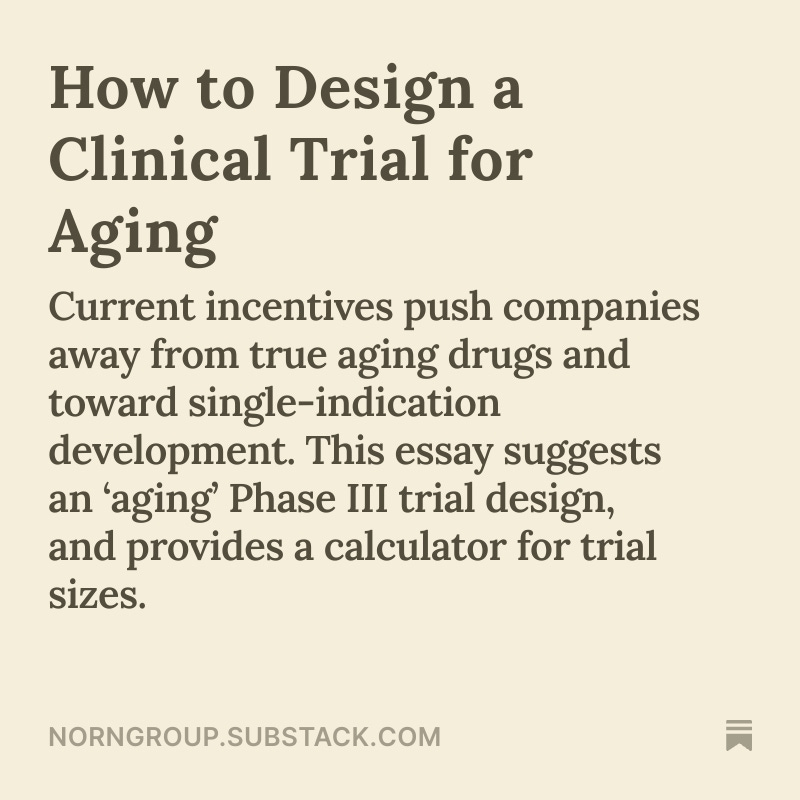
So how do we take the first step? We have just published our essay on how to design a clinical trial for aging where we answer this exact question.
@NornGroup’s @marton_mes and @BrennanOverhoff propose that the path forward is composite endpoints, where we use a multimorbidity-prevention trial counting time-to-first-event across multiple age-related diseases measured together, such as cardiovascular events, cancer diagnoses, neurodegeneration, and renal disease.
The piece walks through different endpoint options, analyzes why each faces specific constraints, and builds out the complete framework for implementation. It also includes a calculator that takes your drug’s estimated effect sizes and outputs required sample size, so you can see exactly when an aging trial becomes economically viable.
Martin Borch Jensen (@MartinBJensen) on how important it is to validate aging clocks with 3rd party benchmarks:
"As someone who cares about the longevity, I want there to be a test that you can take that tells you how you're doing...
If you make a change in your life, tells you whether you should keep at it or maybe you should stop.
But the only way [...] to validate those numbers [...] is basically to wait out the rest of your life, which is not okay, right? That's not acceptable.
We should have third-party benchmarks of how accurate each one is, right?"