🔍"TransAnnot—a fast transcriptome annotation pipeline" an efficient tool that speeds up #RNASeq annotation, supporting various input types & custom databases. Benchmarking shows it’s up to 333 x faster than other tools. https://t.co/QNzJm3caKQ #Bioinformatics #Transcriptomics @ma@marusiazel@yazhiniav @milot_mirdita
A new Science #Immunology study shows that regulatory T cells exposed to inflammatory environments, such as in #tumors, require continuous expression of the transcription factor #FoxP3 in mice. @IMPvienna https://t.co/3oAngXmkbC
Our van der Veeken lab shows in a new study that the transcription factor Foxp3 is only needed in regulatory T cells during inflammation.
🔎Turning off Foxp3 boosts anti-tumor immunity without harmful side effects.
➡️Read the paper: https://t.co/inpl9QXIKz
@viennabiocenter
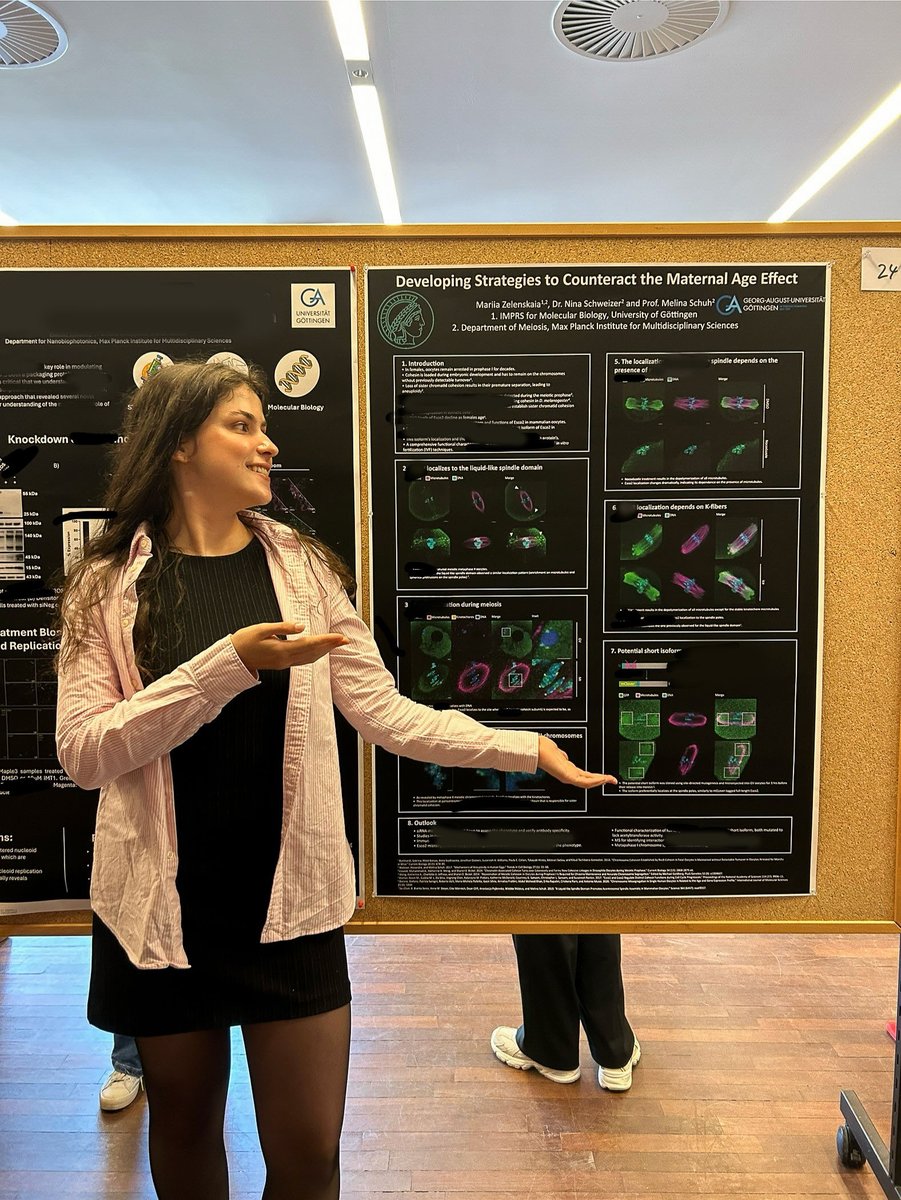
It was great having @marusiazel@schuhlab for her lab rotation within the IMPRS Molecular Biology Master Program. She presented her project, supervised by Nina, in our large seminar room. Congratulations on sucessfully finishing - well done!🎉#researchtogether#posterpresentation
🧬 Happy to share our new work on enhancer-enhancer cooperativity in Drosophila! Using STARR-seq, we analyzed over 1,000 individual enhancers and 1 million enhancer pairs to explore how they regulate tissue-specific vs. housekeeping genes.
Read more: [https://t.co/mM0NQg63dN]
Spacedust: de novo discovery of conserved gene clusters. Combining sensitive Foldseek structure search and conserved neighborhood detection to discover functionally-associated gene clusters in prokaryotic & viral genomes.
🚀https://t.co/SkFl2Cn8GM
📄https://t.co/TnS4uAPc3a 1/6🧵
B cell development relies on transcription factors guiding several maturation stages.
Meinrad Busslinger’s lab at the IMP now reveals their precise roles using a new tool to target protein elimination in live mice.
Read more: https://t.co/HpGIa0iCxK