I updated https://t.co/89CvV6PFjW. tried to rebuild macOS sequoia inside a browser tab.
@alanagoyal's site was the catalyst. her iterations have become my benchmark, even if we've never spoken.
Trade opening goes through mcp-pear’s open_position tool.
Claude constructs the payload (execution type, leverage, USD value, long/short asset composition) and sends it to Pear’s API.
Pear signs the transaction server side by an agent wallet so the mcp server never touches users private keys.
Been a Claude maxer for a while. I hate switching and managing tabs.
So I stopped.
Here's me opening a live pair trade on @pear_protocol without leaving Claude.
This works because of MCP.
I've spent the past year building MCP servers across prediction market protocols. @Polymarket, @Kalshi, @opinionlabsxyz, and now @pear_protocol.
Each one taught me something about what changes when the consumer of your API is an agent, not a human.
My thesis: a venue doesn't need everyone to come to its UI. It needs every interface someone builds to speak its language.
Full writeup: https://t.co/G5zngNOLxg
npm: https://t.co/CFVZpWffeN repo: https://t.co/WPINwJL7oA
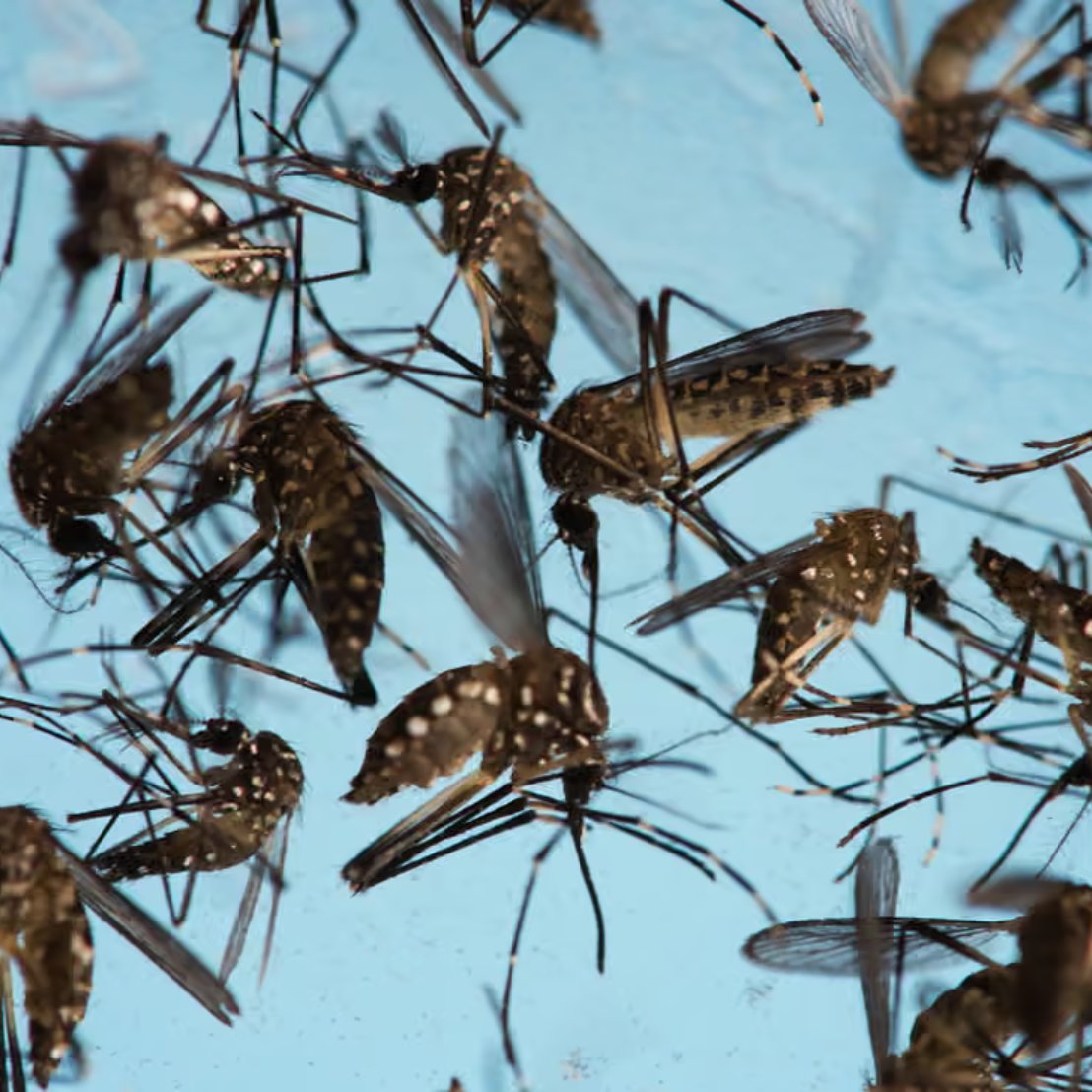
BREAKING: Google is planning to release 32 million mosquitoes across Florida and California.
The company has asked the EPA for permission to proceed, with the public given until June 5 to respond.
The mosquitoes are infected with Wolbachia bacteria, which stops them from reproducing and slowly collapses the wild population from within.
Google's previous Debug Project trial in California's Central Valley nearly eliminated mosquitoes from three test sites entirely. A separate trial in Singapore cut dengue cases by 70% within 12 months.
Google has now released over 1 billion mosquitoes across four continents. This new proposal is the largest deployment in US history.
Fastest moving Korean Stable for a reason!
For stables to become global and regional standards, integrations are necessary. In this @KrwqCash is setting the standard.
$KRWQ is now available on @FireblocksHQ via @base.
Over 2,400 institutions — banks, exchanges, fintechs, payment companies — can now integrate Korean won liquidity directly into their existing workflows.
The Korean won is one of the world's most traded currencies. It belongs onchain.
Read more: https://t.co/Qmdpy9wZWo
$KRWQ is now available on @FireblocksHQ via @base.
Over 2,400 institutions — banks, exchanges, fintechs, payment companies — can now integrate Korean won liquidity directly into their existing workflows.
The Korean won is one of the world's most traded currencies. It belongs onchain.
Read more: https://t.co/Qmdpy9wZWo
That water clarity is an engineering decision, and the math behind it is wilder than the video.
Roman aqueducts ran on gravity alone. No pumps, no pressure systems. Engineers carved channels with a gradient so shallow it borders on absurd. The Pont du Gard in southern France drops 2.5 centimeters over 275 meters. That's roughly the thickness of a coin over the length of three football fields. They surveyed that accuracy with plumb lines and wooden leveling instruments.
The clarity you're seeing is a direct product of flow velocity. Too steep and the water erodes the channel walls, picks up sediment, turns brown. Too flat and it stagnates. Roman engineers targeted a slope of about 20 centimeters per kilometer, which kept the water moving fast enough to stay fresh but slow enough to stay clear. Before the water reached the city, it passed through multi-chamber settling tanks where velocity dropped near zero. Suspended particles sank. Clean water flowed out the top into the next chamber. Repeat three or four times.
Pliny specified the minimum slope in writing. Vitruvius published the exact mortar ratio for hydraulic cement: one part lime to two parts volcanic ash for underwater work. The pozzolana from Pozzuoli reacted with water to form a calcium-aluminum-silicate compound that actually gets stronger the longer it sits submerged. Modern concrete degrades in water. Roman concrete bonds with it.
Scale the whole system and it gets harder to process. Eleven aqueducts fed Rome at its peak. Combined output: roughly 1 million cubic meters of water per day. That works out to about 250 gallons per person for a city of one million. Modern New York delivers about 125 gallons per person per day. Ancient Rome had access to double the per capita water supply of the largest city in the United States, running entirely on slope and stone.
The Trevi Fountain in Rome is still fed by one of them. Two thousand years, same source, same gravity, same water.
That water clarity is an engineering decision, and the math behind it is wilder than the video.
Roman aqueducts ran on gravity alone. No pumps, no pressure systems. Engineers carved channels with a gradient so shallow it borders on absurd. The Pont du Gard in southern France drops 2.5 centimeters over 275 meters. That's roughly the thickness of a coin over the length of three football fields. They surveyed that accuracy with plumb lines and wooden leveling instruments.
The clarity you're seeing is a direct product of flow velocity. Too steep and the water erodes the channel walls, picks up sediment, turns brown. Too flat and it stagnates. Roman engineers targeted a slope of about 20 centimeters per kilometer, which kept the water moving fast enough to stay fresh but slow enough to stay clear. Before the water reached the city, it passed through multi-chamber settling tanks where velocity dropped near zero. Suspended particles sank. Clean water flowed out the top into the next chamber. Repeat three or four times.
Pliny specified the minimum slope in writing. Vitruvius published the exact mortar ratio for hydraulic cement: one part lime to two parts volcanic ash for underwater work. The pozzolana from Pozzuoli reacted with water to form a calcium-aluminum-silicate compound that actually gets stronger the longer it sits submerged. Modern concrete degrades in water. Roman concrete bonds with it.
Scale the whole system and it gets harder to process. Eleven aqueducts fed Rome at its peak. Combined output: roughly 1 million cubic meters of water per day. That works out to about 250 gallons per person for a city of one million. Modern New York delivers about 125 gallons per person per day. Ancient Rome had access to double the per capita water supply of the largest city in the United States, running entirely on slope and stone.
The Trevi Fountain in Rome is still fed by one of them. Two thousand years, same source, same gravity, same water.
@Rizstanford@elonmusk@iScienceLuvr Simulation Hypothesis researcher. Isn’t that just fancy way of saying ‘I play too many video games’? 😂
Elon might let this one slide tho
SpaceX is such a bad ass company. In their IPO filing, they wrote this:
• The first private company to develop and launch a liquid-fuel rocket to reach orbit (2008)
• The first private company to successfully dock a private spacecraft with the International Space Station (2012)
• The first to successfully propulsively land (2015) and refly orbital-class rocket boosters (2017)
• The first to begin deploying a large-scale LEO broadband satellite constellation (2019);
• The first private company to transport astronauts to orbit, returning America's ability to fly astronauts to and from the International Space Station (2020)
• The first to manufacture consumer-grade phased-array user terminals at scale (2022);
The first to deploy a large-scale LEO satellite-to-mobile constellation (2025)
• The first to build a gigawatt-scale Al training cluster and largest coherent supercomputer (2026)
• The first gigawatt-scale Megapack battery installation (2026); and
• The only company capable of building orbital AI compute at scale.
BOOM.
I updated https://t.co/89CvV6PFjW. tried to rebuild macOS sequoia inside a browser tab.
@alanagoyal's site was the catalyst. her iterations have become my benchmark, even if we've never spoken.
I updated https://t.co/89CvV6PFjW. tried to rebuild macOS sequoia inside a browser tab.
@alanagoyal's site was the catalyst. her iterations have become my benchmark, even if we've never spoken.
I updated https://t.co/89CvV6PFjW. tried to rebuild macOS sequoia inside a browser tab.
@alanagoyal's site was the catalyst. her iterations have become my benchmark, even if we've never spoken.