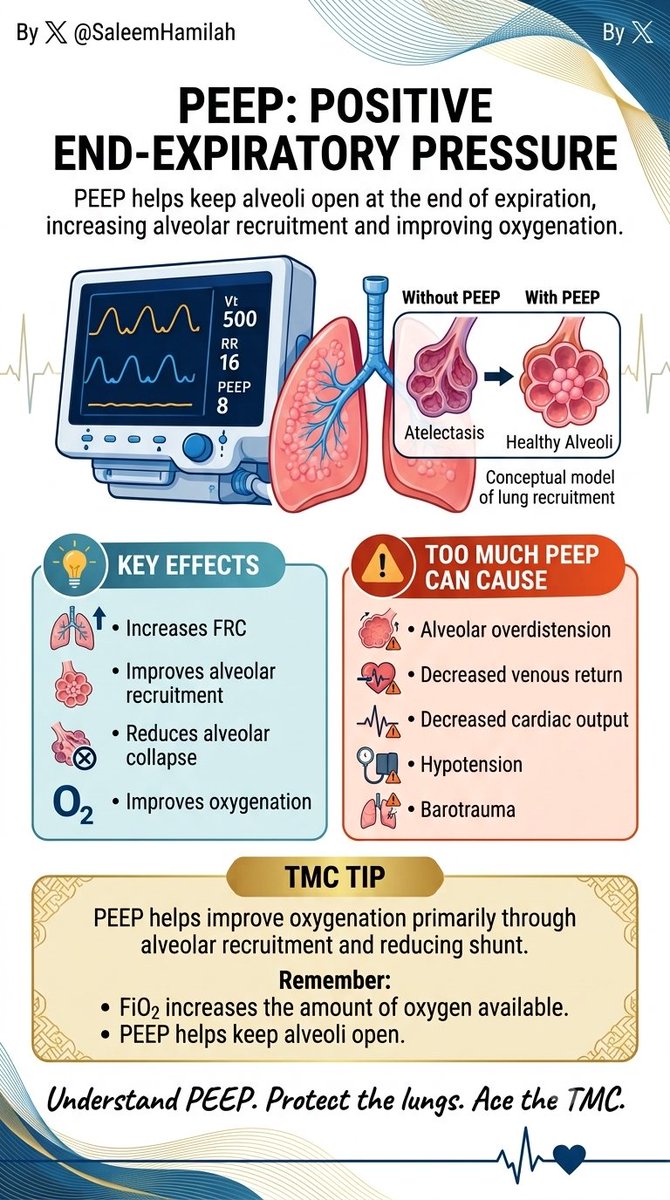
PEEP: POSITIVE END-EXPIRATORY PRESSURE
PEEP helps keep alveoli open at the end of expiration, increasing alveolar recruitment and improving oxygenation.
Key effects:
• Increases FRC
• Improves alveolar recruitment
• Reduces alveolar collapse
• Improves oxygenation
But too much PEEP can cause:
• Alveolar overdistension
• Decreased venous return
• Decreased cardiac output
• Hypotension
• Barotrauma
TMC TIP:
PEEP helps improve oxygenation primarily through alveolar recruitment and reducing shunt.
Remember:
FiO2 increases the amount of oxygen available.
PEEP helps keep alveoli open.
Understand PEEP. Protect the lungs. Ace the TMC.
#respiratorytherapist #PEEP #MechanicalVentilation #VentilatorManagement #RespiratoryTherapy
ARDS Management Beyond the Guidelines
🟦 This 2026 narrative review emphasizes that lung-protective ventilation in ARDS should not rely on fixed population-based targets alone. Because ARDS varies in recruitability, respiratory drive, chest-wall mechanics, body habitus, and hemodynamic response, ventilator settings must be individualized through repeated physiological assessment.[1]
🟩 Initial ventilation: In a passive, newly intubated patient, VCV is often practical because it guarantees VT delivery and permits measurement of Pplat and DP.
¤¤¤ A reasonable starting point is VT of approximately 6 mL/kg PBW , adjusted with respiratory rate to maintain acceptable pH and carbon dioxide.
¤¤¤ Oxygen saturation should generally be maintained around 92–96% , while avoiding unnecessary hyperoxia.
🟨 Monitoring and high driving pressure: Plateau pressure should remain below approximately 28–30 cmH₂O, and driving pressure below 15 cmH₂O.
¤¤¤ If driving pressure is high, clinicians should first investigate airway closure, intrinsic PEEP, chest-wall loading, and overdistension.
¤¤¤ Only after identifying these factors should tidal volume be reduced, potentially to 4 mL/kg, while minimizing circuit dead space and avoiding excessive respiratory rates and dynamic hyperinflation.
🟧 PEEP and gas exchange:
☆☆☆ PEEP should be selected according to recruitability rather than oxygenation alone. Higher PEEP may recruit collapsed lung, but in non-recruitable lungs it can cause overdistension, hypercapnia, hypotension, and right-ventricular injury.
☆☆☆ Oxygenation, carbon dioxide, pH, driving pressure, cardiac output, and right-ventricular function must therefore be interpreted together. ☆☆☆ Permissive hypercapnia may be acceptable when pH remains tolerable.
🟥 Patient effort and special populations: ☆☆☆ Excessive respiratory effort and dyssynchrony can produce occult lung injury; ventilator adjustments should precede deeper sedation or neuromuscular blockade.
☆☆☆ Obesity may require higher PEEP because elevated pleural pressure does not necessarily indicate lung overdistension. During ECMO, ultra-protective ventilation and careful PEEP individualization are recommended. Liberation should begin early but only with systematic monitoring of respiratory effort. Proportional modes such as PAV+ or NAVA may improve synchrony in selected patients.
🔵 I consider this review highly valuable because it converts lung protection from a rigid protocol into a dynamic bedside process.
¤¤ Its strongest contribution is reminding clinicians that a “normal” oxygen saturation or airway pressure does not prove that ventilation is safe. However, several physiological techniques require expertise, and their use should complement—not replace—established ARDS guidelines and clinical judgment.
[1]:https://t.co/0Fczi2tyuC "ARDS management beyond the guidelines: a practical physiology-based approach to individualized care"
🧵 ACUTE-PHASE REACTANTS: 8 rules every rheumatologist should know
CRP ↑
Ferritin ↑
Fibrinogen ↑
Albumin ↓
And ESR?
🚨 ESR is NOT an acute-phase reactant.
It is an indirect marker of inflammation.
High-yield pearls 👇
@IhabFathiSulima@docakx#MedTwitter
Methotrexate pneumonitis is real—but it is not the same as chronic RA-associated ILD.
Stable RA-ILD does not automatically mean stopping methotrexate. New fever, dry cough or breathlessness, however, demands urgent evaluation and exclusion of infection.
Know the difference.
#Methotrexate #RheumatoidArthritis #RAILD #Rheumatology #MedEd @IhabFathiSulima@docakx
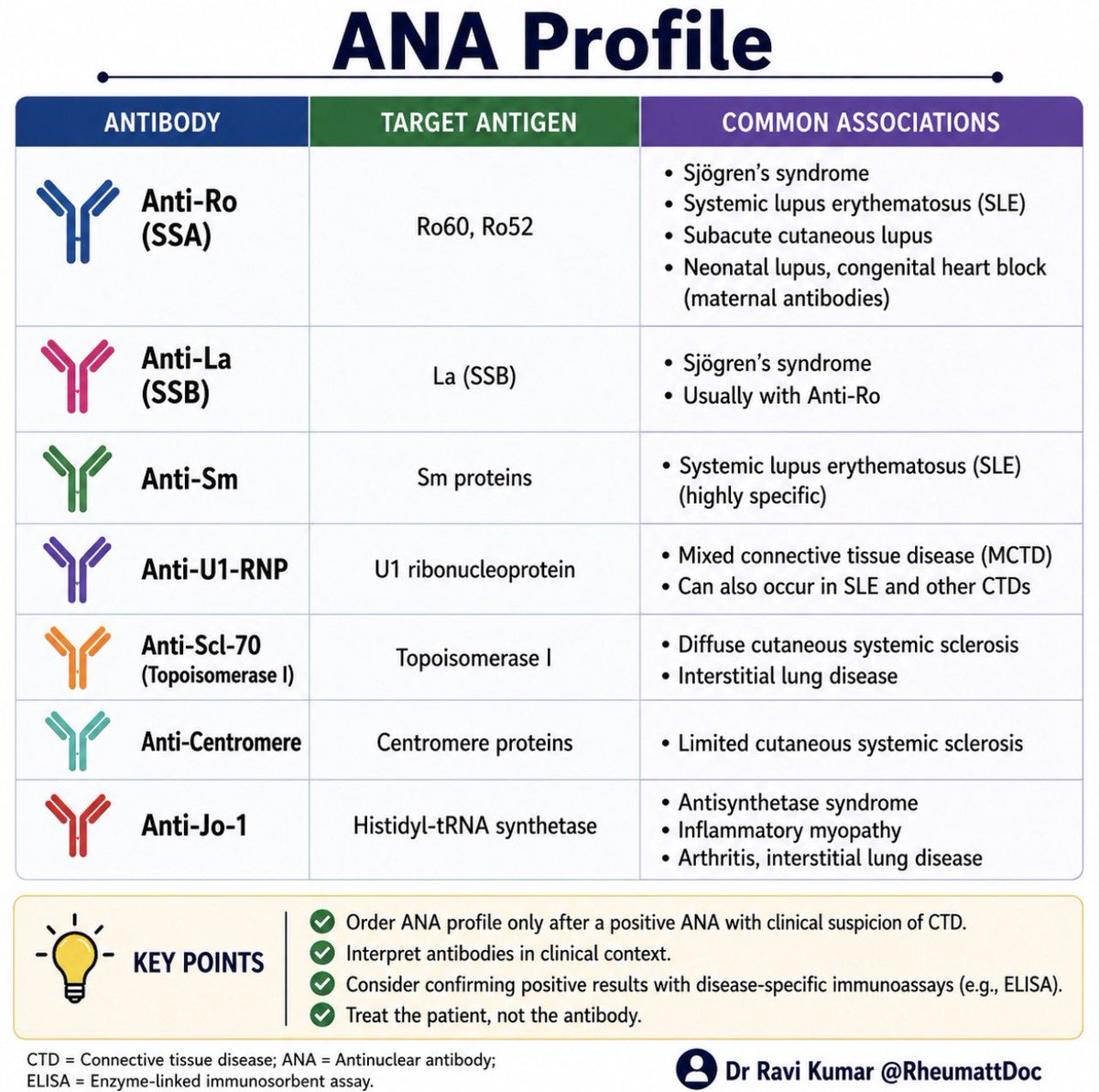
🧵 ANA Profile: Beyond a Positive ANA
A positive ANA is often the beginning not the end of the diagnostic journey.
The ANA profile helps identify disease-specific autoantibodies that support the diagnosis of connective tissue diseases when interpreted in the right clinical context.
Whenever available, confirm clinically relevant autoantibodies with disease-specific immunoassays (e.g., ELISA or other validated antigen-specific assays) rather than relying solely on the ANA profile.
Let’s break it down. 👇
#RheumattDoc #MedTwitter #RheumTwitter #Medicine #rheumatology @docakx@IhabFathiSulima@CelestinoGutirr@DurgaPrasannaM1
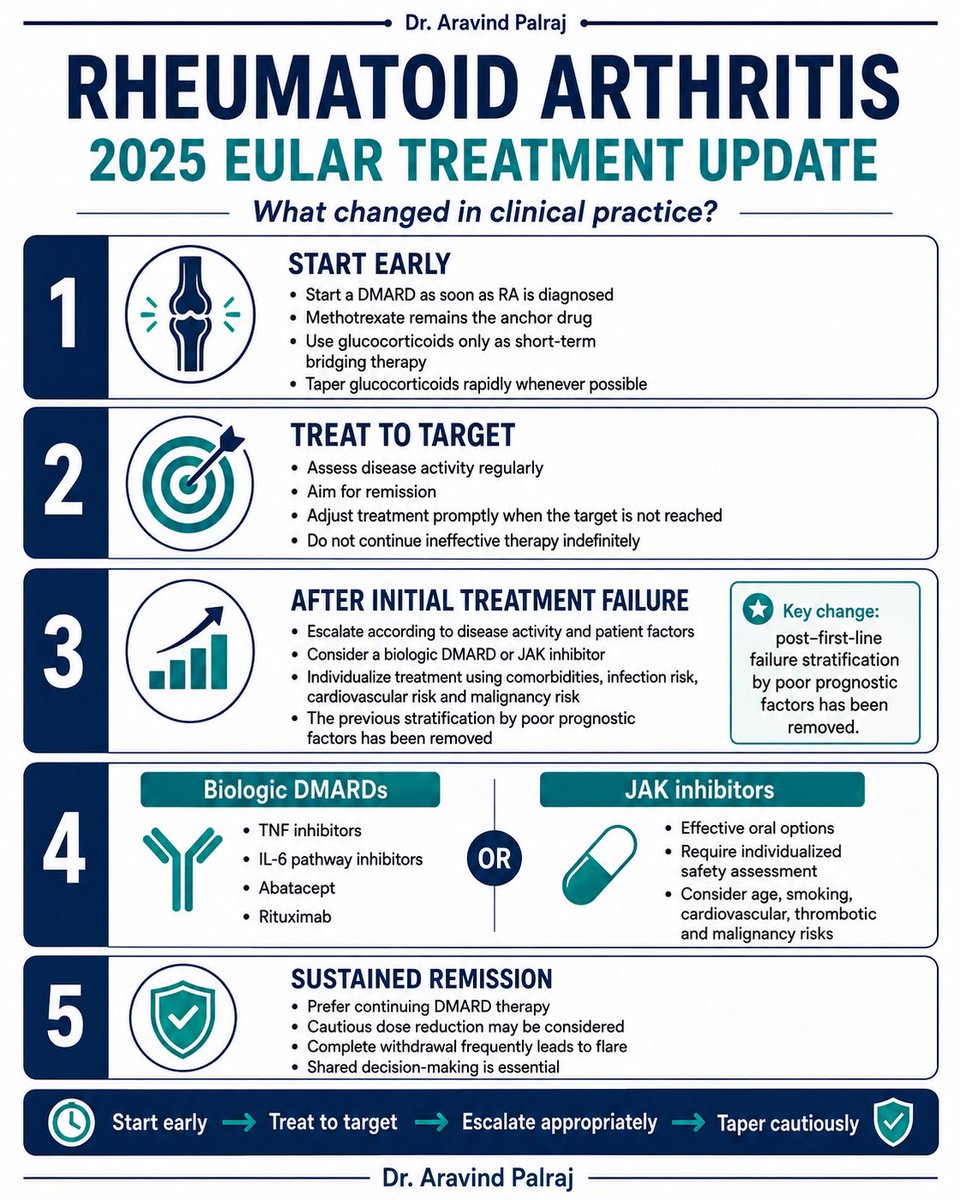
Rheumatoid arthritis management continues to evolve.
The 2025 EULAR recommendations reinforce the importance of early diagnosis, treat-to-target, individualized use of biologic/JAK inhibitors, and cautious DMARD tapering only after sustained remission.
The goal remains unchanged: achieve remission early, prevent irreversible joint damage, and improve long-term outcomes.
What do you think is the most practice-changing update in the 2025 EULAR recommendations?
#Rheumatology #RheumatoidArthritis #EULAR2025 #TreatToTarget #MedEd @IhabFathiSulima@docakx@eular_org
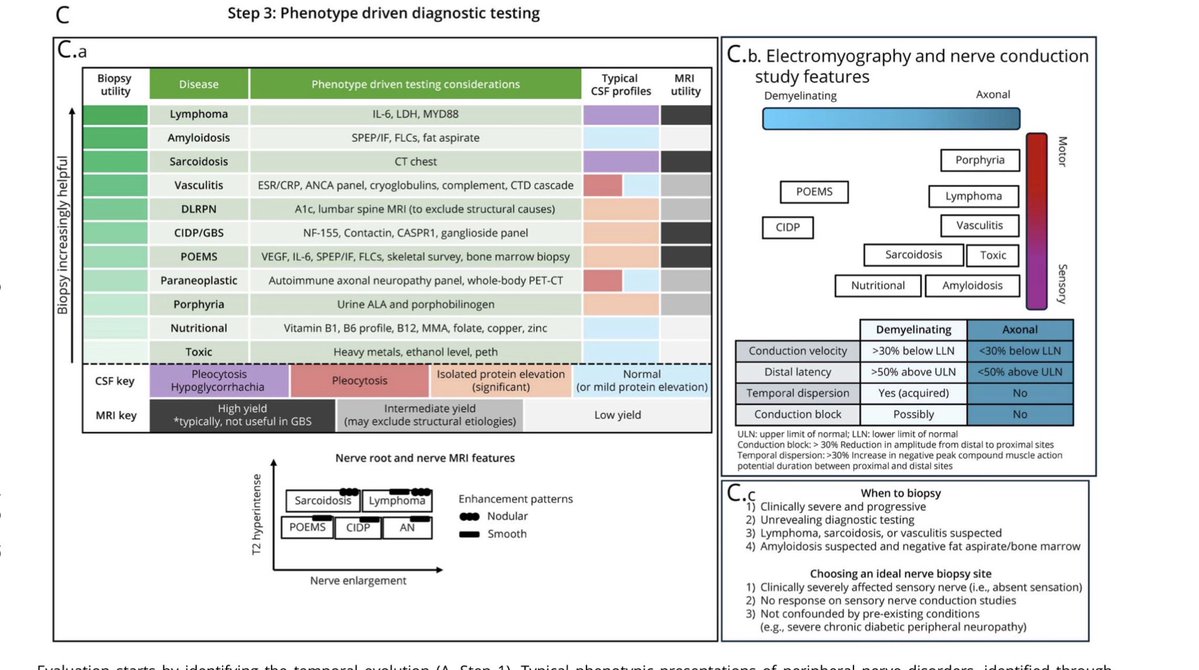
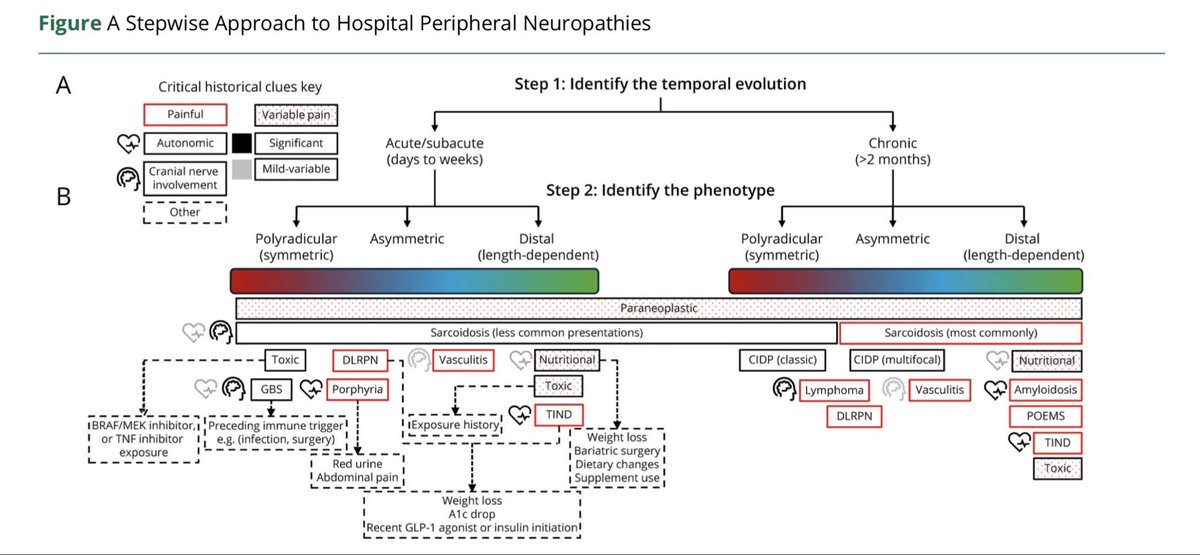
One of my missions is to make Peripheral Neuropathies more understandable for non-experts. Recognizing that physicians often find PNs challenging, especially in the hospital setting, I collaborated with @MayoClinicNeuro Neuromuscular hospitalists, @ReeceHass and @SantilliAshley, and my former NM co-fellow #JMartinezThompson to develop an engaging infographic that simplifies how to approach neuropathies leading to hospitalization. The incredible artistic skills and creativity of @ReeceHass truly brought this project to life, exceeding all expectations. We hope you find this helpful. https://t.co/HjEJbfOkqh
Pneumocystis jirovecii pneumonia (PJP) remains one of the most preventable opportunistic infections in rheumatology—but prophylaxis should never be based on a single drug alone.
The decision depends on the overall immunosuppressive burden, including glucocorticoid dose, combination therapy, lymphopenia, underlying disease, and individual patient risk.
This infographic summarizes:
• When to consider PJP prophylaxis
• Key risk amplifiers
• Preferred and alternative prophylactic agents
• When to reassess and discontinue prophylaxis
• Common clinical mistakes to avoid
Risk assessment should always be individualized—rituximab alone is not an automatic indication for PJP prophylaxis.
#Rheumatology #Immunology #PJP #Pneumocystis #PatientSafety #MedicalEducation @DurgaPrasannaM1@IhabFathiSulima@docakx
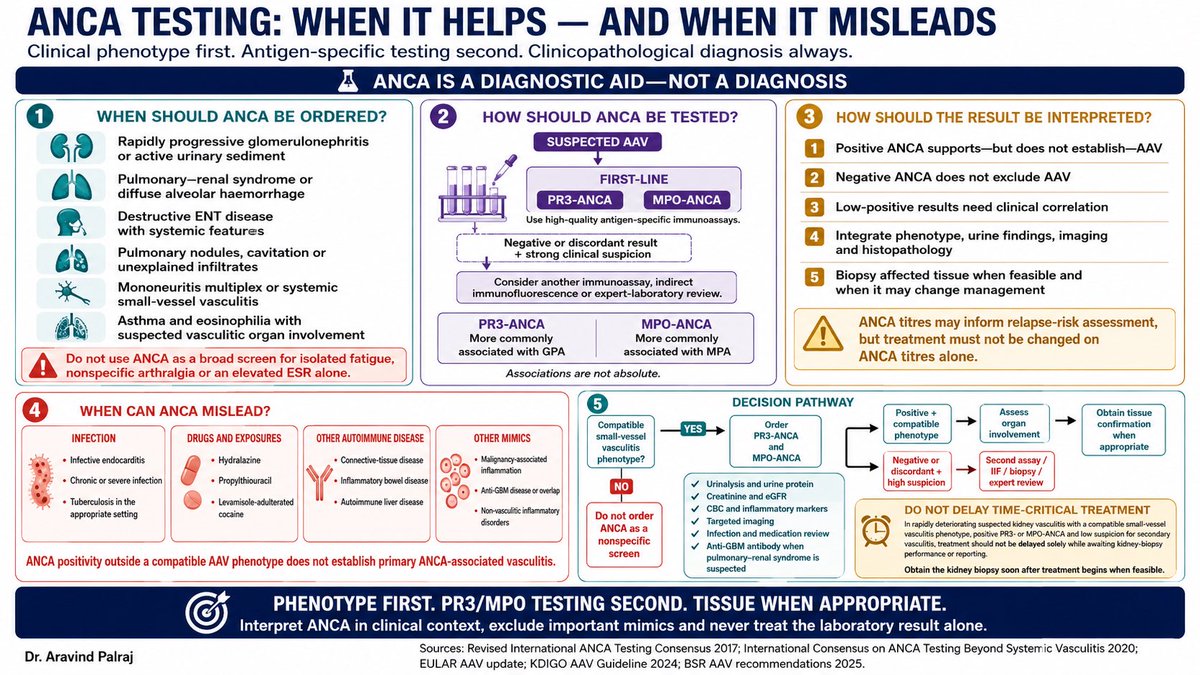
ANCA is a powerful diagnostic tool—but only when used in the right clinical context.
A positive ANCA does not diagnose ANCA-associated vasculitis, and a negative ANCA does not exclude it.
This infographic summarizes when to order ANCA, how to interpret PR3-ANCA and MPO-ANCA, common diagnostic pitfalls, and why clinical phenotype always comes before laboratory results.
Interpret the patient—not just the antibody.
#Rheumatology #ANCA #Vasculitis #MedEd #EvidenceBasedMedicine @IhabFathiSulima@docakx@vasculitisES@anzvasc@IRAeNewsLetter
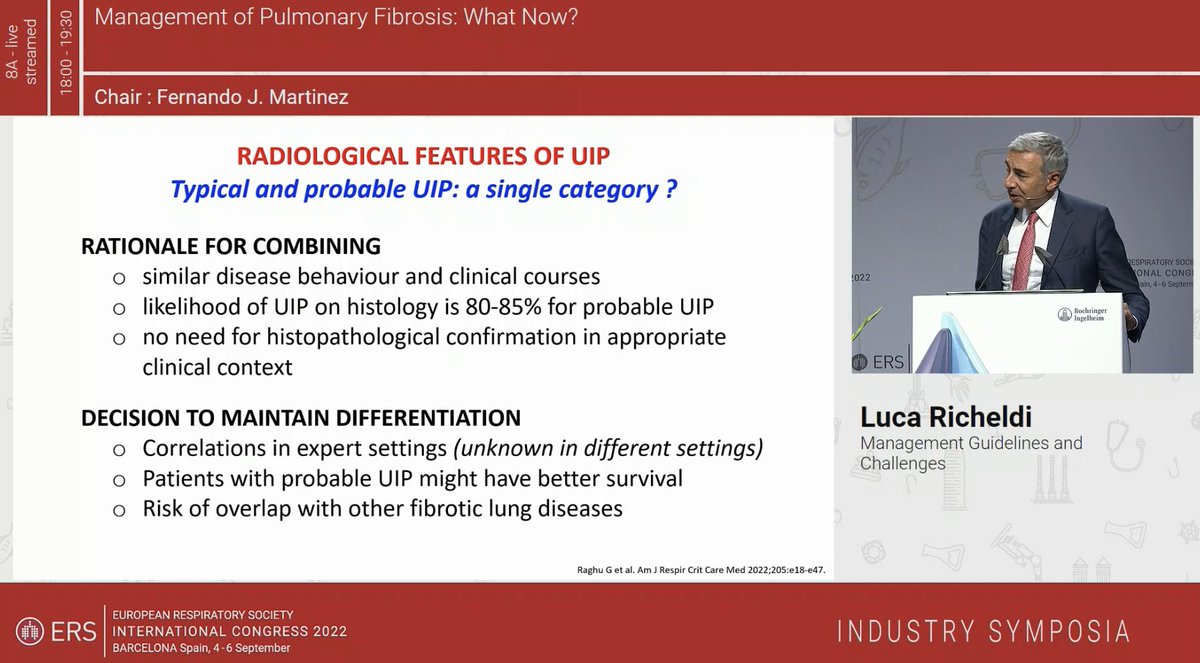
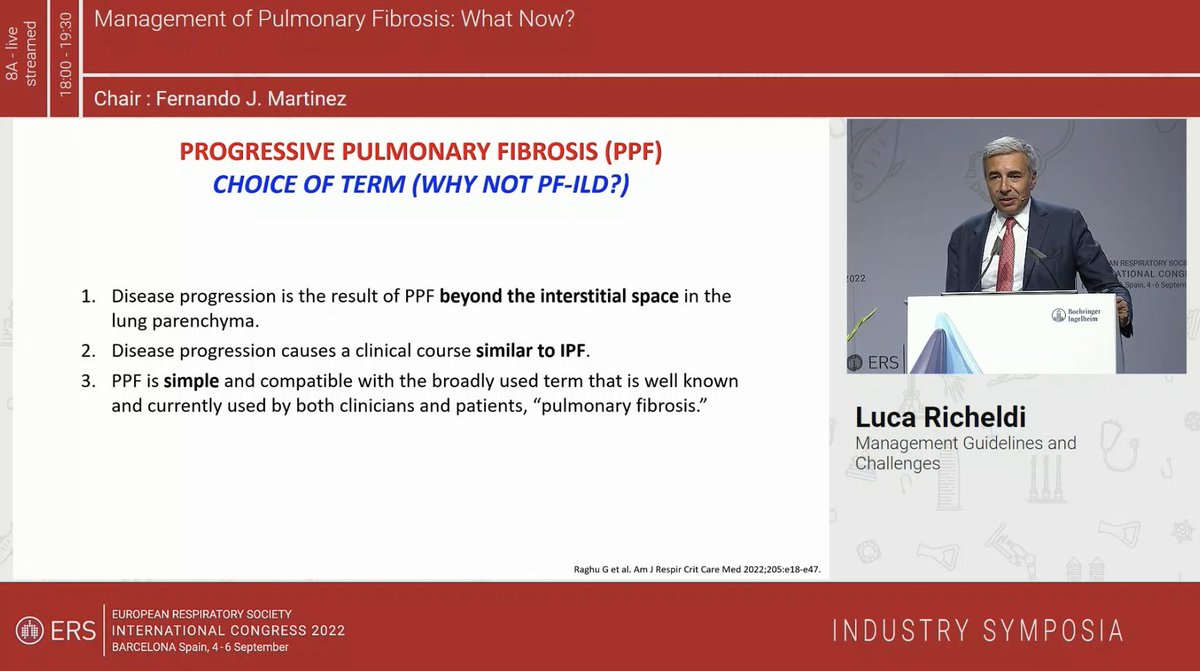
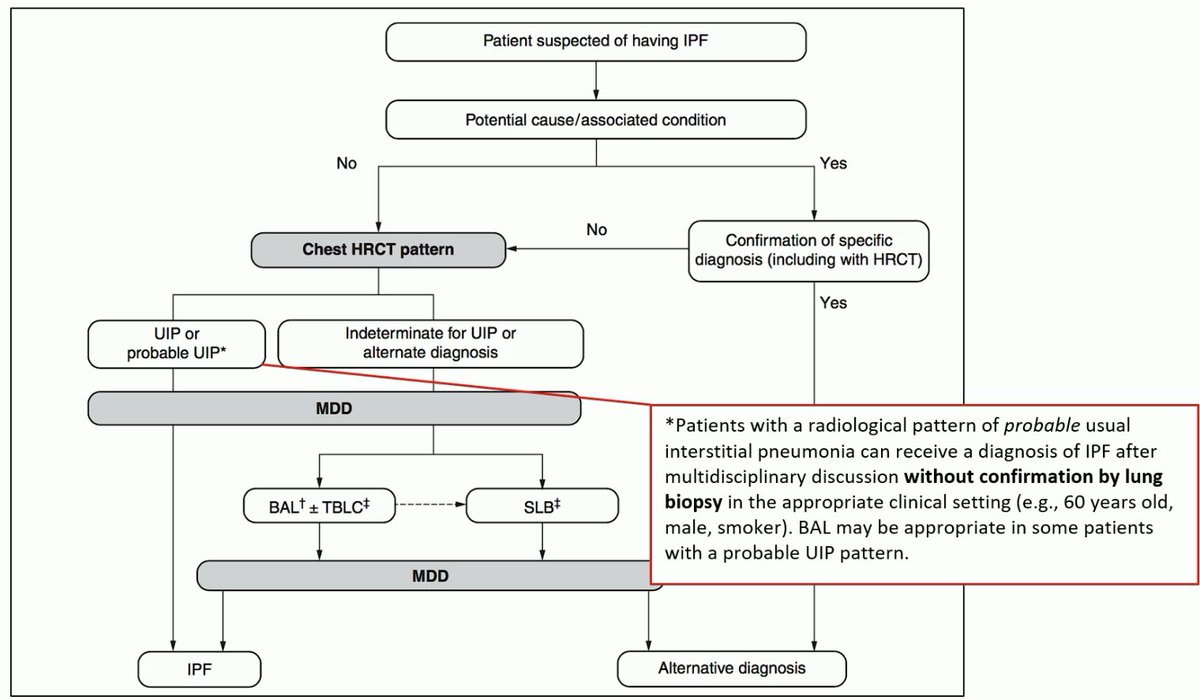
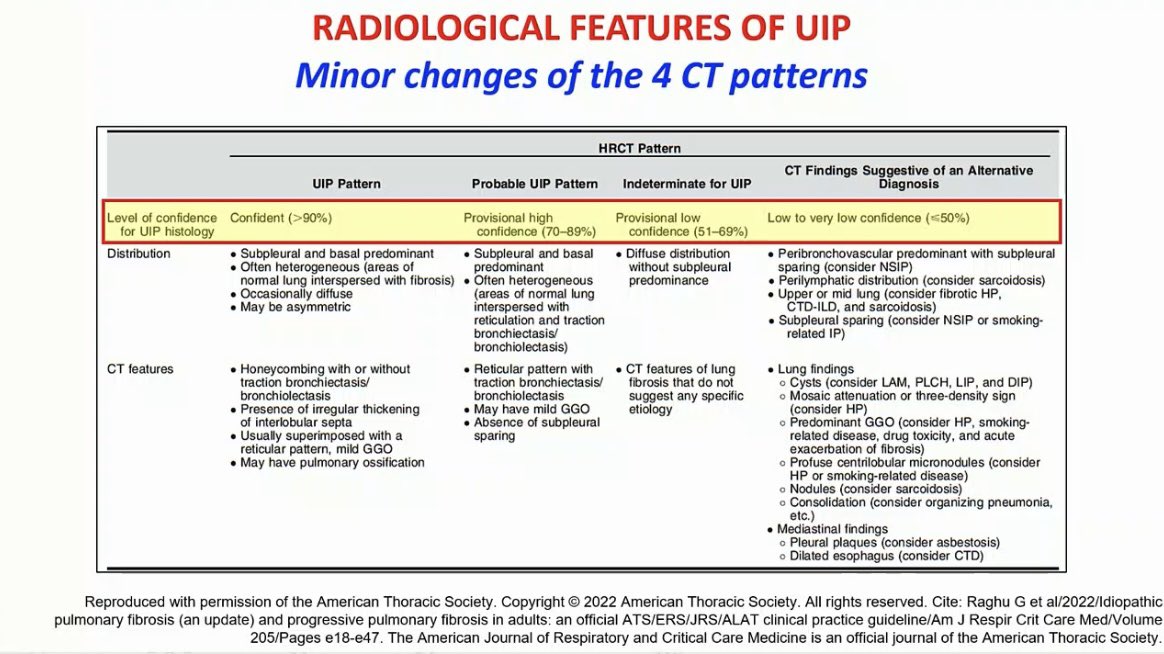
Prof. Luca Richeldi @Lucaric dissects IPF and PPF as presented in the new guidelines.
Examines the case for combining ‘typical’ and ‘probable’ UIP into one category; and the choice for “PPF” as a new terminology - not a distinct clinical diagnosis.
#ERS2022#CurePF
ERJ Podcast: Listen as Chief Editor @ProfJDChalmers speaks to Associate Editor Prof. Dave Singh about pre- and post-bronchodilator spirometry in COPD.
Listen to the episode: https://t.co/Qk0vHDM64z
A subtle myositis clue can completely change the diagnosis.
Ulcerative Gottron papules, tender palmar papules, mild CK elevation, and early ILD—what is the most likely autoantibody?
Think before you answer.
#Rheumatology#Dermatomyositis#InterstitialLungDisease #MedicalEducation #ClinicalChallenge @IhabFathiSulima
Important antithrombotic drugs in acute myocardial infarction (ACS)
Aspirin
- Loading: 150-300 mg PO (or 75–250 mg IV if oral administration is not possible)
- Maintenance: 75-100 mg once daily
P2Y12 inhibitors
Prasugrel (preferred over ticagrelor in ACS patients undergoing PCI when no contraindications exist)
- Loading: 60 mg
- Maintenance: 10 mg once daily
- 5 mg once daily if body weight ≤60 kg
- Contraindicated in patients with prior stroke/TIA
- Generally avoided in patients ≥75 years unless the expected benefit outweighs the bleeding risk
Ticagrelor
- Loading: 180 mg
- Maintenance: 90 mg twice daily
- If extended beyond 12 months: 60 mg twice daily
Clopidogrel
- Loading: 600 mg
- Maintenance: 75 mg once daily
- Use when prasugrel or ticagrelor are contraindicated, unavailable, or not suitable
Unfractionated heparin (UFH)
◻️ 70-100 IU/kg IV bolus during PCI
◻️ 50-70 IU/kg IV bolus if used with a GP IIb/IIIa inhibitor
Treatment should always be individualized based on the clinical presentation, bleeding risk, reperfusion strategy, and need for oral anticoagulation.
Reference: 2023 ESC Guidelines for the Management of Acute Coronary Syndromes (Eur Heart J. 2023).








![SaleemHamilah's tweet photo. ARDS Management Beyond the Guidelines
🟦 This 2026 narrative review emphasizes that lung-protective ventilation in ARDS should not rely on fixed population-based targets alone. Because ARDS varies in recruitability, respiratory drive, chest-wall mechanics, body habitus, and hemodynamic response, ventilator settings must be individualized through repeated physiological assessment.[1]
🟩 Initial ventilation: In a passive, newly intubated patient, VCV is often practical because it guarantees VT delivery and permits measurement of Pplat and DP.
¤¤¤ A reasonable starting point is VT of approximately 6 mL/kg PBW , adjusted with respiratory rate to maintain acceptable pH and carbon dioxide.
¤¤¤ Oxygen saturation should generally be maintained around 92–96% , while avoiding unnecessary hyperoxia.
🟨 Monitoring and high driving pressure: Plateau pressure should remain below approximately 28–30 cmH₂O, and driving pressure below 15 cmH₂O.
¤¤¤ If driving pressure is high, clinicians should first investigate airway closure, intrinsic PEEP, chest-wall loading, and overdistension.
¤¤¤ Only after identifying these factors should tidal volume be reduced, potentially to 4 mL/kg, while minimizing circuit dead space and avoiding excessive respiratory rates and dynamic hyperinflation.
🟧 PEEP and gas exchange:
☆☆☆ PEEP should be selected according to recruitability rather than oxygenation alone. Higher PEEP may recruit collapsed lung, but in non-recruitable lungs it can cause overdistension, hypercapnia, hypotension, and right-ventricular injury.
☆☆☆ Oxygenation, carbon dioxide, pH, driving pressure, cardiac output, and right-ventricular function must therefore be interpreted together. ☆☆☆ Permissive hypercapnia may be acceptable when pH remains tolerable.
🟥 Patient effort and special populations: ☆☆☆ Excessive respiratory effort and dyssynchrony can produce occult lung injury; ventilator adjustments should precede deeper sedation or neuromuscular blockade.
☆☆☆ Obesity may require higher PEEP because elevated pleural pressure does not necessarily indicate lung overdistension. During ECMO, ultra-protective ventilation and careful PEEP individualization are recommended. Liberation should begin early but only with systematic monitoring of respiratory effort. Proportional modes such as PAV+ or NAVA may improve synchrony in selected patients.
🔵 I consider this review highly valuable because it converts lung protection from a rigid protocol into a dynamic bedside process.
¤¤ Its strongest contribution is reminding clinicians that a “normal” oxygen saturation or airway pressure does not prove that ventilation is safe. However, several physiological techniques require expertise, and their use should complement—not replace—established ARDS guidelines and clinical judgment.
[1]:https://t.co/0Fczi2tyuC "ARDS management beyond the guidelines: a practical physiology-based approach to individualized care"](https://pbs.twimg.com/media/HRvOdV4bEAACA9Q.jpg)