Introducing Claude Science, a new app designed with every stage of research in mind.
Artifacts traced to their code, environments managed on demand, and 60+ optional scientific databases that you can connect.
Available now in beta.
Doom scrolling but make it educational 🤓
Introducing Short Video Overviews in NotebookLM! Turn your most complex sources into 60-second, vertical videos that deep dive into any concept.
Rolling out now to Google AI Ultra and Pro subscribers on mobile & web (free users soon!)
Rewatched this conversation between Sam Altman and Alex Blania from 6 months ago.
Everyone is bullish AI.
Very few people are asking what happens when AI becomes indistinguishable from humans.
If OpenAI launches a social app, what happens next?
900m+ real humans may need to prove they are real.
Impossible?
Think again.
That’s the World thesis.
$WLD $ORBS
The AI trade is crowded.
The proof-of-human trade isn’t.
ETHConf NYC: The Five-Year Consolidation Before Ethereum Institutional Cycle
The market mood and the fundamentals are moving in opposite directions.
Ethereum adoption is at all-time highs, while X sentiment feels close to all-time lows. As @haydenzadams put it: vibes are negative, but actual usage of the technology is the strongest it has ever been.
That disconnect was the main signal from @ethconf
I came to New York to test the thesis against reality, not against the chart. The chart is weak, the sentiment is worse, and the room was clearly not euphoric. There was no retail mania, no obvious speculative excess, no broad willingness to underwrite duration, and no feeling that the market was rushing to reprice Ethereum.
What I saw was apathy.
Not panic. Apathy.
And that matters, because apathy is often more important than panic. Panic usually comes with forced sellers, headlines, liquidations and emotional exhaustion. Apathy is quieter. It is when the market no longer wants to defend the story, no longer wants to pay for the future, and no longer cares enough to argue.
That is where Ethereum feels today.
But underneath that apathy, the facts did not look like a failed ecosystem. They looked like the early architecture of a new financial system.
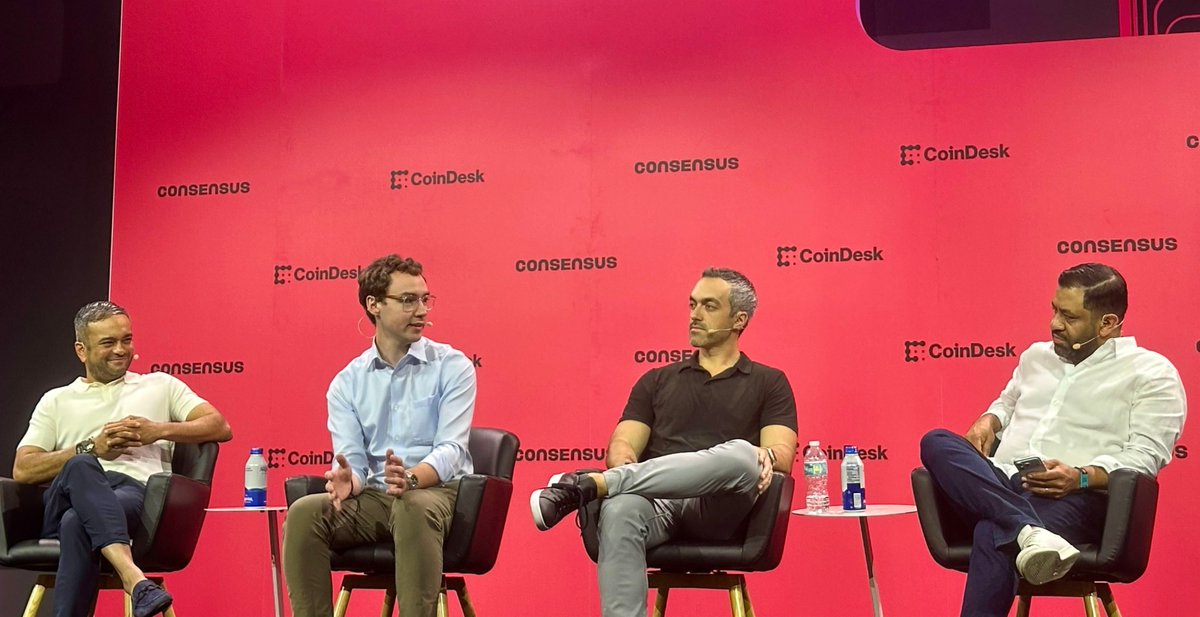
The conference was not really about another crypto cycle. It was about stablecoin payments, onchain credit, tokenized securities, institutional collateral, 24/7 markets, agent wallets, programmable trust, and regulatory clarity. The names in the room mattered: BlackRock, DTCC, Coinbase, Aave, Consensys, Moody’s, policy voices, allocators, protocol researchers and infrastructure builders were all circling the same transition from different angles.
The institutional question is no longer simply “if”.
It is becoming “how fast, under what rules, on which rails, with which compliance layer, and with what form of trust minimization?”
That is a very different conversation from the last cycle.
The last cycle was mostly about speculation. This one is increasingly about infrastructure.
The CLARITY Act was one of the biggest takeaways for me. I understood the concept before the conference, but I did not fully appreciate the magnitude. This is not just “crypto regulation.” It is about market structure, SEC vs. CFTC jurisdiction, developer and infrastructure rules, token classification, exchange registration, disclosures, stablecoins, tokenization, and the rules of the road for bringing digital assets into the regulated U.S. financial system.
If CLARITY passes, it does not only help the BlackRocks of the world. They are already coming. The bigger unlock is that it gives regional banks, brokers, custodians, payment companies, fintechs, asset managers and smaller financial institutions a legitimate path to participate without guessing where the legal landmines are.
That is the part I underestimated.
For years, the U.S. regulated crypto through enforcement. CLARITY represents the possibility of regulating through architecture. It may not pass. The political window is narrow. But if it does, the second-order effects could be far larger than the market is pricing. Once the rulebook exists, the industry moves from “can we?” to “how fast?”
That is how institutional adoption accelerates.
Tim Beiko’s framework was one of the cleanest of the week. Ethereum is not trying to be the world computer for everything. It is the “reasonably necessary” world computer.
That distinction is critical. Ethereum’s edge is not speed alone. Speed can be copied. Throughput can be optimized. Incentives can be subsidized. Ethereum’s edge is permissionless access, censorship resistance, credible neutrality, durable commitments, canonical uniqueness and programmable trust.
Those properties are expensive. They should not be used everywhere. They should be used where they are necessary.
That points to the real frontier: programmable markets, capture-resistant coordination, and agent economies. In plain English, Ethereum wins where neutrality is not a feature. It is the product.
@wmougayar framed the valuation problem in a way markets still struggle to process. Ethereum is not just the sum of its fees. Its value is closer to the sum of the world’s dependence on neutral settlement infrastructure.
That is why the market keeps mispricing it.
Its token supply obscures its systemic function. Its decentralization defies corporate analogies. Its L2 ecosystem hides base-layer dependence. Its visible activity understates institutional flows. Its valuation models trail its economic role.
Traditional investors want to value Ethereum like a company. But Ethereum is not a company. It is closer to a public-good settlement layer with private-good applications built on top. The Internet had a similar problem in its early years. Its value was not obvious from early revenue capture. The real value emerged from dependency: commerce, media, communication, identity, payments and coordination eventually became dependent on it.
Ethereum is in that uncomfortable phase where dependency is growing faster than the market’s ability to price it.
That also changes how I think about the Ethereum Foundation. The fact that the Foundation gradually becomes less central is not necessarily bearish. It may be the natural maturation of the system.
The market still wants a CEO, a marketing department, a strategy deck, and one institution to blame. But the whole point of Ethereum is that no single institution should be the product. The Ethereum Foundation was essential in the early phase. But the center of gravity is now broadening: core developers, L2s, wallets, stablecoin issuers, exchanges, banks, asset managers, public companies, policy makers, treasury vehicles and independent researchers.
That is what neutral infrastructure should look like as it matures. Less foundation-centric. More ecosystem-driven. Harder to coordinate, yes. But more credible.
The capital markets angle was also impossible to ignore.
The $BMNR presentation sounded very similar to the framework @fundstrat laid out in Paris last week: Ethereum is moving from being only a protocol asset to becoming a balance-sheet asset.
That matters.
The Bitcoin treasury trade taught the market that public equity wrappers can create a new buyer base for scarce digital assets. Ethereum can follow a different path, because ETH is not only digital scarcity. It is productive collateral, staking yield, settlement infrastructure, stablecoin rails, tokenization infrastructure and the base asset of programmable finance.
That is why $BMNR matters.
That is why $SBET matters.
When I think about @Sharplink I think about it less as a single stock story and more as one expression of a broader institutional transition: public equity capital trying to underwrite $ETH exposure, ETH yield and Ethereum’s role as financial infrastructure.
I also had the opportunity to spend time with @ethereumJoseph@sheffieldreport and members of the $SBET team. I do not treat that as endorsement. I treat it as diligence. The point of being there was to stress-test the thesis with people building the infrastructure and people thinking seriously about capital allocation around Ethereum.
That matters most when the market is apathetic. In markets, price tells you what people feel. Diligence tells you whether the facts changed.
The AI angle made the week more interesting, but not in the superficial “AI x crypto” way. The deeper point is that autonomous economic activity will need rails. Agents will need wallets, mandates, permissions, identity, settlement, risk controls, human authorization and programmable constraints.
If AI becomes abundant, the scarce layer becomes trust.
Who is human? Who controls the agent? Who authorizes the transaction? Who owns the keys? Who sets the mandate? Who bears the liability? Who gets access?
During the same week, @OpenAI was moving the AI conversation further into economic infrastructure: broad AI access, research on AI’s economic impact, and optionality toward public markets through a confidential S-1 filing. That is not an Ethereum catalyst by itself, but it sharpens the question. If AI becomes a major economic actor, the world will need neutral infrastructure for value, identity, authorization and trust.
Ethereum is one of the few systems designed for that world.
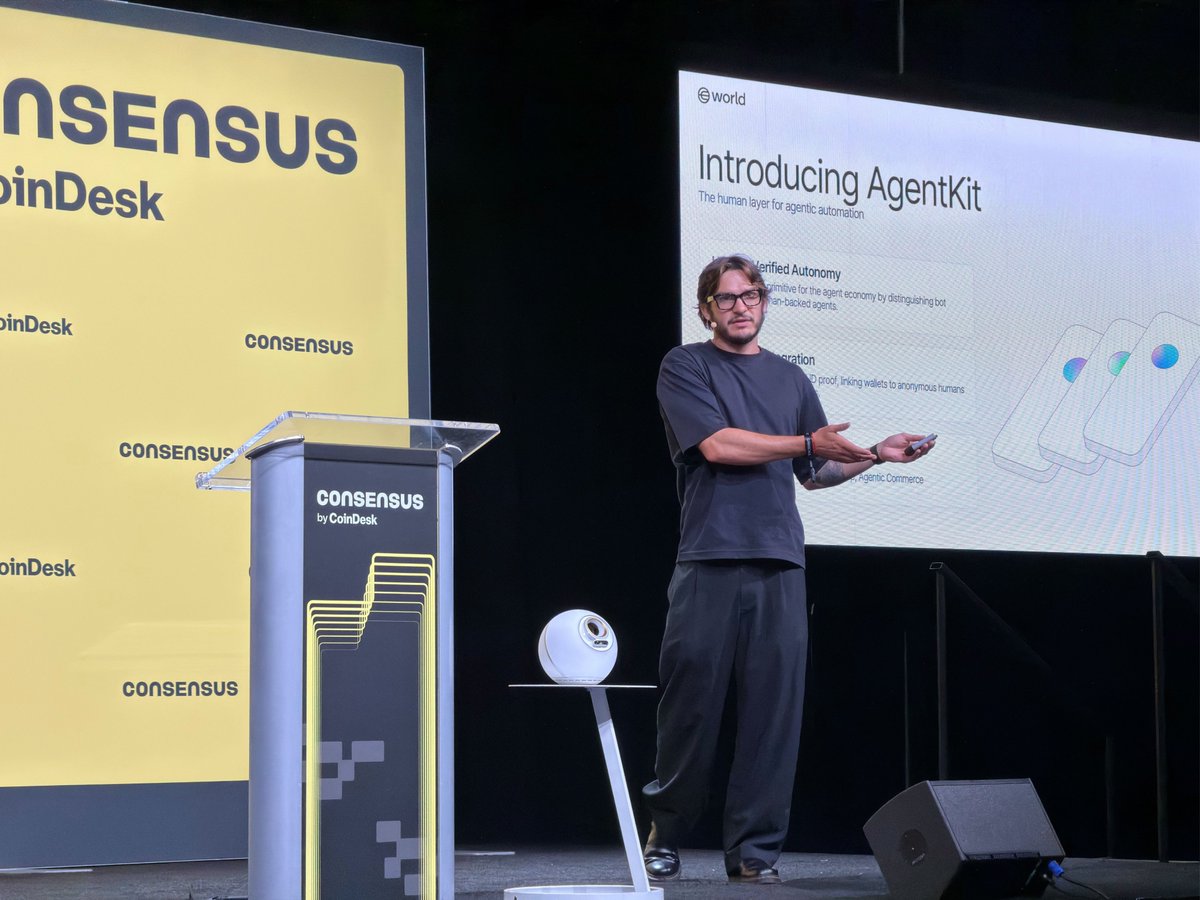
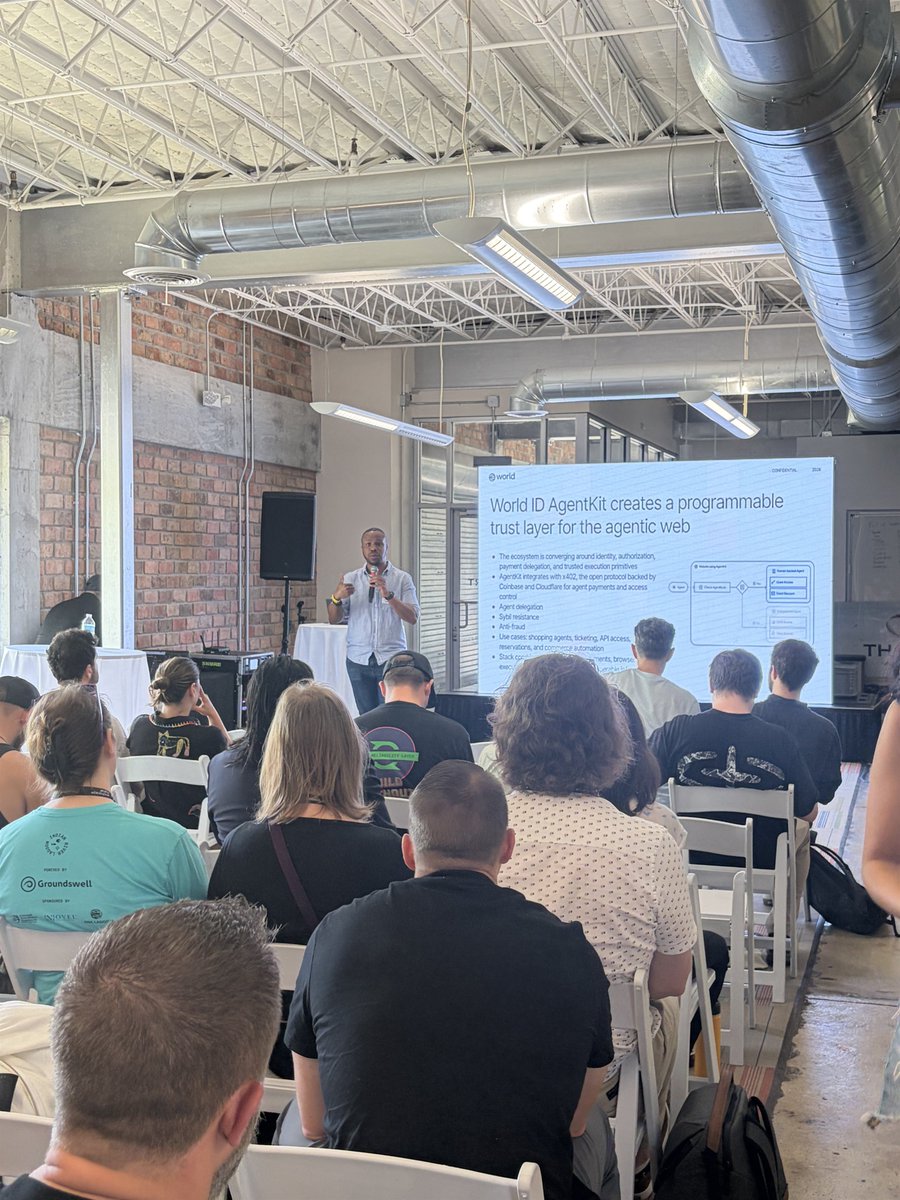
I also spent time with people from WORLD @worldnetwork during the week. I would frame that narrowly, not as a separate thesis, but as part of the same stack. AI creates the need for proof of human identity. Ethereum creates the programmable trust layer. The financial system creates the demand for neutral settlement. Those conversations are starting to converge.
The conference made one thing clear: Ethereum is being pulled by three major forces at the same time.
Capital markets.
Payments.
AI agents.
Each requires trust, settlement, identity, permissioning, collateral and programmability. That is Ethereum’s opportunity.
The market, meanwhile, is focused on the chart. Fair enough. The chart is weak. But the question is not whether the chart feels good. It does not. The question is whether the facts changed.
Did adoption break? Did stablecoins slow down? Did tokenization disappear? Did institutions walk away? Did policy get worse? Did credit markets stop moving onchain? Did AI reduce the need for programmable trust? Did Ethereum lose credible neutrality?
From what I saw, the answer is no.
The facts did not deteriorate. The mood did.
That is a very different setup.
Druckenmiller always comes back to the same discipline: what are the facts, what is the price, and what is the payoff?
Right now, the price is trading like Ethereum is a failed trade. The fundamentals are developing like Ethereum is becoming financial infrastructure.
That gap is the opportunity.
The difficult part is that gaps like this do not close on command. They close when the market is ready to believe the story again. Today, the market is not there. There is no excitement, no urgency, no broad institutional FOMO, no retail bid, and no clean narrative premium.
Just builders, policy movement, stablecoin infrastructure, onchain credit, tokenization, treasury vehicles, AI agents, and a base layer that continues to matter more than the market wants to admit.
That is why I left @ethconf more constructive, not less.
Not because the conference felt euphoric. It did not.
Because the conference showed a market that is emotionally exhausted while the fundamental architecture keeps advancing.
Apathy is uncomfortable, but in markets apathy often appears when the selling is no longer about facts and the buying has not yet become obvious.
That is where the best risk/reward tends to begin.
My takeaway is simple.
Ethereum is being priced like a crypto asset stuck in the past, while it is increasingly being built, discussed, regulated and capitalized as neutral infrastructure for the next phase of finance and AI.
After this apathy and long five-year consolidation, FOMO will return.
And when it does, the move in ETH could be explosive.
As usual... Do your DD
1/n
Hacks have been plaguing DeFi's growth as of late...
so we got together with a group of friends to create https://t.co/FY6k4wxt96: a FREE real-time hack detection platform!
i'd like share how it works + how you can use it today, FREE!
🗽 ETHGlobal New York 2026 Partner | World
@worldnetwork is bringing $15k in prizes to NYC this June.
The real human network. Private proof of human, financial infrastructure, and human-first experiences for the age of AI.
June 12–14 · Metropolitan Pavilion
Apply to Hack: https://t.co/tWsrpkfAUp
Today, we open Flash Pools.
Trepa makes precise predictions feel like a video game.
Every 60 seconds, predict where BTC's price will land. Closer = bigger share of the pool. Up to 100x.
Continuous numerical forecasting at sub-minute resolution. A new prediction primitive on @solana.
Start playing: https://t.co/ZDwz8Hb2Gs
Millions spend hours with AI characters.
But characters forget, creators don't earn, and the best experiences sit behind paywalls.
We raised $1.5M to build the character economy with @lattice_fund, @cbventures' Base Ecosystem Fund, @JME_Ventures; bootstrapped by @worldcoinfnd.
Introducing ToolRouter: one MCP endpoint for tools your agent can actually trust.
It helps delegated agents discover AgentKit boosts like free Exa trials and Verified Browserbase sessions, tests x402 endpoints before agents spend, and gives developers simple API key billing and management.