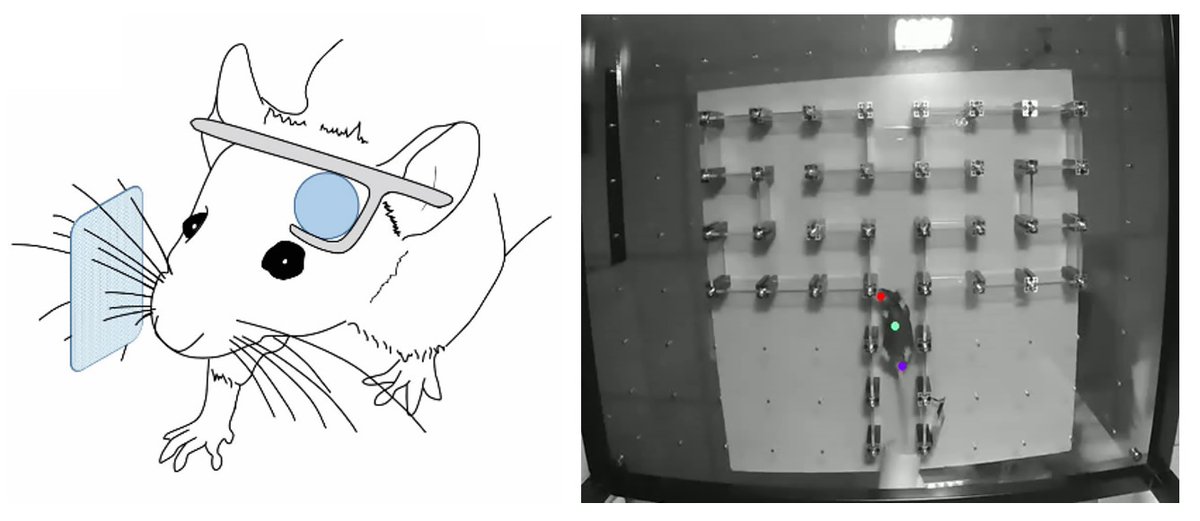
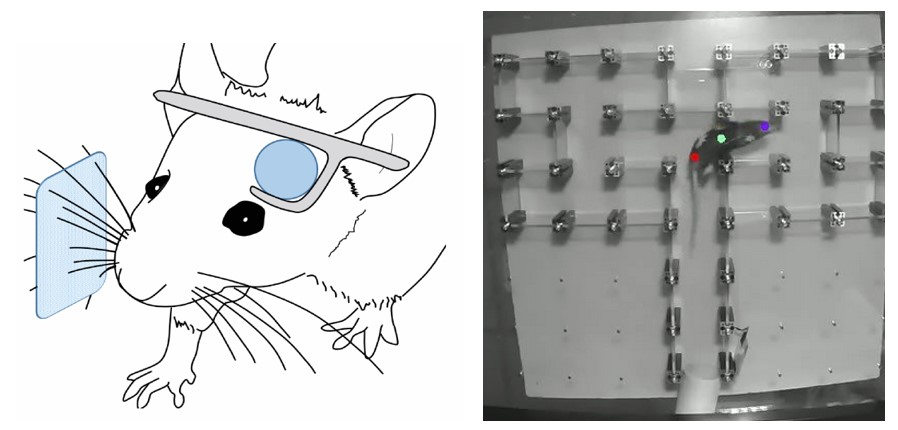
Just out in Current Biology: What happens in barrel cortex when a mouse learns a specific tactile sequence? Neurons now reflect the action associated with the learnt stimulus, as well as the outcomes. Lots of work by @BaleNeuro, @MatinaBitzidou, @pfkinghorn, Elena Giusto
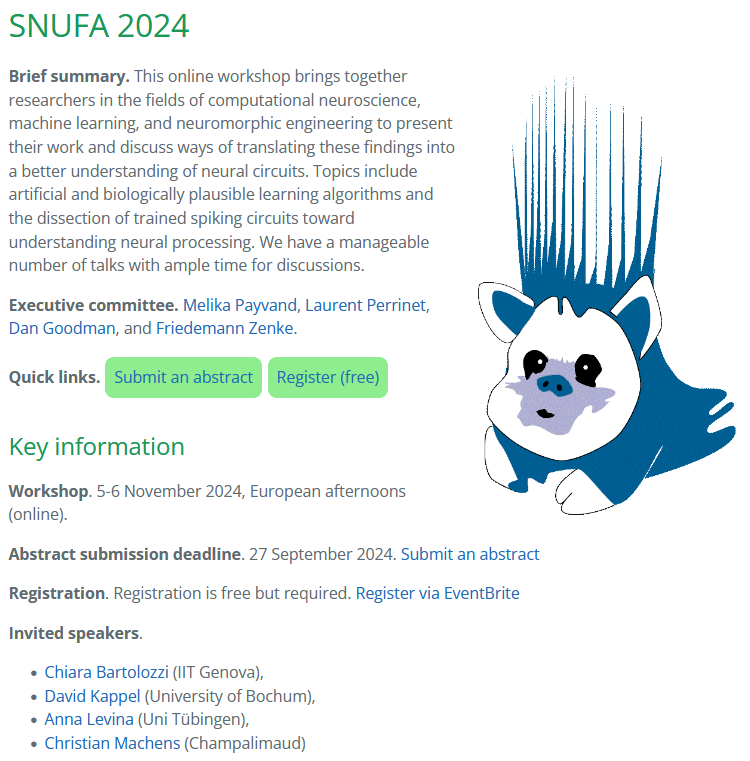
SPIKING NEURAL NETWORKS!
If you love them, join us at SNUFA24. Free, online workshop, Nov 5-6 (2-6pm CET). Usually ~700 participants.
Invited speakers: Chiara Bartolozzi, David Kappel, Anna Levina, Christian Machens
Posters + 8 contributed talks selected by participant vote.
Very pleased to announce this @physoc meeting in September, co-organised with @RiccardoStorch1 and @RasSPet. Looking forward to discussions with our fantastic speakers! Registration opens April 3rd. https://t.co/u03VjxUTHy
Mouse training is an art form, but there is one tenet I stand by: they naturally go from being hypermotivated to not motivated, and while you may control this to an extent by adjusting reward-to-punishment ratio, it's best to sort trials into states (e.g. Ashwood et al. 2022).
Now published in @JNeurosci : Reward modulates visual responses in the superficial superior colliculus of mice. Independently of arousal and other behaviours. https://t.co/BKN0nzdc3A
Learn more at our poster #SfN2023 with @IntoNeurons:
Mon 13 Nov 1-5pm DD20
🔮Ever wished you could just say what behavioral analysis you wanted? ... "Plot the animal's trajectory" "Count the head hips in the open arm"
👀🪄we present AmadeusGPT🎻 to do this ...
🗞@shaokaiyeah@jessy_lauer@zhoumu53@trackingplumes and me https://t.co/PAazDd3iXj
🧵⬇️
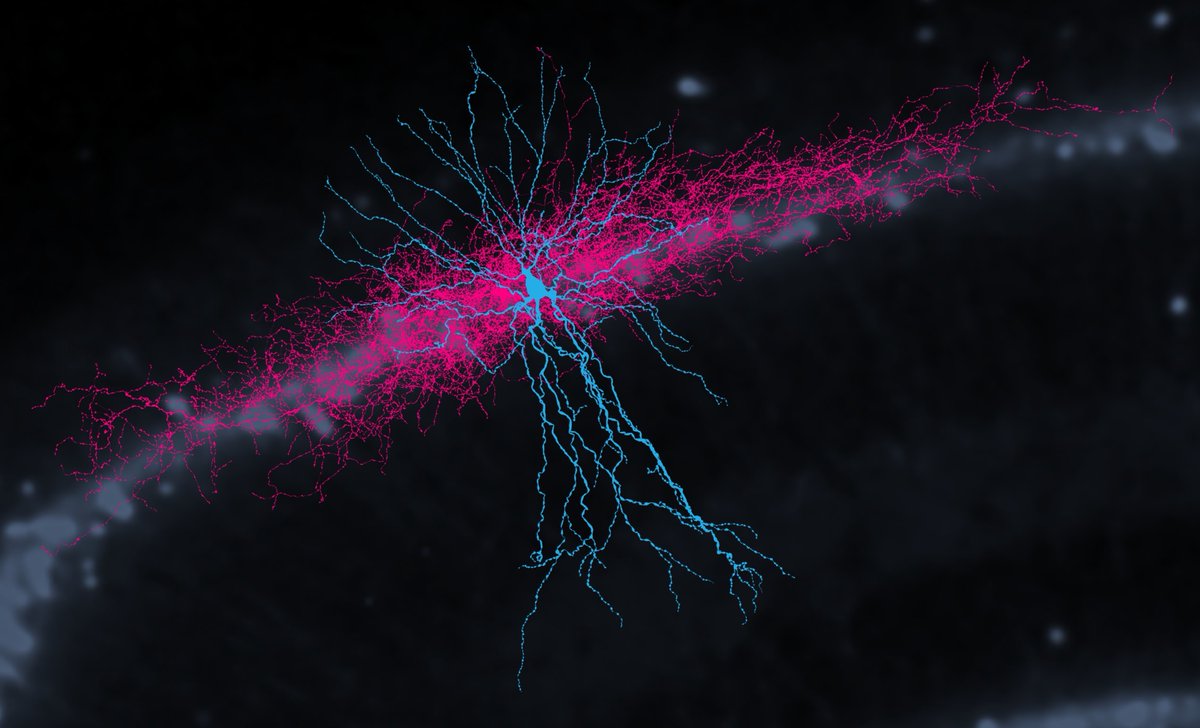
New paper on visual response types among neurons in the superior colliculus of the mouse. Headlines: less functional diversity than in the retina + strange anatomical clustering of same-type cells. https://t.co/JBXbDG2Jiv @eLife
Postdoc open to investigate sensory and task-dependent neural activity in mice performing goal-directed whisker-guided tasks. Two designs: head-fixed with 2-photon imaging or a novel modular maze for free exploration. Get in touch! https://t.co/aB8qx2GLwk, [email protected]
The response to the @eLife announcement has me thinking about why people are so scared about the end of journals. I'm wondering if it's because it's one of the few consequential endorsements we get in our careers? 🧵
Save the date for a one-day **online** symposium on 21st October 2022:
Rethinking Computational Approaches to the Mind - Fundamental Challenges and Future Perspectives.
Find more info - including how to register - on the event website: https://t.co/moU7U1G2sh.
1/2
If you work with rodent head-fixed behaviour and your animals do tasks with typically hundreds of trials, please check this paper! There is a ton of useful info and advice. Glad to have contributed to this group effort led by Chris Barkus @NC3Rs
Best quote from the GRC so far: "No one believes in a model except the person who makes it, and everyone believes in an experiment except the person who performs it"😆
New funded PhD in my lab to work on a really exciting question: how does sensory cortex process task-related information during natural behaviour? Mouse exploration/decision making, behaviour tracking, 2p imaging or wireless electrophys… 30th Jun deadline https://t.co/oiYHy8cws7
📢 Just over 1 month to go until the UCL Neuroscience Symposium
Speakers include: @smfleming @SonjaBHofer@SKochLab@Nick_Lesica @KathaSchmack, Prof Sanjay Sisodiya, Prof Manju Kurian & Prof Mina Ryten.
📆 22 June 2022, 9am-6pm
ℹ️ https://t.co/C0ZYdU6pcm
#UCLNeuroDomain
Delighted to see this in print! We used a statistical model ("GLM-HMM") to identify latent states underlying sensory decision-making behavior in mice and humans. It turns out "lapses" are not isolated, momentary errors; they arise in clusters during biased / disengaged states!
Calling all Animal Behavior researchers - we want your syllabus! ✨
Our new Education Dept is creating some new teaching material, but first they want to hear from you about how you teach Animal Behavior! 🤔🐒🐘
Please get in touch! More details below 👇