@bilbelcapital's 2025 Annual Letter is out!
Returns since inception: 2,092.4%
Companies discussed: CareCloud Inc. ($CCLD); Intellego Technologies ($INT.ST); International Cement Group Limited ($KUO.SI); CTR Holdings Limited ($1416.HK)
If you are an accredited investor and feel we would be a good fit to work together, please reach out to me.
https://t.co/t8FjxOAx1c
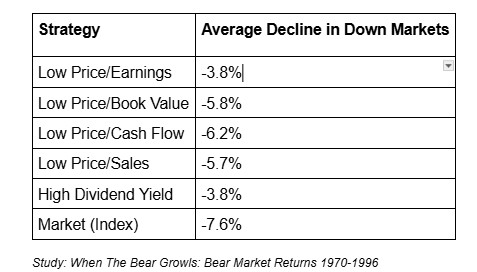
From 1970 to 1996, 2 researchers looked at how cheap stocks performed during tough times.
They studied 1,500 of the biggest companies to check how four kinds of strategies did:
1. Low price-to-earnings
2. Low price-to-book value
3. Low price-to-cash flow
4. High dividend yield
Results:
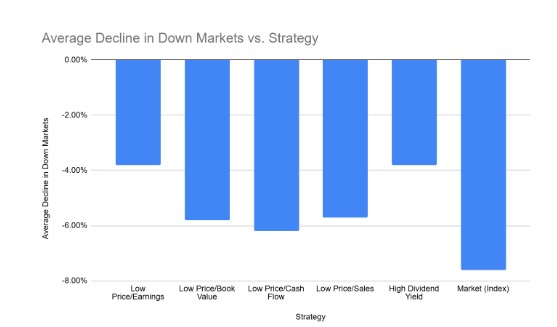
-All these strategies performed better than the market during downturns.
-High dividend yield stocks were the best, losing only about 3.8% on average, which is half of what the market lost.
-Over 27 years, in both good and bad times, all types of cheap stocks outperformed the market.
@bilbelcapital’s next letter will be published soon.
As always, I genuinely believe it will add real value to those who take the time to read it. Having seen what is coming, I can confidently say that it will be worth reading.
some might say I am biased, but our CEO, @sammutgabi, has done a great job in writing things in a simple way, and with a coherent and logical sequence…without compromising on quality and substance.
For more information about Bilbel Capital, or if you would like to potentially invest with us, please contact us on [email protected] or visit https://t.co/qXFjkUDv9W.
Feel free to share this with anyone who you think will be interested in our letter.
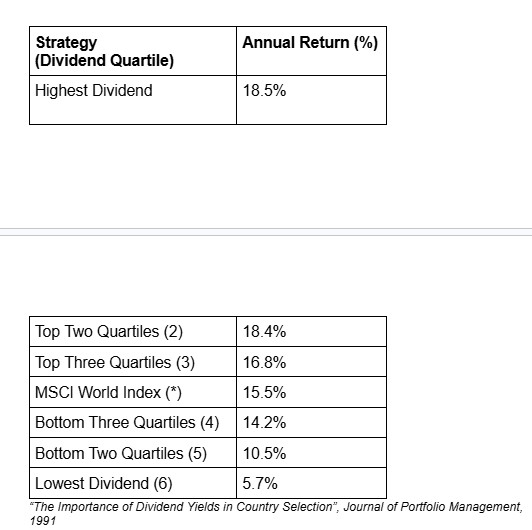
High Dividend Stocks Around the World. A 30 year study.
A. Michael Keppler looked at stocks in 18 countries for 30 years, from 1969 to 1989. He split countries into 4 groups by their dividend yield, checking profits every 3 months.
What he found:
Medium Vulnerability in Axios I found almost exclusively autonomously with GPT 5.5 and DeepSec. (105 million weekly downloads)
This is why we like Open Access @OpenAI@vercel 🫡
https://t.co/2lwcHfQpYN
Speaking of our investor letters, those familiar with the timing of our previous publications may already be able to predict when the next one is coming.
It’s no secret, @bilbelcapital’s next letter will be published in the coming weeks
Some might call me biased, but I do believe @bilbelcapital’s letter is one of the good ones out there.
Would love to know your thoughts on our letters.
As the person responsible for developing @bilbelcapital’s operations, this is the approach I intend to follow as the firm grows.
1. SOPs create control
SOPs are not unnecessary bureaucracy. They create consistency, accountability, control, and scalability by defining ownership, required steps, approvals, controls, and evidence.
2. Process before tools
Processes should always be designed before tools are created or purchased. Technology should support the way the organisation has consciously decided to operate. The company should not be forced to redesign its operations around a tool simply because the tool already exists.
3. Improve with discipline
Processes should not be changed randomly whenever someone identifies a possible improvement. Every change should be assessed against its benefits, costs, risks, timing, and organisational priorities.
4. Automate only when ready
Automation should only begin once the full process has been documented, tested, understood, and successfully completed by a human. The organisation must still be able to verify results and operate when technology fails.
Technology does not fix a weak process.
It simply allows the weakness to operate faster and at a larger scale.
At @bilbelcapital, we will build the process first, prove that it works, improve it in a controlled manner, and only then automate it.
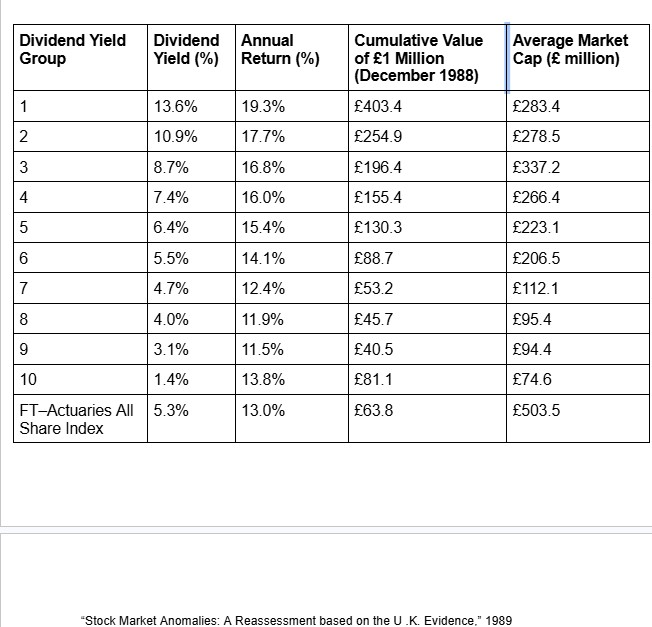
33 year study on dividends.
Professor Levis looked at 4,413 companies in the UK over 33 years (from 1955 to 1988)
Here's what he found:
£1 million invested in stocks that paid:
-Very little dividends grew to £81.1 million
-Moderate dividends grew to £130 million
-The highest dividends grew to £403.4 million
In the near future, @bilbelcapital’s semi Annual Letter will be published.
In the meantime, I would like to re-share our 2025 annual letter.
Returns since inception (February 2022) until annual letter’s publication:
Bilbel Capital: 2,092.4%
S&P 500: 58.1%
Some might call me biased, but I do believe @bilbelcapital’s letter is one of the good ones out there.
Would love to know your thoughts on our letters.
Thank you, I appreciate that.
One of the principles we are trying to build Bilbel Capital around is proper division of responsibility.
I am not the right person to lead the investment side of the firm. That is @sammutgabi’s strength, and his judgment, research process, and investment discipline are best placed there, as proven by the returns achieved.
Equally, Gabriel’s main strength is investing, not the day-to-day operating structure of the business or strategic planning. That is where I come in to add value through SOPs, internal processes, strategic planning, operational discipline, and long-term scalability.
A company becomes stronger when people are honest about where they add the most value, and where others are better placed to lead.
Clear responsibility is far from a weakness, but it is actually how strong firms are built. With this in mind, we’re confident we can continue to grow Bilbel Capital and gradually achieve new milestones.
@MatteMuscat@bilbelcapital Clear SOPs are the backbone of scaling.
I’ve seen automation stumble when the process isn’t documented.
Build the playbook first, then let tech execute.
Rule: Document before you automate
Thank you, I appreciate that.
One of the principles we are trying to build Bilbel Capital around is proper division of responsibility.
I am not the right person to lead the investment side of the firm. That is @sammutgabi’s strength, and his judgment, research process, and investment discipline are best placed there, as proven by the returns achieved.
Equally, Gabriel’s main strength is investing, not the day-to-day operating structure of the business or strategic planning. That is where I come in to add value through SOPs, internal processes, strategic planning, operational discipline, and long-term scalability.
A company becomes stronger when people are honest about where they add the most value, and where others are better placed to lead.
Clear responsibility is far from a weakness, but it is actually how strong firms are built. With this in mind, we’re confident we can continue to grow Bilbel Capital and gradually achieve new milestones.
@bilbelcapital is only 6 months old, but my role has already evolved far beyond marketing.
It now includes drafting SOPs for general operations, improving internal processes, supporting HR, legal, and finance functions, and helping think through the long-term strategy required for growth and scalability (I have drafted a complete 5 year plan for all functions which will be implemented gradually).
One thing has become very clear to me: before a company can scale properly, it needs a solid corporate structure. Clear responsibilities, clear processes, clear documentation, and clear standards. Without that foundation, growth can create confusion instead of progress.
SOPs are not bureaucracy for the sake of bureaucracy. They are the operating manual of the business. They help people know what to do, how to do it, who is responsible, what the standard is, and how the process can be repeated without relying only on memory or individual judgment.
The same applies to AI, automation, and technology. These tools are powerful, but they should not come before process. If the process is unclear, technology only makes the confusion faster. And if a process does not exist, it may be because it is not needed yet.
Build the structure first, document the process, then automate at a later stage.
@MatteMuscat@bilbelcapital While I don’t have your hands on experience I have read many business books and this theme emerges. Given that you are handling it I have no doubt it will scale exceptionally! Good stuff Matteo!
@bilbelcapital is only 6 months old, but my role has already evolved far beyond marketing.
It now includes drafting SOPs for general operations, improving internal processes, supporting HR, legal, and finance functions, and helping think through the long-term strategy required for growth and scalability (I have drafted a complete 5 year plan for all functions which will be implemented gradually).
One thing has become very clear to me: before a company can scale properly, it needs a solid corporate structure. Clear responsibilities, clear processes, clear documentation, and clear standards. Without that foundation, growth can create confusion instead of progress.
SOPs are not bureaucracy for the sake of bureaucracy. They are the operating manual of the business. They help people know what to do, how to do it, who is responsible, what the standard is, and how the process can be repeated without relying only on memory or individual judgment.
The same applies to AI, automation, and technology. These tools are powerful, but they should not come before process. If the process is unclear, technology only makes the confusion faster. And if a process does not exist, it may be because it is not needed yet.
Build the structure first, document the process, then automate at a later stage.
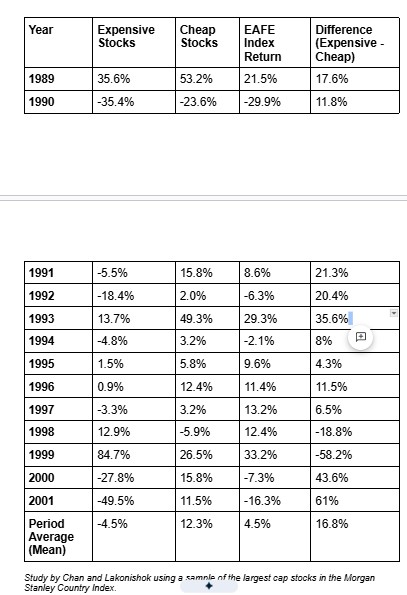
1,000’s of companies were studied for 12 years.
Here’s what they found:
-Big U.S. companies: Cheap stocks made 10% more per year than expensive ones.
-Small U.S. companies: Cheap stocks earned 18.8% more annually than expensive ones over 12 years.
International:
-In countries outside the U.S. like Europe and Asia, from 1989 to 2001, cheap stocks also did better than both expensive stocks and the market average.
Conclusion: Cheap stocks always returned more than expensive stocks, both in the U.S. and in other developed countries.
It is simply intelligent. To buy something for less than it’s worth.