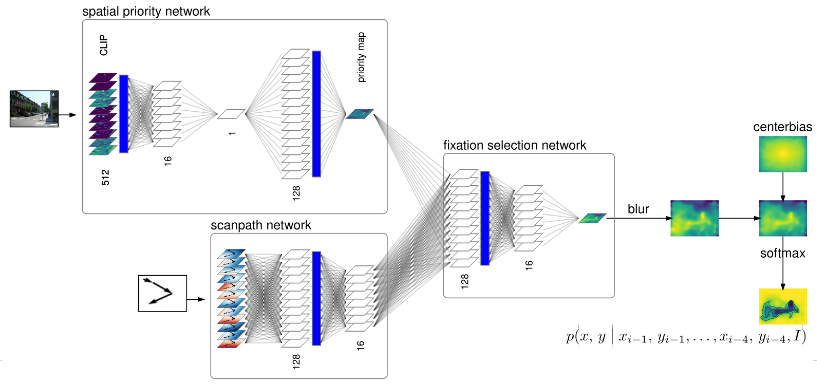
Now out at ECCV 2026: our new paper on using VLMs for building substantially improved scanpath prediction models that can easily be extended towards tasks, subjects, fixation durations and other aspects. Great work by @AgrawalSus35924! https://t.co/Sc41hw8MM2
Now out at ECCV 2026: our new paper on using VLMs for building substantially improved scanpath prediction models that can easily be extended towards tasks, subjects, fixation durations and other aspects. Great work by @AgrawalSus35924! https://t.co/Sc41hw8MM2
I'm very excited to present our paper together with @fededagos here at #NeurIPS2025 today at 4:30pm, poster no 2103. Come by if you want to see how DNNs can help build better mechanistic models of human behaviour!
🚨 New paper at #NeurIPS2025!
A systematic fixation-level comparison of a performance-optimized DNN scanpath model and a mechanistic cognitive model reveals behaviourally relevant mechanisms that can be added to the mechanistic model to substantially improve performance.
🧵👇
🚨 New paper at #NeurIPS2025!
A systematic fixation-level comparison of a performance-optimized DNN scanpath model and a mechanistic cognitive model reveals behaviourally relevant mechanisms that can be added to the mechanistic model to substantially improve performance.
🧵👇
🚨 New paper at #NeurIPS2025!
A systematic fixation-level comparison of a performance-optimized DNN scanpath model and a mechanistic cognitive model reveals behaviourally relevant mechanisms that can be added to the mechanistic model to substantially improve performance.
🧵👇
🚀New Paper
https://t.co/9TDiyZbOaw
Most data-curation for contrastive VLMs is offline and concept-agnostic!
We introduce online, concept-aware batch sampling (CABS), enabling flexible and targeted curation, yielding ⬆️boosts over IID sampling (+7-9% on ImageNet + ret)!
🧵👇
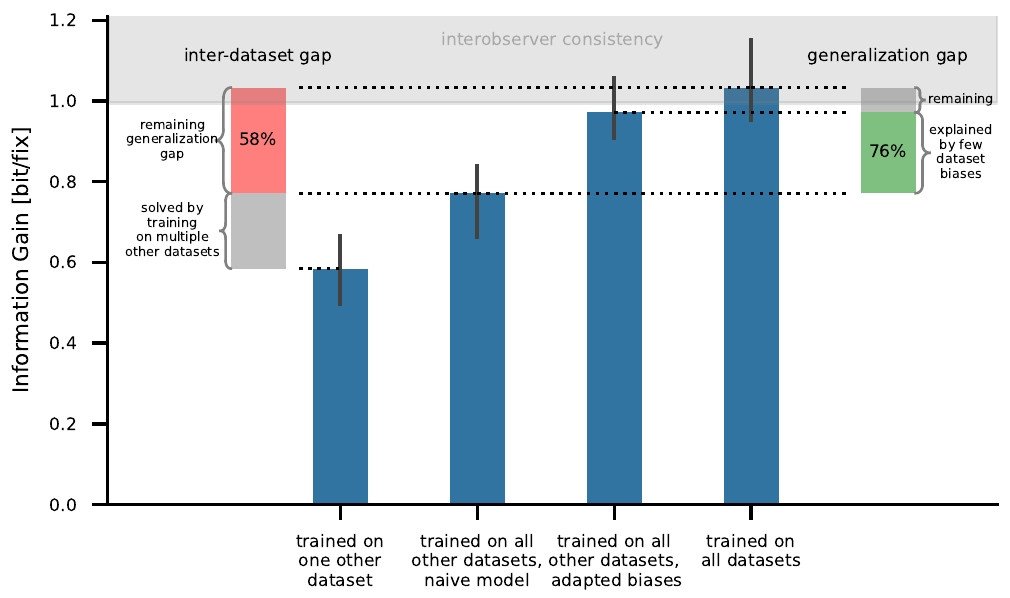
I'm happy to be here at @ICCVConference and looking forward to meeting many interesting people! I will present our new paper on Modeling Saliency Dataset Bias for better predictions on new datasets: https://t.co/92qjSxUdZW
We found that less than 20 interpretable parameters are responsible for most of the performance drop on unseen datasets and that they can be adapted in a very data efficient way.
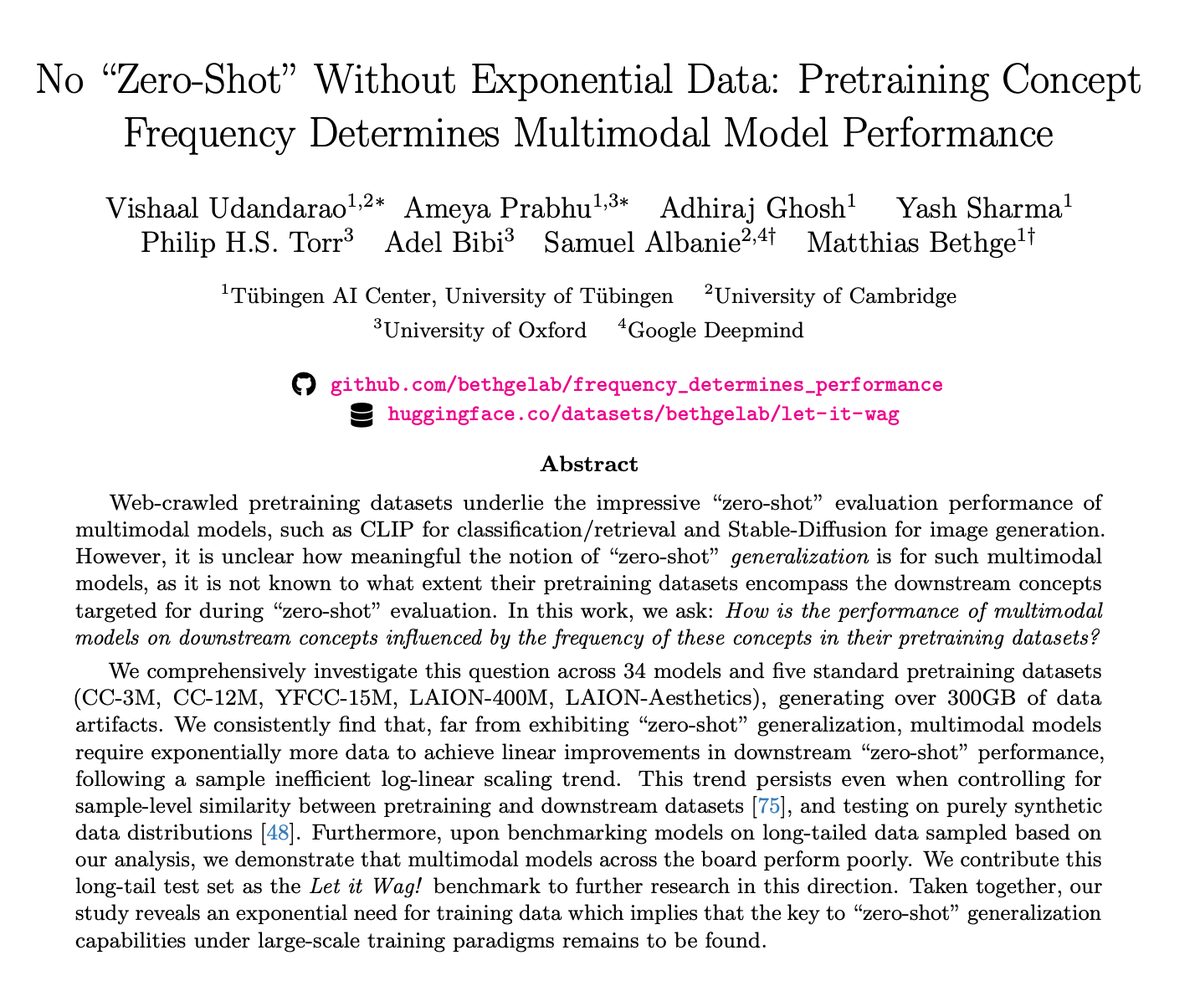
🚀New Preprint Alert!
📊Exploring the notion of "Zero-Shot" Generalization in Foundation Models. Is it all just a myth? Our latest preprint dives deep. Check it out!🔍
https://t.co/4PKwBGzr6K
Interested in deploying computer vision models in the real world? You're probably going to want to continuously adapt to your data.
We show that a simple baseline approach beats all current continuously adapting methods.
⬇️🧵 1/6
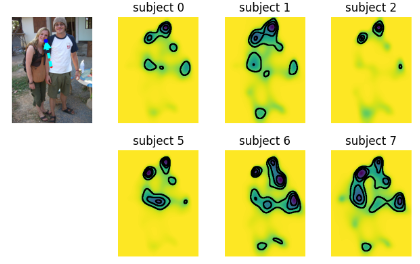
I'm looking forward to giving my talk "Modeling Internal State Changes in Free-Viewing and Visual Search Scanpaths With Gain Control in DeepGaze III" at 12:00pm @VSSMtg . Come by if you're interested!
@hidoba_tarazi @MatthiasBethge @tsawallis @CentreForCogSci@uni_tue@ARVOJOV Sorry, I forgot to answer you... No, the model so far only incorporates fixations and saccades, but doesn't handle microsaccades. But that might be interesting to do in the future.