Popper’s argument against Adorno is presented better in his contribution to the positivism dispute in German Sociology which has be collected into a terrific book. I’d also recommend O’Neill and Uebel’s paper on the prior Neurath/Horkheimer dispute
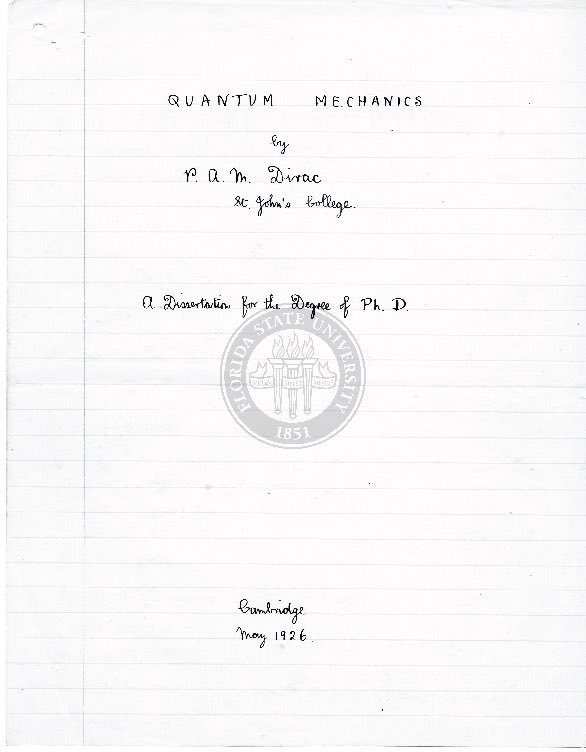
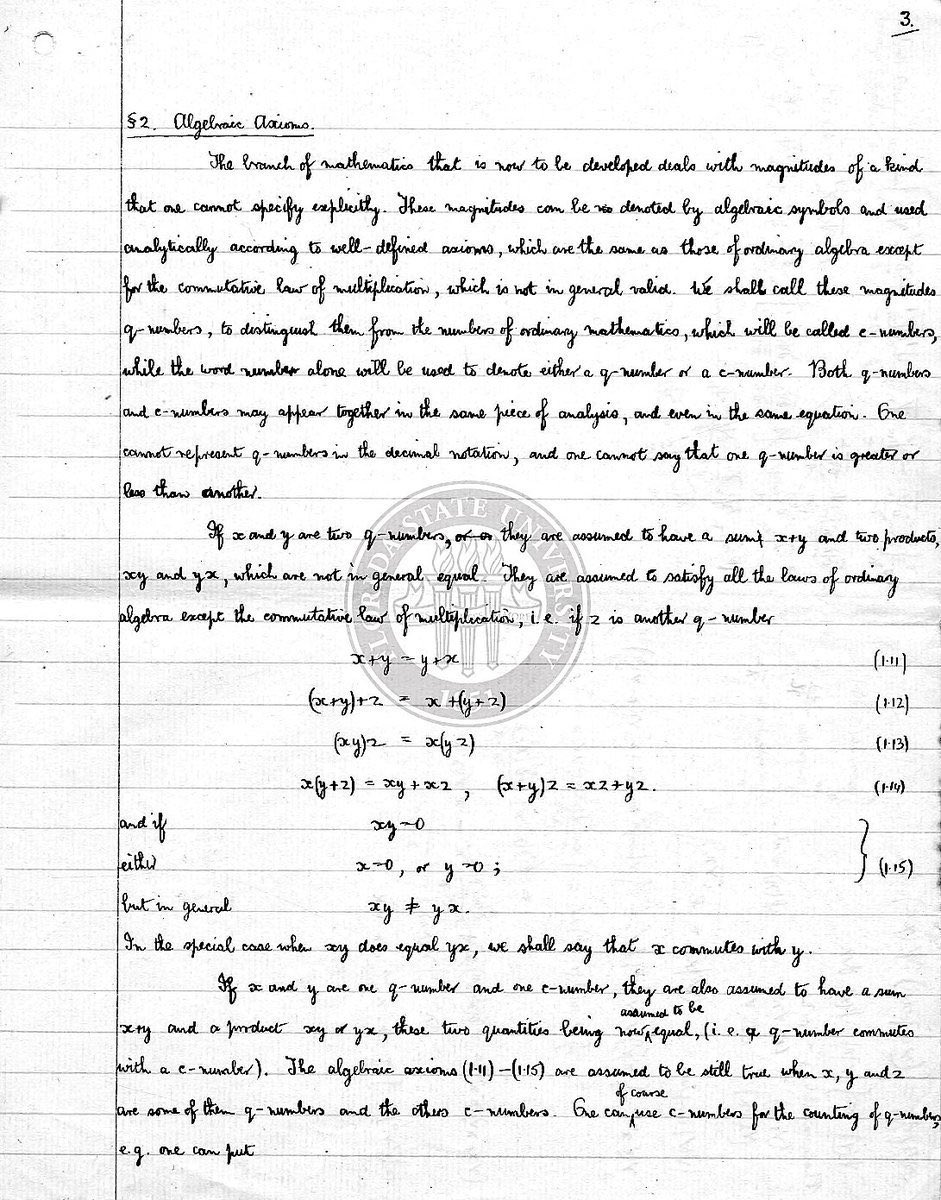
Imagine writing a PhD thesis so foundational that the title is literally just the name of the entire field of study.
Paul Dirac, 1926: "Quantum Mechanics."
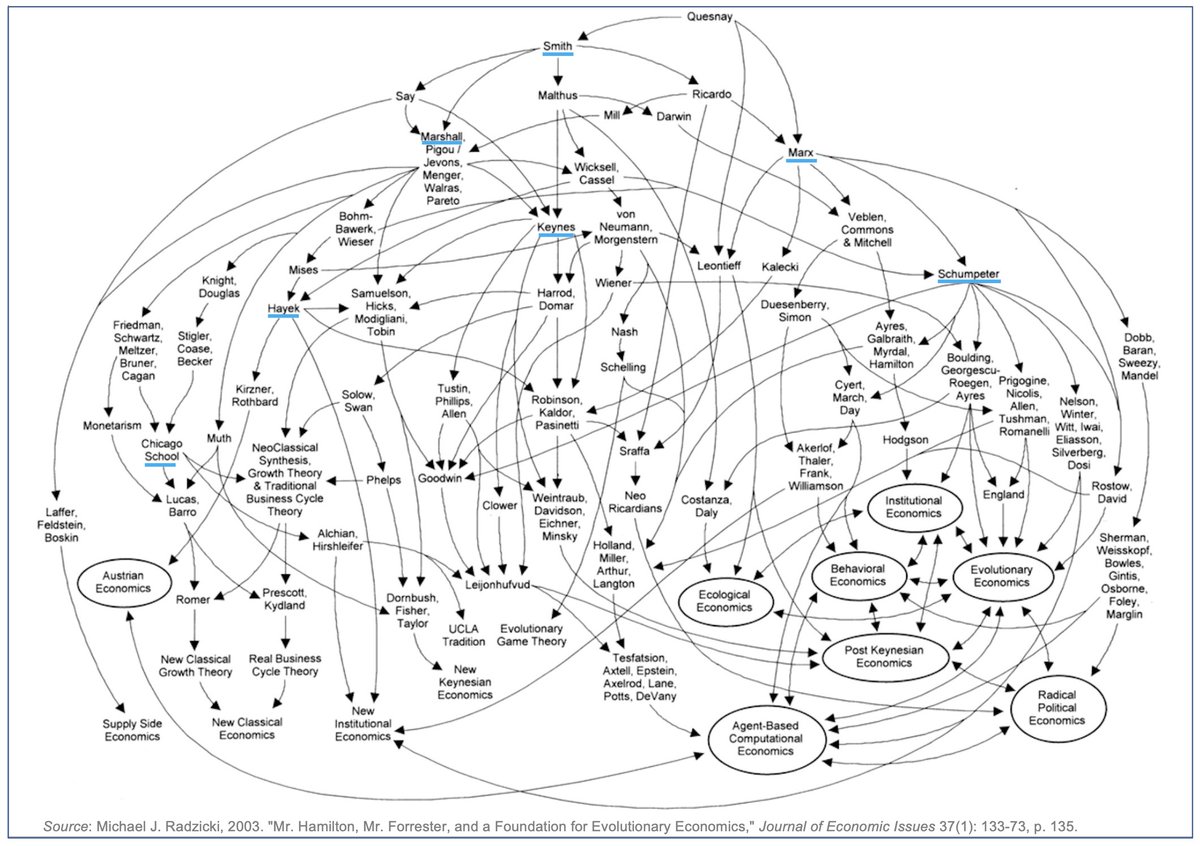
Schools of Thought in Economics
This figure links Smith, Marx, Marshall, Keynes, Hayek, Schumpeter and others to contemporary schools of thought. It helps to understand the genealogy of influential economic theories.
To see it better, download and expand it.
“Let us take a line of poetry at random, say the beginning of Claudio’s great speech in Measure for Measure: ‘Ay, but to die, and go we know not where’: We can hear of course the metrical rhythm, an iambic pentameter spoken as a four-stress line. We can hear the semantic or prose rhythm, and we hear what we may call the rhythm of decorum, the verbal representation of the horror of a man facing death. But we can also, if we listen to the line very attentively, make out still another rhythm in it, an oracular, meditative, irregular, unpredictable, and essentially discontinuous rhythm, emerging from the coincidences of the sound-pattern:
Ay:
But to die ...
and go
we know
not where …
Just as the semantic rhythm is the initiative of prose, and as the metrical rhythm is the initiative of epos, so this oracular rhythm seems to be the predominating initiative of lyric. The initiative of prose normally has its center of gravity in the conscious mind: the discursive writer writes deliberately, and the literary prose writer imitates a deliberative process. In verse epos the choice of a metre prescribes the form of rhetorical organization: the poet develops an unconscious habitual skill in thinking in this metre, and is thereby set free to do other things, such as tell stories, expound ideas, or make the various modifications demanded by decorum. Neither of these by itself seems quite to get down to what we think of as typically the poetic creation, which is an associative rhetorical process, most of it below the threshold of consciousness, a chaos of paronomasia, sound-links, ambiguous sense-links, and memory-links very like that of the dream. Out of this the distinctively lyrical union of sound and sense emerges. Like the dream, verbal association is subject to a censor, which (or whom) we may call the ‘plausibility-principle,’ the necessity of shaping itself into a form acceptable to the poet’s and his reader’s waking consciousness, and of adapting itself to the sign-meanings of assertive language well enough to be communicable to that consciousness. But associative rhythm seems to retain a connection with dream corresponding to the drama’s connection with ritual.”
—Northrop Frye, Anatomy of Criticism
Sawit, coklat, kopi, ngga bisa tumbuh di Eropa. Cuaca ngga mendukung.
Semua kebutuhan negara Eropa akan tanaman itu ditanam di negara qismin macam ndon.
Mereka dapet cuan, kita dapat alam yang hancur.
Lalu mereka bilang “Duh kasian, kalian kok ngga peduli lingkungan?”
Muslim twitter Indo lebih suka bawa-bawa agama untuk masalah pilihan personal kayak childfree.
Giliran masalah perampasan tanah, krisis iklim, eksploitasi buruh dalil-dalil agamanya jarang banget keluar.
@TrendAsia_Org Kalau di Islam, bencana/musibah itu takdir, terlepas dr apapun pemicunya (deforestasi, illegal logging, illegal mining dll), tp musibah itu atas kehendak Allah. Buat yg muslim, hal itu sepaket ya dalam rukun iman thd takdir Allah.
@txtdaricowok Skema yg masuk akal,
Impoten: soalnya anti-natalis
Punya utang: kita gak bisa hidup tanpa utang
Broken home: fakta, nyalahin orang tua terus karena udah dilahirkan