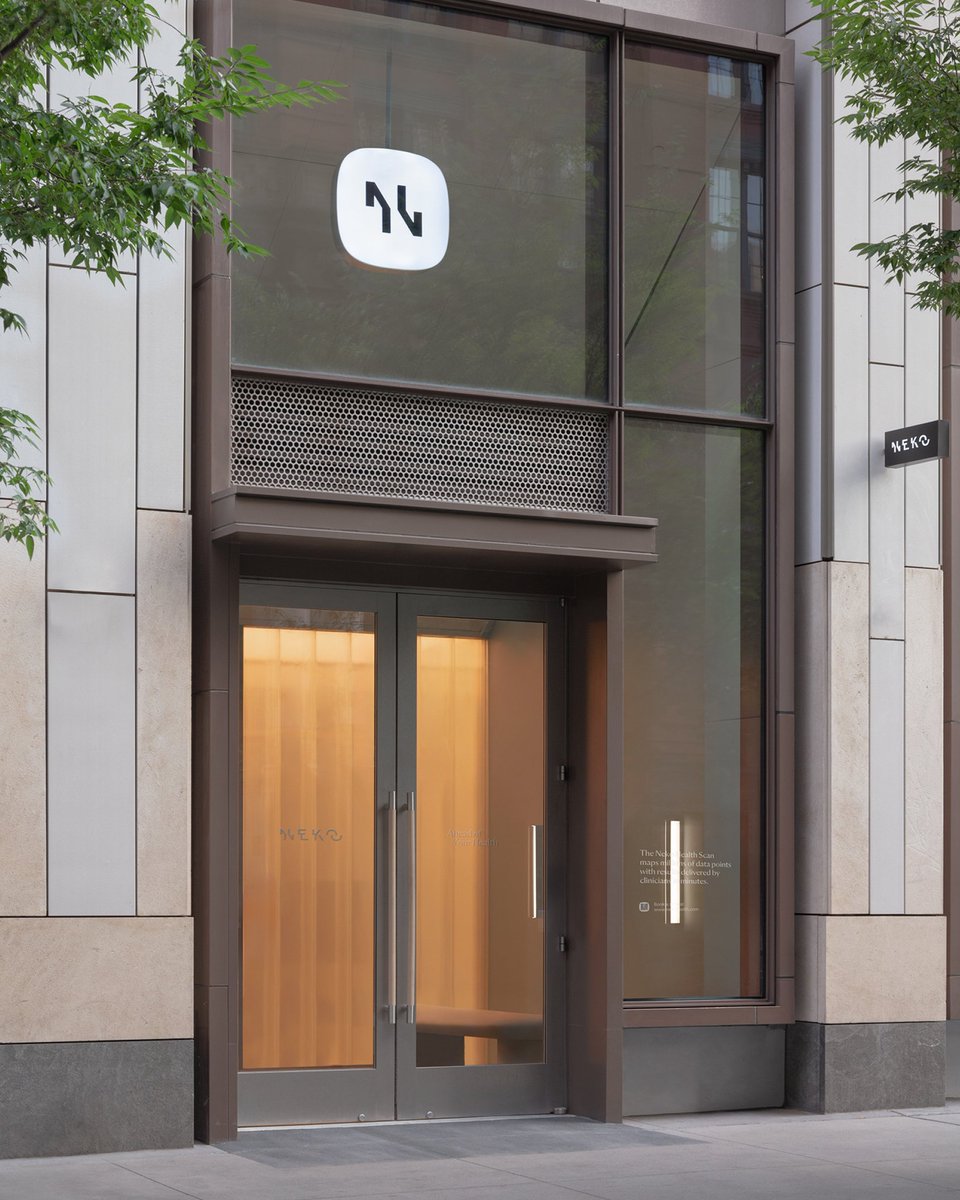
20 years ago, I was here in New York, pitching a small startup from Europe.
This week, I'm back here, once again in pitch mode, talking to friends old and new about democratizing preventive health with @Neko.
I've always been obsessed with building the most amazing product possible. And with Neko, the end goal is to truly change consumer behaviour. We want as many people as possible to have access to quality preventive healthcare - not for the 1%, but for the 99%.
Thank you to my co-founder Hjalmar (@HNilsonne) and to the amazing team that made our first New York clinic opening possible today.
@kellabyte IOCP was introduced in NT 3.5 in 1994. io_uring in 2019 (according to the AI I just asked).
I agree the NT kernel has a few quite awesome features for a very long time.
@davidfowl I feel that with AI the need for languages which optimize for ease of writing code (at the expense of runtime speed or deployment complexity) don’t fulfill an important role anymore.
Personally I’m hoping that Python will lose importance over time.
@ChristophKappes So ein Schwachsinn, das Vorlesen vom Notar kämpft doch nicht für die Sicherung des Rechtsverkehrs? Vielleicht bei Privatpersonen denen nicht zugetraut werden kann das sie Verträge überhaupt durchlesen. Aber bei Firmen hilft das nichts.
Today I'm excited to share an update on @Neko's US expansion.
This launch is probably the most consequential milestone in our company's mission to make preventive healthcare accessible at population scale.
Modern medicine is extraordinary at fixing you once something has gone wrong. It is almost entirely uninterested in looking before that happens.
We've spent the past 8 years building an alternative and we are finally ready to bring it to the US for the first time.
Neko NYC opens on 24 September at 300 Lafayette Street in SoHo. A Neko Health Scan is $499.
Americans are already spending thousands of dollars to access yearly labs, on-demand scans, or concierge medicine. At Neko, there are no third-party imaging centres, no send-out labs, nobody in the middle taking a cut. We built a completely new healthcare experience ourselves to make it both better and cheaper for you.
If you're not familiar with our concept, in one hour you get a full skin check, body composition, EKG, 4-point blood pressure analysis, macro and micro vascular assessment, and comprehensive labs with results before you leave. Then a clinician sits down with you and takes you through every finding, in person, before you leave the building.
For about 1.2% of scans we have a direct life-saving intervention.
There are already 25,000 New Yorkers in line for a scan. That could mean saving 300 lives in NYC alone.
Miami, SF and Washington DC are already under construction. Waitlists for those cities open today (linked in the comments). 🇺🇸
@davidfowl I have been playing with something similar for azure DevOps and GitHub: https://t.co/bj4Sv1koky
Pretty happy with the result even if not “native”.
@KamenarVladimir@IceSolst Isn't this pretty reasonable though? Most orgs might configure this, but they certainly never tested it :)
Or they don't have canaries to test it which is the only reliable way to test that the policy is effective over time.
Over 60,000 Signups in Just Twelve Weeks!
It's been nearly three months since we launched @neko in London, and the response has been nothing short of incredible. Over 60,000 people have signed up for a scan, which reflects a growing shift toward preventive healthcare and early detection - exactly what the system needs!
We're already working on our next set of London locations, and the next one is going to be massive.
This is pretty common with Java as well.
But anyway, I am pretty proud that even after we have grown the backend team from 1 happy guy to many more, we have managed to keep away the "Best Practice"-people, so our codebase has few projects and only interfaces where useful.
I’ve been away from the .NET space for almost a decade but I’m back and I’m already fighting against folks who want to implement Event Sourcing architecture to solve something that 25kb of ints will solve the problem.
.NET architects are obsessed with styles of architectures.