Tim Cook reveals a surprising truth about hiring at the world's biggest tech company:
You don't need to know how to code to work at Apple.
"We hire people from all walks of life and people that have college degrees, people that don't. People that code, people that don't."
Tim is a vocal advocate for learning to code, but not because it's a prerequisite for getting hired. He sees it as something far broader:
"I do recommend coding for everyone to learn because I think it's a form of expressing yourself and it's a global language and it's the only global language that we all share is coding."
So if coding isn't the golden ticket, what is?
Tim explains that the traits he values most have nothing to do with technical credentials. There are three that matter above all else.
The first is collaboration.
Not just the willingness to work with others, but a deep, genuine belief that teams produce better outcomes than individuals ever could:
"Can they really collaborate? Do they deeply believe that one plus one equals three?"
The second is curiosity.
@tim_cook gravitates toward people who are relentless in their need to understand, people who never stop probing how the world works and why people think the way they do:
"I think curiosity is a trait that I love about people, about people that ask questions that are so curious about how things work, how people think. All of the why and how questions."
The third is creativity.
This is where everything comes together. Apple's entire model depends on anticipating needs that consumers haven't even recognised yet:
"We're looking for people that can see around the corner because ultimately we want to create products that people can't live without, but they didn't know they needed."
Collaboration. Curiosity. Creativity. None of them show up on a résumé, and none of them require a degree. But according to Tim Cook, they're exactly what makes a great team player at Apple.
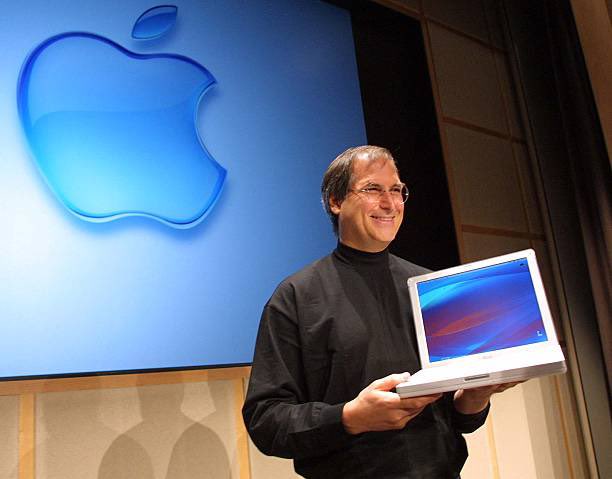
Apple Computer CEO and co-founder Steve Jobs holds up an all new iBook notebook computer weighing just 4.9lbs (2.2kgs) during an Apple Media event in Cupertino, California.
In 1997, Steve Jobs came back to Apple and canceled 70% of the product line.
The engineers whose projects just died?
Three feet off the ground with excitement.
“They finally understood where in the heck we were going.”
He spent 20 minutes explaining how he was going to bring Apple back:
On focus:
"We looked at the product road map going out for a few years and said a lot of this doesn't make sense."
"There's way too much stuff and not enough focus."
"We got rid of 70% of the stuff on the product road map."
"You're going to see the product line get much simpler. And you're going to see the product line get much better."
On inventory:
"We've got two to three months of inventory in our manufacturing pipeline. And about an equal amount in our distribution pipeline."
"So we're having to make guesses four, five, six months in advance about what the customer wants."
"We're not smart enough to do that. I don't think Einstein's smart enough to do that."
"So we're going to get really simple. Take inventory out of those pipelines. Let the customer tell us what they want. And respond to it super fast."
On marketing:
"To me, marketing is about values."
"This is a very complicated world. A very noisy world. We're not going to get a chance to get people to remember much about us. No company is."
"So we have to be really clear on what we want them to know about us."
On brand neglect:
"Apple is one of the half dozen best brands in the whole world. Right up there with Nike, Disney, Coke, Sony."
"But even a great brand needs investment and caring if it's going to retain its relevance and vitality."
"The Apple brand has clearly suffered from neglect in the last few years."
On what not to do:
"The way to bring it back is not to talk about speeds and feeds. Not to talk about megahertz. Not to talk about why we're better than Windows."
"The dairy industry tried for 20 years to convince you that milk was good for you. It's a lie. But they tried anyway."
"Sales were going like this." [Down]
"Then they tried 'Got Milk.' Sales went like this." [Up]
"Got Milk doesn't even talk about the product. It focuses on the absence of the product."
On Nike:
"The best example of all. One of the greatest jobs of marketing the universe has ever seen is Nike."
"Nike sells a commodity. They sell shoes. Yet when you think of Nike, you feel something different than a shoe company."
"In their ads, they don't ever talk about the product. They honor great athletes. That's who they are."
On Apple's identity:
"Our customers want to know: who is Apple? What do we stand for?"
"What we're about isn't making boxes for people to get their jobs done."
"Apple at its core is that we believe people with passion can change the world for the better."
"Those people crazy enough to think they can change the world are the ones that actually do."
On death:
"For 33 years, I've looked in the mirror every morning and asked: if today were the last day of my life, would I want to do what I'm about to do today?"
"Whenever the answer has been no for too many days in a row, I know I need to change something."
"Remembering that I'll be dead soon is the most important tool I've ever encountered to help me make the big choices in life."
"Almost everything—all external expectations, all pride, all fear of embarrassment or failure—these things just fall away in the face of death."
"You are already naked. There is no reason not to follow your heart."
On time:
"Your time is limited. So don't waste it living someone else's life."
"Don't be trapped by dogma, which is living with the results of other people's thinking."
"Don't let the noise of others' opinions drown out your own inner voice."
"Have the courage to follow your heart and intuition. They somehow already know what you truly want to become."
"Everything else is secondary."
"Stay hungry. Stay foolish."
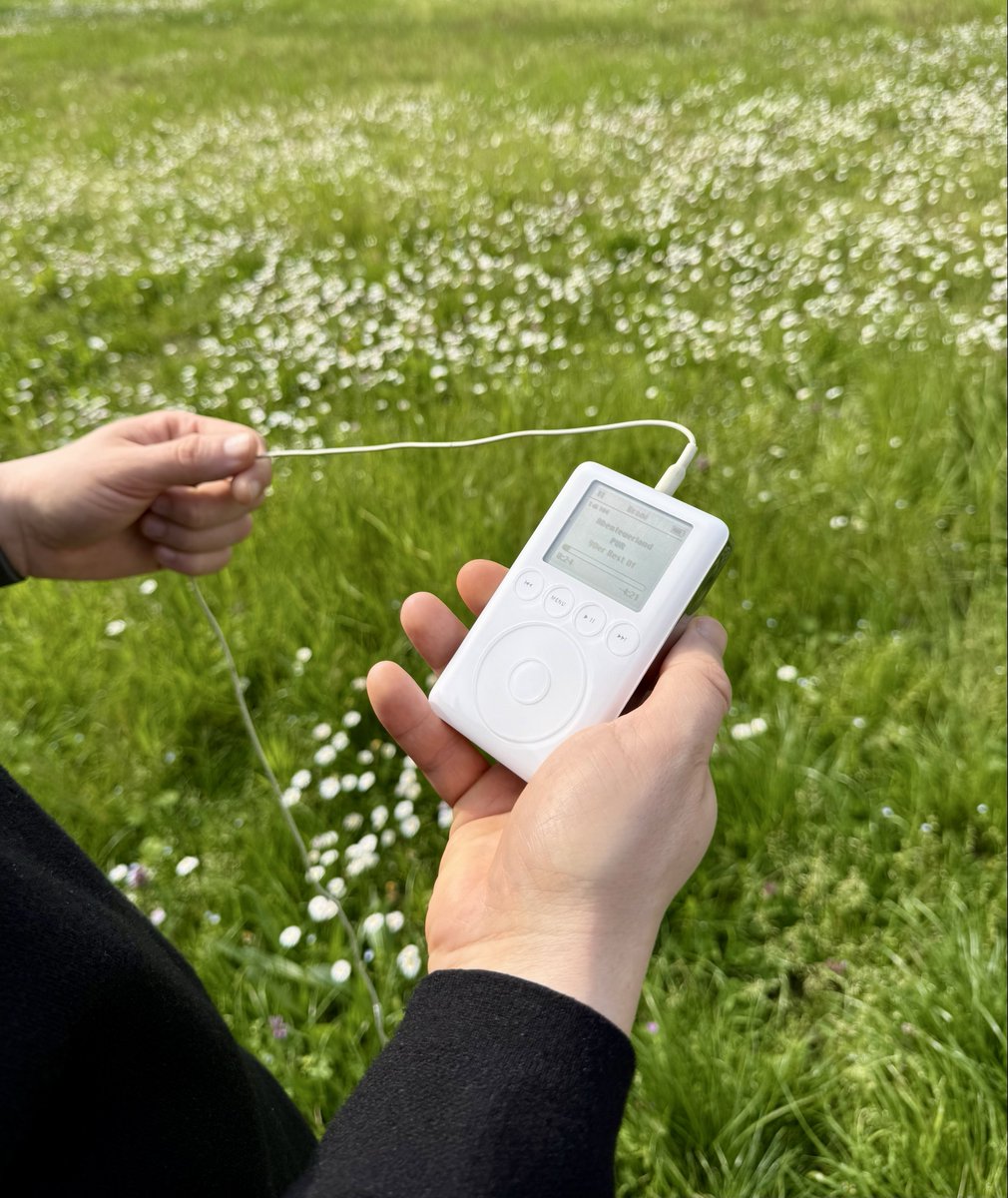
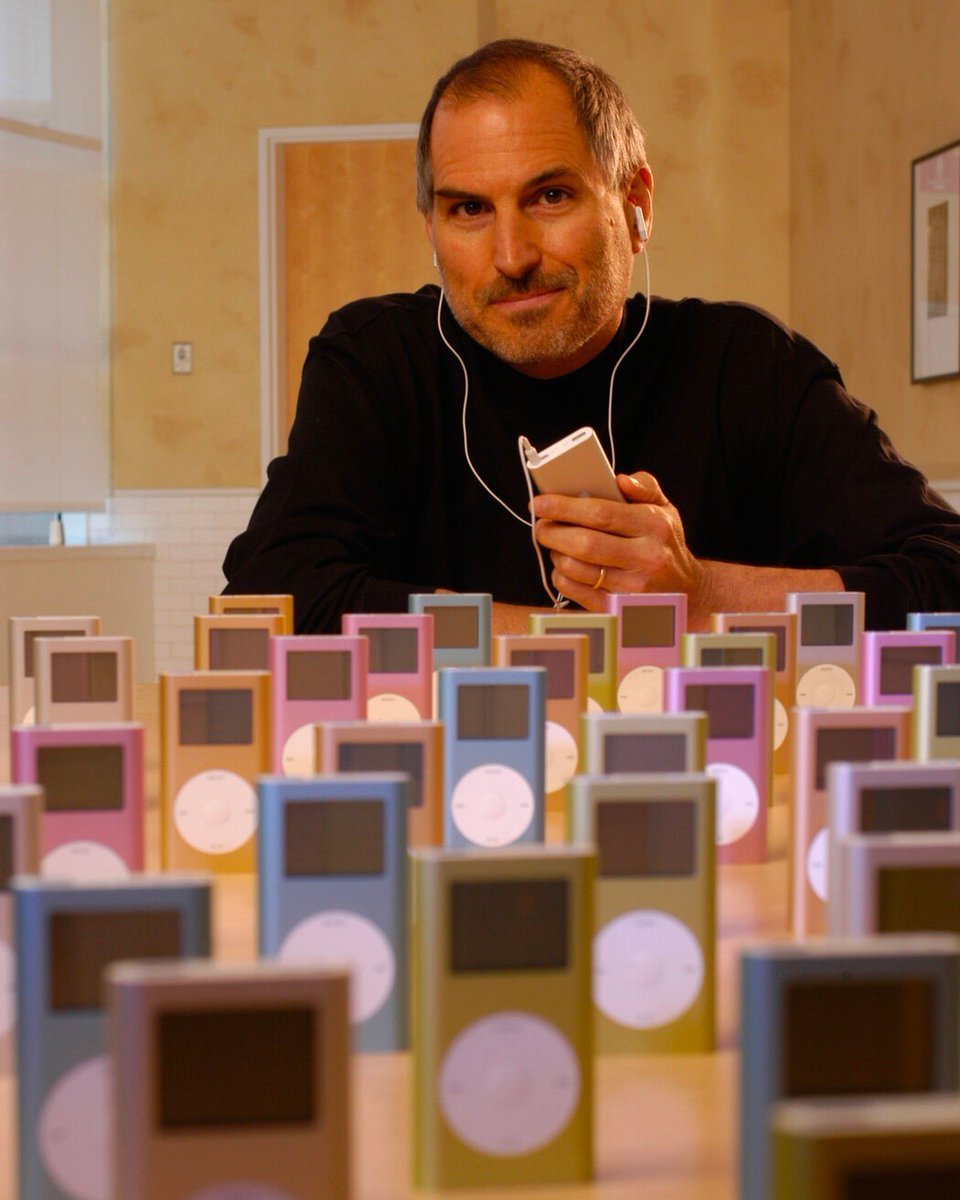
The original iPod launched at $399, worked only with Macs, and got savaged by critics.
"Way overpriced." "Too limited." One famous headline called it the "Wheel of Fortune"... And not as a compliment.
Tony Fadell shipped it anyway.
Then he shipped 17 more versions.
Windows compatibility. The Mini. The Nano. The price cuts.
Each one closing the gap between what they'd announced and what they'd actually imagined.
By the time the iPod peaked, it had sold 400 million units and quietly become the foundation for the iPhone.
Most people remember the iPod as a huge win for Apple but in reality the first version was expensive, Mac-only, and widely mocked.
The product that changed music forever needed several generations to become itself.
That's the thing nobody tells you about great products.
"The launch isn't the achievement. The launch is the permission to keep going."