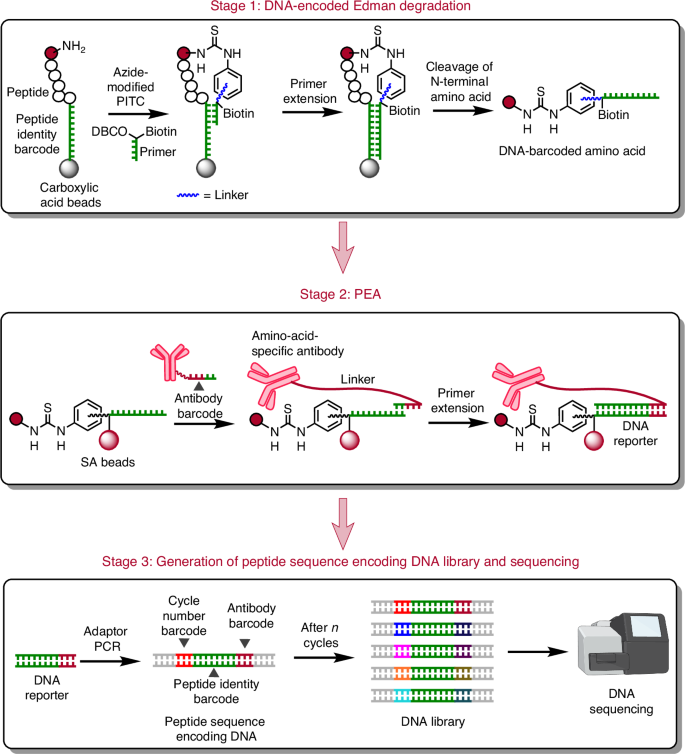
A very impressive study for how we could prevent lung cancer more than 5 years before it is diagnosed. Using machine learning, discovery of a 14-plasma protein signature of risk that predicts responsiveness to an antibody therapy to interleukin, IL-1β
Validated across 8 cohorts
@CellCellPress@CharlesSwanton
https://t.co/qpPtgs1dH0
People who don't follow cancer research often ask me why we haven't cured cancer. That perception masks a wonderful reality: We make amazing, stepwise progress every year, and the result is that many people live much longer today than they would have previously.
Right now we're in the thick of the annual meeting of the American Society of Clinical Oncology, the biggest research meeting on new cancer medicines, and this morning a bunch of really important studies dropped. I'm going to review them here.
This first image is the result for daraxonrasib, a treatment for pancreatic cancer that is generating consdirable excitement. The green line is the probability of living for patients who got the new drug; the gray one is the chemo control group.
If you follow cancer drugs, a chart like this will make your breath hitch a little. I'm going to review these and some other data here.
The ramp up of cancer immunotherapy is remarkable. Now we're seeing vaccines achieve some cures or remissions in the most refractory cancers: pancreatic, melanoma, glioblastoma, renal, triple-negative breast cancer.
✓ out the new Ground Truths (link in profile)
Cancer survival in the U.S. just crossed 70%.
It was 63% in the 1990s.
That gap = 4.8M people alive today.
This one chart captures survival gains across 29 cancer types.
The wins are real.
So is the unfinished work.
▪️CML: 31% → 72%
▪️Multiple myeloma: 32% → 62%
▫️Kidney: 59% → 82%
▫️Metastatic melanoma: 16% → 35%
▫️Childhood ALL: 80% → 92%
But some cancers barely moved.
Cervical cancer outcomes actually worsened.
None of this is abstract progress, though.
These are birthdays, grandkids, and years of life returned.
This is what funded science does.
Next time someone asks if cancer research works, show them this (full) chart.
- - - - -
Source: ACS Cancer Statistics 2026 · SEER · 𝘷𝘪𝘢 @Jori_health
- - - - -
Today we all lost our jobs.....
Three Nature papers showing that scientists in the conventional sense are obsolete
At least read the first one.... the AI replaced all things that the scientist does ....
https://t.co/zMsRLaaRDU
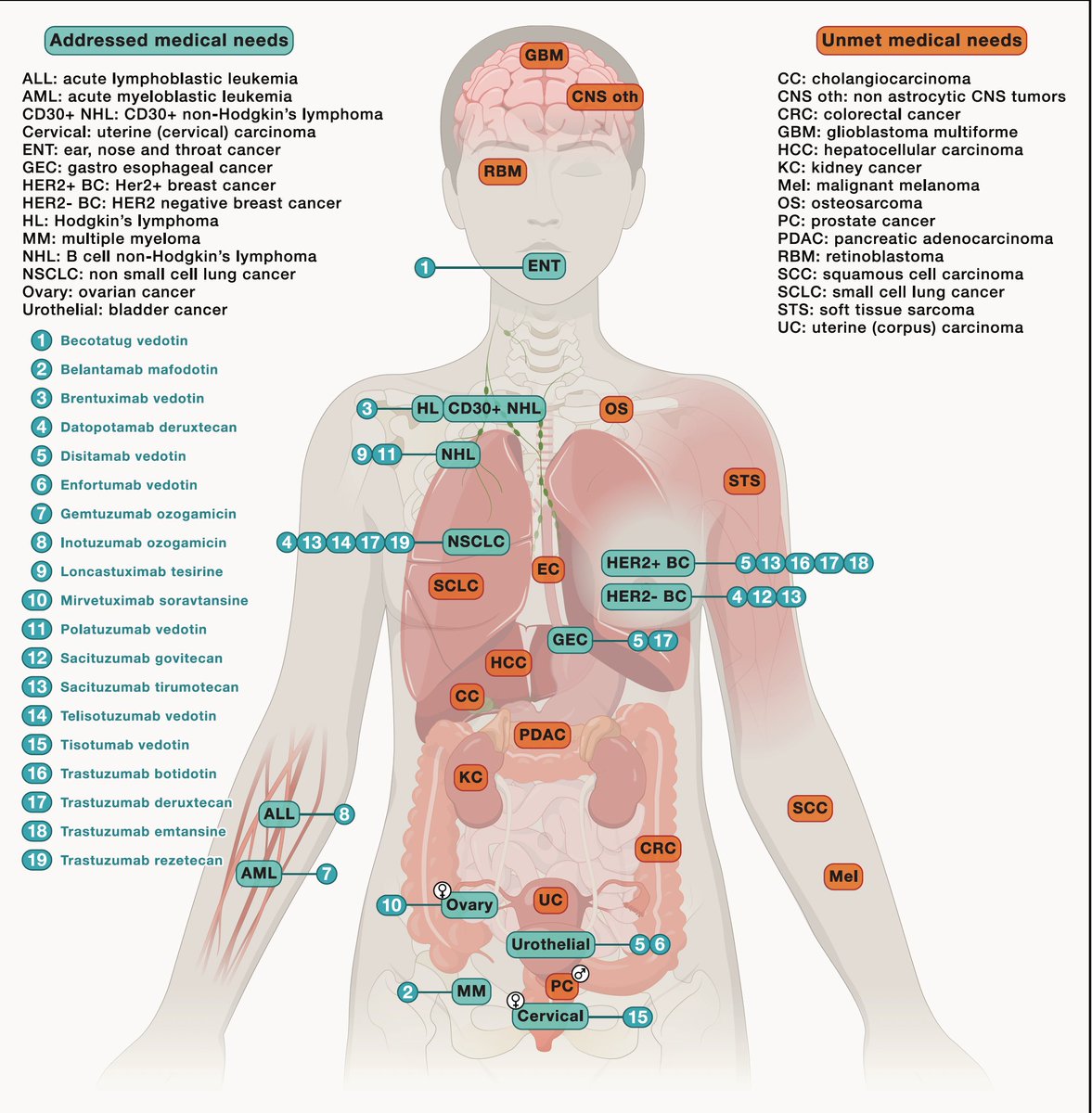
The progress and intensity of clinical research efforts with antibody-drug conjugates vs cancer is remarkable
A new @CellCellPress review
https://t.co/bkaJ2OOt63
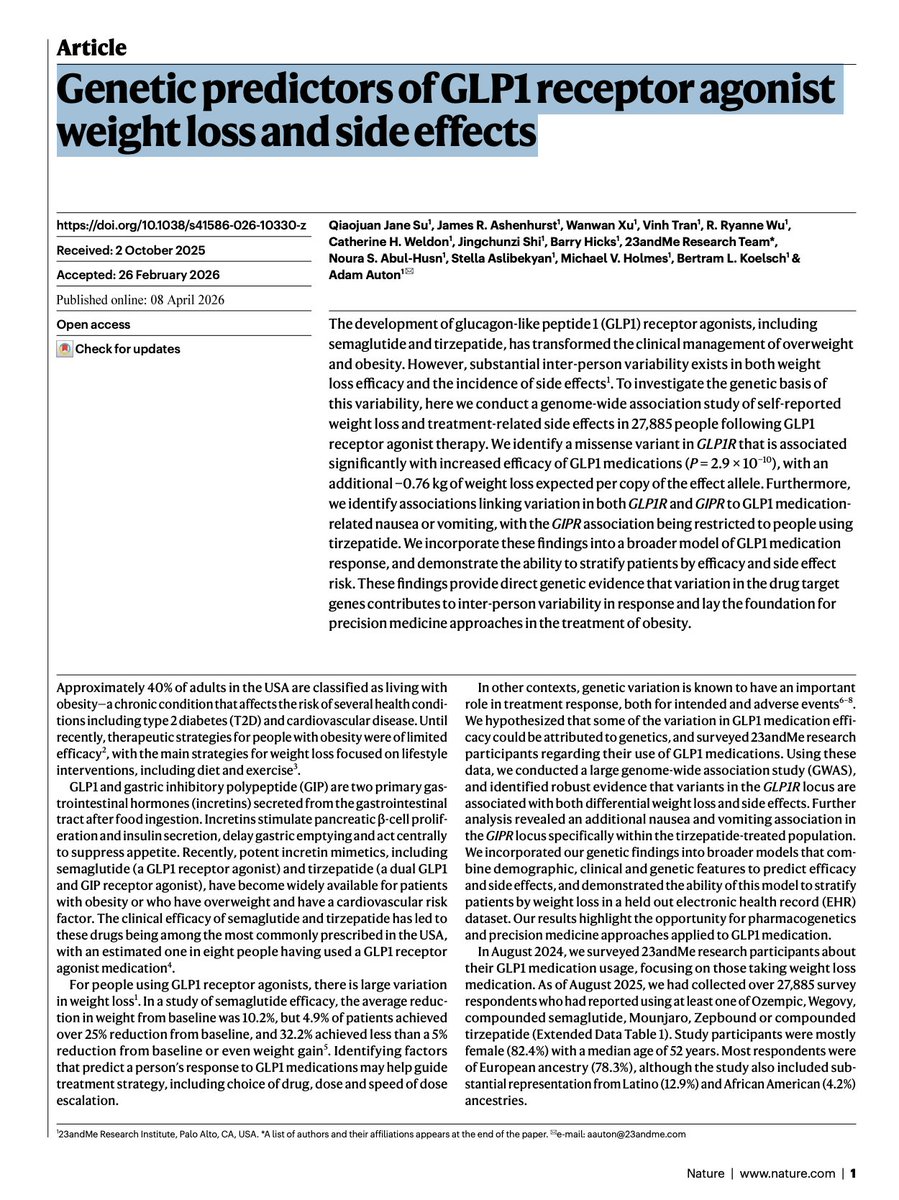
A massive Nature study of 27,885 GLP-1 users just dropped some major news about Ozempic and tirzepatide.
Your DNA determines how much weight you lose and how bad the side effects hit.
1 in 3 people see minimal results, and now we know why: (1/9)
I don't agree with every point made here, but on a macro level this piece is paints a devastating picture of the broader geopolitical outcomes of Trump's war in Iran. An obituary to an American superpower whose decline has undoubtedly been hastened by the vainglorious, self-enriching, short-sighted idiocy of a president like Trump. A world in which America's traditional allies find themselves exposed, unprepared and under-resourced. A world which is not inevitable, yet, as the author would have you believe. But with each new day of Trump's presidency, is looking more and more likely.
https://t.co/yflLi94Joq
FDA just rewrote the CAR-T approval rulebook. Randomized trials. Superiority over SOC. No more single-arm shortcuts. Every program built on the old model is now repricing risk. Here's what changed - and what it means for sponsors and investors:
https://t.co/hmcJzBM3tN
Joe Kent on camera tonight:
“All 18 of America’s intelligence agencies agreed — Iran had no capacity to develop a nuclear bomb.”
“But Israel was telling us they would be able to assemble ten bombs in two weeks.”
18 American intelligence agencies: no nuclear capacity.
Israel: ten bombs in two weeks.
Trump chose to believe Israel over his own entire intelligence community.
This is not the first time this has happened.
Iraq 2003: Ahmed Chalabi told the Bush administration Saddam had WMDs. The intelligence community had doubts. They chose Chalabi. 4,500 Americans died. No WMDs were found.
Iran 2026: Israel said ten bombs in two weeks. 18 agencies said no nuclear capacity. They chose Israel. 14 Americans dead. No nuclear program found.
Joe Kent ran the National Counterterrorism Center.
He just told you on camera what the intelligence actually said.
And what was ignored to start this war.
Never stop connecting the dots.
Seven clocks are running. None of them negotiable. All of them counting down to the same weeks.
The planting clock. Mid-April is the biological deadline for corn and soybean planting across the US Midwest. Every day that passes without nitrogen becoming affordable and available narrows the window for corn. USDA projects corn falling to 94 million acres from 98.8 million. Soybeans rising to 85 million from 81.2 million. The seeds that go into the ground in the next three weeks determine America’s grain harvest in October. The decision is irreversible.
The USDA clock. March 31. Prospective Plantings. The report that converts farmer intentions into official data. Every acreage number, every corn-soy ratio, every nitrogen-dependent calculation becomes a published fact that traders, governments, and food agencies will use to model global supply for the next twelve months. The number arrives in twelve days.
The FAO clock. April 3. The Food Price Index. The first global reading that captures post-Hormuz commodity prices across cereals, vegetable oils, dairy, meat, and sugar. The 2022 peak was 159.7 in March 2022 after Ukraine. This reading will incorporate oil above $100, urea at $610, LNG halted, packaging repriced, and freight surcharges of $500 to $1,500 per container. The number that determines whether the UN declares a food emergency arrives in fifteen days.
The pharmaceutical clock. India’s API inventory buffers are two to three months, measured from the war’s onset on February 28. Late May is the depletion window. Methanol at 87.7 percent Hormuz exposure feeds the solvent chain for paracetamol, ibuprofen, metformin, and antibiotics. Once buffers deplete, the shortage becomes a patient access crisis for the 47 percent of US generics that originate in India.
The China crude clock. FGE NexantECA confirmed China is drawing commercial reserves at up to one million barrels per day. The draw sustains refinery operations for four to six weeks from March 19. Mid-April to late April is the exhaustion window. After that, China faces three options: accelerate Russian pipeline imports, reroute at massive premium, or crack open the strategic petroleum reserve. The third option reprices every commodity on the planet.
The helium clock. SK Hynix and Samsung hold two to three months of helium inventory. Late May to early June is the depletion window. South Korea imports 64.7 percent of its helium from Qatar. Ras Laffan is offline. If helium buffers deplete before alternative supply arrives, semiconductor fabrication faces rationing. The AI hardware supply chain hits a physical wall measured in months, not quarters.
The insurance clock. Solvency II requires 30 to 60 days of zero incidents before P&I clubs can reinstate war risk coverage. Even after a ceasefire, the insurance normalisation takes six to sixteen months based on the Red Sea precedent of 26 months and counting. The logistics system lags the financial relief rally by the longest duration of any clock in this crisis.
Seven clocks. The shortest expires in twelve days. The longest runs for over a year. The planting window, the USDA report, the FAO index, the drug buffers, the Chinese crude draw, the helium inventory, and the insurance cycle are all counting down simultaneously. None of them pause for diplomacy. None of them respond to presidential directives. None of them read sealed packets.
The calendar is the only actor in this war that has never lost a negotiation.
https://t.co/iFmUcarGdV
Reshaping Pfizer’s drug discovery priorities
https://t.co/72p6DS72ou
Chris Boshoff, Pfizer’s CSO and President of R&D, discusses the company's renewed focus on oncology, obesity drugs and more in our latest interview
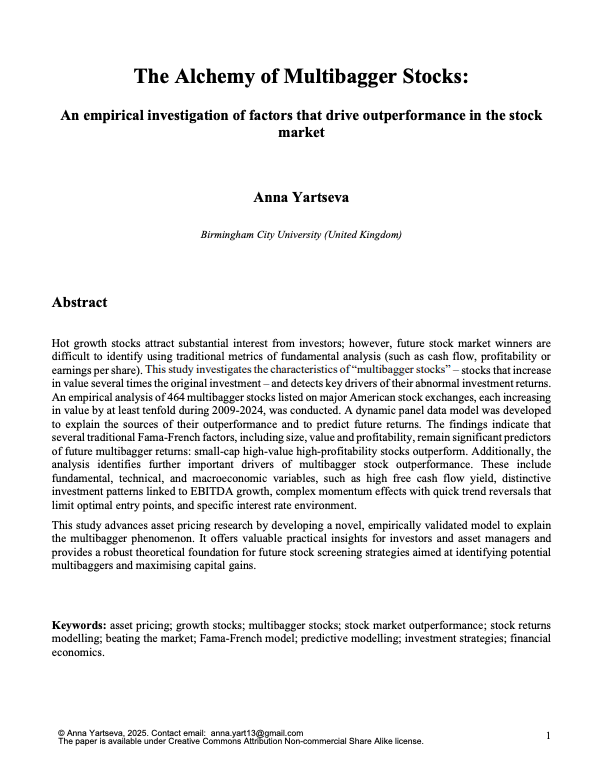
The secret of hedge funds is revealed in a 41-page PDF:
This paper analyzed 464 stocks that 10X-ed over a 24-year period.
Here are the best factors that drive outperformance: (number 3 is the best 🧵)