Big milestone for @FlareNetworks
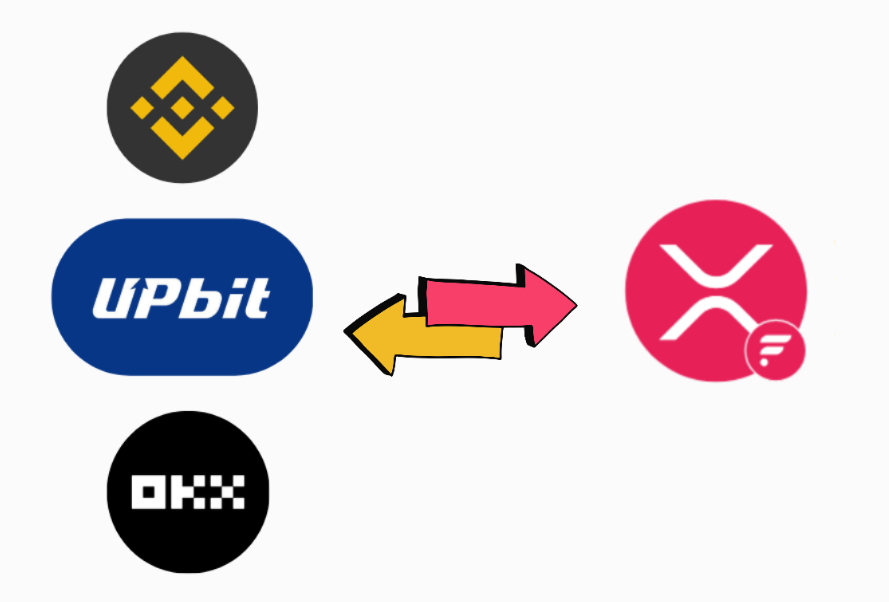
Users can now move their XRP directly, seamlessly, trustlessly, from an exchange like Binance into a tailor-made onchain financial ecosystem and access yield
Proud of @j00sko and the team of engineers who made it happen
(This is just the start!)
FAssets v1.3 is live on mainnet.
Minting FXRP = one XRPL transaction.
Reserve a destination tag once, and every mint after is just an XRP withdrawal. Works from any exchange — Binance, Kraken, OKX, Upbit, Bithumb, all of them.
Billions of XRP are sitting on CEXs. @FlareNetworks is the only chain that reaches them in one step.
FAssets is more XRPL-aligned than people think
People ask how the FAssets system actually uses XRPL. The honest answer is that the FAssets core flow is built out of native XRPL primitives — four of them — and that's the architecture.
1. Destination tags. Minting FXRP means sending tagged XRP to the core vault. Redemption sends tagged XRP back to wherever the user wants it — an exchange, a custodian, a wallet. It's the same tag primitive XRPL users already rely on every day. EVM ecosystems are now trying to reinvent this with "subaccounts." XRPL has had it from day one.
2. Native signer sets. The core vault itself uses XRPL's built-in signer-set mechanism. Signers are visible on any explorer, and the vault only ever signs two transaction types: payments to agents on redemption, and escrows. Two native operations, both auditable on-chain.
3. Escrow. Large balances in any signer-controlled account benefit from additional protocol-level constraints. So FAssets continuously locks vault XRP into XRPL-native time-locked escrows that release on a rolling schedule. The liquid balance is always sized well above what's needed to keep redemptions flowing smoothly — the rest sits outside the signing scope until expiry, time-locked by the XRPL protocol itself.
Why escrow rather than a custom contract? Because escrow is battle-tested, every XRPL explorer can verify the parameters independently, and standard XRPL operations are simple to validate and easy to monitor.
4. Memo fields. XRPL payments can carry memo data, and FAssets uses that to encode what the user wants to happen on Flare after the mint lands — buy a token, deposit into a vault, hit a Smart Account instruction. One XRPL transaction, full sequence on Flare.
No new transaction types, no new wallet UX, no forks. Use XRPL the way it's designed.
FAssets v1.3 is live on mainnet.
I miss the days of Gm. Things have changed a lot these past 6 years and my TL is often _far_ from uplifting, but it’s important to stoke the embers of hope / optimism now and then..
And so..
Gm Gm ☀️
RWAs.. and we haven’t yet discussed FTSO custom feeds for provision of SOFR daily, 3month, 6month, historical rates to unlock a broader range of interest rate swap products via Spectra. But that’s for another time.
Flare is:
- Layer 1 chain
- built-in oracles for price + state
- data + data proofs for internet data
- secure bridging for XRP, soon BTC
- AI + compute (via TEE layer)
- Dedicated XRP trading, staking, yield
- MEV and chain revenue capture
Did I miss anything? @FlareNetworks
Also privacy, a feature enabled by the TEE layer. This will be accompanied by verifiable offchain compute, onchain attestations, consensus learning across models for reliability.
So, @SentoraHQ curate DeFi vaults.
They have strict risk mandates.
They continue to achieve institutional allocation for their vaults.
Firelight, built on @FlareNetworks, harnessing FXRP as input collateral, will provide DeFi cover for their smart yield vault.
Onwards we go.
Firelight will back @SentoraHQ Smart Yield.
A native, capital-backed protection layer, providing direct coverage for Sentora vaults!
With protection embedded at the vault level, this adds a capital-backed layer on top of strategy, risk data, and execution.
We're partnering with @SentoraHQ to bring native, capital-backed cover to institutional vaults.
Built on @FlareNetworks and powered by $XRP, this integration embeds real-time, programmatic protection directly into DeFi capital flows. 🔥
The upcoming updates for the FAsset system could be one of the most important unlocks yet for XRP utility.
Why?
Because XRPL destination tags are designed to make the bridge far more exchange-native: users should be able to mint FXRP directly from supported exchange withdrawals and redeem directly to supported exchange deposit addresses.
That means the path from idle XRP to onchain yield gets much shorter. Flare will enable a flow that can meet XRP liquidity where it already lives!
And once that happens, the incentive structure changes.
Users get a clearer path to put XRP to work. Exchanges, in turn, have a reason to care, because passive balances become easier to pull into yield-bearing environments.
The result is a net positive for everyone: better UX, better capital mobility, and stronger pressure for the market to take XRPFi seriously.
I joined @FlareNetworks because I wanted to be part of a smart team with a founder who can filter signal from noise. This FIP, with all the upcoming products, is signal for Flare.
Also: this transparent community call on X feels like a solid blueprint for the future.
The full FIP.16 X Space - start to finish.
We covered:
Why now, how this is a strategic shift, FIRE, protocol level MEV, what this means for builders, what goes live day 1, Songbird's role in FIP.16, timelines, and much more.
Watch it now or bookmark it for later.
12-page proposal. 4,000 X posts overnight. 1,100 people tuned in live.
That should tell you something. The easy takeaway is that people care about @FlareNetworks' tokenomics.
Here are the top 15 questions and answers from the space, while we work on reviving the recording with @X:
They used to talk about blockchain and the future of finance.
10000+ rug pulls, exploits, failed projects with no funding, etc later, with billions in raised funds that have gone through the VC -> whale flows via DeFi 1.0, 2.0 etc, this industry is now feeling a lot closer to a finance industry. It’s taken 6 years since I started but a lot of the pieces have been figured out.
The biggest hurdles are still larger financial instititions considering “how can I get our leadership comfortable with your permissionless chain + defi protocols etc” although step by step, these are being figured out, gradually. We will see repos onchain with stablecoin settlement, we will see other structured products launching. I imagine a world where JP offer BTC as the underlying alongside gold / index funds etc and there’s some other derivatives priced on top. Crypto as a commodity that can serve as collateral, also as an exchange currency etc.
The internet was adopted because it was big and permissonless and opened up opportunities. Same for public blockchains. We’ll have our https:// through various secure privacy solutions (flare is building these), segregated vaults etc via qualified custodians like BitGo etc.. there will be granular modular systems that people can use to sign with faceID or with their ledger devices.. we’ll deploy agents on our behalf, agents will deploy their own sub agents. Cross chain private margin trading, TCLEs, all of it. There will still be gambling. There will still be trading. Stablecoins have been the constant growth engine behind the space.
It’s all exciting. It’s slow. It’s sometimes arduous, but it’s happening.
Listen.
FLARE COULD BECOME ONE OF THE FIRST GENERAL-PURPOSE L1s TO IMPLEMENT PROTOCOL-DIRECTED BLOCK BUILDING WITH A GOVERNED MEV MANDATE TIED TO TOKEN ECONOMICS.
In simple terms, this means @FlareNetworks is not just trying to grow the network and hope FLR benefits indirectly.
It is proposing a system where part of the value normally extracted through block building, arbitrage, and liquidations can be captured at the protocol level and redirected back into the network’s economics.
On most networks, more activity does not automatically mean stronger token economics.
The chain gets used, value is created, but a meaningful part of that value leaks to external actors while the token still depends heavily on emissions and future expectations.
What Flare is proposing is much more ambitious.
If activity on the network grows, the goal is for more of that value to be captured through fees, MEV, and other protocol revenues, then routed toward supply reduction, validator and staker support, and broader ecosystem growth.
To me, this is one of the biggest open problems in crypto:
How do you make token value connect to real network usage?
- More usage could mean more value captured.
- More value captured could mean stronger FLR economics.
- Stronger FLR economics could mean a healthier long-term network.
Flare is trying to move away from a model where the token is supported mainly by emissions, toward one where the network recycles more of its own economic activity back into FLR and the ecosystem.
Our commitment remains to serve as a blockchain for data. To connect, provide accessibility. A full-stack utility layer 1 chain with data + compute.
Users won't necessarily know what's facilitating or protecting their everyday activities. Technology operating under the hood.
FIP16 re-calibrates the network to generate revenues, reduce reliance on emissions, and lower inflation.
It puts FLR at the centre of network sustainability.
Now: onchain [structured] finance, XRP focus
Next: modular product suite around FDC proofs +TEEs for everyday businesses
Trustless environments for business will be de facto in this new agentic era.
The FDC, consensus learning, verifiable offchain compute, PMWs all expand Flare's product scope.
Removing the requirement for trust and providing verifiability, agent guardrails, connectivity.