Sharing my new open-source project, Reaper, a tool to find and analyze potentially unused code in your repositories.
GitHub: https://t.co/g2YP8GRYYO
I've written a short article explaining the problem, the approach, and how you can get started. https://t.co/OYzwS2gZox
I'll go with Michael Stonebraker
> Co-created Ingres (1973), one of the first relational databases.
> Created PostgreSQL (1986), the most popular open-source relational database.
> Co-founded Vertica (2005) to promote a column-based DB for faster analytical queries.
> Built VoltDB (2009), an in-memory database designed for high-speed transaction processing.
> Won the Turing Award (2014) for his contributions to database systems.
> If you are using Kafka in your company, startup, or personal project, you need to try this tool: Kafkaesque
> Monitoring Kafka is tedious. We either have to rely on the CLI or observability platforms.
> Built Kafkaesque to solve this problem: a dedicated, read-only Kafka monitoring tool.
> Provides a web UI and CLI to inspect cluster health, brokers, topics, hourly message rates, consumer groups, and partition lag.
> Stack: Go + PostgreSQL + HTMX
> Single binary, easy to deploy, and read-only (safe by design)
> Check it out: https://t.co/2Dziq7Z6wM
> Details in the thread 🧵
Sharing my new open-source project, Reaper, a tool to find and analyze potentially unused code in your repositories.
GitHub: https://t.co/g2YP8GRYYO
I've written a short article explaining the problem, the approach, and how you can get started. https://t.co/OYzwS2gZox
Reaper excludes common test patterns from dead-code candidates: tests/, test_*, *_test, *.test.*, and *.spec. Test references still contribute graph edges, so production code used by tests is less likely to be flagged.
However, unusual test naming or highly dynamic runtime behavior can still produce false positives.
> If you are using Kafka in your company, startup, or personal project, you need to try this tool: Kafkaesque
> Monitoring Kafka is tedious. We either have to rely on the CLI or observability platforms.
> Built Kafkaesque to solve this problem: a dedicated, read-only Kafka monitoring tool.
> Provides a web UI and CLI to inspect cluster health, brokers, topics, hourly message rates, consumer groups, and partition lag.
> Stack: Go + PostgreSQL + HTMX
> Single binary, easy to deploy, and read-only (safe by design)
> Check it out: https://t.co/2Dziq7Z6wM
> Details in the thread 🧵
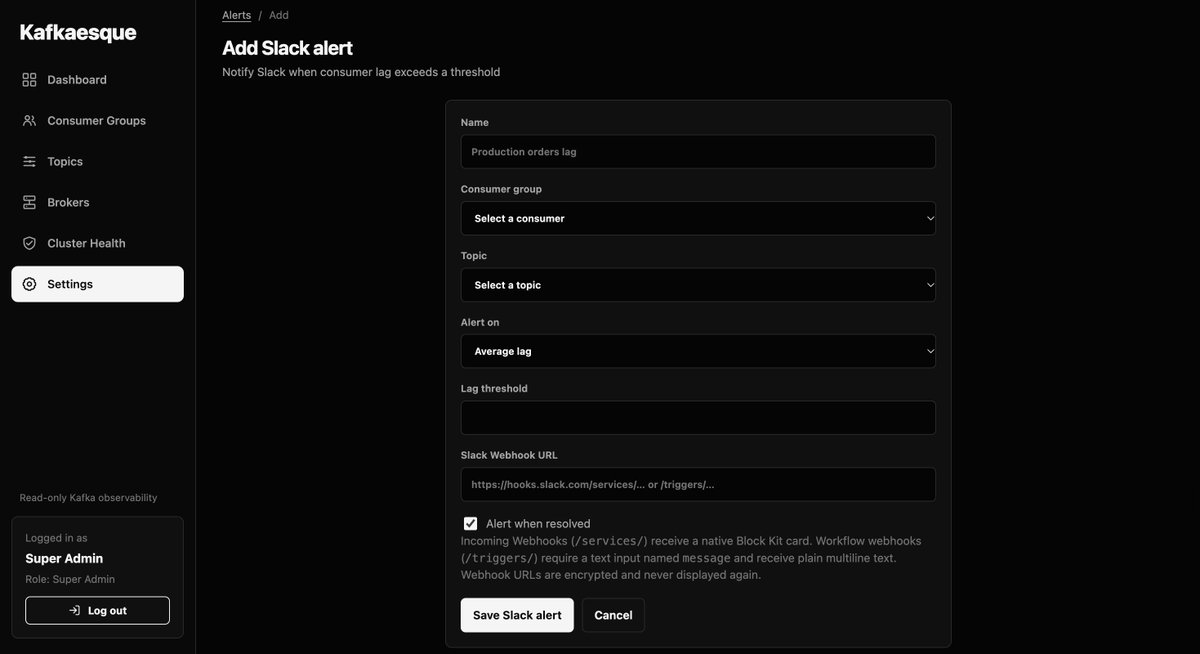
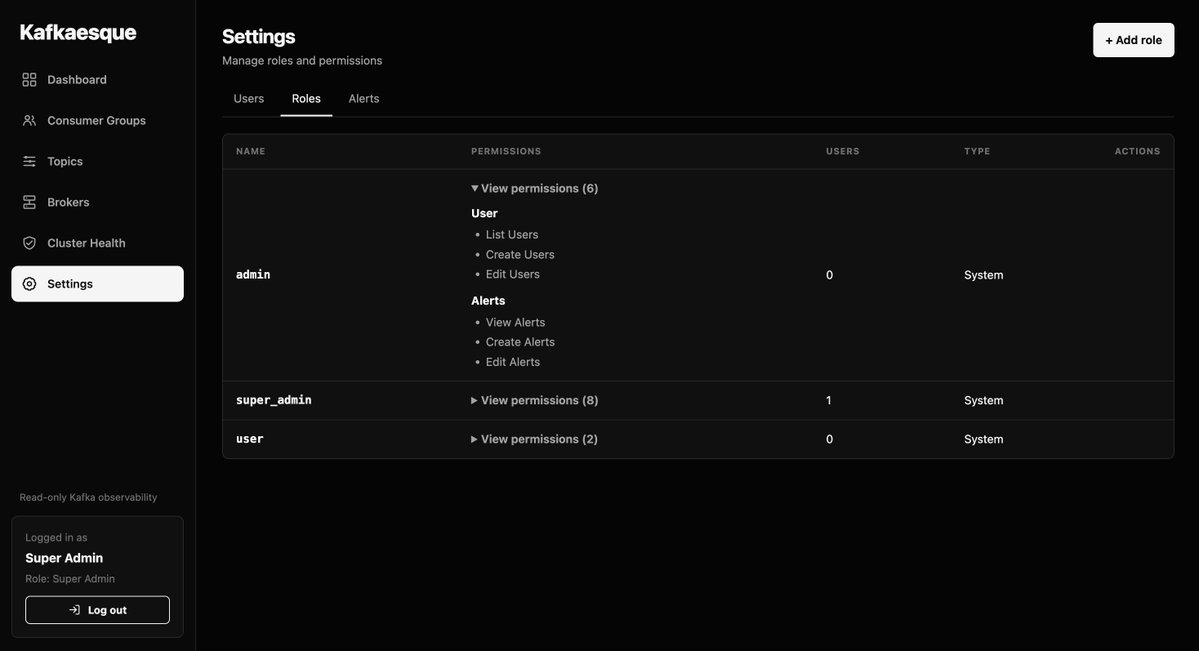
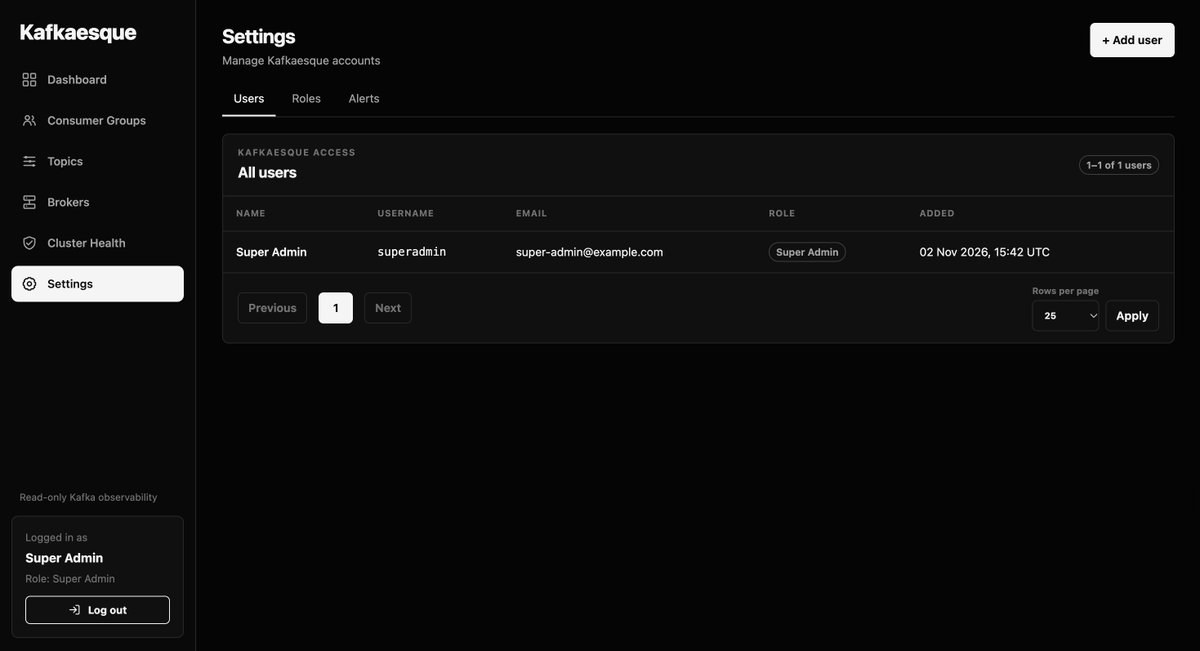
> UI walkthrough: Settings
i. User control panel: list, create, edit, or delete users.
ii. RBAC: Create roles and assign permissions as per the requirements
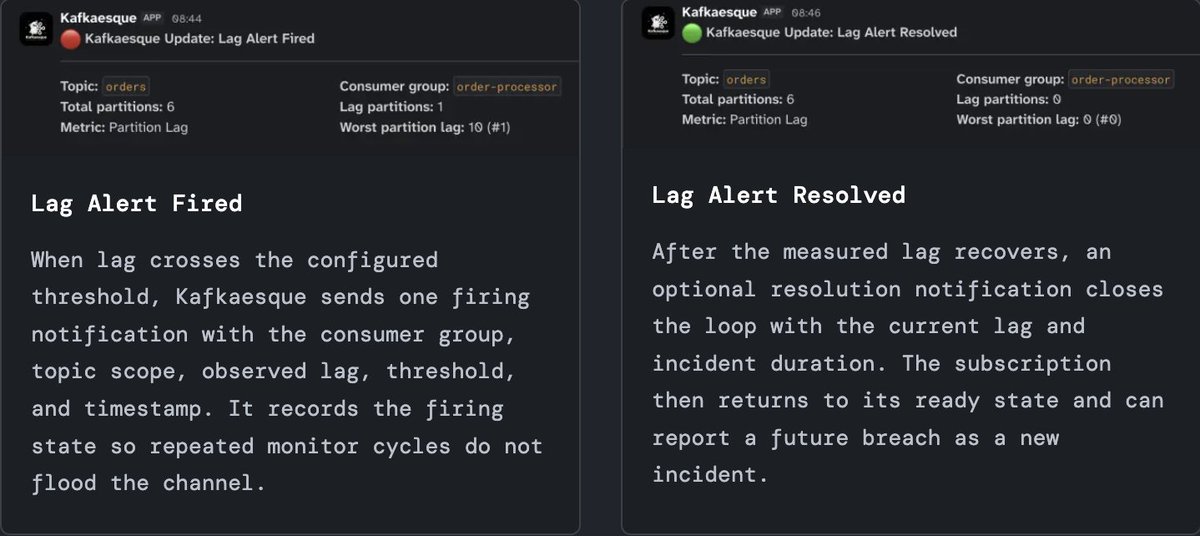
iii. Slack alerts: Manage Slack alerts, supports both the Slack app and workflows.