Fajna praca w fajnym zespole szuka człowieka - Adiunkt w Katedrze Metodologii, @WNPiSM@UniWarszawski Proszę podawać dalej, dziekuję. https://t.co/jcMMFFfeQE
Today @KozminskiUni Review features a research note in which I describe a recent research on network science of social cohesion and inferences about the topology of society-wide discussion networks
https://t.co/5SmT477L4J
@Michal_Bilewicz@szacilow To mi przypomina wymianę zdań z moim, wtedy 6letnim synem, który mnie zapytał dlaczego w bajkach są zawsze szaleni naukowcy a nie szaleni budowlańcy albo szalone kasjerki...
Uważam, że system ewaluacji naukowej powinien przyznawać, przynajmniej w jakiejś części, punkty za czytanie międzynarodowych czasopism naukowych a nie publikowanie w nich.
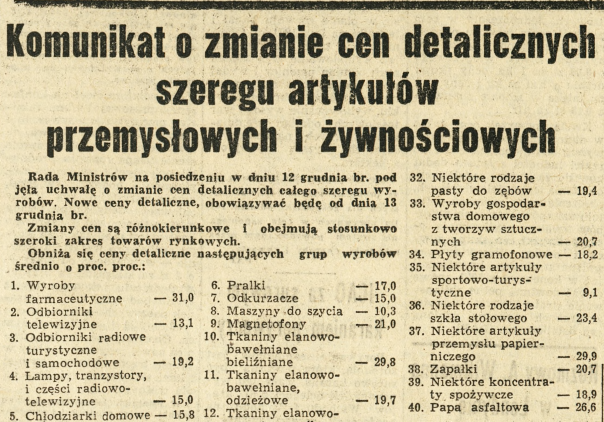
Czy doczekamy czasów, w których porzucone zostaną centralistyczne idee mikro-zarządzania nauką? Tyle się teraz rozważa modeli zdecentralizowanej organizacji nauki i finansowania badań (vouchery badawcze, transfery peer-to-peer), a my dalej: masło w górę, telewizory w dół.
Dla akademików przyszedł znowu dzień obwieszczenia @MNiSW_GOV__PL cen urzędowych na towary i usługi działalności naukowej. Zmiany, podobnie jak 50 lat temu, są "różnokierunkowe".
Produkty na rynek krajowy w górę, produkty na eksport w dół. Cement w górę, ale beton, jak to beton, bez zmian. Dziesięć najtańszych krajowych wyrobów czekoladopodobnych (20 pkt) można wymienić na jedną czekoladę luksusową na eksport (200 pkt) - czy to ten sam towar?
Pan Prezydent właśnie oświadczył, że prowadzę "wątpliwie naukową działalność, antypolską". Pal sześć. Więcej: zarzucił nieuczciwość zacnemu gronu nestorów polskiej psychologii, wyznaczonemu przez CK do oceny mojego dorobku. Skandaliczna wypowiedź. 1/2
Today marks the 1000th day since the full-scale invasion. @kse_ua has launched memorial scholarships to honor members of our peers who gave their lives defending Ukraine.
Iryna Tsybukh, our MA student in Public Policy, recognised journalist and activist, she volunteered as a paramedic during the invasion. She lost her life in May 2024 in the Kharkiv region. In her last email to me, she wrote that she hoped the war would end soon so she could return to the university to defend her thesis in the field of history and memory studies.
Ruslan Chopiuk, brother of our math teacher Yurii, died in 2023 in the Kherson region. His scholarship will be awarded to undergraduate students who demonstrate academic progress, reflecting the Chopiuk brothers’ philosophy.
Yar Batoh, a friend of mine and former colleague at Vox Ukraine and KSE Institute, dedicated his research to the energy sector. After being accepted to Georgetown and Columbia with scholarships, he chose to serve in the army instead. Ironically, he died in 2024 defending the Ukrainian city of New York in the Donbas region (yes, there is such a city in Ukraine). He dreamed of studying in New York City, US, but lost his life near our own “New York” in Ukraine.
These scholarships will support KSE students, who will change Ukraine through leadership and research driven policies.
Please donate here: https://t.co/4tJt3ddSW2
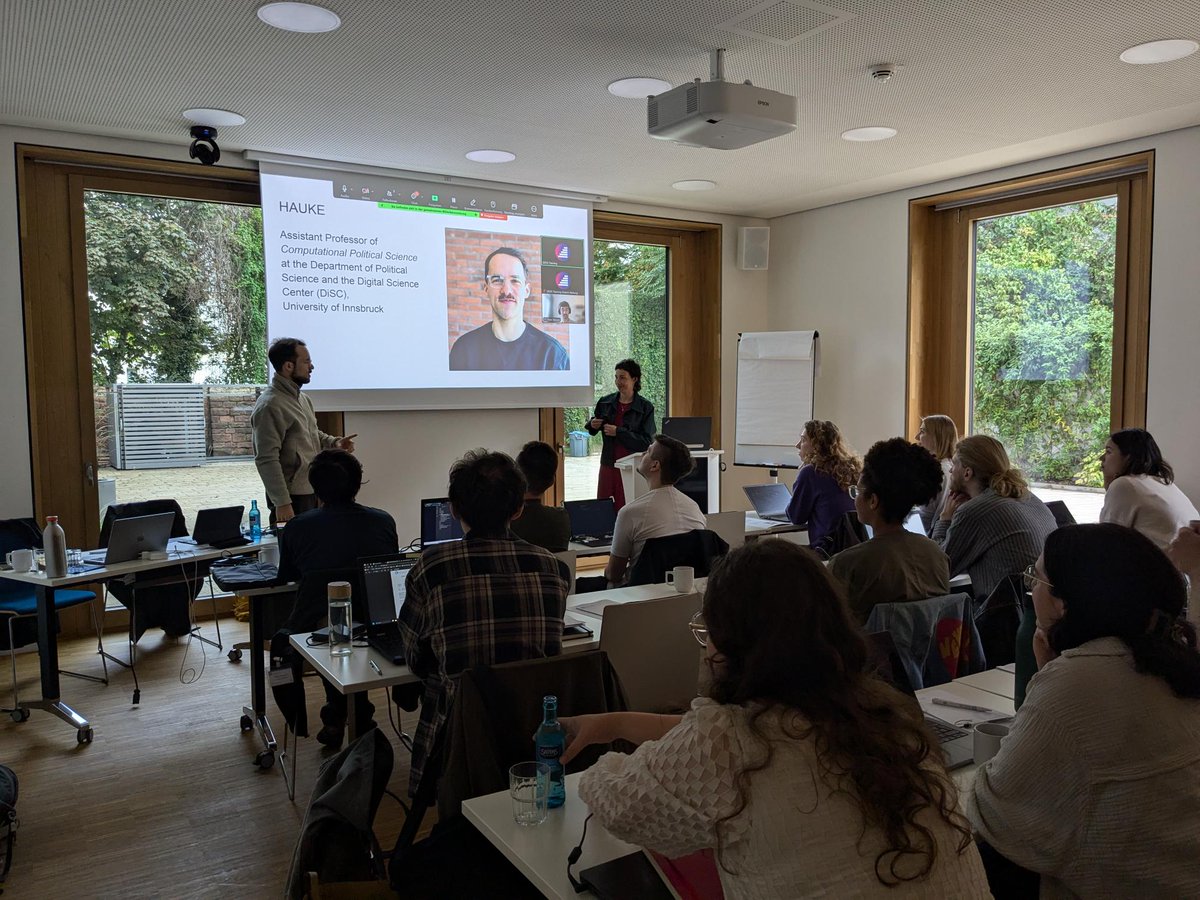
👋 Warm greetings to all lecturers and participants in the final week of the #GESISfallseminar! With our last set of courses—two onsite and one online—we're excited to embark on 5 more days of learning and discussions around #CSS methods.
September is upon us 😱
So I'm bouncing this job(s) posting for everyone to see 👀
Please send it to any 🎓recent/soon PhDs 🎓 in your life. You never know, they may have the world most awesome job by the time the clock strikes midnight on the last day of 2024! ⏱️
Eleven years ago, I quit an abusive academic relationship with my former co-author Ricardo Hausmann, presently a Professor of Practice at the Harvard Kennedy School. This abuse has now returned in a new act of plagiarism. Today, I am pushing back.
A few months ago, I learned about two new working papers that Hausmann and his team posted at the World Intellectual Property Organization (WIPO) [1,2]. The first one claims to introduce a “multidimensional approach” to economic complexity by combining data on trade, patents, and publications, and concludes that these metrics are complementary when explaining economic growth. Yet, this is exactly what my co-authors and I did in a 2023 peer-reviewed journal paper [3] that Hausmann and his co-authors were perfectly aware of (as I document below). Instead of giving proper acknowledgement to our work, however, Hausmann and his team hide it in a footnote on page 18 clouded in a factually incorrect statement. The footnote says that “other studies have developed similar complexity metrics under different names.” That is not true. Our 2023 paper uses the same name as Hausmann et al.’s 2024 “new” working paper, namely, the “Economic Complexity Index (ECI).”
Now, it is reasonable to wonder if this is a misunderstanding or oversight. People sometimes forget to cite others for innocent reasons. But there is clear evidence to the contrary in two other working papers published almost simultaneously with the first one. One of them, is another WIPO working paper by his coauthors but without Hausmann [4]. This paper does properly acknowledge the existence of our work in multidimensional economic complexity in the main text: “Following […] Stojkoski et al. (2023).” So, the team clearly knew about the work. The third working paper [2], also at WIPO, includes Hausmann as a first author making a call for the use of multidimensional economic complexity methods in innovation policy. Here, the only example of multidimensional work cited by Hausmann et al. is his own 2024 working paper [1], this time completely ignoring the 2023 peer-reviewed paper he knew about (“In Hausmann et al. (2024), we measure this for each country in different dimensions (e.g., trade and patents).”). Unsurprisingly, I had made a similar call for multidimensional expansion of the field in a paper that was also published after peer-review in 2023 (Hidalgo CA, Research Policy, 2023 [5]) and that had been available as a pre-print for two years. In that paper, I cite our original multidimensional economic complexity contribution and also two other papers that had introduced multidimensional approaches to relatedness, another key concept in the field, which Hausmann does not cite either.
In my view, these three documents provide clear evidence of an attempt by Hausmann to misappropriate an idea published by a former co-author while knowing of that work. This, violates Harvard’s honor code [6] which requires the “accurate attribution of sources” and considers “plagiarizing or misrepresenting the ideas or language of someone else as one’s own” as a violation of its community standards. In the first working paper [1], he copies the idea while hiding the attribution in a factually incorrect footnote. Simultaneously, he releases a second working paper citing this unpublished work as the only example of prior art [2]. The third paper [4], the one by his co-authors but not him, shows that the team knows about the work and behaves differently when the senior member of the team (Hausmann) is not an author.
My co-authors and I were dismayed by Hausmann’s attempt to misappropriate our ideas. Why bother doing original work and getting it past peer-review (which for both of our papers was a lengthy process), if authors with a platform such as Harvard University take your ideas and pass them as their own? But this is not the first time.
In 2019, Hausmann and his team announced a “first-of-its-kind” and “unique” feature in their trade data visualization website (“Atlas Online”): the “country profiles.” Yet, my group had supported country profiles in the Observatory of Economic Complexity (OEC) since 2012, several months before Hausmann and I parted ways in 2013 (see full story document for details [7]). The reason that the profiles disappeared in Hausmann’s copy of the Observatory in 2013 was that they were deleted by his team, probably because they did not understand that we had conceived these pages for search engine optimization.
In short, the original OEC that I designed with my group and placed in the public domain had country profiles in 2012 and was redesigned in 2015 to make the country and product profiles the main part of the site. Today, https://t.co/2d5FR0ZgGZ [8] serves over 100,000 profiles, a design concept we use prominently when constructing other data distribution platforms (e.g. Data USA, Data Mexico, etc). In fact, in 2016 I published a “how to” guide in Scientific American for this kind of work in 2016 [9]. But when Hausmann and his team at Harvard finally built country profiles in 2019, seven years after we did, they claimed a “revolutionary first-of-its-kind” and “unique” feature, in their lab’s own website [10] and in the Harvard Gazette [11]
So why share this now?
I have three reasons.
First, I broke off my relationship with Hausmann in 2013 after several unpleasant experiences, which included having to fight for the authorship rights of junior authors (which Hausmann wanted to exclude from our joint book: The Atlas of Economic Complexity) and being exploited when we were equal partners in a company that I had registered for us to do joint consulting work (see full story document [7]). From there on, I just wanted to forget about him. The tacit deal was that, if he stopped the abuse, I could put this in the past. But Hausmann has repeatedly broken this tacit deal. His 2024 working paper research agenda seems to involve putting forward, without proper acknowledgement, ideas my team and I published after peer-review in 2023 and made available online in 2022. It has been more than a decade. This has to stop.
The second reason is that because Hausmann has done this before, I am concerned that if I don’t push back, he will do it again. Right now, my research group and I have a great thing going on. Should we worry that in 2026 Hausmann will try to pass off our 2024 and 2025 papers as his own?
The third reason is that this egregious behavior is supported by a power asymmetry that is highly profitable for Hausmann thanks to the Harvard platform. Soon after we split ways in 2013, Hausmann sold this [12] embarrassingly bad economic data visualization website to the Mexican Government as part of a project rumored to be about USD 5,000,000 (paid using an undisclosed and untraceable escrow account (“fideicomiso”)). The online platform was so sloppy that some government officials started to call it “El Mamarracho” (a derogatory term in Spanish for extremely shoddy work). I learned about this in 2019, after a new team entered Mexico’s economic ministry and invited us to build Data Mexico [13], a properly built open data portal integrating dozens of datasets in thousands of profiles for a fraction of the cost of the “Mamarracho.”
Hausmann has engaged in commercial endeavors with many governments (e.g. Albania, Azerbaijan, Colombia, Mexico, etc.). So, in my opinion, the target audience for these misappropriated working papers are not other scholars, but the officials who purchase economic development contracts from him and take the word of the Harvard Professor of Practice at face value.
This is what makes misappropriating the multidimensional economic complexity idea important. A strong motivation for any consulting work in this space is the fact that trade-based measures of economic complexity explain future economic growth. This was established in a paper Hausmann and I published together in 2009 [14], based on work we did together while I was a PhD student at the University of Notre Dame. But the 2023 multidimensional economic complexity paper made that idea obsolete. On the one hand, it simultaneously considers multiple expressions of complexity (trade, patents, and research), and on the other hand, it looks at multiple outcomes (growth, inequality, and emissions). Giving advice based on the latest developments in the field requires using a multidimensional framework.
Finally, I want to say that I have nothing against Hausmann’s co-authors, some of whom I know personally and some of whom I don’t. I understand that they are in a situation in which they may depend financially and professionally on Hausmann. His first attempt to spin my publicizing these facts may be to argue that someone of his caliber does not have the time to look at petty things like footnotes and references (pinning the responsibility on them). I don’t think that’s fair.
I also want to say that I do not consider Ricardo’s behavior necessarily representative of Harvard University or of the World Intellectual Property Organization. I have met many people at those organizations and continue to collaborate with some of them. They are outstanding scholars
I have decided to go public with this statement after consulting with several senior colleagues and lawyers specialized in disputes in higher education.
I am absolutely distraught by having to deal with this situation eleven-years after I quit that abusive relationship. But he needs to cut it out.
Dziękując za zainteresowanie moją procedurą awansową chciałabym oświadczyć, że nie inicjowałam żadnych działań medialnych i poprosić o ich wyciszenie. Po decyzji RDN udostępnię pełną dokumentację tak, by każdy mógł wyrobić sobie zdanie. Będę wdzięczna za RT. @JemielniakD@Piegziu
3. Projekty współautorskie są lepsze i ciekawsze. W dobrym tonie jest uwzględnienie każdego wkładu współpracowników, zwłaszcza młodszych, nawet z naddatkiem. 4. W Polsce udowadniamy samodzielność przy habilitacji. Potem możemy robić ciekawe badania z kim chcemy i jak chcemy.
To może mój komentarz:-) 1. Oprócz projektów udanych są mniej udane. Wyniki można publikować 'gdzie bądź', a można wcale. IMO selektywność jest wyrazem dojrzałości badawczej. 2. Forma jest drugorzędna względem treści, z dobrego artykułu można łatwo zrobić monografię, tylko po co.