HiPOD: Layers in West Melas Chasma
This stunning image shows well-exposed layers of a canyon wall in Melas Chasma. Our science goal is to see if we can constrain layer orientations and unconformities.
https://t.co/WqogGQj4ba
NASA/JPL-Caltech/University of Arizona
#Mars#NASA
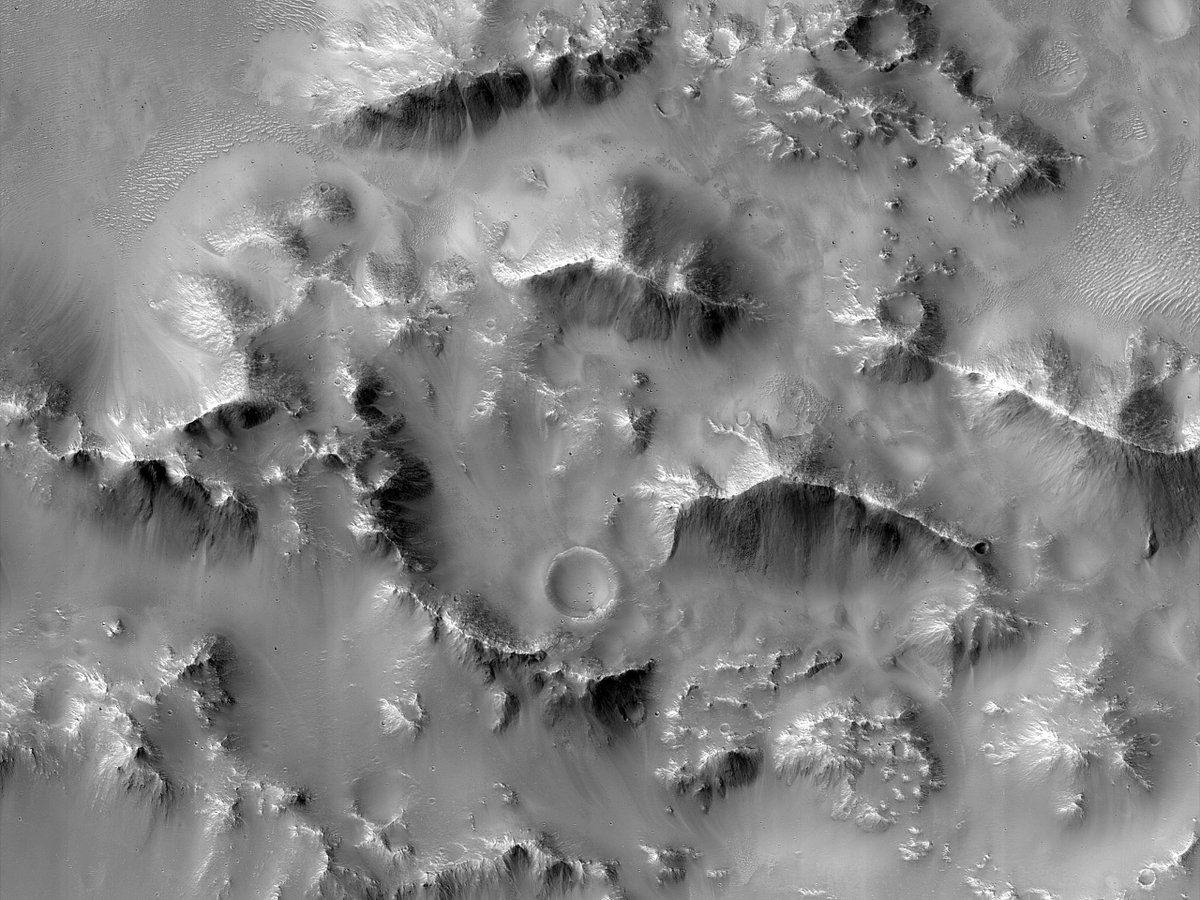
HiPOD: The Ridges Within
The objective of this observation is to examine ridges on the floor of an extremely old impact crater located in Noachis Terra, a southern highland region of heavily cratered and ancient terrain.
https://t.co/1qN9VYPdPU
#Mars#NASA#science
HiPOD: Cliffs of Crumbling, Layered Sediments
Massive deposits of sediments rich in hydrated sulfates are found in central Valles Marineris. Such deposits on Earth are soft and easily eroded, and that appears to be true on Mars as well.
https://t.co/ik6HGwksR9
#Mars#science
HiPOD: Mesas of Layered Sedimentary Rocks in Valles Marineris
This image covers a tiny fraction of Valles Marineris, revealing layers with different colors and textures that were deposited in different environments.
More: https://t.co/y5mUJKfSob
#Mars#NASA
HiPOD: Steep Slopes of Crumbling Bedrock in Valles Marineris
Hiking over this terrain would be challenging for future human visitors. Drones that can fly over this terrain may be the best way to explore the geology.
More: https://t.co/vibC1cgzGo
#Mars
HiPOD: Bright Patches
The science rationale for this observation underscores the importance of HiRISE for higher resolution images: the CaSSIS instrument on the ExoMars Trace Gas Orbiter detected bright patches here, so we can take a more detailed look.
https://t.co/5NRQqmiOwU
USGS–Hawaiian Volcano Observatory scientists conducted a monitoring overflight of Kīlauea summit on May 22, 2026, and observed/measured the following: ➖Magma pooled and glowing within both north & south vents ➖Sulfur dioxide emissions averaged around 2,000 tonnes/day (typical during pauses between episodes) ➖Plume drifting southwest into the Kaʻū Desert ➖Collected thermal and visual imagery of the tephra cone on the crater rim, the crater‐walls, and new lava flows on the crater floor ➖With permission from Hawaiʻi Volcanoes National Park, collected a sample of episode 47 lava flows 🔭 Episode 48 lava fountaining is projected between May 24–27. 📹: Clips of Kīlauea summit fieldwork on May 22, 2026. #Kilauea #HVO #Fieldwork
Thin Section Thursday! contributed by Reagan Elizabeth Davis, UG student at James Madison University. The rock pictured is a Kyanite Quartzite gathered near Ogilby CA. (XPL) Kyanite shows low to moderate interference colors, and bladed form. #ThinSectionThursday#kyanite
Yellowstone, Toba, Taupo ... and Tuscany? Not quite, but the Tuscan Magmatic Province likely contains thousands of cubic kilometers of magma.
Read all about it in terrific new @CommsEarth research from Matteo Lupi @UNIGEnews and colleagues.
https://t.co/AMpT6aZeWX
Today marks the 46th anniversary of the 18 May 1980 Mount St. Helens eruption, a defining case study in volcanic geomorphology and post-eruptive hillslope evolution.
Following widespread tephra deposition, Collins & Dunne (1986, GSA Bulletin) quantified erosion processes from 1980–1983 using stake-array measurements of rill erosion and sheetwash. They documented a rapid decline in erosion rates, driven by rill network stabilization and increasing substrate permeability occurring even before vegetation recovery.
Basin-scale erosion decreased from ~26 mm/yr (1980–81) to ~1.8 mm/yr (1982–83), with only ~1/6 of tephra ultimately removed by fluvial processes before mass wasting again dominated hillslope evolution. Coinciding with the Rocky Mountain Section Meeting, this work highlights how long-term process studies remain central to geomorphology research and discussion.
🌋 Read more here: https://t.co/An5zjWH5wk
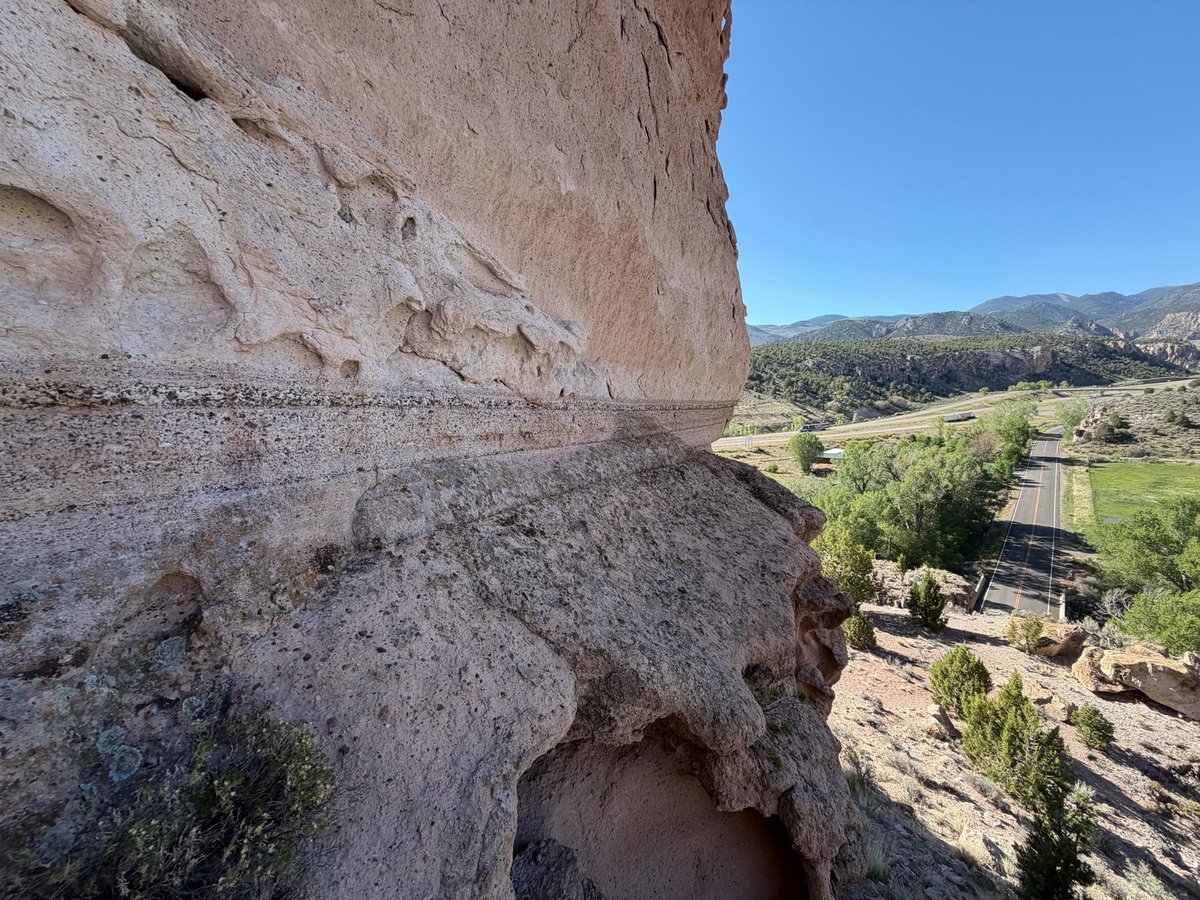
For our final afternoon and night of #ps9605#fieldschool we’re in the stunning landscape of Snow Canyon State Park. A fantastic way to end the learning experience #geology#planetaryscience
These ripple marks suggest that Mars had a much thicker atmosphere with Earth-like winds over 3 billion years ago.🌪️
New research published in #Geology reveals the first direct evidence of supercritical climbing wind ripples on Mars—sedimentary structures that record an intense ancient sandstorm in Gale Crater.
Using imagery from NASA’s Curiosity rover, researchers identified ripple structures formed by:
• Exceptionally strong, gusting winds
• Rapid sediment transport and deposition
• Sustained storm activity that may have lasted for hours or longer
These findings add to a large body of evidence suggesting that Mars had a thicker atmosphere billions of years ago. The ripple structures in this study are important because they may provide a more direct physical constraint on atmospheric density.
This study is already gaining attention and has been featured in https://t.co/RMqP2mkQWg—read the full paper: https://t.co/KpkCIcTst3
#Mars #PlanetaryGeology #CuriosityRover
HiPOD: Channels in Rahway Valles
This suggestion footprint contains channels and ridges that may have been created by volcanic, fluvial, and/or glacial processes.
https://t.co/Gr5c3Z9pxd
NASA/JPL-Caltech/University of Arizona
#Mars#science#NASA
TS Thursday: Image and caption from Luke Meaney, James Madison University in Harrisonburg, VA. Hornblende andesite from Mt. Shasta, CA. A near perfect Hornblende in Cross-polarized light. See the third order pinks, blues, greens, and yellows. #thinsectionthursday#hornblende
HiPOD: The Wall of a Crater in Tyrrhena Terra
A public target suggestion from HiWish, this observation was acquired to determine if lava flow was ever present and to evaluate the landscape. Tyrrhena Terra is located south of Isidis Planitia.
https://t.co/njOuwNYlst
#Mars#NASA
Strap in: Follow one of our paratroopers from @16AirAssltBCT jumping in to Tristan da Cunha – one of the world’s most remote communities – to deliver vital medical support 🪂
Wait for it .... 11 seconds and BOOM! Some breathtaking footage from Fuego 🇬🇹 and
@BoiseState scientists in this great science update on infrasound sensors.
https://t.co/LzyJoihMqF