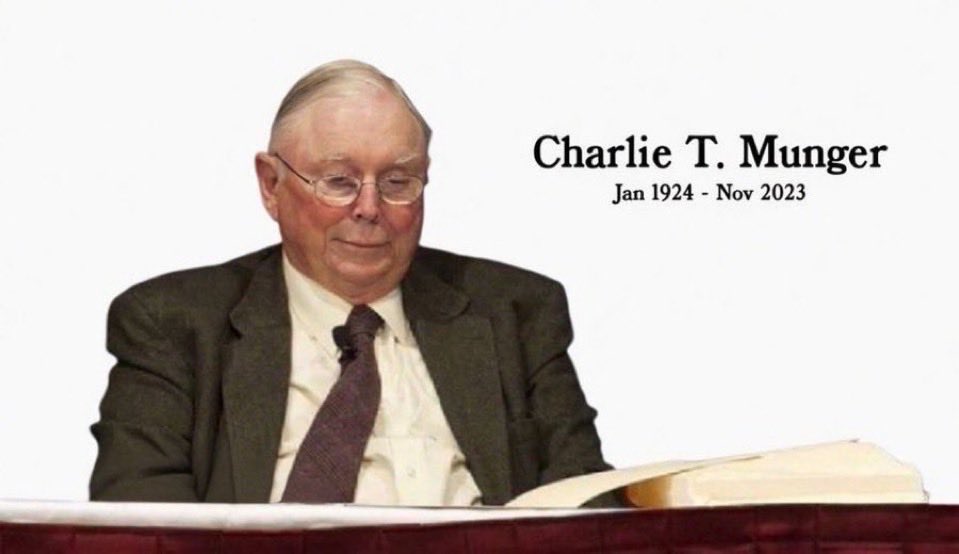
"If you want to end up wise, heavy ideology is very likely to prevent that outcome... You want to be very careful with intense ideology. It presents a big danger for the only mind you're ever going to have."
— Charlie Munger.
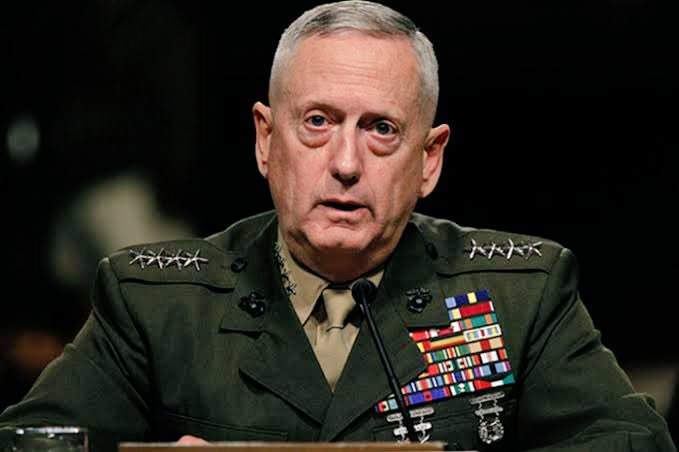
“If you haven't read hundreds of books, you are functionally illiterate, and you will be incompetent, because your personal experiences alone aren't broad enough to sustain you.”
— James N. Mattis
Becoming successful is not luck. It’s math.
If your probability of success on any single try is 1/10 (10%), you’ll need to try roughly 50 times to have over a 99.5% chance of at least one success.
Formula: 1 − (0.9⁵⁰) ≈ 99.48%
At 100 attempts, it’s 99.997% — for all practical purposes, a virtual certainty.
The more times you try, the higher your odds climb. Persistence compounds. Keep going.
If the stock market doesnt go up over a long enough period of time the economy risks collapse. For all you young investors and traders out there- Buy and hold, dont let the trading scam suck you in. You WILL make more buying shares of good companies that provide value and are growing then you will day trading and gambling.
The Bitcoin 4 year cycle will stay relevant as long as people keep fading it. Ironically, the same people that call for it to break every cycle, are the same people that cause it to happen mechanically
Macro for Dummies, by Dummies
Just six trading days ago, after the Nasdaq had already fallen roughly 8%, quite a few investment banks and well-known investors started raising caution flags on the market.
For instance, firms such as Bank of America and Citigroup, along with investors such as Steve Eisman of “The Big Short” fame, were warning about the risks ahead.
The concerns sounded convincing: no rate cuts, the $SPCX IPO valuation, capital raising concerns around $GOOGL, $META, and $ORCL, and a long list of other “red flags.”
Looking back, that turned out to be the bottom.
Including today’s pre-market action following the signing of a peace deal, the Nasdaq has rallied roughly 6% since then.
Now the response will be: “Well, nobody expected a peace deal.”
Exactly.
If the entire forecasting exercise is just extrapolating today’s conditions into the future, and the future almost never unfolds the way the present looks, what’s the point of doing it in the first place?
The only forecast with a perfect long-term track record is that markets tend to go up over time.
If someone asks what the market will do next week, next month, or after the next macro event, the honest answer is:
“I don’t know.”
The future is always shaped by variables nobody is talking about yet.
Ironically, the people on X who obsess over macro are usually the most clueless participants in the market.
They spend their days repeating assumptions, quoting each other, and recycling whatever happens to be popular on the timeline that week.
Very few have actually outperformed the market. Yet somehow they’re always the most certain about what happens next.
I am not here to tell you that you can never have a drink again.
I am here to make sure you understand the biological cost of every choice you make.
Alcohol has been normalized in our culture for decades, but that does not mean it comes without consequences.
The science is clear. Alcohol impacts nearly every system in your body, from your brain and hormones to your sleep, metabolism, and long-term health.
Read the research and decide for yourself.
My theory is that the American empire is JUST getting started.
US has a stranglehold on Space with SpaceX, which is the next frontier for defense/war. It has a comically large lead. No one will be close for at least 20 years.
It is the leading power in AI by far - both in models and chips. China is catching up fast, but the US has an inherent mechanism that will increase the likelihood that it will win in the end - a free market + capitalism + free speech.
A free market + capitalism allows for brutal competition between companies. Free speech allows for AI models to be maximally truth seeking, which means that AIs CAN and WILL BECOME smarter than humans to the point where they can tell the truth about its leaders.
This is literally impossible in China. Try having a Chinese model that says Xi Jinping is corrupt. Good luck with that.
Then, you have a country that has more guns than people and surrounded by two massive oceans and two friendly neighbors, which means any sort of kinetic take over of the country is literally impossible.
Not to mention the US has BY FAR the best and strongest military.
The only way adversaries can hope to defeat the US is by tearing it from within by pitting us against each other. This is why it's virtually guaranteed that all the division/hatred/polarization you see within the country is fomented by China/Russia Psy Ops + propaganda efforts.
I'm not saying these aren't naturally happening in spots - America is far from perfect - but it would be naive to think our adversaries aren't pouring millions of gallons of fuel on a fire.
As long as the American public a) has the ability to exercise its free speech b) has a protected 2nd amendment c) capitalism and free markets continue to function and d) the populace is aware of how awesome America really is, it is literally impossible to stop the US's trajectory to global domination in the coming decades, especially as China's demographics continue to collapse.
It's the bottom of the 9th, the game is tied, and the US has the bases loaded. It's a 3-2 pitch.
All we need is a home run, and we win the rest of the century.
Stanley Druckenmiller, who made extensive use of technical analysis throughout his career, says:
"I can unequivocally tell you that technical analysis is about 20% as effective today as it was 30 years ago, because no one was using it. But when everybody's using it, it doesn't work anymore because you don't have a unique thing to act against."
As Peter Lynch said many times, technical analysis is largely a waste of time. In the long run, stock prices follow the economic results of the business.
"If charts could really predict the future, technical analysts would all be billionaires."
Personally, I combine fundamental analysis with a bit of technical analysis to identify the best moments to buy aggressively and when to sell.
Stocks lose 50% or more of their value all the time "without reason."
That's when I pay the most attention.
Let's take advantage of those moments.