@NataliaVartan Coincido contigo en mucho de lo que dices. Lo más importante para la paz de uno mismo es la aceptación del tiempo. Aunque es más fácil decirlo que hacerlo.
🇨🇦🇺🇸🇪🇸 Un Trisolaris Oscuro podría ser real a sólo 28 años luz.
Descubren Welopōʻai, un sistema estelar triple (dos estrellas muertas y una enana roja) situado a unos 28 años luz de la Tierra.
Según el profesor Patrick Dufour: Este sistema no debería existir"
Sigo ⬇️
Hacia el 1200 a.C. existía un mundo globalizado: imperios que comerciaban, se escribían cartas y dependían unos de otros.
En unos 50 años se vino abajo. No hubo una causa única. Falló el sistema entero.
Es el colapso que más se parece a nuestro mundo. 🧵
LOS SERES MÁS ANTIGUOS DEL LEGENDARIUM DE TOLKIEN
En el Legendarium de Tolkien, algunos seres vieron nacer las estrellas y otros existían antes de que el mundo tuviera forma.
En este hilo repasamos a los 6 seres más antiguos de Arda según el lore con una mención especial.
What if the Sumerians didn't invent everything they knew? What if they inherited it from people who survived a drowned world?
Around 14,600 years ago, something extraordinary happened. The planet was coming out of the last Ice Age, and an enormous amount of meltwater entered the oceans. Scientists call it Meltwater Pulse 1A.
Over roughly 350 years, global sea levels rose somewhere around 14 to 18 metres. That's roughly the height of a five storey building.
Today, we build our cities along rivers and coastlines. We always have. Fresh water, fishing, transportation, fertile land. It's where people naturally settle.
Our ancestors were no different.
Before the oceans rose, enormous areas of what is now the seafloor were dry land. The North Sea, Southeast Asia, Australia, and perhaps most interestingly, the Persian Gulf.
Yes, the Persian Gulf.
Much of that massive body of water between modern Iran and the Arabian Peninsula was once an exposed landscape. Ancient rivers crossed it, including systems connected to the Tigris and Euphrates. There may have been freshwater springs, lakes, wetlands and places perfectly suitable for people to live.
Archaeologist Jeffrey Rose even published research examining the possibility that this region once served as a refuge for prehistoric human populations.
Now consider what happened as the ice melted.
The water kept rising. Not all at once, and not everywhere at the same rate. Over generations, entire landscapes disappeared. Places where people hunted, gathered food, raised children and buried their dead were gradually swallowed by the sea.
Where did those people go?
They didn't all just stand there and drown. Many would have moved. And they would have taken something with them.
One of the earliest great urban civilizations, with monumental architecture, complex administration, mathematics, astronomy and eventually writing.
The Mesopotamians preserved stories of extraordinary teachers known as the Apkallu. In later Babylonian accounts, a being called Oannes emerged from the sea and taught humanity the foundations of civilization.
A culture living near a region that had been progressively swallowed by the ocean preserved traditions about ancient figures associated with water who brought knowledge to humanity.
I'm asking whether mythology could preserve a distorted memory of something that really happened.
Could displaced populations from a now-submerged landscape have carried older traditions into Mesopotamia? Could those traditions have survived for thousands of years, eventually becoming stories about divine teachers and the origins of civilization?
There is a serious problem with this idea, and I'm not going to pretend otherwise.
Meltwater Pulse 1A happened thousands of years before Sumerian civilization emerged. The Persian Gulf also flooded gradually, with major stages occurring long after the original meltwater pulse. We have no archaeological evidence establishing that survivors from that early period became the teachers described in Mesopotamian mythology.
Here's what we do know.
The land existed and the rivers existed. Human populations occupied the wider region. The seas rose. And a considerable part of the prehistoric landscape is now underwater.
We also know that humans were far more capable before agriculture than they are often given credit for. People were making bread like foods in the Levant around 14,400 years ago, thousands of years before farming became established there.
So why do we assume that all the knowledge behind civilization had to originate in the places where we eventually find its surviving ruins?
Maybe some of it came from places we haven't excavated because they're now sitting beneath tens of metres of seawater.
Perhaps the people who helped lay the foundations of Sumerian culture were descendants of populations displaced from the ancient Persian Gulf, carrying knowledge that had been passed down for thousands of years.
And perhaps some of those memories eventually became the stories of the Apkallu.
It's a hypothesis. It needs evidence. But the geography gives us a legitimate reason to investigate.
We're trying to reconstruct the beginning of civilization while enormous sections of the world our ancestors inhabited remain underwater.
I can't help wondering how much of our own history we're missing simply because we've been looking for it on dry land.
¿Hay una TIERRA HELADA oculta orbitando al Sol más allá de Plutón?
➡️ El 23 de noviembre de 2026 Patryk Sofia Lykawka, Pedro Bernardinelli y Jonathan Horner publicaron en la revista científica Monthly Notices of the Royal Astronomical Society una investigación titulada: “Señales de un planeta similar a la Tierra en el sistema solar distante”.
NO es el teórico Planeta 9, este seria otro distinto y más pequeño que el de la teoría del Planeta 9.
Es una nueva hipótesis que propone la existencia de un planeta de una masa de entre 1 a 2 veces la terrestre.
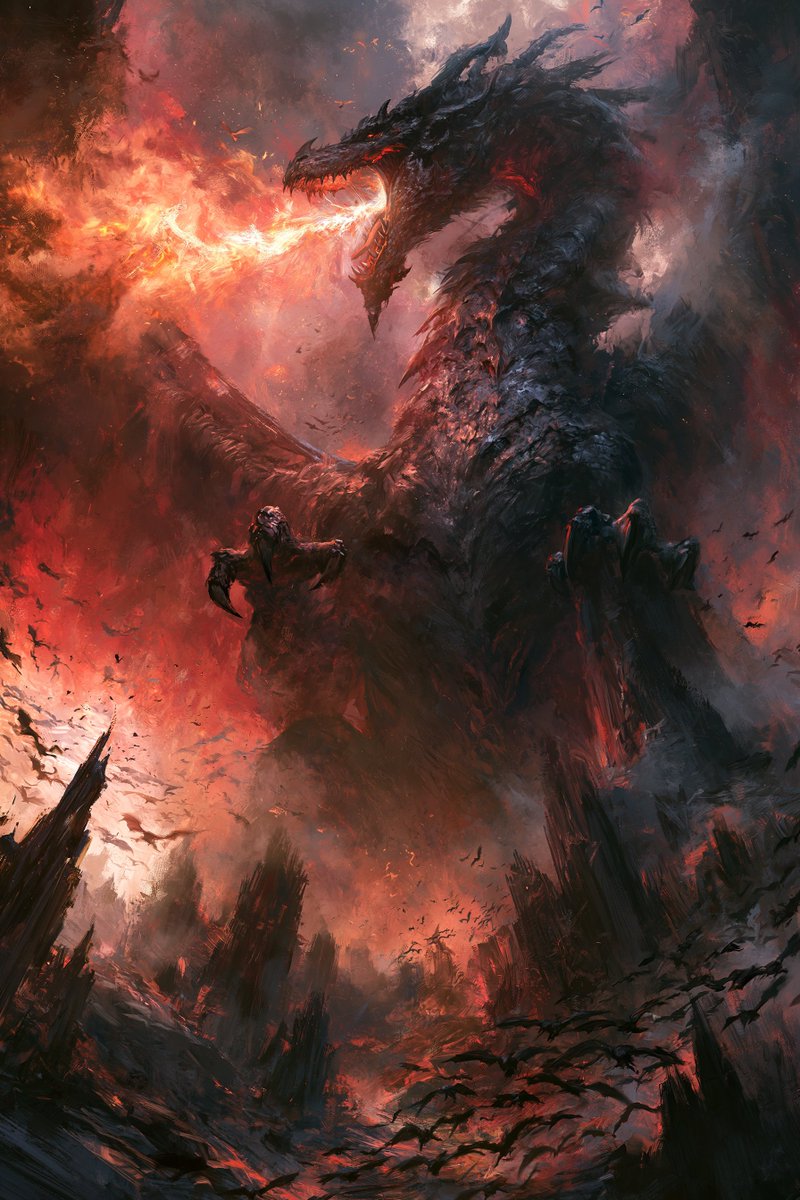
LOS 4 DRAGONES OFICIALES DE LA TIERRA MEDIA
En el lore de Tolkien, existen cuatro dragones con nombre propio en la Tierra Media.
Ordenados de menor a mayor poder e impacto histórico en Arda, repasamos a estas cuatro criaturas forjadas por Morgoth y por qué ocupan su lugar.
Klasik fiziğe göre Güneş yanmamalıydı
Güneş'in çekirdeği yaklaşık 15 milyon derece. Kulağa korkunç sıcak geliyor ama fizikçiler 1920'lerde hesap yaptığında bir sorun çıktı. İki protonun birbirini itmesini yenip kaynaşması için bunun yaklaşık bin katı sıcaklık gerekiyordu. Güneş bu hesaba göre çoktan sönmüş olmalıydı
Çözüm 1928'de George Gamow'dan geldi. Kuantum tünelleme
Kuantum dünyasında bir parçacık aşamayacağı bir duvarın önünde durduğunda hikâye bitmiyor. Çok küçük bir ihtimalle duvarın öbür tarafında beliriyor. Tırmanmadan, kırmadan. Sadece geçiyor
Ama ihtimal o kadar küçük ki Güneş'teki tek bir proton bir eşine kaynaşabilmek için ortalama milyarlarca yıl bekliyor. Milyarlarca yıl boyunca saniyede defalarca duvara çarpıyor ve geri sekiyor
Güneş'i yakan şey bu yüzden tek bir protonun başarısı değil. Orada yaklaşık 10 üzeri 57 proton var. Her biri neredeyse imkânsız bir denemeyi durmadan yapıyor. Bu kadar çok deneme olunca imkânsız olan her saniye milyarlarca kez gerçekleşiyor
Şu an yüzüne vuran ışık bir başarı hikâyesi değil. Neredeyse tamamı başarısız olan sayısız denemenin sonucu
İnsan da "olmuyor" dediği şeye genelde tek bir denemeye bakarak karar veriyor. Bir başvuru reddedildi, bir mesaj cevapsız kaldı, bir paylaşım tutmadı. Oysa bazı duvarlar hiçbir zaman tırmanılarak aşılmıyor. Sadece yeterince çok çarpılarak
Sence bir şeyi başarmak için daha çok yetenek mi lazım, yoksa daha çok deneme mi
In 333 BC, Alexander the Great stormed Sagalassos a mountain city 5,000 feet up that had broken every army before him by marching his heavy phalanx straight up steep slopes as arrows and rocks bounced off locked shields, taking the city in a single day before it rose to Roman wealth and vanished for a millennium. 🏛️⚔️
This cinematic physics simulation explores the incredible relationship between galactic motion, geological history, and the evolution of life on Earth.
El Sol viaja por la galaxia dentro de una burbuja.
Es la heliosfera, una enorme burbuja que forma el viento solar y que envuelve a todos los planetas. Nos protege de buena parte de la radiación que llega del resto de la Vía Láctea.
Y en el centro de la galaxia hay otras dos burbujas gigantes, las de Fermi, que se extienden miles de años luz por encima y por debajo del plano galáctico. Son la huella de un pasado violento, probablemente del agujero negro central.
El espacio es maravilloso. 🔭
Will Smith brings out Alfonso Ribeiro and they hit the Carlton dance on Graham Norton
The moment Alfonso starts doing the Carlton and the whole studio loses it.
Will, Jazzy Jeff, and Carlton all going at it while the crowd is screaming.
Pure nostalgia.
Christopher Nolan: «Hans, necesito una musiquita para una película sobre el espacio. Algo tranquilo, tampoco te emociones».
Hans Zimmer: «Sí, sí, algo sencillito».
Y el tipo terminó componiendo una de las bandas sonoras más impresionantes de la historia del cine jajaja.
Lo curioso es que Nolan le dio una página sobre la relación entre un padre y su hijo, sin decirle que estaba preparando Interstellar (2014).
Zimmer convirtió aquella idea en una obra maestra.
Y escucharla interpretada en directo, con toda una orquesta, es una auténtica locura.
¿Soy el único al que se le pone la piel de gallina con este soundtrack?
El gran Antonio Gala 🇪🇸 (1930-2023), en el programa del no menos grande Jesús Quintero 🇪🇸 (1940-2022), hace más de 30 años ya preveía lo que iba a suceder hoy.
A veces pienso que el Sr. Gala era el guionista de los Simpson. La clavó.