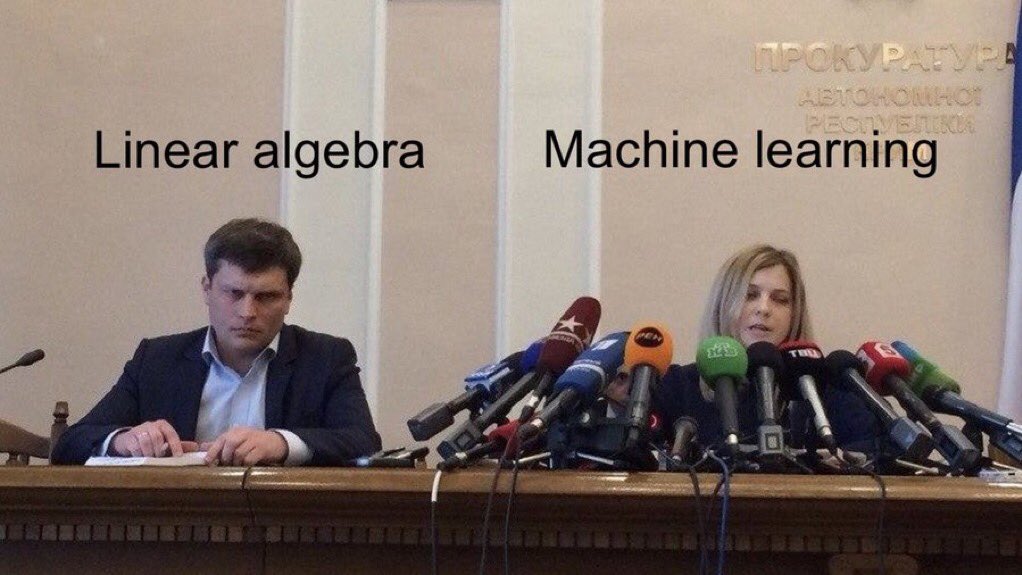
Mathematician:
Jacobian conjecture is false! After 87 years we've found one counter-example.
Statistician:
So you're telling me the Jacobian conjecture is true almost surely.
A lot of my MIT circle ended up in quant at places like Jane Street, Citadel, and HRT.
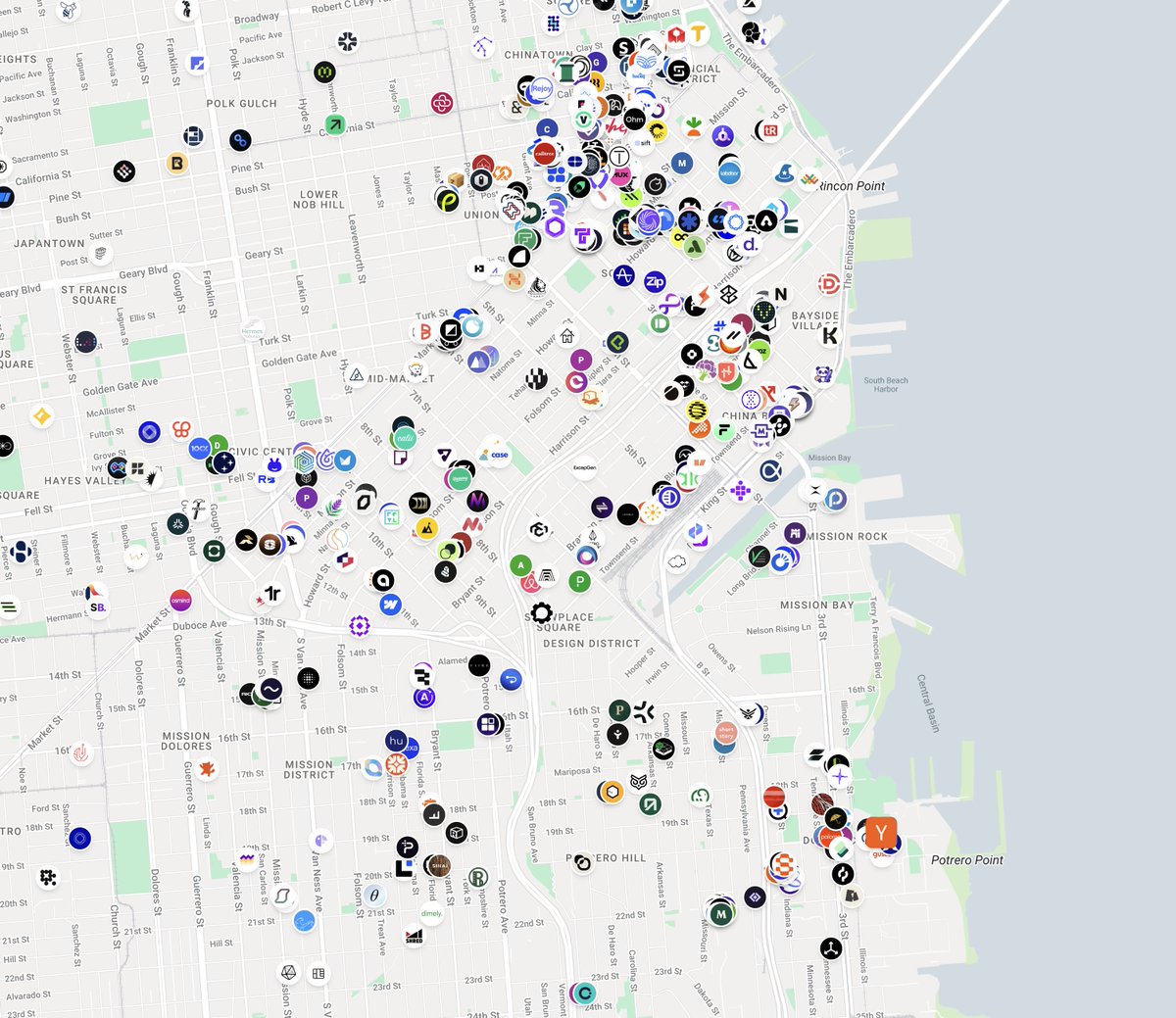
Now a huge chunk of them have moved from NYC to SF to found or join AI startups.
And I've noticed something interesting... the finance mindset is actually the wrong one for startups.
In finance, being wrong is expensive. You want to protect your downside, size your bets carefully, and minimize losses. The whole game is essentially loss mitigation.
Startups operate on completely different math, where the power law means that missing a winner costs orders of magnitude more than being wrong.
If you catch the one company that returns 1000x, it buries every bad bet you ever made, combined.
That's easy to say, but it looks insane in practice.
A lot of people think Elon has dumb takes and on a lot of individual things, they might be right, but he's been correct on the things that actually move the needle. E.g. electric vehicles when everyone called it a toy market, rockets when "private space" was a punchline, and AI risk before it was a mainstream concern.
The results speak for themselves.
Being right often matters in finance, but in startups and VC, being right on the things that matter is the only thing
Jensen Huang, Founder and CEO of @NVIDIA, delivered the keynote at Carnegie Mellon’s 2026 Commencement and received an honorary Doctor of Science and Technology degree. His work has helped shape modern computing and the era of #AI. More from Commencement: https://t.co/12Loke7GUC
@PavanKumarNY@sama Hey Pavan! Building a platform to create multi-agent vocal assistant for HRs companies, sales calls, customer conversations, … https://t.co/fdPx9GKrPN. Your feedback would be great on it!
Diffusion (stochastic SDE sampler): erratic Brownian trajectories zigzagging through noise.
Flow Matching (deterministic ODE integrator): clean, straight-line paths to the data modes.
Same start, radically different dynamics.
Introducing TurboQuant: Our new compression algorithm that reduces LLM key-value cache memory by at least 6x and delivers up to 8x speedup, all with zero accuracy loss, redefining AI efficiency. Read the blog to learn how it achieves these results: https://t.co/CDSQ8HpZoc
[1/D]
🤔 What are drifting models really connected to?
📢 Our new paper, A Unified View of Drifting and Score-Based Models, shows that the bridge to score-based models is clear and precise (w/ team and @mittu1204, @StefanoErmon, @MoleiTaoMath)!
✍️ Main takeaway: drifting is more closely connected to score-based (diffusion) modeling than it may first appear!
🔗 https://t.co/FFw33dm8SF
🎯 Here’s why:
Drifting’s mean-shift moves a sample toward the kernel-weighted average of nearby samples.
Score function points toward regions of higher density.
So both describe local directions that push samples toward where data is denser.
We show that this link is exact for Gaussian kernels (Section 4.1):
📌drifting’s mean-shift = a rescaled score-matching field between the Gaussian-smoothed data and model distributions — the vector field underlying score matching (Tweedie!).
📌This also clarifies the bridge to Distribution Matching Distillation (DMD): both use score-based transport directions, but only differ in how the score is realized—drifting does so nonparametrically through kernel neighborhoods, whereas DMD relies on a pretrained diffusion teacher.
🤔 So what happens for the default Laplace kernel used in drifting models? Let’s look below 👇
🚀MIT Flow Matching and Diffusion Lecture 2026 Released (https://t.co/bKgs2wghvY)!
We just released our new MIT 2026 course on flow matching and diffusion models! We teach the full stack of modern AI image, video, protein generators - theory and practice. We include:
📺 Videos: Step-by-step derivations.
📝 Notes: Mathematically self-contained lecture notes
💻 Coding: Hands-on exercises for every component
We fully improved last years’ iteration and added new topics: latent spaces, diffusion transformers, building language models with discrete diffusion models.
Everything is available here: https://t.co/bKgs2wghvY
A huge thanks to Tommi Jaakkola for his support in making this class possible and Ashay Athalye (MIT SOUL) for the incredible production! Was fun to do this with @RShprints!
#MachineLearning #GenerativeAI #MIT #DiffusionModels #AI
⚡️ We just added support for Nvidia G4 (RTX Pro 6000 Blackwell Server Edition) GPUs in @GoogleColab! 🔥
With a peak rating of 960 BF16 TFLOPs (~50% more than the A100-80G) and 96 GB of VRAM (20% more than the A100-80G), it’s the most efficient high-performance GPU we’ve ever released. ⏱️Time to make GPUs go brrrr 🏎️
KAN is awesome and works exactly as mentioned in the paper.
MLPs are struggling to approximate many functions and KAN by design combines Kolmogorov Arnold ideas and fuses them with the best of what MLPs can offer.
The result is awesome KAN.
Colab in the original post by @milos_ai
#KAN


![JCJesseLai's tweet photo. [1/D]
🤔 What are drifting models really connected to?
📢 Our new paper, A Unified View of Drifting and Score-Based Models, shows that the bridge to score-based models is clear and precise (w/ team and @mittu1204, @StefanoErmon, @MoleiTaoMath)!
✍️ Main takeaway: drifting is more closely connected to score-based (diffusion) modeling than it may first appear!
🔗 https://t.co/FFw33dm8SF
🎯 Here’s why:
Drifting’s mean-shift moves a sample toward the kernel-weighted average of nearby samples.
Score function points toward regions of higher density.
So both describe local directions that push samples toward where data is denser.
We show that this link is exact for Gaussian kernels (Section 4.1):
📌drifting’s mean-shift = a rescaled score-matching field between the Gaussian-smoothed data and model distributions — the vector field underlying score matching (Tweedie!).
📌This also clarifies the bridge to Distribution Matching Distillation (DMD): both use score-based transport directions, but only differ in how the score is realized—drifting does so nonparametrically through kernel neighborhoods, whereas DMD relies on a pretrained diffusion teacher.
🤔 So what happens for the default Laplace kernel used in drifting models? Let’s look below 👇](https://pbs.twimg.com/media/HDyEnYZbYAArCm0.jpg)








![JCJesseLai's tweet photo. [1/D]
🤔 What are drifting models really connected to?
📢 Our new paper, A Unified View of Drifting and Score-Based Models, shows that the bridge to score-based models is clear and precise (w/ team and @mittu1204, @StefanoErmon, @MoleiTaoMath)!
✍️ Main takeaway: drifting is more closely connected to score-based (diffusion) modeling than it may first appear!
🔗 https://t.co/FFw33dm8SF
🎯 Here’s why:
Drifting’s mean-shift moves a sample toward the kernel-weighted average of nearby samples.
Score function points toward regions of higher density.
So both describe local directions that push samples toward where data is denser.
We show that this link is exact for Gaussian kernels (Section 4.1):
📌drifting’s mean-shift = a rescaled score-matching field between the Gaussian-smoothed data and model distributions — the vector field underlying score matching (Tweedie!).
📌This also clarifies the bridge to Distribution Matching Distillation (DMD): both use score-based transport directions, but only differ in how the score is realized—drifting does so nonparametrically through kernel neighborhoods, whereas DMD relies on a pretrained diffusion teacher.
🤔 So what happens for the default Laplace kernel used in drifting models? Let’s look below 👇](https://pbs.twimg.com/media/HDyEqVzbEAAxESB.jpg)





