#ICYMI: the long-awaited updated @ASH_hematology#ITP guidelines are here!
With so many new agents for managing ITP, I’m excited for these recs to better help our patients achieve durable platelet responses and improved QOL
Link: https://t.co/QY57AsYnBE
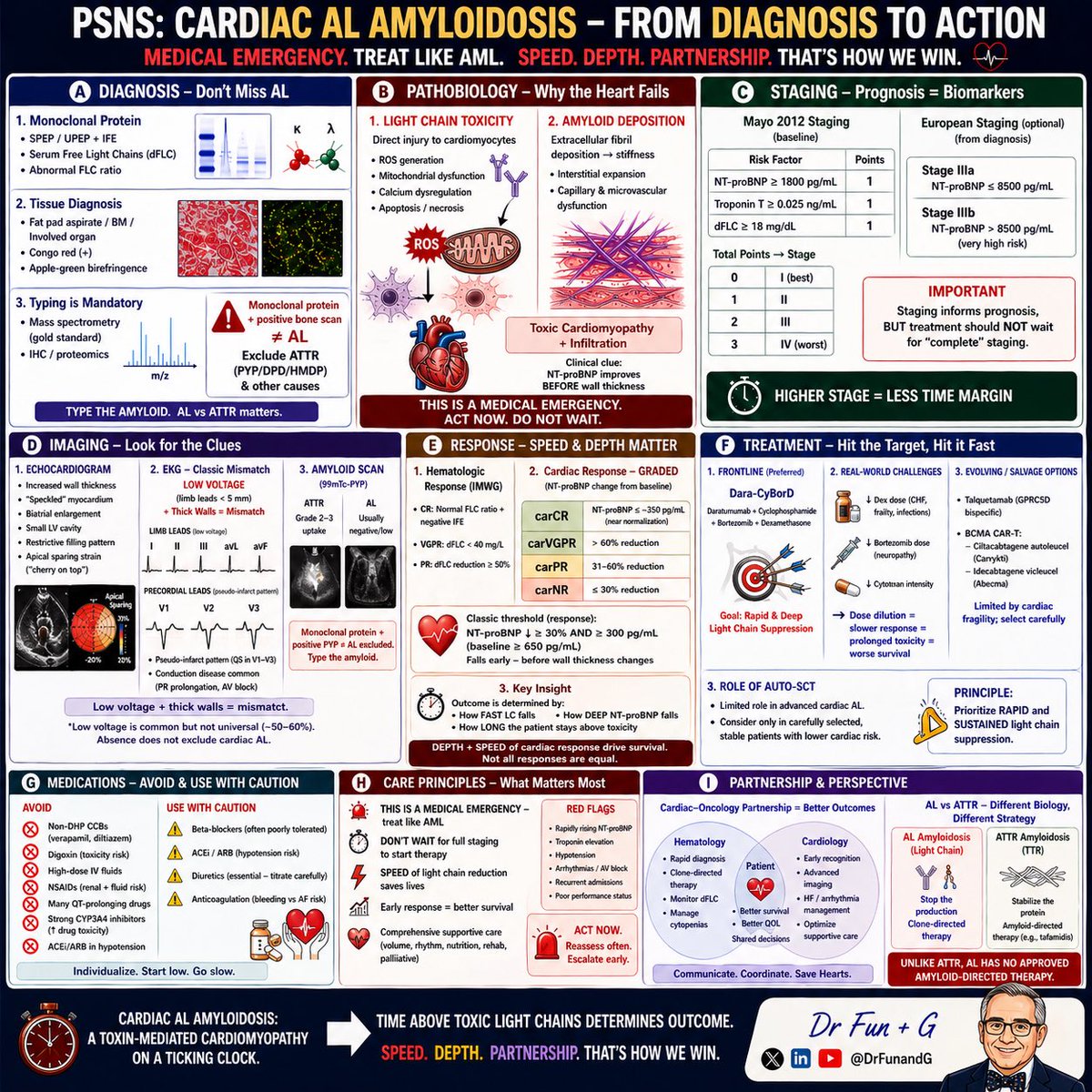
Cardiac AL Amyloidosis = Hematologic EMERGENCY 🆘
Not just deposition — it’s toxin-mediated cardiomyopathy on a ticking clock
Key points:
• Confirm AL → type the amyloid (don’t confuse with ATTR)
• Light chains = direct cardiotoxins
• Stage for prognosis — don’t delay treatment
• EKG + Echo mismatch = infiltrative clue
• Response is graded → depth and speed matter
• Real-world therapy is often diluted → prolonged toxicity
Treat like AML. Act now.
Outcome depends on:
• how FAST LC falls
• how DEEP NT-proBNP falls
• how LONG patient stays toxic
Time above toxic light chains determines survival
✍️ Dr Fun + G
#Amyloidosis #Myeloma #Hemetwitter
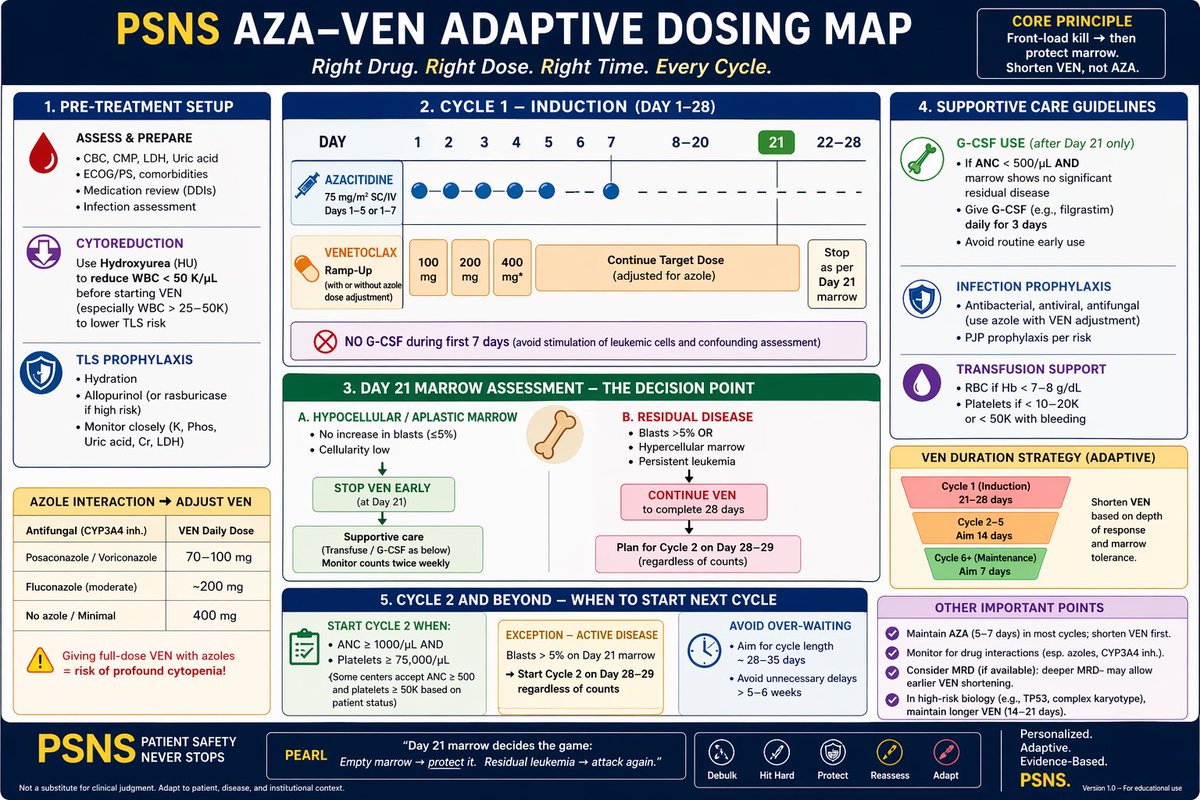
💣 AZA + VEN doesn’t fail—execution does.
Day 21 marrow decides everything.
Shorten VEN, not AZA.
Don’t wait for perfect counts.
Here’s how we induce AML in 2026 👇
Please let us know your approach.
#AML#HemeTwitter
Dr Fun + G
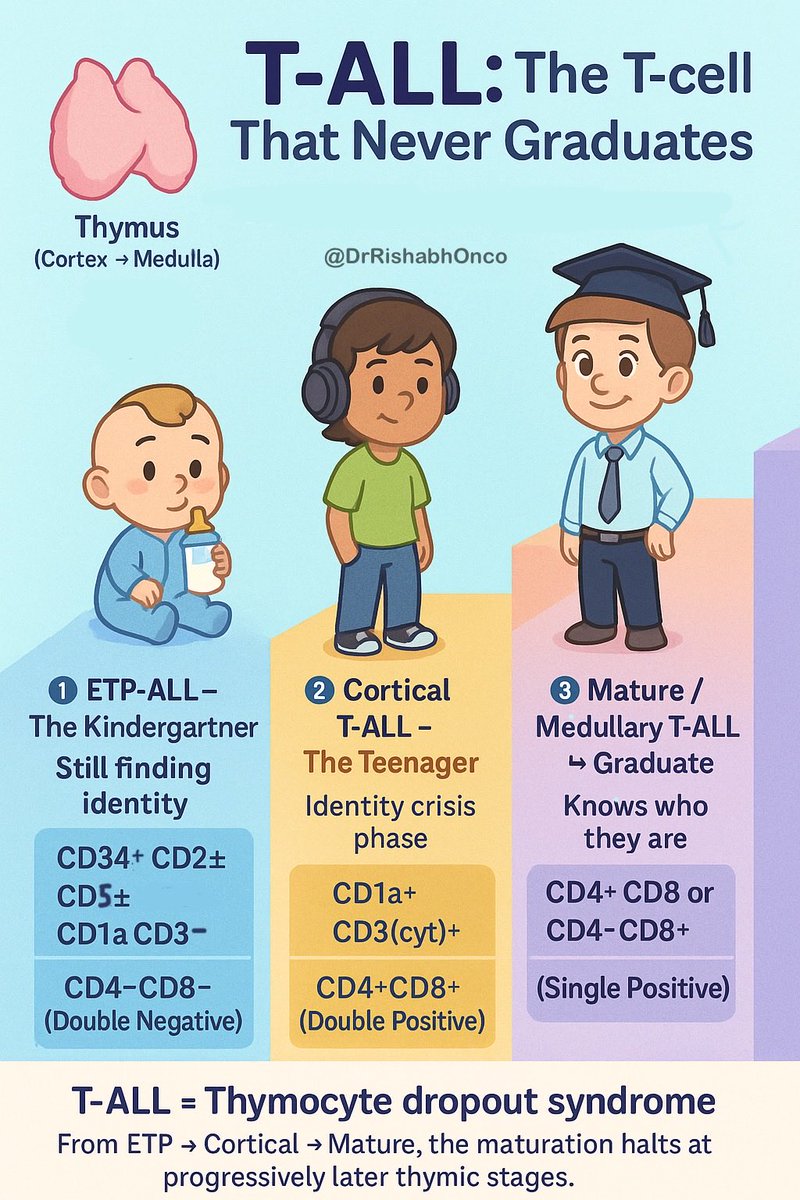
🎬 T-ALL: The “T-cell that never graduates” story! 🧬🎓
Inside the thymus, every T-cell goes to “Thymic High School.”
T-ALL happens when one of them drops out early!
Let’s meet our 3 troublemakers in this thread 👇
(1/4)
@RanjitKSMD@ASCO@myESMO@EricTopol@OncoAlert@NCIcancer@VPrasadMDMPH@ASH_hematology
#OncoTwitter #PathTwitter #Leukemia #HemePath #MedEd
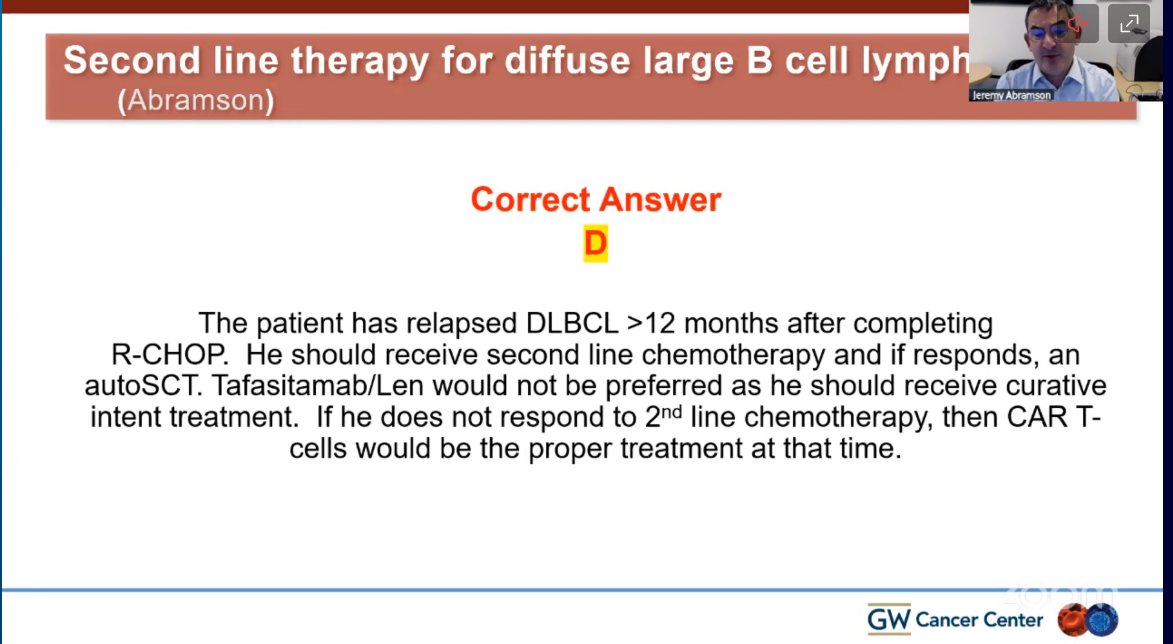
🧬 DLBCL Relapse >12 Months Post R-CHOP — Second-Line Therapy
💡 Correct Answer: D – R-ICE chemotherapy, if responds followed by auto-SCT
🔹 32-year-old male with non-GCB DLBCL relapsed 18 months post-RCHOP → late relapse.
🔹 For late relapses (>12 mo), standard approach = salvage chemo (R-ICE, R-DHAP, R-GDP) → if responsive → autologous SCT.
🔹 CAR-T (Axi-cel/Tisa-cel) reserved for primary refractory or early relapse (<12 mo).
🔹 Tafasitamab + Lenalidomide used for non–transplant-eligible or relapsed/refractory post–2L setting, not curative here.
🔹 Thus, curative intent = R-ICE → auto-SCT.
🔹 If fails to respond → proceed to CAR-T therapy.
📚 Source: Best Practices in Hematology I — Dr. Jeremy Abramson, Massachusetts General Hospital / GW Cancer Center.
#DLBCL #RICE #AutoSCT #CAR_T #Lymphoma #HemaFellows #ESH #EmiratesHematologySociety
NCCN 2026 – CML: Discontinuation of TKI Therapy
📌 General Principles
✅ TKI discontinuation safe in selected CP-CML pts
💬 Shared decision with CML specialist on risks/benefits & TKI withdrawal syndrome
⚠️ Avoid if ever had AP-CML or BP-CML
⚠️ Avoid if MMR not regained within 3 mo after restart
🧬 Requires more frequent molecular monitoring than during TKI use
👩⚕️ Consider only if all eligibility criteria met
🧾 Eligibility Criteria for TKI Stop
📈 CP-CML only (no prior AP/BP phase)
💊 ≥3 yrs on approved TKI (imatinib, dasatinib, nilotinib)
🔬 Documented quantifiable BCR::ABL1 transcript
🟢 Stable deep molecular response (MR4; BCR::ABL1 ≤0.01% IS) for ≥2 yrs
– confirmed by ≥4 tests, ≥3 mo apart
🧪 Reliable qPCR lab with sensitivity to MR4.5
⏱️ Frequent PCR monitoring
– q1–2 mo in first 6 mo post-stop
– q2 mo during months 7–12
– q3 mo thereafter if remains in MMR (≤0.1% IS)
🔁 If Molecular Relapse (loss of MMR)
🔴 Restart TKI within 4 weeks
📈 Monitor monthly until MMR regained, then q3 mo
♻️ If not regained by 3 mo ➡️ continue TKI & test for BCR::ABL1 KD mutation
⏳ Continue TKI for ≥6 mo before considering second stop attempt
⚠️ Do NOT Attempt TFR
If ever in AP-/BP-CML
If not in sustained DMR ≥2 yrs
If no access to standardized high-sensitivity qPCR
If patient unwilling/unable for frequent monitoring
📌 Key Notes
💡 Evidence for TFR strongest with imatinib, dasatinib, nilotinib
🟢 Patients in MR4 at ≥2 yrs likely eligible (based on EURO-SKI, STIM trials)
🚫 Patients with high Sokal risk, prior resistance, or low NK cells less likely to maintain TFR
#CML #NCCN2026 #TKI #TFR #MR4 #BCRABL1 #Oncology