John C Malone Professor at @JohnsHopkins @JHUCompSci @jhuclsp @jhumceh; Part time @techatbloomberg (tweets my own)
Director @hopkinsdsai
@mdredze.bsky.social🦋
This was a really fun conversation, bc we just chatted instead of it being about whatever I have coming out under embargo. Really encourage you all to give it a listen mainly bc it’s the first time tears have happened on @TheDoctors podcast. 🤦♂️🤣 but seriously worth a listen even if I’m biased.
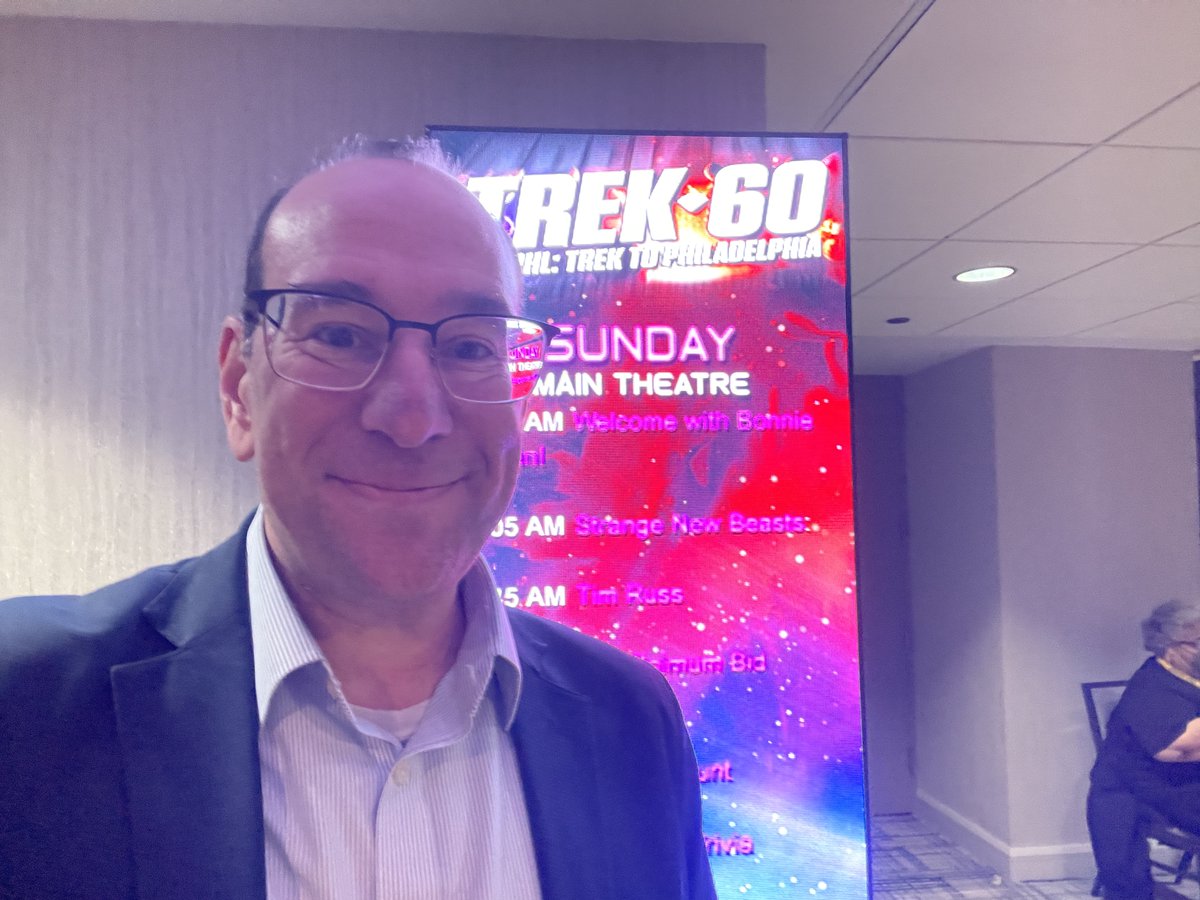
Last weekend, Chronicle attended Trek-60 in Philadelphia in celebration of Star Trek’s 60th anniversary. During our time here, we had the privilege of interviewing and interacting with dozens of true Star Trek fans, who each gave us insight into what makes this fandom great.
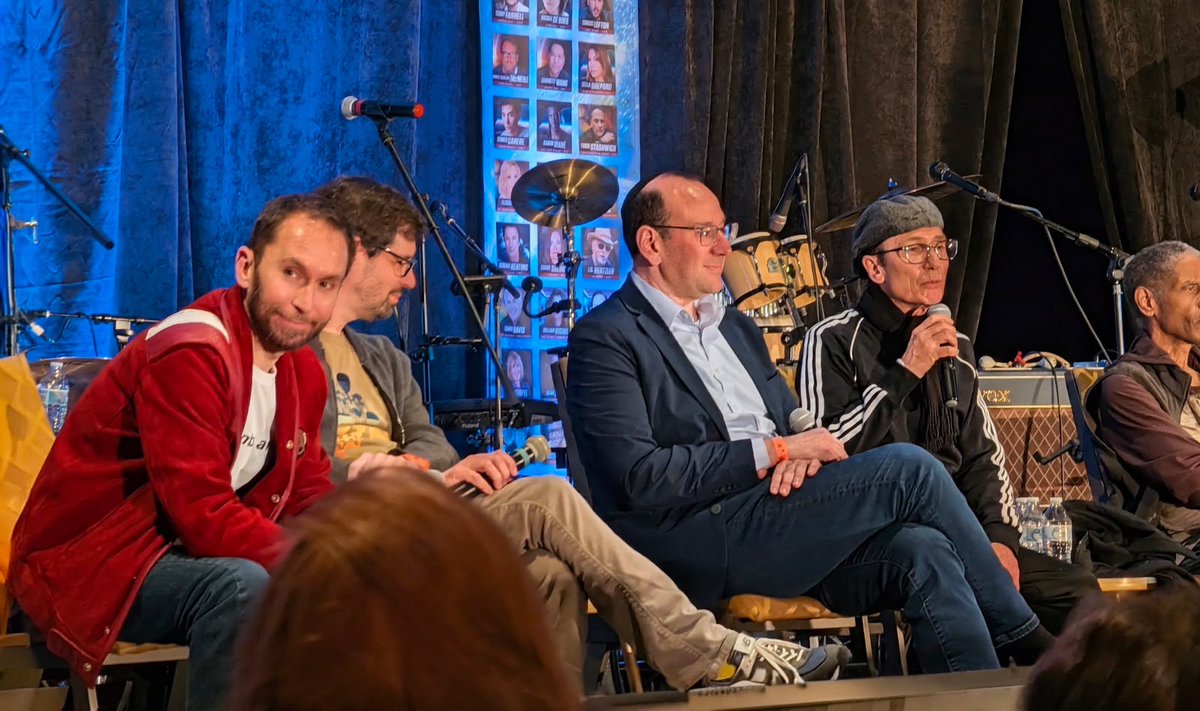
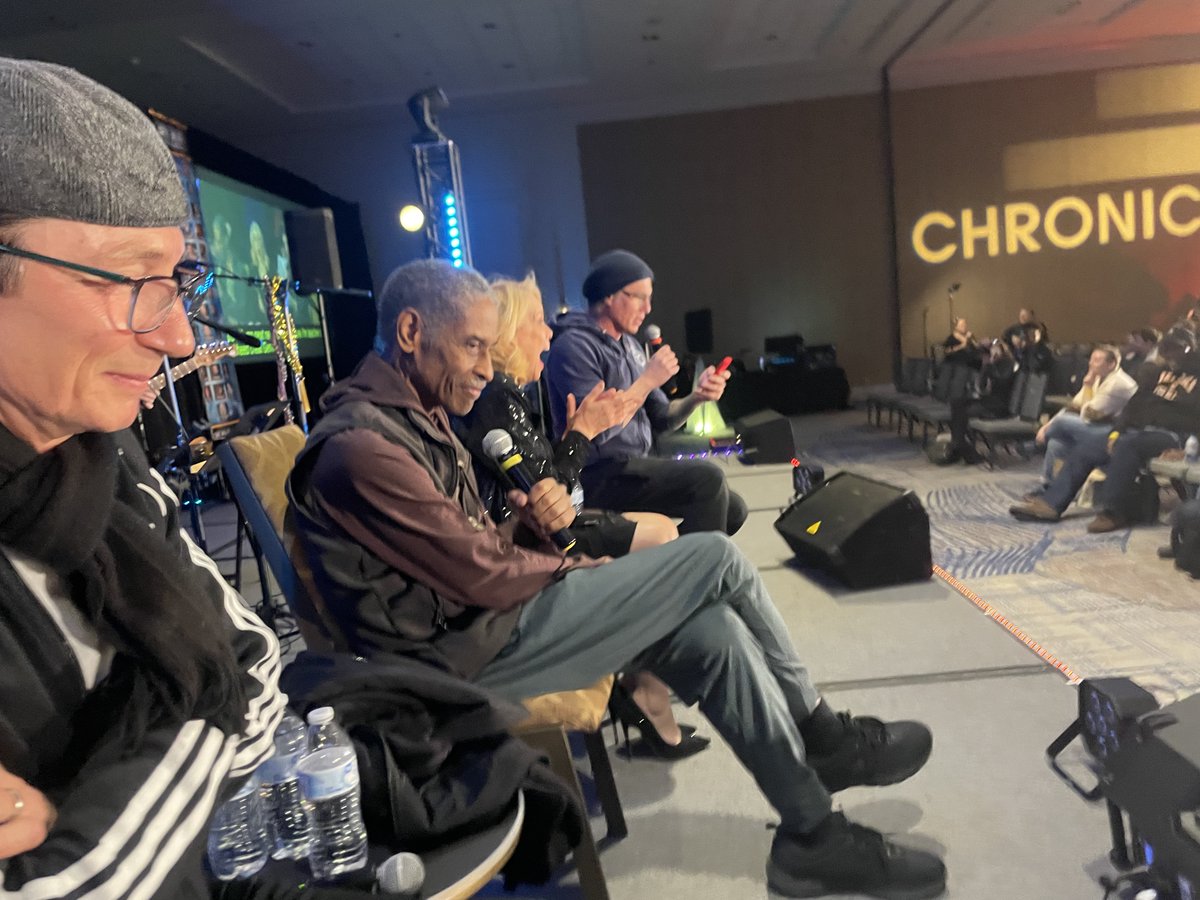
On Sunday, our very own Oliver Lewis hosted the panel “A Bridge to the Future,” featuring Anson Mount (“Star Trek: Strange New Worlds”), Chase Masterson (“Star Trek: Deep Space Nine”), Tim Russ (“Star Trek: Voyager”), and Dominic Keating (“Star Trek: Enterprise”), alongside two leading AI researchers: @mdredze (Johns Hopkins University) and @mark_riedl (Georgia Tech). This panel offered a healthy conversation on AI and the entertainment industry, and how actors and viewers alike should approach the rise of generated content and technological encroachment.
Stay tuned for more fan stories and insights!!
The Johns Hopkins Data Science and AI Institute Postdoctoral Fellowship Program is now accepting applications for the 2027–2028 academic year. Apply now!
Application deadline: Dec. 11, 2026.
Details and apply: https://t.co/0MG7JyP3JJ
It's PhD application time! My group @JohnsHopkins is always looking for creative researchers to join us
If you are excited about embodied intelligence and want to define new problems worth solving no one is thinking about yet, check below and apply!
https://t.co/Iokm3YxuXQ
Render the robot. Generate the world. 🌍
Introducing DOPPEL: one video world model across robot arms, humanoids, human hands, and full bodies.
Given a body's intended motion, DOPPEL predicts how the world responds.
1/n 🙃
AI agents do remarkably well in discovering new ideas and solving hard science problems.
Do we understand how LLMs search their way to a final idea?
How do they recover after getting stuck during ideation?
We study LLM ideation by turning it into a two-agent game of question-answering with binary feedback.
Now that the cat is out of the bag, I can finally share a life update:
Thrilled to be heading to the Bay Area to join https://t.co/z4vTUMvBBw!!
Yejin (@YejinChoinka) has been a mentor since my postdoc era, and getting to work with her again, alongside Carlos (@guestrin) and this group of researchers + engineers, makes this especially meaningful to me. I'm excited to see what we can build together when AI systems keep learning from the people who use them and the problems they work on.
During this time I'll be on leave from my faculty position at Johns Hopkins. I’m grateful to my colleagues and students at Hopkins, and I can’t wait to get to work with the Noeri team!
If you’re applying to JHU’s CS Ph.D. program and don’t have access to application support, we’d be happy to help! Please submit your application below.
Join us in advancing data science and AI research! The Johns Hopkins Data Science and AI Institute Postdoctoral Fellowship Program is now accepting applications for the 2027–2028 academic year. Apply now! Deadline: Dec. 11, 2026.
Details and apply: https://t.co/0MG7JyP3JJ
JHU Data Science and AI Institute Postdoctoral Fellowship program is searching for postdocs (due Dec 11th).
If you're interested in working with me on computational social science, NLP, and AI for human behavior & society, apply here: https://t.co/8e3TdPJ6wZ
Applications to @HopkinsDSAI Postdoctoral Fellowship program are open! If you are interested in working with me on human-centered privacy and security in AI, agentic systems, and robotics, please apply! DDL: 12/11 https://t.co/paoVl4z4Ef
An agent says “task complete.” How did it get there?
Did it test its changes, recover from errors, or revise its plan after human feedback?
We will be presenting our work on Act*ONOMY, a taxonomy for understanding and analyzing AI agent behavior, at NeurIPS 2026 in Sydney next month.
Developed through Grounded Theory, Act*ONOMY provides a shared vocabulary of 10 actions, 46 subactions, and 120 behavior categories. It links behavior labels to exact quotes in agent traces, helping researchers compare agents, inspect what agent does during runtime, and investigate potential failure patterns.
Explore the resources on our website(https://t.co/V2QDrE58wu):
🔎 A living and extensible taxonomy that can be expanded as AI agents evolve.
🧩 Annotated trajectories and reports. Follow agent runs and a human–agent coding session turn by turn, explore behavioral profiles, and inspect the evidence behind each annotation.
🛠️ Automated skills. Analyze your own agent traces and human–agent interactions, discover behaviors in new papers, and maintain or extend the taxonomy.
📄 Paper: https://t.co/OHzOXHpY9C
🤗 Hugging Face dataset: https://t.co/XG0UQmKPkH
💻 GitHub (code, datasets, and extension protocol): https://t.co/wX9kLjQl1a
We’re continuing to update the repository and taxonomy, and welcome feedback on the tools and codebook.
Many thanks to all my coauthors for their contributions to this work! @KaiserWhoLearns@JentseHuang@ktvank@SijieCesium@YuanCosette@shi_weiyan Zhuoran Lu @ZiangXiao@DanielKhashabi@mdredze
If you will be at NeurIPS in Sydney, I’d love to chat about how you study agent behavior and hear about your work!
From @Kevin_Ashton to @TheAtlantic and @SNFAgora, @AnneApplebaum, leaders from across and beyond our community will come together at the @JHUBloombergCtr in D.C. on 11/10 to explore the ideas and innovations shaping our future. Review the agenda and register today: https://t.co/AetKnToH7O