🚨 How people get scammed out of their crypto 🧵
Almost every one of these scams works the same way: they get you to hand over your keys, sign something, or send the coins yourself.
Here are the ones hitting people right now 👇
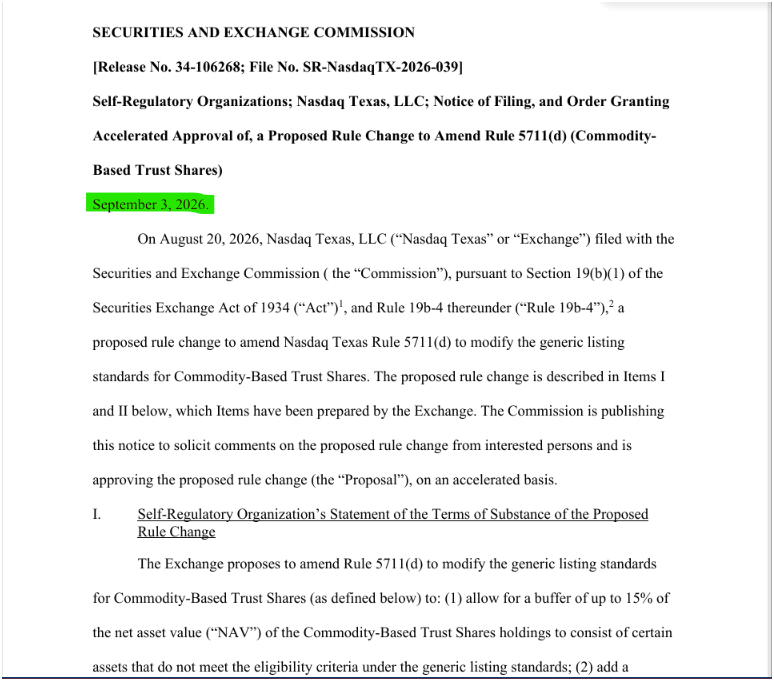
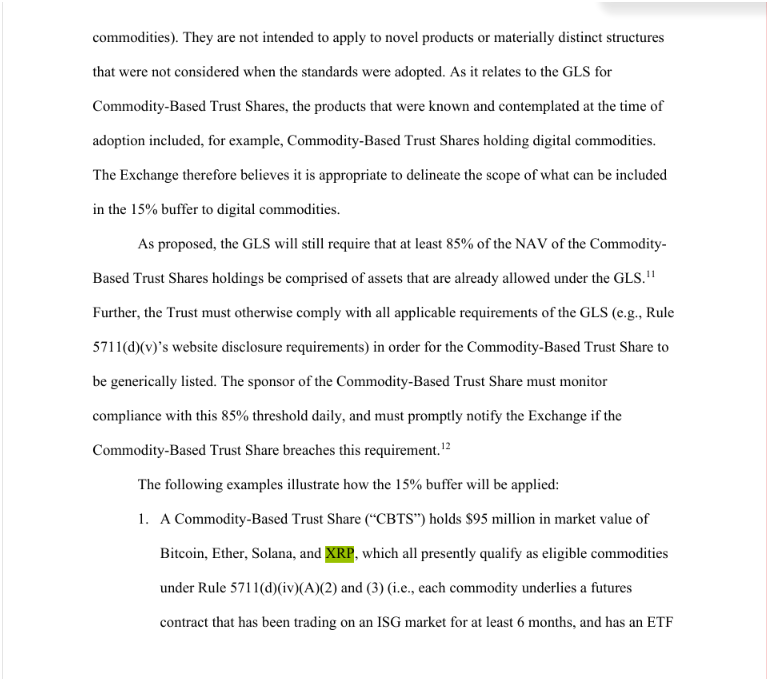
Blackrock can now file.
This strips away remaining uncertainty. All/many existing XRP ETF issues will likely file amended S1’s in the next 2-3 weeks, maybe next week.
This 100% codifies SOL & XRP as commodities. Thats great for SOL because clarity act could actually hurt Solana in some ways.
Further—the 15%NAV buffer opens the door for Blackrock to create indexes.
This filing accelerates everything and acts as a fuel source.
And I was already bullish on the weekend and September.
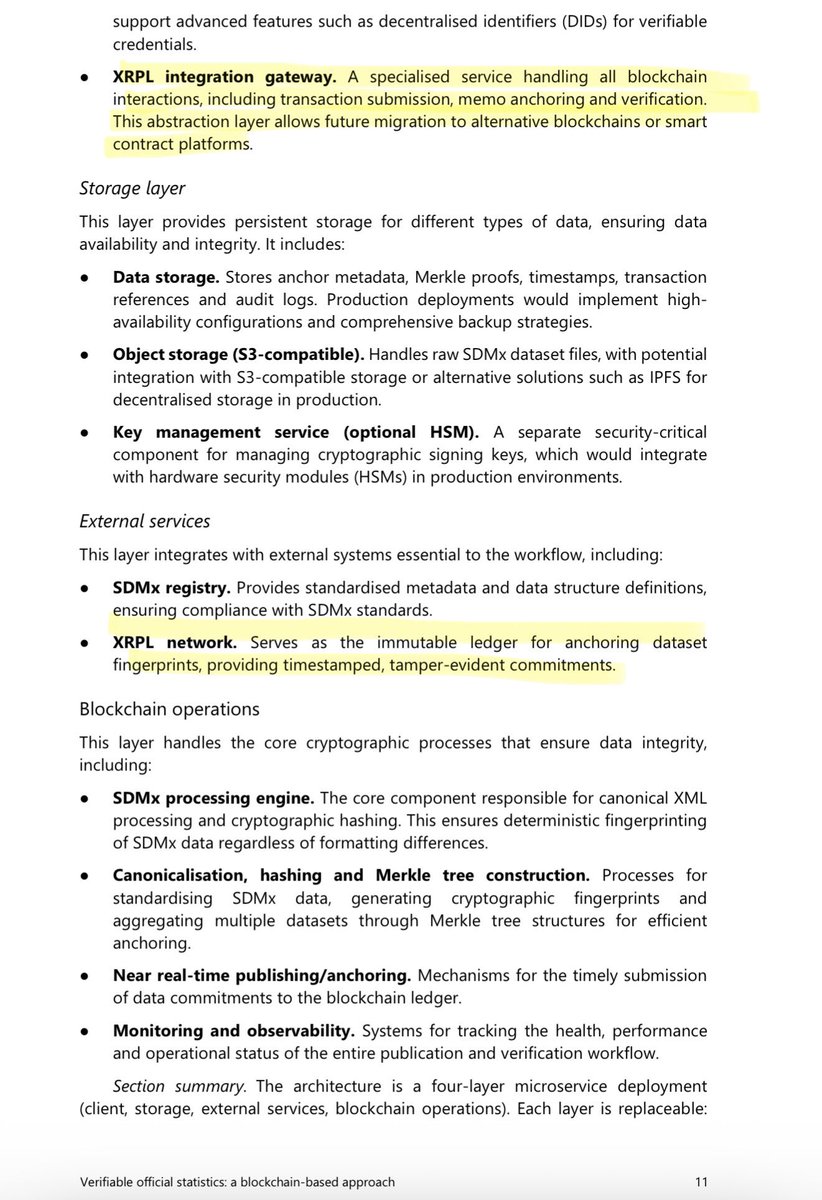
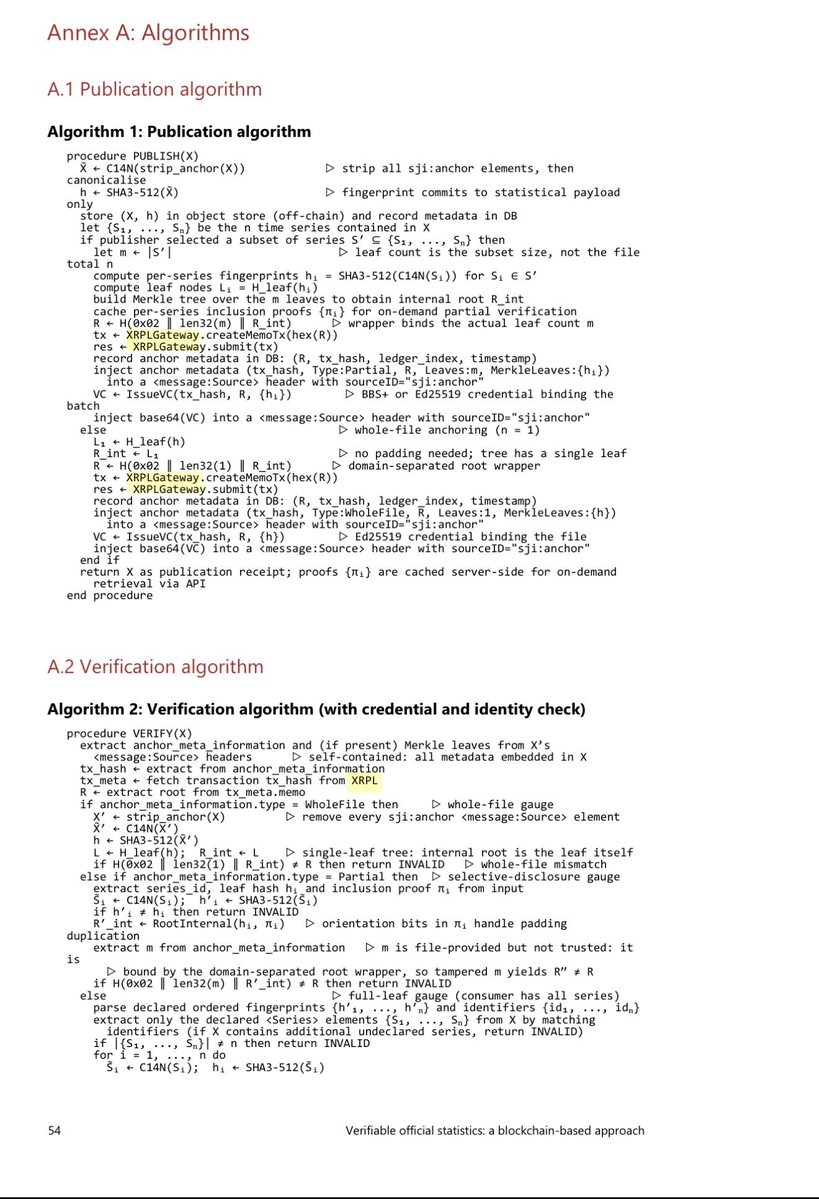
Call it what it is. The ripple:native Ledger just got written into a BIS proof of concept as the layer that makes official data verifiable. Years of “show me the utility” just got an answer in public. Utility first. Price later.
‼️ JUST IN: SEPTEMBER 2026 REPORT CONFIRMS THE BIS IS LEVERAGING XRP FOR A NEW ON-CHAIN VERIFICATION PILOT‼️
XRPL 🤝 Bank for International Settlements
Fully documented below.📝👇
NEW: @Ripple is preparing the XRP Ledger for a future where quantum computers could break today's cryptography, rolling out a four-stage plan to shield the network before that threat arrives.
⚡️NEW: Ripple is quantum-proofing the XRP Ledger before "Q-Day" arrives.
Ripple is preparing ripple:native for the moment quantum computers can break the cryptography protecting wallets, which researchers call Q-Day, per CoinDesk.
The company laid out a four-stage migration plan, including an emergency route if quantum computing advances faster than expected.
🚨 Former BlackRock MD: XRP success is inevitable.
Banks don't make trillion-dollar infrastructure bets on hype. They bet on utility.
Cross-border payments are the pain point. XRP is the fix.
The inflection point is here.
Introducing Ripple Prime’s Delta One business – bringing Total Return Swaps across US-listed equities, indices and digital assets to clients, tailored to their investment horizons, risk mandates and reporting requirements.
Single counterparty. Cross-margined. Structurally aligned. 24/7
This is what institutional equity derivatives access should look like: https://t.co/Fyc2HE2soR
The SEC has declared our registration statement effective!
Press release here: https://t.co/sqMogIjJYm
Armada Acquisition Corp. II shareholders will vote on the proposed business combination on Sept 30, 2026. Completion remains subject to that vote and to customary closing conditions.
Here’s what @ashgoblue had to say about it. 👇
This content is for informational purposes only and does not constitute investment advice. This content may contain forward-looking statements that involve risks and uncertainties; actual results may differ materially. Digital assets involve risk, including potential loss of principal. Learn more about Evernorth: https://t.co/f1nPiu69OG.
@Ripple just opened a Wall Street swap desk. Stocks, indexes, and crypto. One balance sheet.
A central bank does three jobs: it issues the money, it runs the settlement system, and it stands in the middle when credit is extended.
Ripple is lining up the same three. RLUSD is the money. The XRP Ledger is the settlement system. Ripple Prime is the credit desk, and Delta One is that desk going live.
Little by little Ripple is becoming a central bank of its own kind. XRP is the reserve asset at the center. The reserve is the scarce asset the rest of the system is organized around. Today was more confirmation.
Next comes another license, another market, another hour they stay open. That’s how the bank gets built.
Very hesitant to give up control of my XRP so somebody can use it as collateral while they go trade.
I believe much safer and sustainable yield opportunities are on the way.
The Real Cost of Borrowing Against Your XRP
Let's break it down
Everyone talks about the upside.
Keep your XRP, get cash now, no taxable sale.
Sounds amazing
Nobody talks about the price of that convenience until it's too late to matter.
Start with the number nobody puts in the headline.
Traditional securities-backed lines of credit against stocks currently run roughly 5.5 to 9% all-in for most clients.
Crypto-backed loans against XRP commonly start higher. @LanternFi, for example, publishes an 11% base rate plus a 2% origination fee on XRP, a 13% starting APR.
That gap is real and it's the market pricing in risk that doesn't exist with a stock portfolio.
Here's the math nobody shows you before you sign.
Deposit 100,000 XRP at $2, that's $200,000 in collateral, borrow $80,000. XRP needs to drop to roughly $1.23, a 38% move, before you hit their margin call threshold. Keep dropping toward $1.07, a 47% move, and you're at liquidation, before interest.
This isn't a black swan.
We've watched 15 to 20% single-candle moves happen twice in the last two weeks alone, on real charts, in real time.
Now the part that should actually change how you think about this.
I asked Lantern directly what happens if liquidation doesn't cover the loan.
Credit where it's due, they gave a straight answer.
Recourse is limited to the collateral.
If liquidation comes up short, they eat the loss, not the client.
They also disclosed they hedge this exact risk internally with put options, and are exploring letting borrowers buy their own puts at origination to raise their liquidation threshold, still exploratory, not live.
That's a genuinely strong structural answer.
But one platform answering well on the record isn't the same as knowing it's true everywhere.
Most crypto lenders don't publish this clearly, and plenty of loan agreements bury full-recourse language in terms nobody reads.
Some platforms can and do come after you for the shortfall.
Get it in writing in the actual agreement, not a reply on X.
The risks that don't go away no matter how good the answers are.
No FDIC insurance. No banking charter. BitGo's $250M custody insurance covers theft and key compromise, not the lending platform's insolvency, fraud, or a broad loan-book failure.
If the lender itself fails, you're a creditor in a wind-down, not a protected depositor.
No independent audit of the loan book exists at Lantern, and that's true almost everywhere in this category.
You're trusting the company's word on reserves and loan health because no third party is verifying it.
That's true here too.
The interest rate itself is the risk disclosure most people skip past.
13% isn't a rounding error next to 5.5 to 9%. It's the market pricing in counterparty and volatility exposure a stock-backed loan doesn't carry.
What to actually do before you sign anything.
Ask what happens if collateral falls short of the loan balance, and get the answer in the signed agreement, not a DM.
Verify the license yourself. Lantern lists NMLS ID 2732930 with an active Arizona Consumer Lender License, checkable at https://t.co/qw7nKPLIti.
Assume there's no independent audit anywhere in this space until proven otherwise.
Model your own liquidation price before you borrow, not after price already moved against you.
Good, documented answers from one company are worth noting.
They're not a reason to stop asking the same hard questions of every platform that wants your XRP as collateral.
Personal note: I'm holding off myself.
XLS-66D would put lending natively on XRPL, no third party holding your collateral, no company to trust on the shortfall question at all.
Until that's live, this is the audit I'll keep running on every platform that asks for my XRP.
Thank you @jungwonkim312 for allowing me to audit @LanternFi
I look forward to watching you grow and wish you nothing but success 🤝
We audit the plumbing 🛡
Scammers are actively targeting the XRP community in full force. My X notification tab is completely unusable due to the flood of tagging every 2min by 10 accounts.
Nobody is giving you anything for free.
I'm boiling inside when i see scammers tagging me or others, and then community members reply in the comments like "Ohh thanks is this real?". I can't even reply without amplifying the scam to even more people.
For the love of God.
Consider everyone here to be after your XRP, have your guard up. Sit on your hands. Do nothing.
XRPL has already proven it can support tokenized assets at scale. Now it’s time to put these assets to use: global transfers, trading, collateralizing, and settling.
The upcoming release of xrpld 3.3.0 includes five amendments that move XRPL significantly closer to that goal.
Here's what each one enables:
𝗖𝗼𝗻𝗳𝗶𝗱𝗲𝗻𝘁𝗶𝗮𝗹 𝗠𝗣𝗧
Confidential MPT brings native privacy to Multi-Purpose Tokens (MPTs) on XRPL by combining zero-knowledge proofs with elliptic-curve encryption. Issuers and token holders can keep balances and transfer amounts private on a public ledger, while designated parties - such as auditors or regulators - can verify transaction details when required. For financial institutions, privacy is often a prerequisite for using public blockchain infrastructure.
𝗕𝗮𝘁𝗰𝗵
Batch enables up to eight transactions across different accounts to execute atomically in a single ledger. Either every transaction succeeds, or none do. For the XRPL community, this unlocks more sophisticated workflows without introducing trust assumptions. For institutions, it enables capabilities like delivery-versus-payment (DvP) and atomic settlement, where both sides of a transaction execute together or not at all.
𝗣𝗲𝗿𝗺𝗶𝘀𝘀𝗶𝗼𝗻 𝗗𝗲𝗹𝗲𝗴𝗮𝘁𝗶𝗼𝗻
Permission Delegation allows institutions to delegate narrowly scoped transaction permissions without handing over full signing authority. It's the on-chain primitive for role-based access control. Treasury teams can retain custody of issuance keys while authorizing trading desks or operational teams to perform specific actions within defined limits. This separation of duties is a common requirement for institutional operations.
𝗦𝗽𝗼𝗻𝘀𝗼𝗿𝗲𝗱 𝗙𝗲𝗲𝘀 𝗮𝗻𝗱 𝗥𝗲𝘀𝗲𝗿𝘃𝗲𝘀
Sponsored Fees and Reserves allows a sponsor - such as a bank, issuer, or platform - to pay XRP transaction fees and account reserves on behalf of another account. Users continue to own their accounts and keys, while removing one of the biggest onboarding hurdles: requiring every participant to acquire and manage XRP before they can interact with the network. This improves the experience for both institutions and consumer-facing applications.
𝗗𝘆𝗻𝗮𝗺𝗶𝗰 𝗠𝗣𝗧
Today, once a Multi-Purpose Token is issued, its configuration is effectively fixed. If an issuer needs to update transfer fees, metadata, or enable new capabilities later, the alternative is often issuing an entirely new token and migrating holders. Dynamic MPT allows issuers to define, at issuance, exactly which properties may be updated over time. This provides a practical way to adapt to changing business needs and regulatory requirements without requiring a full token migration.
—
The release is currently anticipated for next week. As always, these amendments will only activate following validator approval. If you run a validator, we encourage you to review the amendments as they become available.
Specifications and documentation are available at https://t.co/9j2gW93dAD, and the Ripple team will be publishing technical deep dives, implementation guidance, and security reviews over the coming weeks.
What is Project Eleven?
Let's break it down
Project Eleven is a security startup founded in 2024 by Alex Pruden, a former US Army Special Operations officer, built entirely around one mission: getting Bitcoin and other digital assets ready for the moment quantum computers can break today's cryptography, what the industry calls "Q-Day." They're the same firm you'd have seen referenced if you've followed Ripple's own quantum roadmap, they're doing this work network by network.
In January, they raised a $20 million Series A at a $120 million valuation, backed by Coinbase Ventures, Castle Island Ventures, and Balaji Srinivasan among others, bringing their total funding to $26 million.
Their stated goal is to become something like a "Palantir for post-quantum migration," building the readiness assessments and tools that let networks transition deliberately instead of scrambling once the threat becomes real.
This week they shipped something genuinely new, and it directly answers a problem you should understand.
If a quantum computer ever becomes powerful enough to break Bitcoin's signature math (or any other crypto), it doesn't just threaten new transactions. It creates a harder problem: how do you prove you're the real owner of an old wallet once an attacker can forge a valid signature for it too?
Signatures stop being proof of anything.
Project Eleven's answer, built with Jim Posen, lead developer of the Binius proof system, sidesteps signatures entirely. Instead, it uses a zero-knowledge proof built around your wallet's key-derivation path, the internal hierarchy standard wallets already use to generate every address from a single seed.
You can mathematically prove you know the seed material sitting above your address in that structure, and that it actually produces your address, without ever revealing the seed or any private key. That proof can then authorize a migration transaction to a new, quantum-safe address. A forger who only cracked your exposed public key doesn't have that seed-level knowledge, so they can't produce the proof, even if they can fake a signature.
The numbers are what make this more than a whitepaper exercise. On a standard MacBook Air, generating the proof takes 243 milliseconds. Verifying it takes 40 milliseconds. No GPU required, no trusted setup. That's roughly 200 times faster than an earlier unoptimized version of the same idea from earlier this year.
Two honest limitations worth knowing.
First, this only protects wallets built on the standard derivation structure (BIP-32), the one basically every modern wallet already uses.
Second, and this is the detail that made headlines, it doesn't help Satoshi's own 1.1 million BTC, those coins predate this derivation standard entirely, so there's no compatible seed-path proof available for them, quantum-safe or not.
Nothing here is live on any blockchain yet. It's an unaudited prototype that would need actual protocol-level adoption, the same kind of network amendment process you already read about in Ripple's own 2028 quantum roadmap, before it could protect a single real coin.
But it's a concrete, working answer to a question that was mostly theoretical a year ago: not just how do we encrypt against quantum computers, but how do you prove ownership once encryption itself has already failed.
ISO Ledger 🛡