The world of math extends far beyond math. Its static patterns are behavioral science for general dynamic patterns (non-physical, competencies, types of minds). Physical interfaces between ecology of patterns, à la Mind-Body and Math-Physics
OK did 1 pass. Looks like the novelty here is replacing the QFT box which rotates phases in a circle with another magic box which rotates phases in a 4-corner square, and that + Grover amplification = exact probabilities. So I made a visual to see it in action.
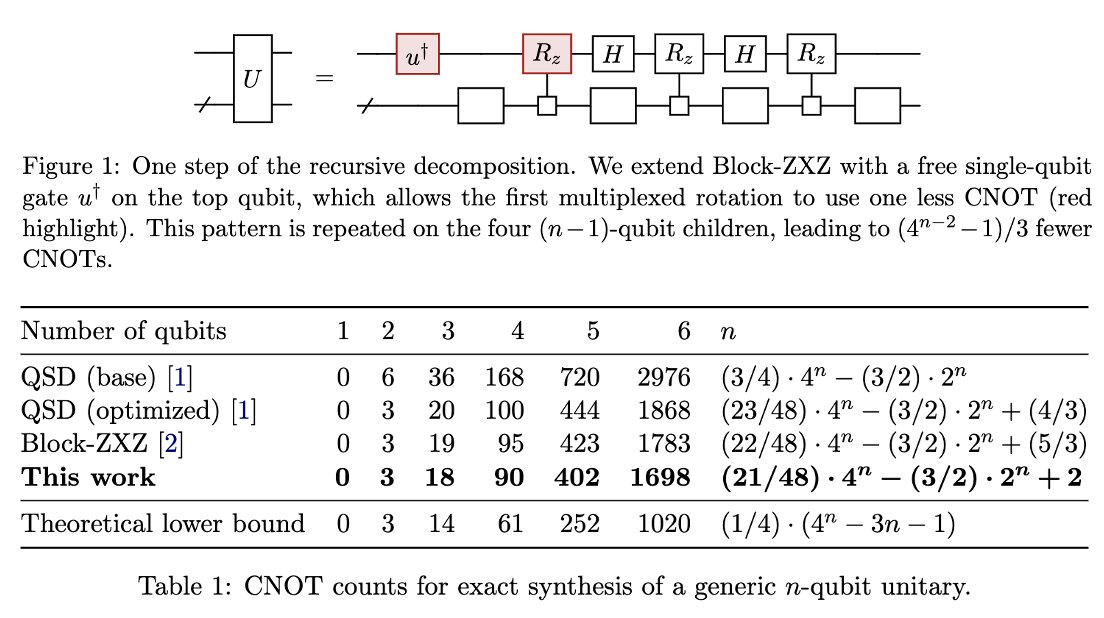
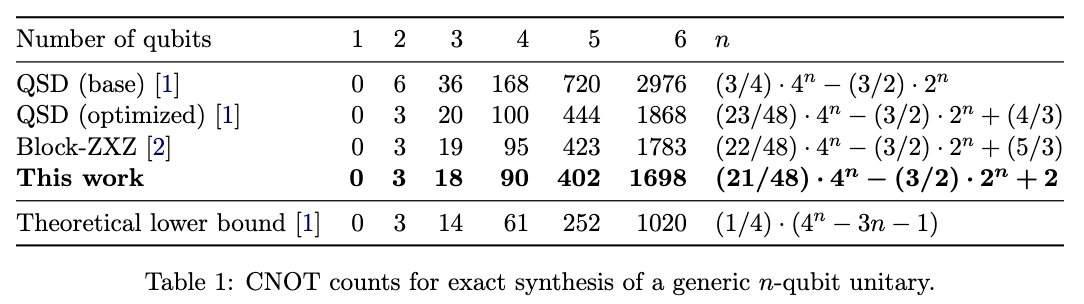
I found an improved algorithm for unitary synthesis! This is a fundamental step in compiling quantum programs, and pushes state-of-the-art closer towards the theoretical lower bound.
This problem has been on my mind for the past 2 years and I'm happy to make progress.
I found an improved algorithm for unitary synthesis! This is a fundamental step in compiling quantum programs, and pushes state-of-the-art closer towards the theoretical lower bound.
This problem has been on my mind for the past 2 years and I'm happy to make progress.
I found an improved algorithm for unitary synthesis! This is a fundamental step in compiling quantum programs, and pushes state-of-the-art closer towards the theoretical lower bound.
This problem has been on my mind for the past 2 years and I'm happy to make progress.
@johnsmithyson0 Controlled-NOT (CNOT) gates are fundamental ops in quantum computing. This problem involves compiling an arbitrary quantum op (unitary matrix) to primitive ops to run on the hardware
The new algorithm isn't completely analytical but nonetheless, progress! I'll put out paper and numerical experiments soon once verified, but I am happy
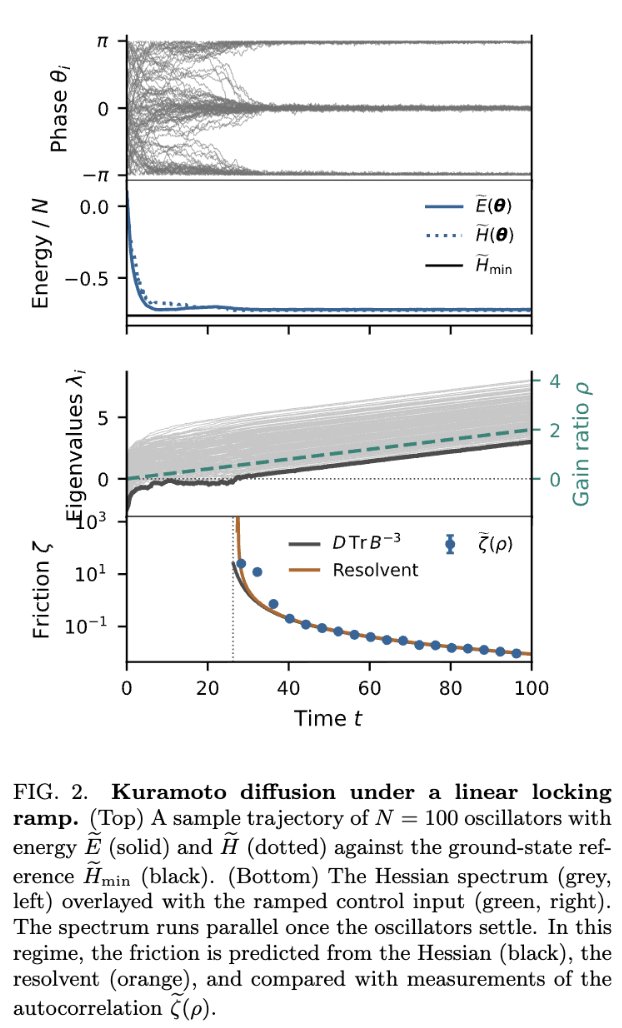
@faintlimits Ising machines, mainly their annealing theory instead of hardware. Should be the first application of the friction tensor to Kuramoto, I think.
@indefeasible_ Extending geometric landscape annealing [0] to Kuramoto oscillators, as proposed in the future work. Viewing them as Langevin diffusion, I think some minimum dissipation bounds could apply in the slow-driving case using the friction metric tensor
[0] https://t.co/7KG1qZca4J