Elk Fact Friday: Elk have hollow hair that provides insulation and helps them retain body heat during extreme cold. (presented by @STIHLUSA.) Find more elk facts➡️https://t.co/Lis2g469lu
#rmef#elk#huntingisconservation
17 Jan 1706: American #statesman Benjamin Franklin is born in #Boston. He is the youngest boy in a family of 17 children. Among his many accomplishments, he helped draft the Declaration of #Independence. He dies on April 17, 1790. #history#OTD#ad https://t.co/YaDYeSoKJv
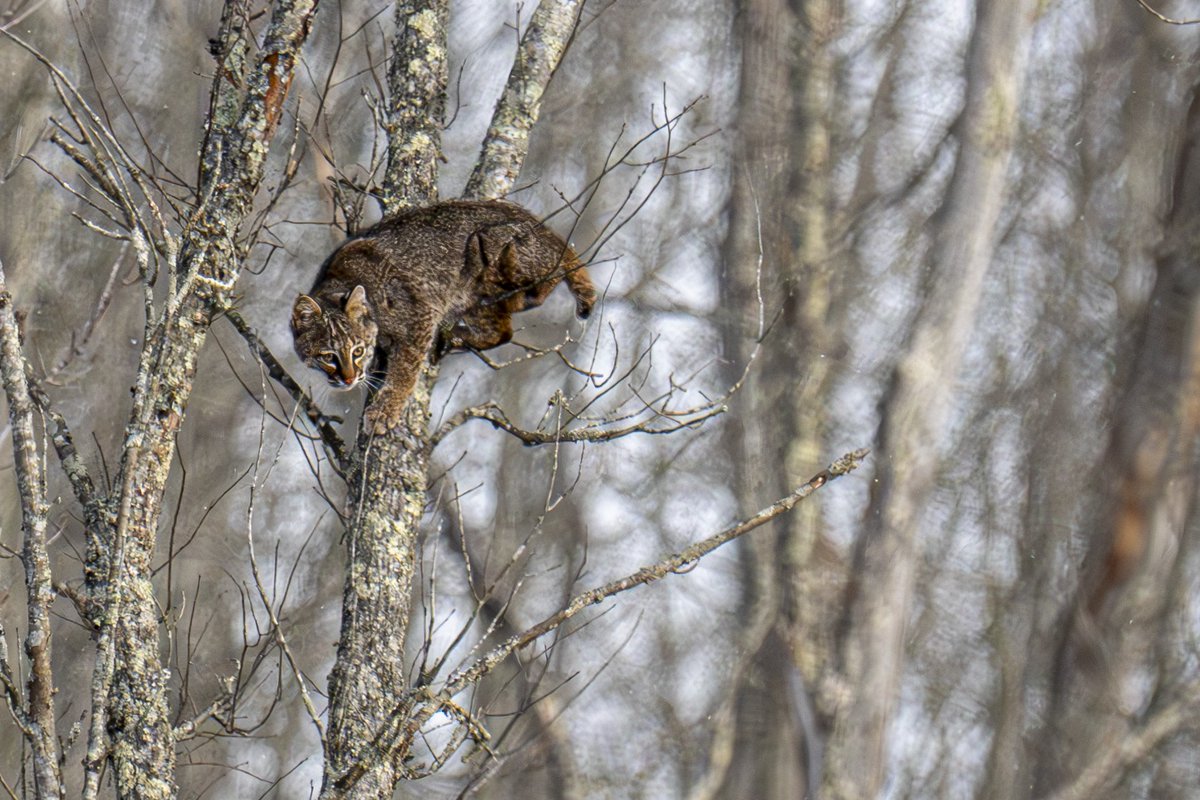
Want to see a bobcat? Don't forget to look up! Bobcats are great at climbing and will often use trees to wait for prey or even escape larger predators. While they typically hunt at dawn and dusk, they're more active during the day in the winter.
📷 courtesy of Nicholas Shaw
Pheasant Fact Friday!💡
Many people prefer the mild taste of the pheasant’s light colored meat to the strong taste of a duck’s dark meat. Why is there a difference in color? Color depends on the amount of work that a muscle has to preform. The hard working muscles are the darkest colored. Hard working muscles need more blood to deliver energy to the working cells, and to remove the CO2 and heat produced while metabolizing that energy. So more blood makes the muscle darker. Since duck muscles do more work (long migration routes) than pheasant muscles, duck meat is darker and stronger tasting. Even within ducks, those that migrate each year have darker meat than domestic, non-migrating ducks.
In many birds like the pheasant and chicken, the leg muscles are dark meat while the breast is white. The legs do more work than the breast (flight) muscles. Hunters know that pheasants do more running than flying, and commercially raised chickens do no flying. Consider also the animals with red meat. The slow, sedate cow has lighter colored meat than the fleet-footed, energetic deer.
#pheasantsforever #pheasants #pheasantfactfriday
"You cannot separate hunting from the love of outdoors, respect for wildlife, and dollars that flow back into habitat" - @DougBurgum ��👏👏
Former ND Governor Doug Burgum testified before the Senate Environment and Natural Resources Committee as they considered his nomination to be President-elect Trump's Secretary of the Interior. Thank you Senator @JimJustice_WV for your heartfelt question about inspiring future generations of hunters and anglers, and Gov. Burgum for speaking to America's unmatched outdoor traditions and recognizing Pheasants Forever among other conservation leaders for making hunting possible!
Pheasant Fact Friday!💡
January is the coldest month of the year. Day and night temperatures are often colder than most home freezers. A 2 degree night with even a moderate wind of 11 mph creates a windchill of -25 degrees. How can pheasants survive such conditions? While you can wear another wool scarf or down vest, the pheasant has only the clothes it grew last July. In October it could ruffle its feathers for more insulation, but that’s not enough now. The answer to staying alive in January is food, habitat, and even when the bird was hatched last spring. Under severe winter conditions, an early hatched hen (May) can survive two days longer than a late hatched hen (July). The hen hatched in May will be larger and have more body fat on which to survive.
Each pheasant must increase its energy intake to offset the increased loss of body heat, and to maintain it’s 108 degree temperature. In January the bird needs 504 kcal/day for warmth and weight gain. This mid-winter dietary requirement is equal to two McDonald’s hamburgers or three Snickers candy bars a day. This is nearly double that needed last October when ruffled feathers were sufficient for warmth.
#pheasantsforever #pheasant #pheasantfactfriday
Pesh-kabz or Peshkabz, a type of Indo-Persian��knife designed to penetrate mail armour and other types of armour. Originally created during Safavid Persia, it became widespread in Central Asia and Indian subcontinent during Mughal period.
Pesh-kabz originated in Safavid Persia and is believed to have been created sometime in 17th Century AD, to overcome mail armor worn by mounted and foot soldiers of day. Term itself was first used to describe front of a girdle worn by Persian wrestlers, indicating that pesh-kabz was worn centrally as opposed to kard and other blades which were worn at sides. It soon spread to neighbouring Afghanistan and Central Asia before eventually being introduced to Indian subcontinent by Mughals. After armor ceased to be worn by modern armies, pesh-kabz retained its utility as close combat knife and many Pashtun tribesmen, particularly Mahsud, Afridi and Shinwari clans, continued to use design, along with chura and kard.
During their period of colonial rule in India, British frequently referred to all Afghan blades of this pattern collectively as "Afghan knives" or "Khyber knives", after Khyber Pass that marked the transition from British India to nation of Afghanistan. In India, manufacture of pesh-kabz was centered in city of Bhera, now part of Pakistan. During WWI, on 17 January 1916, Maharaja of Patiala ordered a modernized version of traditional knife fit for use in modern war from Wilkinson Sword Company. This exemplar combined a straight blade of classic form with hilt of a Lee-Enfield bayonet. Only 555 pieces were manufactured and none of these seems to have survived though there is a detailed sketch from producers' archives. Pesh-kabz is still used today as a personal weapon as well as a ceremonial badge of adulthood for Pashtun and other Afghan hill tribes.
Most pesh-kabz use hollow-ground, tempered steel single-edged full tang, recurved blade with a thick spine bearing a "T" cross-section for strength and rigidity. In most examples, a pair of handle scales are fixed to the full-tang grip, which features a hooked butt. The earliest forms of this knife featured a recurved blade, suggestive of its Persian origin. In all variants blade is invariably broad at the hilt, but tapers progressively and radically to a needle-like, triangular tip. Upon striking a coat of mail, this reinforced tip spreads the chain link apart, enabling rest of blade to penetrate the armour. One knife authority concluded that the pesh-kabz "as a piece of engineering design could hardly be improved upon for purpose".
Knife is typically used as a thrusting weapon also held upside down in hand with thumb on bottom of handle. Wide hollow-ground blade also possesses considerable slicing performance, and as such may also be used effectively with slashing or cutting strokes. Its ability to be used as either a cutting or thrusting weapon has caused more than one authority to erroneously classify pesh-kabz as fighting dagger.
Pesh-kabz are typically around 40-46cm in overall length, with blades of 28-33cm. When compared to other similar knives with T-section blades and reinforced tips, pesh-kabz is virtually indistinguishable, save for its length of blade. Kard or bahbudi has longer blade (though still shorter than an Afghan sword such as salwar yatagan) and considered a separate design, while chura, used by Mahsud clan of Pashtun Khyber tribe, a slightly shorter version of pesh-kabz.
Pesh-kabz has a full tang and is traditionally fitted with walrus ivory scales or handles, but other examples have been found using ivory from tusks of the rhinoceros, or elephant. Still other knives may be found with scales of wood, agate, jasper, rock crystal, horn, serpentine (false jade) or metal. Sheaths are typically constructed of metal or leather over wood, and may be inset with silver or precious stones.
📷 : Horse Handle Lapis Lazuli Dagger (Khanjar), Persian, 19th Century CE. (Al Sabah Collection, Kuwait)
#archaeohistories
Premiering tomorrow at 5pm CST, Rooster Road Trip XV Ep. 1 | Cattails & Cackles | 2024 Public Land North Dakota Pheasant Hunt. Head to the link below to subscribe to our YouTube channel to be the first to catch all the action!
https://t.co/GLExoDW7HE
If you took some time out of your busy fall schedule to vote last week – thank you. Your civic engagement is not only a duty, but a meaningful contribution to shaping the future we share as conservationists and hunters.
Your news feeds are probably flooded with punditry on the outcomes of the election and filled with anxious or elated speculation about what this election means for the nation. But what about for a conservation non-profit like Pheasants Forever and Quail Forever? In short: Our mission remains the same today as at our founding 42 years ago.
Looking to the future, our team will continue to execute our strategic priorities, deliver vital habitat and access across the country, and educate, engage and expand the upland conservation community to amplify our mission. We will also maintain our nonpartisan approach to advocacy, because we know that even in these highly partisan times, conservation transcends politics.
Click the link below to learn more about post-election insights from PF & QF written by president and CEO, Marilyn Vetter:
https://t.co/BpvDkuaUzG
New findings reveal King Arthur’s Hall, a site of legend and lore on Bodmin Moor, England, dates back to the Neolithic period, making it 5,000 years older than previously thought. 👇 Link in comments! 👇
#Neolithic#KingArthur#BodminMoor#Cornwall#prehistoric#Britain #Historic #England #AncientOrigins
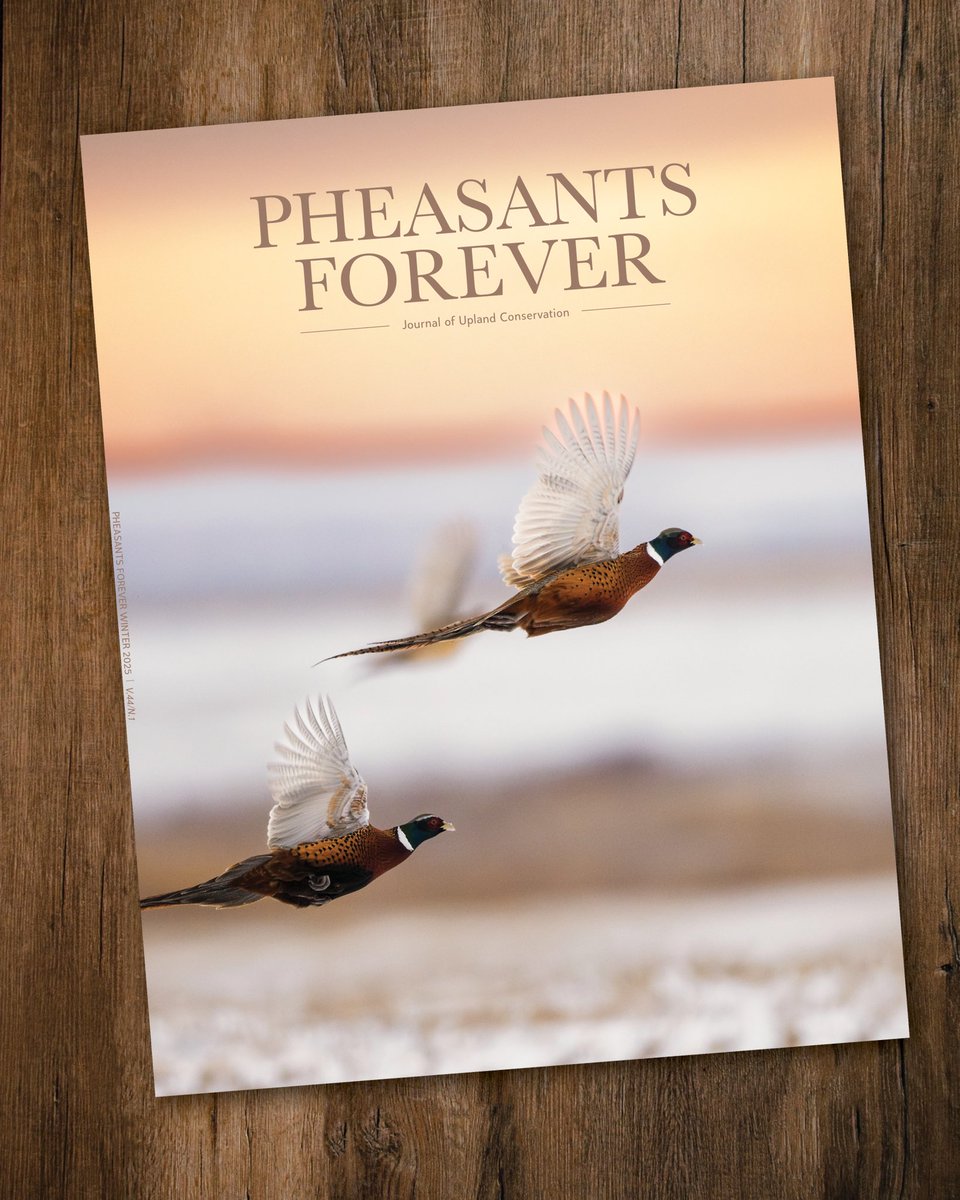
WINTER JOURNAL CELEBRATES PF COMMUNITY
As two roosters from a winter flock cross our Winter Pheasants Forever Journal cover, so the impact of PF chapters, volunteers and donors crosses into the lives of people and communities across the pheasant range. Hear the stories in our winter issue, with a hearty helping of winter hunting takes and techniques. And you do not want to miss our special section poking some good fun at all the kinds of hunters you see out there.
Sign up or renew by November 12th to make sure you are on the list for Winter’s Pheasants Forever Journal. – Tom Carpenter, Editor. Link below!
https://t.co/Hez34b1bjK
Grasslands in Montana, like everywhere else, are disappearing.
Nationwide, 2.6 million acres of grasslands are lost each year, including thousands of acres in eastern Montana. Over 30% of the state’s grasslands have been broken or altered, resulting in a 34% decline in grassland bird populations statewide.
Efforts to protect these acres take many forms, including what’s known as mesic habitat restoration. Mesic habitat holds more water than surrounding areas during crucial times of the year, and everything from sage grouse to cattle depend on it to thrive. The loss of this habitat can severely impact wildlife as well as livestock, so Pheasants Forever staff in Montana have been working tirelessly to protect these vital oases.
Watch the full video at the 🔗 link below, where we detail just how mesic restoration works, and what “The Habitat Organization” and our partners are doing in Montana to protect the state’s remaining grasslands.
https://t.co/LqN7r8jEnt
Happy National Hunting and Fishing Day! To celebrate this day we want to encourage everyone to introduce someone new to hunting this season by becoming a mentor and taking the Hunter Mentor Pledge (Link Below). Below is a testimonial about the power of mentorship by PF and QF's very own Membership Services Coordinator Scott Moehlmann.
“I am an adult-onset upland hunter and would have gotten into the sport much earlier had I known someone who would be willing to take me under their wing and show me the ropes. Furthermore, when I finally did take the plunge, get my dog, and start to try to figure it all out, I struggled mightily. I spent 2 seasons trying to learn the ins and outs out on my own with very little success. Once I met a mentor who showed me the where and the how of upland hunting, I started to have some success and became obsessed. Being able to do the same for others is incredibly rewarding. I try to introduce people to hunting every year and always enjoy the experience."
https://t.co/r4I6z00xwb