Acabei de publicar um artigo que escrevi para matéria de Inteligência Artificial sobre Ética no período passado.
Ainda devo voltar nesse assunto, já que tenho bastante interesse.
https://t.co/P6ru5SB4ji
You know at 20,487 (combined add/remove)
We can assume an average and say per line this is 3-4 seconds to read, let's just boldly assume the same to understand.
So what, 8 seconds per line? That's 163,896 seconds.
Now let's divide that by 60, I'll round the decimal down for courtesy - that is 2,731 minutes.
Now let's turn those minutes in to hours - so what, 2,731/60 again!
Rounding to the nearest 1dp point that gives us 45.5 hours.
Now I do work hard, so in my flow state I work for 14 hours straight.
It's gunna take me 3.25 days in my state to even understand what you have produced.
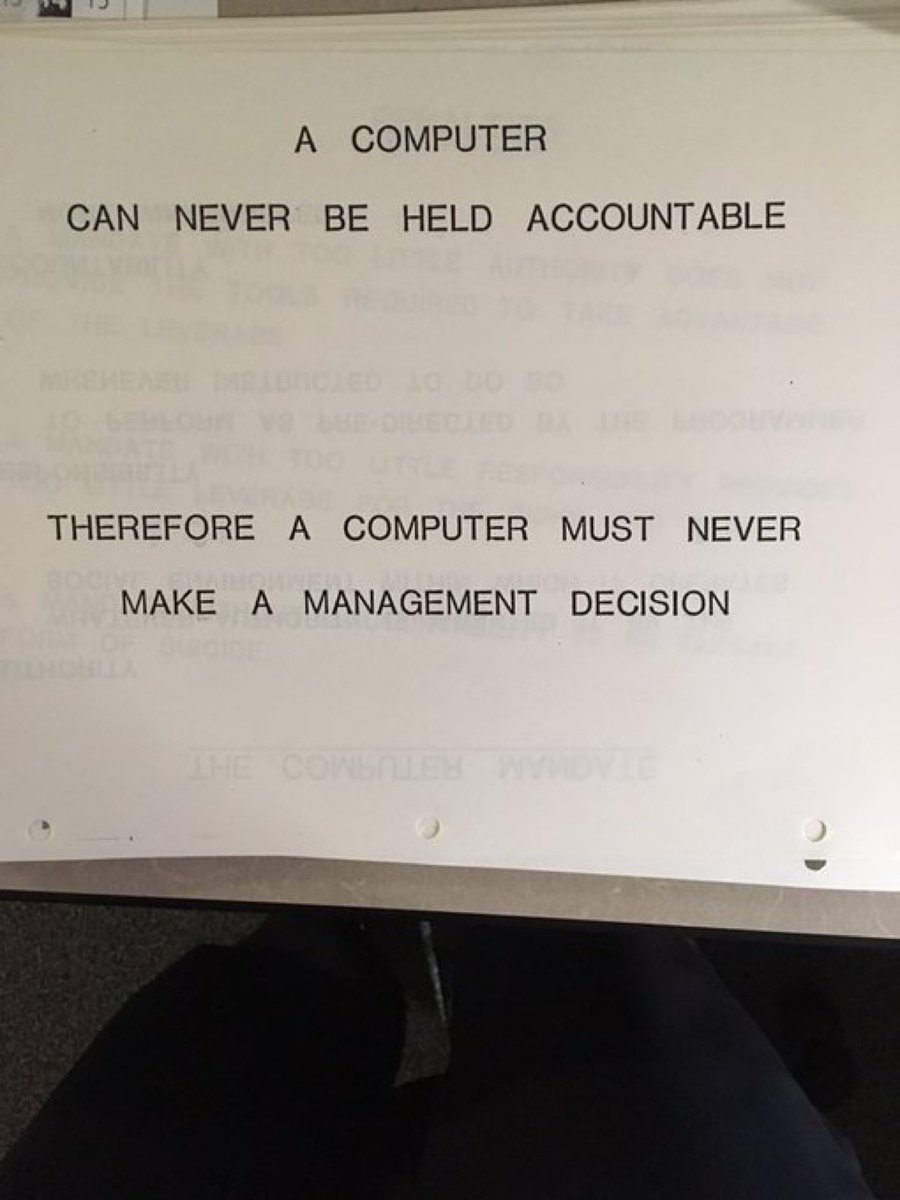
You do not understand, nor read your code. If this is markdown, there is zero way to verify that your AI hasn't hallucinated. This does not belong to you, it has nothing to do with you, you are a vessel.
I like AI, I do not like people who pretend to be productive.
Anthropic just released the receipts on a fear everyone’s been hand-waving.
52 junior engineers learning a new Python library. AI group scored 50% on comprehension tests. Manual coding group scored 67%. That’s a 17% gap on foundational skills, and debugging showed the steepest decline.
The productivity trade looked even worse. The AI group finished only two minutes faster on average, and that difference didn’t reach statistical significance. Several developers spent up to 30% of their time just composing queries.
Here’s what actually matters: they identified three failure patterns that predicted sub-40% scores. Fully delegating code to AI. Starting independently but progressively offloading work. Using AI as a debugging crutch without building understanding. All three share a common thread: removing the cognitive struggle that produces learning.
The high scorers (65%+) did something different. Some generated code first, then asked follow-up questions to understand what they’d produced. Others requested explanations alongside the code. The fastest group asked only conceptual questions, then coded independently while troubleshooting their own errors.
The gap between “AI makes you faster” and “AI helps you learn” turns out to be enormous. And most workflows are optimized entirely for the former.
Usar software livre tinha que ser obrigatório em TODOS os órgãos estatais brasileiros, também. Software proprietário tem que ser proibido no Estado, salvo raras exceções.
Ao se intitular da escrita de Papers, a OpenAI tenta resolver esse problema alimentando seu modelo com a grande maioria dos Papers recém escritos (isso imaginando que a grande adoção dessa nova ferramenta).
Esses tempos de IA que viveremos daqui pra frente, além das problemáticas mais óbvias, vai agravar o monopólio em muitas áreas. As ferramentas utilizadas serão apenas aquelas suportadas por LLMs simplesmente.
Introducing Prism, a free workspace for scientists to write and collaborate on research, powered by GPT-5.2.
Available today to anyone with a ChatGPT personal account: https://t.co/9mTLAbxPdH
Porque não vai haver dado o suficiente para treinar modelos a usarem ferramentas novas ou recém criadas. E isso meio que cria um problema de ovo-galinha. No sentido de que se não há mais dado gerado, como continuaremos a alimentar esses LLMs?
Coding is dead.
Software engineering is very much alive.
We are at a turning point in history but most people are asleep at the wheel or too proud to admit it.
When @karpathy himself switches to 80% agentic coding in the span of two weeks, there is no return. RIP coding
This has been said a thousand times before, but allow me to add my own voice: the era of humans writing code is over. Disturbing for those of us who identify as SWEs, but no less true. That's not to say SWEs don't have work to do, but writing syntax directly is not it.