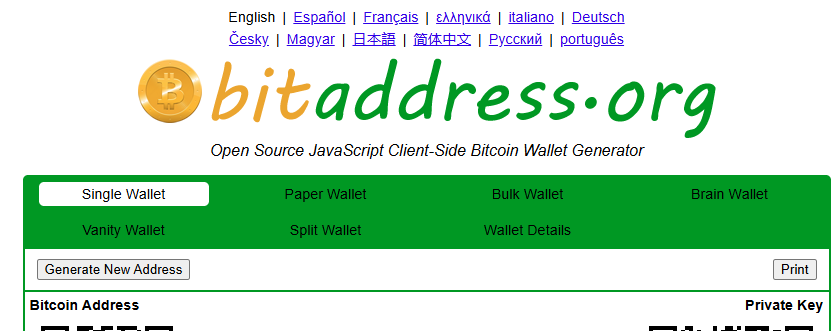
The timestamps of bitcoin is about 10 minutes interval, it's too rough for some application. I spent several weekends created a tool with timestamps about 10 seconds interval, it is at https://t.co/9iveFGShix welcome for testing #bsv#timeoftx
Here is another reason why BSV is the original and genuine Bitcoin. This website https://t.co/Gphqs9LxFL was the first to offer paper wallet creation; it launched to the public in 2011, prior to any hard fork or the block-size civil war and it remains operational and in use by me today. For those unaware, it generates P2PKH addresses in the Base58Check format; the same format Satoshi used and which we continue to use today, though only on BSV, not on BCH or BTC.
In a Ponzi structure, the returns do not come from productive activity. They come from new entrants.
So when the returns stop, the machine does not “stabilise.” It stalls.
The old buyers need new buyers. The new buyers need newer buyers. When the next layer refuses to arrive, price support disappears, confidence breaks, liquidity thins, withdrawals accelerate, and everyone suddenly discovers that “long-term conviction” meant “please let me exit before you.”
That is why declining cycle returns matter.
35x becomes 17x.
17x becomes 3.5x.
3.5x becomes 1.8x.
Then what?
At some point the story cannot pay the bill.
If the only thesis is “number goes up because number went up before,” then falling returns are not a minor detail. They are the engine coughing smoke.
A productive system survives because it produces value.
A Ponzi-like system survives only while enough fresh money believes the previous candle was prophecy.
Here is the ugly little arithmetic.
BTC can process about 4.5 transactions per second in practice.
A week has 604,800 seconds.
So total weekly capacity is:
4.5 × 604,800 = 2,721,600 transactions.
Now suppose 1,000,000 Coinbase users decide they want their BTC out of the exchange and into custody within one week.
That alone requires:
1,000,000 ÷ 604,800 = 1.65 transactions per second.
So one exchange withdrawal panic consumes about 36.7% of the entire BTC network’s weekly transaction capacity.
Not payments. Not commerce. Not global adoption. Just one exchange queue trying to leave the casino.
Now add existing traffic.
If normal BTC demand is 3.0 tx/s, adding Coinbase withdrawals gives 4.65 tx/s. The network is already over capacity, and about 92,800 transactions cannot clear that week.
If normal demand is 3.5 tx/s, total demand becomes 5.15 tx/s. The backlog is about 394,400 transactions.
If normal demand is 4.0 tx/s, total demand becomes 5.65 tx/s. The backlog is about 696,800 transactions.
At that point, fees do not rise politely. They auction violently.
Blockspace is fixed. Panic demand is not. So the fee becomes the price of getting out before the next man.
$50 fees? Easy.
$150 fees? Entirely plausible.
Higher? If people are trying to withdraw tens or hundreds of thousands before an exchange locks, delays, “reviews,” or discovers its charming little liquidity problem, then yes. They will pay.
Because the fee is no longer a transaction cost. It is an exit bribe.
And this is the little joke the BTC priesthood never quite understands.
At 4.5 transactions per second, self-custody for the masses is not sovereignty. It is musical chairs with a very expensive chair.
When everyone wants out of the exchange at once, BTC does not become freedom.
It becomes a queue.
And the queue charges admission.
I am pleased to announce that, despite repeated assurances that I already possess more degrees than common sense, I have been accepted for yet another PhD.
This year I will begin doctoral research at Birkbeck, University of London, focusing on the history of money, institutions, accounting systems, and administrative record-keeping.
Some people collect sports cars.
Others collect watches.
I appear to collect dissertations.
What particularly interests me is the evolution of the mechanisms by which societies learned to record obligations, identity, ownership, exchange, and accountability across time. This includes the study of livery records, financial administration, institutional bookkeeping, and the often-overlooked documentary infrastructure that made complex economic systems possible.
Much of modern debate about money begins in the wrong century. People argue endlessly about currencies, banking, and finance while paying remarkably little attention to the ledgers, registries, audits, censuses, rolls, and records that allowed large-scale institutions to function in the first place.
The history of money is, in many respects, the history of information.
Before one can tax, one must count.
Before one can borrow, one must account.
Before one can govern, one must record.
The romantic imagines history is shaped by kings, revolutions, and battles.
The accountant knows it is shaped by whoever kept the books.
So naturally, I have decided to spend the next several years buried in centuries-old records proving that the people with ink, ledgers, and filing systems were often more important than the people with crowns.
You bought BTC and thought you had bought Bitcoin. That is the funny part.
Nobody is laughing because someone bought a speculative asset. People speculate every day. Some even manage not to buy the whole way down while congratulating themselves for their financial genius.
The laughter is for the people who bought a ticker, inherited a slogan, and still cannot tell the difference between a price chart and a working monetary system.
Bitcoin was electronic cash. It was meant for transactions, settlement, commerce, micropayments, scale, and utility. BTC became a museum token with a fee market, a priesthood, and a crowd of bagholders calling inactivity “sound money.”
There is a simple rule here, though it seems to defeat many: price is not utility. Scarcity theatre is not commerce. Hoarding is not a payment system. A thing going up does not prove it works, and a thing falling while you buy more of it does not make you early; it may simply mean you are providing exit liquidity with religious enthusiasm.
So yes, congratulations. You bought something called BTC. You may even have made money, or perhaps you bought on the way down and called it conviction, as people often do when arithmetic has become emotionally inconvenient.
But you did not understand Bitcoin.
You bought the souvenir and mistook yourself for the architect.
Why Mental Poker Matters Today
It is the cryptographic foundation for true trustless multiplayer games on public blockchains.
When combined with micro-payments (bonded-subsat-channel), verifiable accounting, and secure key management (overlay-broadcast), it enables games where real money can be at stake with no house, no trusted operator, and full cryptographic fairness.
Call me a fraud if you wish.
Call me a liar.
Call me delusional.
Call me whatever makes you feel comfortable.
The interesting thing is that none of those words matter once the code exists.
For years, many people have focused on stopping me, discrediting me, attacking me, censoring me, misrepresenting me, and preventing anything I was working on from ever seeing the light of day.
At one stage that may have worked.
At one stage much of this existed only in my head, in notebooks, in designs, in unfinished code, in prototypes, in ideas that had not yet become reality.
Ideas can be delayed.
Ideas can be suppressed.
Ideas can be ridiculed.
What becomes much harder to stop is a working system.
This month the code goes public.
Not a promise.
Not a roadmap.
Not a marketing presentation.
Code.
Working systems.
Architectures.
Protocols.
Implementations.
People will be free to inspect it, analyse it, criticise it, improve it, fork it, extend it, or ignore it.
That choice will belong to them.
The thing that many people seem unable to understand is that I am not asking anyone for money.
I am not selling access.
I am not selling licences.
I am not selling permission.
I am not creating a gatekeeper.
I am releasing it.
Free.
The irony is that this is the part many people will find hardest to believe.
Not the cryptography.
Not the distributed threshold systems.
Not the digital possession model.
Not the ability to create truly scarce digital goods.
The hardest thing for many people to understand is that after spending years building it, I am simply giving it away.
And that is why it is already too late to stop.
A secret can be suppressed.
An unpublished idea can be buried.
A prototype can be hidden.
A public implementation cannot be uninvented.
Once the code exists in the open, it belongs to history.
From that point onward, the question is no longer whether it can be stopped.
The question becomes what the world chooses to build with it.
For those who do not yet understand what I am releasing, that is entirely expected.
Most people will initially see banking software.
Others will see encrypted files.
Others will see wallets, databases, digital assets, threshold cryptography, or Bitcoin integration.
Some will see NFTs and immediately misunderstand everything.
The real significance lies elsewhere.
For the first time, digital property can potentially become property in the same sense that physical objects are property.
Possession can become distinct from copying.
Transfer can become distinct from replication.
Ownership can become something more than a database entry or a legal assertion.
The implications extend into finance, law, publishing, government, defence, science, engineering, intellectual property, information security, and every field where information possesses value.
Most people will not understand this immediately because every digital system they have ever used was built upon the assumption that information is copied.
This is built upon the assumption that possession can be transferred.
That distinction sounds small.
It is not.
It changes the economics of information itself.
If successful, I believe this will ultimately prove to be one of the most important developments in computing outside of artificial intelligence.
Not because it creates another product.
Not because it creates another market.
But because it creates an entirely new category of property.
It will take years for people to understand the implications.
Probably a decade.
Many will dismiss it.
Many will misunderstand it.
Many will attempt to explain it using old models and old assumptions.
That is normal.
Truly new ideas are always interpreted through the lens of what already exists.
The final irony is that the part many people will find hardest to understand is not the cryptography, the threshold systems, the possession model, or the architecture.
It is that after spending years building it, I am giving it away.
The code will be public.
The architecture will be public.
The ideas will be public.
Anyone will be able to study them.
Anyone will be able to build upon them.
Anyone will be able to improve them.
The value was never in hiding the idea.
The value is in what the world does with it once the idea exists.
This month I will be releasing the systems I have been building.
Not a token. Not another wallet. Not another "Web3" toy.
A complete banking framework integrated with Bitcoin.
A Bitcoin-enabled SQL database where transactions, records, contracts, invoices, and audit trails are natively tied to the blockchain.
A financial management platform that operates more like Quicken than a cryptocurrency wallet, allowing individuals and enterprises to manage accounts, assets, invoices, contracts, and records within a single system.
Every payment uses deterministic single-use addresses derived through ECDH key exchange. No address reuse. No public identity leakage. Parties can regenerate payment information when authorised, while outside observers see only ordinary transactions.
The architecture is built around master keys, derived subkeys, transaction chains, and hash-key chains, creating a single cryptographic source of truth.
In addition, I will be releasing a digital asset system that supports true transfer of ownership.
When Alice transfers a document or digital asset to Bob, the system is designed so ownership can move rather than merely be copied. The objective is to provide cryptographic evidence that Alice no longer retains access after transfer, creating a form of digital possession that more closely resembles physical property.
These releases are prototypes and will require substantial work before reaching enterprise-grade deployment, but the foundations are now complete.
For years people have talked about what Bitcoin might become.
I intend to show what can actually be built.
Bitcoin was designed to be cash: used, spent, earned, and transmitted.
It was not designed as a shrine where fools throw in their entire net worth and pray that the number goes up.
That is not economics. That is cargo-cult gambling with a ticker symbol.
I do not want the power.
I do not want the money.
I do not want the control.
That will confuse a certain type of person, because a certain type of person cannot imagine building anything except as a prelude to owning the throat through which everyone else must breathe. They think invention is merely the larval stage of monopoly. They think every road must have a tollbooth, every tool must have a landlord, every market must have a priest, and every creator must eventually be reduced to a tenant.
That is their disease.
I have seen what power does. I have seen what money does. I have seen what control does. I have seen it in others, and I have seen it trying to work its way into me. Anyone who says power does not corrupt is usually either lying, already corrupted, or too dull to notice the smell.
I have a good life.
I do not need to build another cage.
What I want is simple.
I am developing this. I am releasing it this year. It is already underway. And when it is ready, I am handing it to everybody.
Not to a foundation.
Not to a platform.
Not to a cartel.
Not to a board of soft-handed little managers who will spend three years discussing governance while quietly writing themselves into the rent stream.
Not to anyone to control.
For everyone.
Anyone, anywhere on Earth, who wants to build with it will be able to build with it. No permission ceremony. No kneeling at the polished altar of Silicon Valley. No begging some intermediary to please allow innovation this quarter, provided it does not disturb the advertisers, the banks, the exchanges, the app stores, the regulators, the consultants, the custodians, or whatever other magnificently useless creature has inserted itself between work and value.
Everything tied to a blockchain.
Everything provable.
Everything private.
Everything controlled without needing gatekeepers and intermediaries standing in the way, charging rent on movement, access, ownership, identity, distribution, or trust.
That is the point.
Not another monopoly.
Not another walled garden.
Not another empire of managed dependency dressed up in the cheap perfume of innovation.
A system where digital goods can exist as property. Where ownership can be proven. Where transfer can be recorded. Where rules can follow the object. Where privacy can remain intact. Where creators can create, buyers can own, and markets can form without asking permission from people whose chief economic function is obstruction with a logo.
The old world was built by middlemen who discovered that if they stood close enough to value, they could convince everyone they had created it.
They did not.
They merely blocked the road and charged admission.
The new world is coming.
And no, it will not be dragged in by me alone, kicking and screaming against the weight of the old order. That is not how worlds change. Worlds change when enough people stop accepting the lie that the cage is there for their protection.
It will come because builders want to build.
Because creators want to own their work.
Because families want more than managed decline and subscription life.
Because people want a better world than the one designed by intermediaries, bankers, platforms, and the thin little men who confuse custody with civilisation.
I am not giving this to the powerful.
I am giving it to those who are tired of needing the powerful.
I am giving it to the people who want more for their families.
I am giving it to the people who want to build businesses without permission, publish without dependence, sell without surrender, create without being farmed, and own without being told that access is the modern substitute for property.
The middle will hate it.
Good.
The gatekeepers will sneer.
Let them.