@Neuroscope_mp Not yet “cracked the code”: Pivotal Phase 3 AD trial (760 biomarker-confirmed patients) is active with results expected 2026–2028; no FDA approval, disease modification unproven, and many similar drugs have failed later stages despite early promise.
Mighty Fujiyama stands eternal under a tender spring sky, kissed by the season’s very first cherry blossoms. 🌸🗻
A quiet promise of renewal, whispered in pink and white.
#Fujisan#Sakura#FirstBlooms#SpringInJapan#JapanNature
Over the past few days I have seen many posts about the Stanford study on what people are calling “sycophantic AI.” I became curious and took the time to read the paper more carefully.
As often happens on social media, the conclusion circulating online is much more dramatic than what the study actually shows.
The research does not demonstrate that AI simply tells people they are right. What it highlights is something more subtle. AI systems often begin their responses by acknowledging the user’s feelings or perspective. In normal human conversation we do exactly the same thing. It is a basic form of empathy.
In the experiment described in the paper, participants interacting with a very agreeable AI were slightly less inclined to reconsider their position in a personal conflict. This suggests that excessive validation can reinforce an initial viewpoint.
That observation is interesting, but the real lesson is not that AI makes people worse. The lesson is that designing useful AI requires a careful balance between empathy and intellectual challenge.
In my view, the real value of AI is not to confirm what we already believe. Its value lies in helping us think more carefully — to question our assumptions and to explore perspectives we might not have considered.
In the end, the quality of the interaction often depends on the question we ask.
If we ask: “Am I right?” we may hear agreement.
If we ask: “What might I be missing?” we may actually learn something.
Perhaps the more interesting question for all of us is this: should AI comfort us, or should it challenge us to think better? Ana Salit
Over the past few days I have seen many posts about the Stanford study on what people are calling “sycophantic AI.” I became curious and took the time to read the paper more carefully.
As often happens on social media, the conclusion circulating online is much more dramatic than what the study actually shows.
The research does not demonstrate that AI simply tells people they are right. What it highlights is something more subtle. AI systems often begin their responses by acknowledging the user’s feelings or perspective. In normal human conversation we do exactly the same thing. It is a basic form of empathy.
In the experiment described in the paper, participants interacting with a very agreeable AI were slightly less inclined to reconsider their position in a personal conflict. This suggests that excessive validation can reinforce an initial viewpoint.
That observation is interesting, but the real lesson is not that AI makes people worse. The lesson is that designing useful AI requires a careful balance between empathy and intellectual challenge.
In my view, the real value of AI is not to confirm what we already believe. Its value lies in helping us think more carefully — to question our assumptions and to explore perspectives we might not have considered.
In the end, the quality of the interaction often depends on the question we ask.
If we ask: “Am I right?” we may hear agreement.
If we ask: “What might I be missing?” we may actually learn something.
Perhaps the more interesting question for all of us is this: should AI comfort us, or should it challenge us to think better? Ana Salit
As a long-time Japan resident (15+ yrs, family here, watching the economy since mid-2000s), Yuri Kageyama nails it: the endless "Japan is doomed" narrative is tired & outdated.
Feb 2026 reality:
- Unemployment ~2.4–2.6% (still G7-low, structural full employment amid labor shortages)
- GDP growth forecasts 2026: ~0.8–1.0% (IMF ~0.8%, BoJ ~1%, others similar) — modest but positive in an aging high-income nation
- Real wages turning positive, core inflation nearing 2% target, domestic demand holding firm despite trade headwinds
Debt high? Yes. But decline porn ignores resilience: low crime, top infrastructure, strong corps, safe-haven yen, quiet adaptation in chips/robotics/AI/batteries.
Vibe shift underway—startups funding up, younger founders bolder, more foreign talent. If Japan leans harder into market/innovation rewards, energy could unleash.
Not 1989 boom, but far from collapse. Japan muddles through tough transitions better than credited. The real risk? Believing the doom loop & stopping the build.
Japan's surprised the world before. Could again. 🇯🇵
if you cover Japan, you hear the established pundits here bemoaning the terrible state the nation is in, and how it's headed toward decline, which is interesting because overall Japan is in pretty good shape objectively and factually, compared to many other nations. if anything, it's possible the big unleashing of economic energy that comes from a transition from a controlled feudal society to a market economy, rewarding innovation, entrepreneurship and ventures, has yet to fully play out here. there will be social costs if this ever happens, and it might take years, if not decades, but that scenario is one possibility.
@drkeithsiau 👁️Yes it’s fascinating!
Seen it several times during vitrectomy👁️
Systemic hypotension,local vasoconstrictors or increased intraocular pressure (IOP) from infusion line can halt this flow. Blanched local field heralds retinal ischaemia urging need to adjust MAP & line pressure
Very good news!
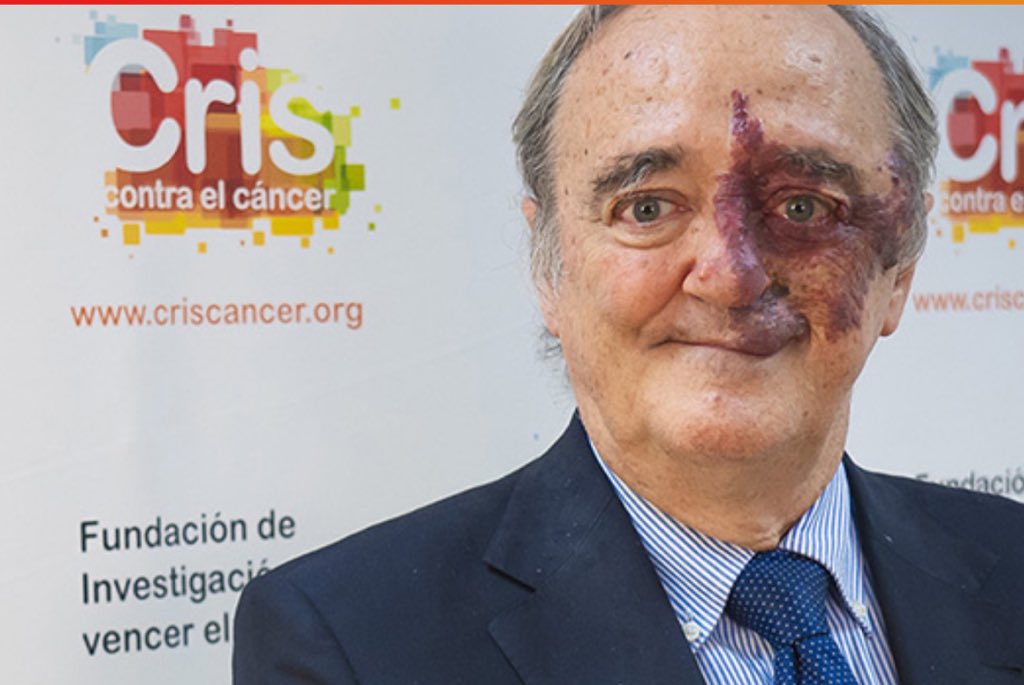
Dr. Mariano Barbacid and team successfully develops a promising new triple-combination therapy that completely and permanently eliminates pancreatic tumors. With such a successful preclinical study, we hope for the best in the coming clinical|human trials.
@elonmusk Suicide is a human tragedy that deserves infinite respect. But turning it into a blunt weapon against a technology—without any proven causality—does not serve the victims, their families, or the truth. We owe people care, nuance, and science, not fear-based shortcuts.
I really believe this.
A day is coming when someone with a spinal cord injury rolls into the hospital, gets a brain implant, and walks out a couple days later.
We’re not there yet. But we’re closer than people think.
Being part of that progress changed something in me. For years I felt like a burden. Now I feel useful again.
That’s a gift I don’t take lightly.
For now, BCIs like mine are output-only.
They don’t generate input in the brain. They simply read neural signals and turn them into actions — like controlling a computer with your mind.
In the future, I do think BCIs will be able to generate input into the brain.
We are very far from that today, and anyone saying otherwise is getting ahead of reality.
But if we ever get there, the most important question won’t be technical.
It’ll be: what will it mean to be human?