Elon Musk just explained why the oldest rule in civilization is ending.
For all of recorded history, survival ran on headcount. More hands meant more food, more soldiers, more future.
That rule just broke.
Musk: “Earth is gonna face a massive population collapse in over the next 20, 30 years. Massive.”
Every fear about robots stealing jobs assumes there’s an endless supply of humans to steal them from.
There isn’t.
Musk: “The birth rate is very low. In most of Europe, Russia, Japan, Korea, Singapore, it’s well below replacement.”
Five places. One number. No exceptions.
The trillions pouring into compute aren’t chasing efficiency. They’re insurance premiums on a species that stopped replacing itself.
Musk: “Is civilization gonna die with a bang or a whimper? This would definitely be dying with a whimper.”
That’s the whimper. Compute is the rebuttal.
Every dollar spent on autonomous labor is a bet that whoever’s left inherits more than any generation before them.
For all of recorded history, being born came with a debt. You paid it in labor, in taxes, in children who’d inherit the same debt.
That might be the first debt AI actually cancels.
Not because you earned it. Because for the first time, nobody’s counting.
solid lessons you need to learn about finance early as a man:
1. assets without liquidity are a death trap in emergencies.
2. keep part of your capital liquid so you can take advantage of sudden, unforeseen opportunities.
3. projects that lock up all your money can cost you bigger opportunities.
4. start what you can finish; always keep emergency funds outside major projects.
NB: many uncompleted buildings you see today are a result of financial indiscipline so train and discipline your financial mindset before starting your first project.
for instance, if a contractor quotes you $100k for a building project, make sure you have x3-5 that amount liquid and sitting pretty elsewhere. many men rush into projects without proper orientation, strategic planning or financial guidance. that’s why you see so many abandoned buildings or completed ones that sit empty or even completed ones that look lifeless.
if you can’t afford to buy that house three times over, then you truly can’t afford it. this principle applies to every major asset or project not just real estate.
don’t be ignorant and pray for miracles. learn something 👍
The most intelligent people I know too are the least successful. Society is upside down. The least useful traits like charisma are placed highest in society and stuff like truth seeking and honesty is punished.
Society will fully collapse as it always does when you have too many running the country who should be digging ditches and too many people who should be running the country digging ditches.
There is a certain type of person everywhere now, especially online.
He consumes endless information every day: philosophy, psychology, productivity, spirituality, neuroscience, business, self-improvement, history.
He knows a little about everything and deeply experiences almost nothing.
His entire identity becomes built around understanding instead of living.
He watches videos about confidence instead of speaking confidently. Reads about discipline instead of becoming disciplined. Studies relationships instead of learning how to love. Consumes motivational content instead of taking action.
He feels intelligent because he is constantly mentally stimulated. But stimulation is not transformation.
Most of the time, knowledge becomes emotional protection. Reality is unpredictable. Reality humiliates. Reality exposes weakness. Books and ideas do not.
Inside information, he can continue imagining himself as intelligent, deep, insightful, different from ordinary people. So he remains trapped in preparation.
He constantly feels as if he is "becoming" someone, while his real life remains strangely untouched. He develops sophisticated language for problems he never confronts directly. He can explain human behavior beautifully while being unable to handle ordinary discomfort, rejection, uncertainty, loneliness, or risk.
He slowly turns life into observation instead of participation.
The internet rewards this personality heavily. He receives validation for sounding aware rather than becoming capable.
Eventually, he begins confusing self-analysis with growth and information with wisdom.
But beneath the intelligence usually exists the same thing: fear. Fear of failure. Fear of embarrassment. Fear of reality answering back.
Because action destroys fantasy. The moment he truly acts, he can no longer hide inside potential.
Não nego a competição sexual; ela existe. Aquele cara para quem ninguém olhava duas vezes passa a ser visto como "interessante" por várias mulheres assim que aparece com uma namorada. Mas isso também tem outro nome.
Quando vemos muita gente prestando atenção em alguém, nosso cérebro tende a interpretar isso como um sinal de valor. Isso se chama prova social. Não significa necessariamente que a pessoa seja a mais bonita, a mais interessante ou a mais legal; significa apenas que ela passou a ocupar uma posição central na dinâmica social.
Existe também o efeito halo. Quando alguém é percebido como atraente, popular ou carismático, as pessoas começam a atribuir automaticamente várias qualidades positivas a ela, qualidades que, muitas vezes, ela nem possui.
Alguns caras dizem usar aliança na mão esquerda para atrair mulheres. Segundo eles, funciona.
O que é engraçado, porque a teoria é que as mulheres querem um homem desejado por outras mulheres. Na prática, às vezes parece que basta convencer o cérebro de que alguém já passou pelo controle de qualidade.
Vocês são patéticos.
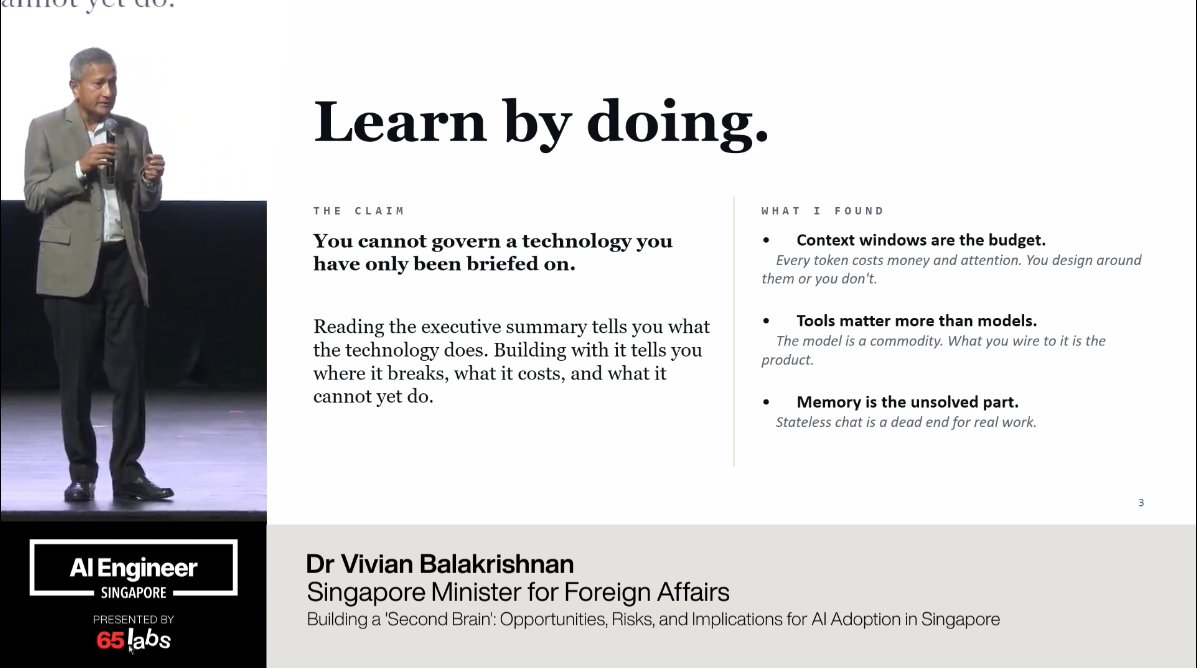
This is amazing - we have Singapore's Minister of Foreign Affairs @VivianBala explaining how he uses a Nanoclaw on Raspberry PI
This is a gem; He says the barriers to accessibility have collapsed - his setup was not created by him; and that memory is the next frontier (LOL)
That 2 PM sleepiness has nothing to do with your lunch. It hits at the same time even when scientists feed people the same tiny meal every hour, in a room with no clocks and steady lighting. Your body is doing it on purpose.
You have two body clocks running at the same time. The first runs on the 24-hour cycle you know about: sleepy at night, awake during the day. The second runs on a 12-hour cycle. Halfway through every day, your brain fires off a quieter version of its nighttime sleep signal. Most people hit this wall between 2 and 4 PM no matter what they ate or how well they slept the night before.
Morning coffee can deepen the crash. Caffeine sticks around in your bloodstream for 5 to 7 hours, so the cup you drank at 8 AM is still half-active at 2 PM. It blocks adenosine, the chemical that makes you feel tired. As long as caffeine is in your system, adenosine keeps stacking up in the background. You just can't feel it. Then the caffeine wears off, and all that built-up tiredness lands on your brain at once. That crash is the tiredness bill you were always going to pay.
Most of human history was built around this dip. The word siesta comes from the Latin "hora sexta," meaning the sixth hour after dawn. Roman shopkeepers, monks, and Mediterranean farmers all stopped working at that hour. The same pattern shows up in China today: surveys say around two-thirds of the population takes a daily nap of about 30 minutes. The countries that fight the dip pay for it. In the US, government data shows drowsy-driving crashes peak in two windows: midnight to 6 AM, and 2 to 4 PM. The afternoon spike lines up almost exactly with the body's biological dip.
NASA put a number on the fix back in 1995. They gave long-haul pilots a 40-minute rest break during cruise, and the pilots fell asleep in 5.6 minutes on average and slept for 25.8 minutes. The payoff: alertness improved 54%, and job performance jumped 34%. Every major sleep lab since has landed on the same answer: 20 to 30 minutes. Long enough to take the edge off, short enough that you don't slip into deep sleep and wake up groggy.
The 2 PM wall is what happens when a Stone Age body runs on an office schedule that expects the afternoon to feel like the morning.
@ayeejuju You didn’t insult his hobbies.
You insulted the place where he felt most like himself.
Then you questioned why you even married him.
Men can take criticism.
What changes them is realising the person they love secretly looks down on them.
6 things every man must cut off to succeed, pay solid attention.
1. cut off the habit of chasing women; not women themselves but the habit. it quietly drains your time, money, focus and direction while your entertaining distractions, others are building their empires.
2. cut off procrastination; every i’ll do it later eventually turns to i wish i started earlier so what you delay today becomes the obstacle that defeats you tomorrow.
3. cut off the negative mindset; doubt is a quiet killer. if you already believe you’ll fail, you don’t need an enemy, you become your own.
4. cut off laziness; idleness doesn’t pay bills. dreams without effort die in silence while you sleep on your potentials someone else is awake grinding and striving so he can thrive later in success
5. cut off vices; addiction is just a slow self-destruction. if you don’t control your habits, your habits will eventually control your life.
6. cut off complacency; comfort is where potential goes to sleep. the moment you stop growing, you start declining.
what most men learn too late is that; a disciplined man is not ruled by pleasure, he is driven by purpose and success doesn’t come from adding more, it comes from removing what holds you back...
so if these 6 stays in place, they don’t just slow you down, they dismantle ur progress. learn something, buena suerte 👍
you’re 22. you scroll 3 hours a day. it feels harmless
at 28 you can’t read an article without checking your phone twice per paragraph
at 32 you don’t understand why nothing you start ever finishes, you’re still dreaming of this project you wanted to start. still no time
at 40 you’ve never finished a book in a decade.
it all passed
Beware the empathy exploit.
Empathy is good and right when thought through (deep), but can be deadly to civilization when simply stimulus-response (shallow).
For example, releasing a repeat violent offender may feel good at first (shallow empathy for the criminal), but it is wrong to do so when that person will go on to hurt or murder innocent victims, as there should be deep empathy for future victims.
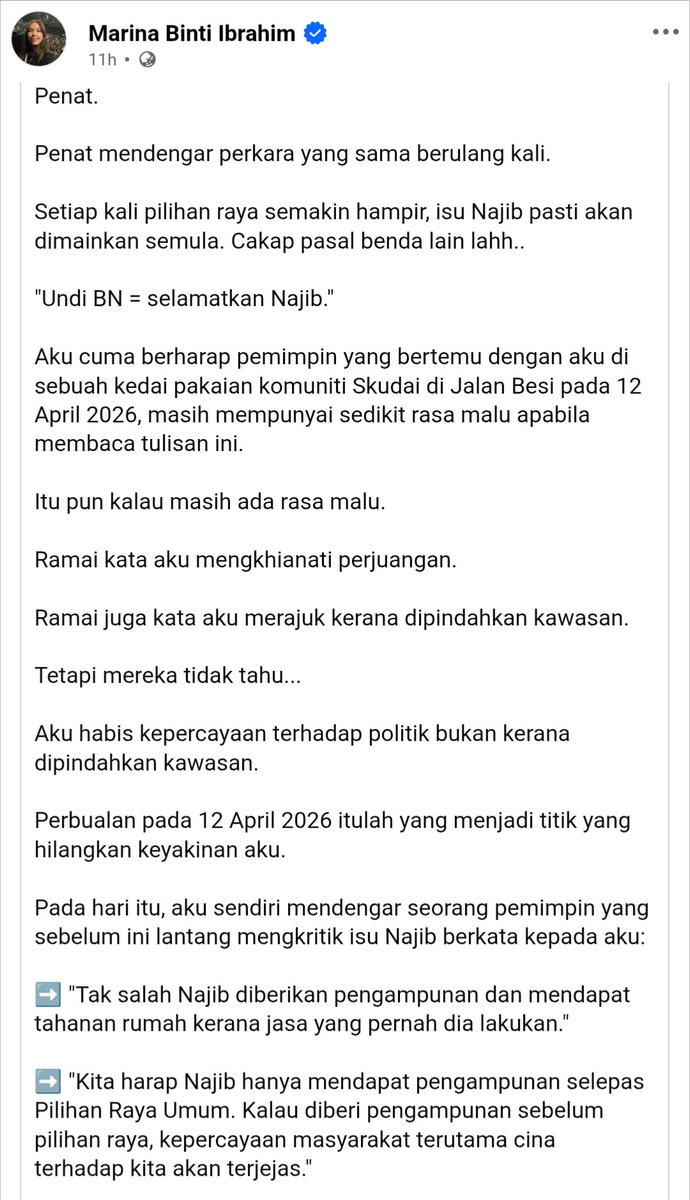
@bckupacc99 Perempuan memang batak nak gi company dinner. Sebab masa tu dorang boleh melaram, make up tebal2 nak tayang dekat jantan2 office. Sama je single ke bini org. Sampai sanggup bayar MUA.
There are bad women, but there are more men who have made being good, for these women, unnecessary. There are more men who have incentivized women’s indifference to morals.
Bad women exist as a direct outcome of the proliferating inadequate masculine model in society today.
A bad woman is a man’s failure - be it that of the father, brother, past lovers, or the men in her society.
The point is: women are not bad; there are not enough reasons or consequences for them to be otherwise. This is the failure of men.
Because, in male-female dynamics, men “control”… heck, they supply incentives. Control would mean appropriate distribution of incentives, they don't.
And incentives shape behavior - even for men who have a high degree of agency to create incentives for themselves, let alone women, who are relatively of lesser agency and thus bound to depend on men.
Therefore, women being bad is rewarding. They would not adopt these behaviors if men had seized the incentives for them.
Women are not bad by philosophy; they do not have the agency to independently sponsor and live out that philosophy. They are dependent and so would be well-behaved if the men around them had made it necessary to be well-behaved.
Men are the problem. Women are the symptoms.
🚨 Someone built an AI that reads candlestick charts the way GPT reads English.
Trained on 12 billion records from 45 exchanges. Outperforms every model by 93%. Live BTC demo. Free.
It's called Kronos.
The first open source foundation model built for financial markets. Not a general AI repurposed for finance. An AI that speaks the native language of candlestick patterns.
Every other model treats financial data like weather data. Kronos treats financial data like financial data.
Here's what it does:
→ Price forecasting. Feed it candlesticks. It predicts where price goes next.
→ Volatility prediction. Forecasts how volatile an asset will be before it happens.
→ Zero-shot. No fine-tuning. Works on any asset, any market, any timeframe.
→ 45 exchanges. Binance, NYSE, NASDAQ, LSE, and 41 more.
→ 4 model sizes. 4M params runs on a laptop. 499M for max accuracy.
→ Live demo running right now. BTC/USDT. 24-hour forecast. Updated hourly.
Here's the wildest part:
→ 93% more accurate than the leading time series model
→ 87% more accurate than the best non-pretrained baseline
→ All zero-shot. No fine-tuning. Out of the box.
Hedge funds spend millions on proprietary models. Bloomberg Terminal costs $24,000/year.
This runs on your laptop. Few lines of Python. Free.
Built at Tsinghua University. Accepted at AAAI 2026. Models on Hugging Face.
11.6K GitHub stars. 2.4K forks. MIT License.
100% Open Source.
Get it here on GitHub: https://t.co/IdEgklvY0a
🚨Want to learn Algorithmic Trading Strategies (that actually work)?
On May 14th, we are hosting a free workshop to help you get started with algorithmic trading with Python.
Register here (500 seats): https://t.co/uBk2SeORef
A couple came for an eye test together.
The husband kept insisting his eyesight was perfect.
The wife said he was lying.
Me: “What makes you think he can’t see well?”
Patient (wife): “Because this man has passed our house gate 4 times this month.”
Husband: “It was dark!”
Wife: “In broad daylight?”
The man looked offended immediately.
During the test, I asked him to read the letters on the screen.
He started confidently:
“E… F… P…”
Then he froze.
Long silence.
Me: “Can you see the next line?”
Husband: “Ma the TV is somehow blurry.”
Wife burst out laughing instantly.
Patient (wife): “THAT’S HOW HE MISSES MY TEXTS TOO.”
Husband: “Please focus on the examination.”
We continued the test.
Me: “Cover your left eye.”
This man covered both eyes.
The wife nearly fell off the chair laughing.
Patient (wife): “Doctor please add memory test too.”
Finally I prescribed glasses.
The husband collected the paper quietly like a defeated warrior.
As they were leaving, the wife said:
“Doctor, can the glasses also help him see when I’m angry?”
The man sighed deeply.
5 minutes later I stepped outside and saw him already wearing the glasses while reading their electricity bill with pure shock on his face.
Me: